La vida

 66
66

La vida



Lorelei Sage, Contemplative Literature Editor: 'La Vida' is an unparalleled portal into the transformative crucible of mystical experience. Teresa of Avila, with unflinching honesty and sublime eloquence, guides the reader through the labyrinth of the soul’s journey toward God. This is not mere autobiography; it is a profound treatise on the mechanics of divine grace and the alchemical process of spiritual purification. Her vivid descriptions of inner states and divine encounters offer esoteric insights that transcend dogma, speaking directly to the heart of the contemplative seeker. A cornerstone text for anyone serious about the practice and theory of deep spiritual union, its wisdom remains potent and transformative.
📝 Description
66
Teresa of Avila wrote 'La Vida' around 1565, detailing her own spiritual experiences.
Teresa of Avila's 'La Vida' recounts her spiritual development and encounters with the divine. Written in the mid-16th century, the book serves as a spiritual autobiography, charting her personal path toward union with God. She describes different stages of prayer and the soul's progression, using vivid imagery and direct personal testimony.
Teresa details the struggles and ecstasies she experienced as she felt closer to God. The text is not a theoretical treatise but a lived account, meant to guide others on similar paths. She demystifies the mystical experience through relatable language and allegories drawn from her Carmelite life. The book offers a look into the inner workings of faith and the practice of prayer from a unique perspective.
As a key text in Christian mysticism, 'La Vida' sits within a tradition stretching back to figures like Pseudo-Dionysius the Areopagite and Meister Eckhart. Teresa's work is a practical manual for the contemplative life, focusing on the direct, personal experience of God. It aligns with mystical aims of achieving union with the divine, but grounds these aspirations in her specific lived experiences and the reforms she enacted within the Carmelite order. Her writings became influential for later mystics and contemplatives seeking to understand the interior life.
💡 Why Read This Book?
Uncover the secrets of divine communion as revealed by a master mystic. 'La Vida' offers a rare, intimate glimpse into the soul's ascent and the profound workings of grace. Ideal for seekers of spiritual depth, scholars of Christian mysticism, and practitioners of contemplative prayer who wish to understand the esoteric architecture of the devotional life. Read this to illuminate your own path toward the Divine.
⭐ Reader Reviews
Honest opinions from readers who have explored this book.
❓ Frequently Asked Questions
What is the primary focus of 'La Vida' by Teresa of Avila?
The primary focus is Teresa's personal spiritual journey, detailing her profound experiences of prayer, divine encounters, and the inner transformation wrought by God's grace within her life and Carmelite reform.
Is 'La Vida' a theological treatise or a personal memoir?
It functions as both. While deeply personal, it also serves as an apologetic work, explaining the nature of her mystical experiences and the theological underpinnings of her reform to the Church authorities.
What does 'La Vida' reveal about the Carmelite way of life?
It offers an intimate look into the disciplined yet deeply spiritual life of Carmelite nuns, highlighting their devotion, their struggles, and the profound contemplative practices that shaped their existence within the convent walls.
Who was Teresa of Avila?
Teresa of Avila (1515-1582) was a Spanish Carmelite nun, mystic, and theologian. She is revered as a saint and Doctor of the Church for her profound spiritual writings and her role in the Counter-Reformation.
What is the significance of Teresa's 'grievous sins' mentioned in her notes?
This highlights her profound humility and her understanding of God's grace. She believed that by detailing her past unworthiness, the power of God's transformative work in her life would be even more evident.
🔮 Key Themes & Symbolism
The Ascent of the Soul
This theme explores the intricate stages of spiritual progression as described by Teresa, akin to climbing a ladder towards the Divine. It looks at the purification of the senses, the intellect, and the will, mapping the inner field of the soul's journey from earthly attachments to ecstatic union with God. The text uses vivid metaphors of castles and gardens to illustrate these profound inner transformations, revealing a sophisticated understanding of spiritual psychology and the arduous yet rewarding path of divine intimacy.
The Nature of Divine Grace
Teresa's 'La Vida' is a proof of the overwhelming and transformative power of God's grace. She meticulously documents how divine intervention guides, sustains, and elevates the soul, often in ways that defy human logic or expectation. This theme examines the passive and active roles of the soul in cooperating with grace, highlighting the essential role of prayer, humility, and surrender in allowing God's presence to permeate every aspect of existence, leading to profound spiritual renewal and sanctity.
The Language of Mystical Experience
This theme unravels the unique and often ineffable language Teresa employs to describe her direct experiences of the Divine. Through strong symbolism, vivid imagery, and profound introspection, she attempts to articulate the inexpressible nature of mystical union, divine visions, and ecstatic prayer. The text serves as a lexicon for understanding the esoteric vocabulary of the soul's dialogue with the Eternal, offering insights into the symbolic representations of God's presence and the subtle communication between the human spirit and the divine realm.
💬 Memorable Quotes
Direct passages from the work, attributed to the author.
“The soul is a castle, and within it there are many mansions.”
— This potent metaphor illustrates the complex nature of the soul, suggesting inner spaces for contemplation and diverse levels of spiritual attainment awaiting exploration.
“I saw nothing but God.”
— This concise statement captures the ultimate goal of Teresa's spiritual pursuit: complete absorption and union with the Divine, where all other perceptions fade.
“Prayer is nothing else than a friendly intercourse with Him with whom we know we are in love.”
— This defines prayer not as a ritual, but as an intimate, loving conversation with God, emphasizing relationship and personal connection.
“Let us not be afraid of the cross; it is the sign of love.”
— This reflects Teresa's understanding that suffering and hardship, when embraced in faith, are not punishments but expressions of divine love and pathways to spiritual growth.
“The important thing is not to think much but to love much.”
— This prioritizes affective devotion and genuine love over intellectual striving in the spiritual life, highlighting the primacy of the heart's response to God.
🌙 Esoteric Significance
Tradition
Rooted in the Christian mystical tradition, 'La Vida' is a seminal text of Carmelite spirituality, a lineage known for its profound emphasis on contemplative prayer and direct experience of God. It draws upon centuries of Christian contemplative practice while forging its own unique path, influencing Western esotericism by offering a systematic yet deeply personal exploration of the soul's union with the Divine.
Symbolism
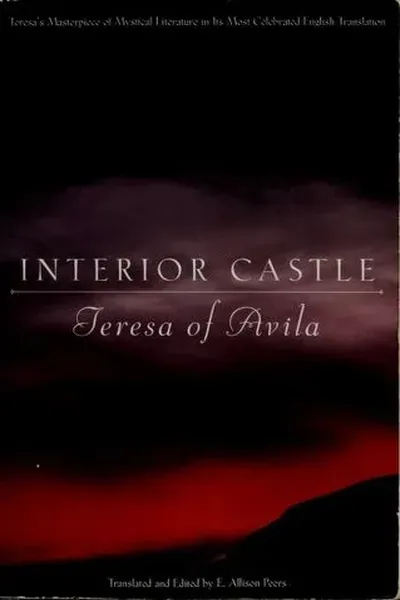
Teresa employs strong symbolism, most notably the 'Interior Castle' with its many mansions, representing the soul's diverse chambers and levels of spiritual development. Other key symbols include the 'fountain of living water,' symbolizing divine grace, and the 'garden,' representing the soul cultivated by God. These symbols provide an esoteric language for understanding the inner spiritual landscape and the process of transformation.
Modern Relevance
In an age often characterized by disconnection and superficiality, 'La Vida' offers a profound antidote. Its exploration of inner stillness, divine connection, and the transformative power of love resonates deeply with contemporary seekers of meaning and authenticity. The book's insights into spiritual psychology and the practice of mindful contemplation provide practical guidance for reading through the complexities of modern life with greater presence and purpose.
👥 Who Should Read This Book
This sacred text is essential for the devout seeker yearning for a deeper connection with the Divine, offering useful insights into the contemplative path. Scholars of Christian theology, mysticism, and religious history will find 'La Vida' an invaluable primary source for understanding the Counter-Reformation and the evolution of spiritual thought. Practitioners of prayer and meditation will discover practical guidance and inspiration for their own inner journeys. Even those new to spiritual exploration can approach this work for its timeless wisdom on humility, love, and the profound capacity of the human spirit.
📜 Historical Context
Written in the tumultuous mid-16th century, 'La Vida' emerged during the height of the Spanish Counter-Reformation, a period of intense theological debate and spiritual fervor within the Catholic Church. Teresa of Avila, a prominent figure of this era, sought to revitalize the Carmelite Order through a return to its austere roots, emphasizing contemplative prayer and poverty. Her writings, including 'La Vida,' served a dual purpose: to provide a deeply personal account of her spiritual journey for her own solace and to offer a compelling justification for her reformist activities to ecclesiastical authorities. The work reflects the era's emphasis on personal piety, mystical experiences, and the ongoing dialogue between the earthly Church and the divine realm, offering a unique window into the soul of a saint navigating faith and institutional challenges.
📔 Journal Prompts
Reflect on the 'mansions' within your own soul. What spiritual spaces do you frequent most often?
How does the concept of divine grace as a 'friendly intercourse' resonate with your understanding of prayer?
Identify a personal 'grievous sin' (a past mistake or perceived failing) and consider how God's grace might have transformed its impact on your life.
Explore the 'garden' of your own soul. What seeds of virtue are you cultivating, and what 'weeds' require tending?
What does it mean for you, personally, to 'love much' rather than 'think much' in your spiritual life?
🗂️ Glossary
Mysticism
A spiritual or philosophical practice that seeks direct, intuitive knowledge of ultimate reality or the Divine, often through meditation, contemplation, or ecstatic experience.
Contemplation
A form of prayer or meditation focused on silent, attentive, and loving union with God, characterized by deep reflection and passive receptivity.
Grace
In Christian theology, the divine assistance or spiritual power given to humans by God, enabling them to live a holy life and achieve salvation.
Apologetic works
Writings or speeches that defend or justify a particular set of beliefs or doctrines, often in response to criticism or doubt.
Carmelite Nuns
Members of a Catholic religious order of women founded in the 12th century, known for their contemplative lifestyle and devotion to prayer and service.
This book appears in 3 collections
🔮 Readers Also Liked
Browse all →








![Camino de perfección [por] Santa Teresa de Jesús](/img/thumb/camino-de-perfecci-n-por-santa-teresa-de-jes-s-teresa-of-avila.webp)
More by Teresa of Avila
All books →


From the “Tarot” Collection
View all →








More Free Divination & Tarot Books
View all →