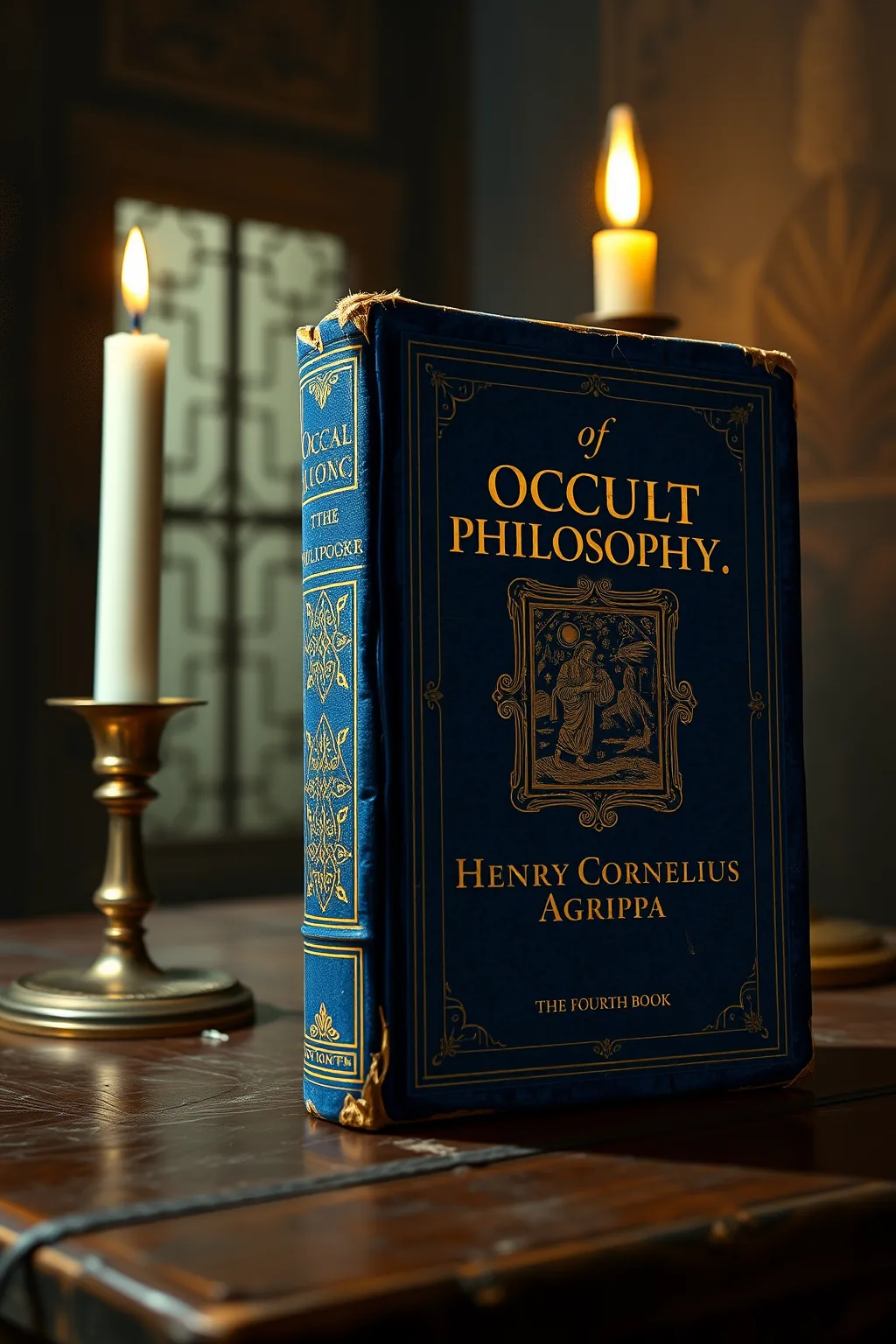
Of Occult Philosophy the Fourth Book
 61
61

Of Occult Philosophy the Fourth Book


Sophia Crane (Associate Editor) — A monumental contribution to esoteric literature, Agrippa's Fourth Book is a cornerstone for serious occult study. It masterfully delineates the principles of practical magic, moving beyond theoretical constructs to offer actionable insights into invoking celestial intelligences and manipulating hidden energies. The text's strength lies in its rigorous systemization and profound theological underpinnings, making it a vital reference for understanding the lineage of Western ceremonial magic. This is essential reading for advanced practitioners and scholars seeking to comprehend the mechanics of ritual and the philosophical underpinnings of divine influence. It demands careful study but rewards the diligent reader with unparalleled clarity on arcane arts.
📝 Description
61
Published posthumously in 1533, Agrippa's Fourth Book of Occult Philosophy details ceremonial magic and angelic hierarchies.
Henry Cornelius Agrippa's Fourth Book of Occult Philosophy, published in 1533, follows his earlier works on natural, celestial, and ceremonial magic. This text focuses specifically on practical magical operations, detailing methods for invoking spiritual beings and understanding their roles. Agrippa outlines various rituals, correspondences, and the necessary preparations for engaging with these entities. The book addresses the construction of magical tools and talismans, emphasizing the importance of precise execution and correct symbolic representation.
It guides the practitioner through the complex systems of angelic hierarchies and the divine names used in conjuration. The text assumes a serious student ready to engage with the rigorous demands of ceremonial practice. Agrippa's approach, while rooted in Renaissance occult thought, presents a structured system for those seeking to understand and interact with the spiritual dimensions he describes. The work is intended for those deeply committed to the study and application of magical arts.
This work belongs to the late Renaissance tradition of grimoires, texts that provided systematic instructions for magical practice. Agrippa's Fourth Book builds upon the theoretical framework established in his more widely known 'Three Books of Occult Philosophy,' shifting focus to the practical application of magic. It reflects a period where scholars and practitioners sought to synthesize Neoplatonic philosophy, Kabbalistic ideas, and Christian angelology into coherent systems for spiritual ascent and interaction with the divine or angelic realms. The emphasis on precise ritual, symbolic correspondences, and the hierarchy of spiritual beings is characteristic of this specific esoteric lineage.
💡 Why Read This Book?
Unlock the secrets of ceremonial magic and divine invocation. Agrippa's Fourth Book provides a systematic framework for understanding and practicing the occult arts, offering profound philosophical insights into the nature of reality and spiritual forces. Ideal for dedicated students of metaphysics, aspiring magicians, and scholars of ancient wisdom seeking to deepen their esoteric knowledge.
⭐ Reader Reviews
Honest opinions from readers who have explored this book.
❓ Frequently Asked Questions
What makes the Fourth Book unique compared to Agrippa's other works?
The Fourth Book is specifically dedicated to practical magic, focusing on the invocation of spirits and divine beings, whereas Agrippa's earlier works primarily explored theoretical occult philosophy and natural magic.
Is this book suitable for beginners in occult studies?
While dense, it serves as a foundational text. Beginners are advised to approach it with patience and perhaps alongside introductory guides to better grasp its complex concepts and terminology.
What are the primary subjects covered in this book?
It delves into the theory and practice of invoking angels, demons, and other spiritual entities, the use of talismans, divine names, and the philosophical underpinnings of ceremonial magic.
What is the historical significance of this work?
It represents a peak of Renaissance occultism, influencing generations of magicians and philosophers, and providing a comprehensive system of magic that was both academically rigorous and practically applicable.
Can this book be used for modern magical practices?
Absolutely. Many modern practitioners adapt Agrippa's principles to contemporary contexts, finding his foundational understanding of spiritual forces and ritual mechanics to be enduringly relevant.
🔮 Key Themes & Symbolism
Ceremonial Magic and Divine Invocation
This book is a deep dive into the mechanics of ceremonial magic, detailing the precise rituals, incantations, and symbolic tools required to commune with celestial and elemental intelligences. Agrippa elucidates the profound belief that through proper invocation, one can access divine power, gain hidden knowledge, and effect transformations in the material world. The emphasis is on the sacredness of the act, the purity of intent, and the meticulous adherence to ancient traditions to ensure successful and safe communion with the spiritual hierarchy. It's a detailed look in the art of bridging the gap between the human and the divine through structured, sacred performance.
The Language of Symbols and Correspondences
Agrippa masterfully unpacks the intricate web of correspondences that underpins occult philosophy. He reveals how the universe operates through a system of interconnected symbols, where everything from celestial bodies and planetary influences to earthly elements and divine names holds specific energetic signatures. Understanding these correspondences is presented as the key to unlocking the secrets of creation and manipulating its forces. The Fourth Book teaches how to read this cosmic language, utilizing sigils, divine names, and planetary alignments to create potent talismans and direct magical operations, thereby aligning oneself with the fundamental order of the cosmos.
Angelic Hierarchies and Spiritual Influence
A central tenet of this work is the exploration of the angelic realms and their role in the divine order. Agrippa meticulously outlines the different orders of angels, their specific domains of influence, and the methods by which a practitioner can invoke their aid or guidance. This is not merely an exercise in summoning; it is a philosophical and theological inquiry into the nature of spiritual intermediaries and their power to affect human affairs and the natural world. The book offers insights into how to petition these beings for wisdom, protection, and assistance in magical endeavors, emphasizing respect and understanding of their divine purpose.
💬 Memorable Quotes
Direct passages from the work, attributed to the author.
“The whole world is a living creature, and the soul of the world is God.”
— Highlights the pantheistic or panentheistic worldview, emphasizing the divine immanence and interconnectedness of all existence.
“Every sensible thing is moved by the soul, and by the spirit of the world.”
— Explains the animating force behind all matter, linking physical phenomena to a universal spiritual energy accessible through magic.
“And we are part of this whole, and therefore we can influence it.”
— Asserts human agency within the cosmic order, positing that our connection to the world-soul grants us the power to effect change through occult arts.
“The true magician is one who understands the hidden causes of things.”
— Defines the magician not by power, but by profound knowledge and insight into the underlying principles governing reality.
💡 Key Ideas
Editorial paraphrase of the work's core concepts — not direct quotes.
For the Art of Magic is the highest, most secret, and most excellent of all things.
This quote captures the book's core premise: magic is not mere trickery, but a profound and elevated discipline essential for understanding reality.
🌙 Esoteric Significance
Tradition
This work is a central to Western Esotericism, deeply rooted in Hermeticism, Neoplatonism, and Christian Kabbalah. It synthesizes these traditions, presenting a coherent system of practical magic that aims to achieve union with the divine through understanding and manipulation of the spiritual forces governing the cosmos. Agrippa's approach bridges the theoretical explorations of natural magic with the more active, ceremonial practices, making it a crucial text for understanding the evolution of magical thought.
Symbolism
The Fourth Book is replete with potent symbolism drawn from various spiritual traditions. It explores the symbolic language of divine names, planetary influences, angelic hierarchies, and elemental forces. Agrippa utilizes these symbols not merely as abstract concepts but as keys to unlocking specific spiritual energies and effecting transformations. The meticulous arrangement of symbols within rituals, talismans, and incantations is presented as a means of aligning the microcosm (human) with the macrocosm (universe), thereby enabling the magician to channel divine power.
Modern Relevance
Despite its historical context, Agrippa's Fourth Book remains remarkably relevant for contemporary seekers of esoteric knowledge. Its emphasis on the interconnectedness of all things, the power of intention, and the structured approach to spiritual exploration offers a valuable framework for modern magical practice and philosophical inquiry. Practitioners continue to draw upon its principles for ritual construction, understanding spiritual correspondences, and developing a deeper connection to the subtle energies of the universe, proving its enduring power as a guide.
👥 Who Should Read This Book
This key work is indispensable for the serious student of Western Esotericism. Scholars of occult history and philosophy will find it an authoritative primary source, offering exceptional insight into Renaissance magical theory. Aspiring practitioners of ceremonial magic will discover a comprehensive guide to ritual, invocation, and the harnessing of spiritual forces. Those seeking a deeper philosophical understanding of the cosmos, divine power, and humanity's place within it will find their intellectual and spiritual curiosity profoundly engaged. Beginners may wish to approach with supplementary texts, but the dedicated seeker will find this volume a life-altering text.
📜 Historical Context
Written during the height of the European Renaissance (circa 1531-1533), 'Of Occult Philosophy, the Fourth Book' emerges from an era of fervent intellectual curiosity, where the boundaries between science, philosophy, religion, and magic were fluid. This period saw a resurgence of interest in Neoplatonism, Hermeticism, Kabbalah, and ancient pagan traditions, all of which deeply informed Agrippa's work. The book reflects the Renaissance man's ambition to synthesize classical wisdom with Christian theology, seeking to understand God's creation through a comprehensive study of its hidden mechanisms. Agrippa, a physician, lawyer, and theologian, was an important figure in this intellectual milieu, and his comprehensive systemization of occult knowledge, particularly in this final volume, provided a foundational text for subsequent generations of occultists, alchemists, and philosophers, shaping the trajectory of Western esoteric thought.
📔 Journal Prompts
Reflect on the concept of the 'soul of the world' as described by Agrippa. How does this idea resonate with your personal understanding of the universe and your place within it?
Agrippa speaks of divine names as potent tools. Explore the significance of names and their perceived power in your own cultural or spiritual background.
Consider the ethical implications of invoking spiritual entities. What responsibilities does a practitioner have towards these beings and the energies they wield?
How might the principles of correspondence and symbolism, as outlined in this book, be applied to understanding contemporary phenomena or personal challenges?
Agrippa presents magic as a highest art. What does this elevated view of magic imply about the potential of human consciousness and its connection to the divine?
🗂️ Glossary
Invocation
The act of calling upon or summoning a divine being, spirit, or angel, often through prayer, ritual, or specific incantations, with the intent of receiving their aid, guidance, or presence.
Ceremonial Magic
A structured form of magic that involves elaborate rituals, specific incantations, symbolic tools, and often the invocation of spiritual entities to achieve magical effects or spiritual enlightenment.
Correspondences
The system of relationships and connections between different parts of the cosmos, such as planets, elements, colors, herbs, and divine names, believed to hold symbolic and energetic significance.
Talismans
Objects inscribed with specific symbols, divine names, or sigils that are consecrated and imbued with spiritual power, intended to attract certain influences or provide protection.
Angelic Hierarchies
The organized ranks and orders of angels as described in theological and esoteric traditions, each possessing specific functions and spheres of influence within the divine administration of the cosmos.
This book appears in 3 collections
🔮 Readers Also Liked
Browse all →








More by Henry Cornelius Agrippa
All books →

From the “Ritual Magic” Collection
View all →






More Free Magic & Ritual Books
View all →