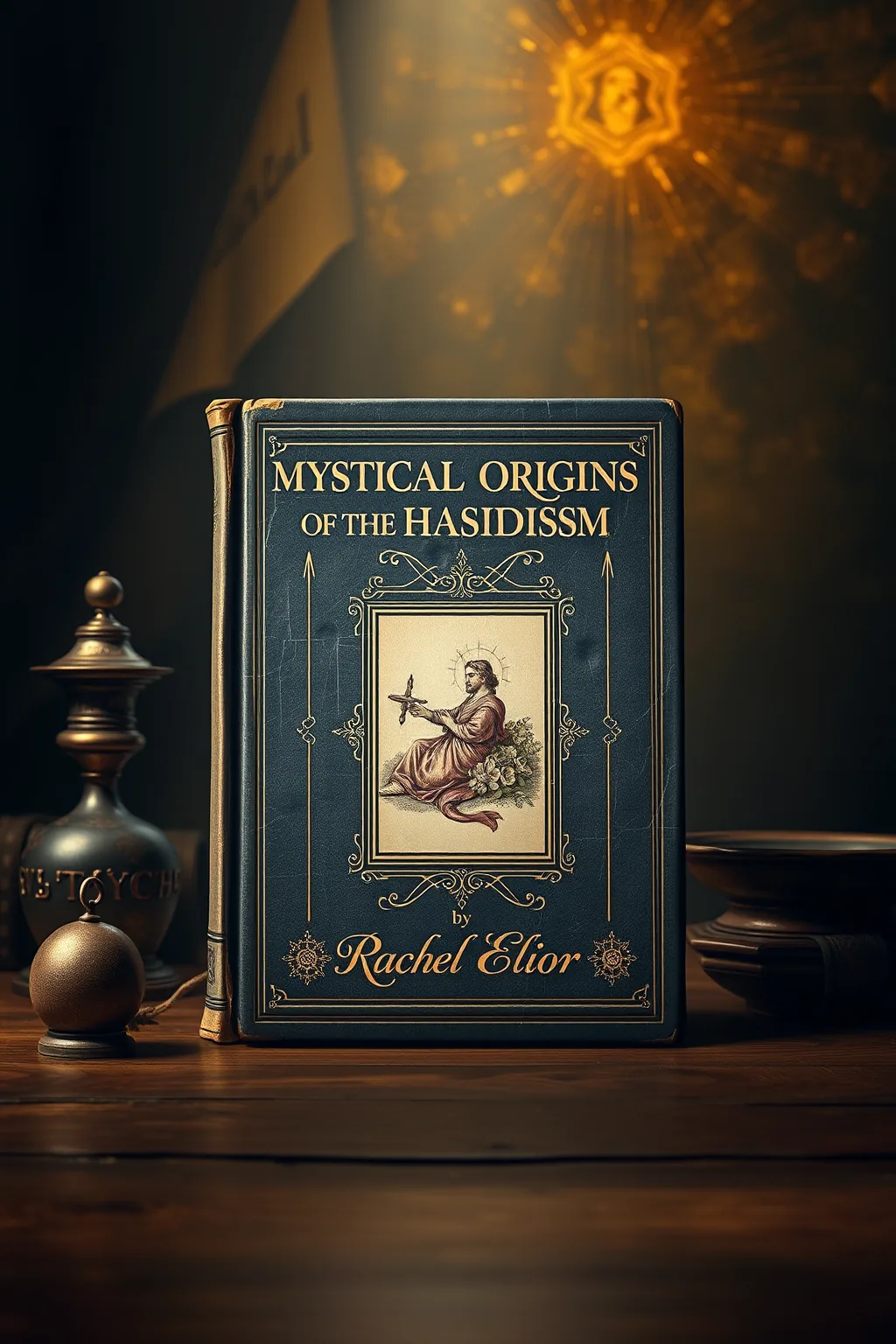
MYSTICAL ORIGINS OF THE HASIDISM
 61
61

MYSTICAL ORIGINS OF THE HASIDISM

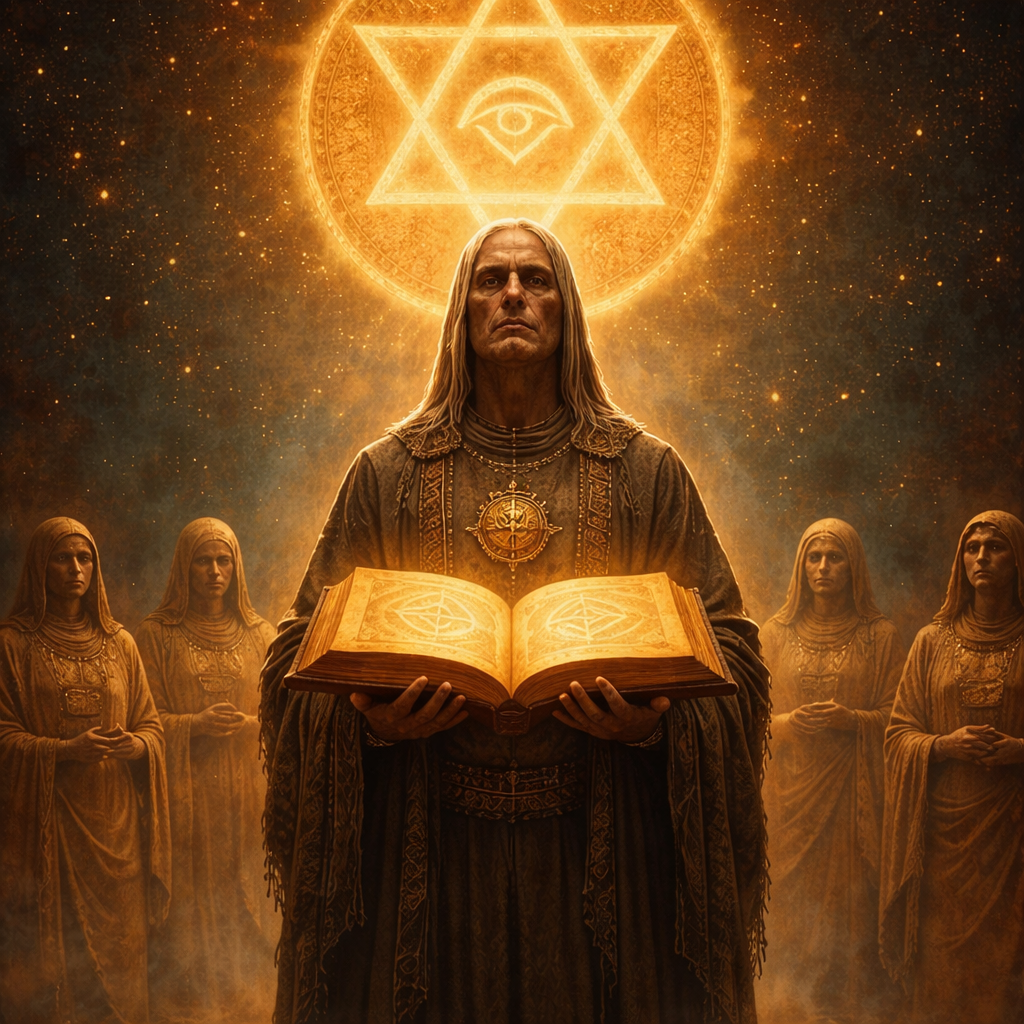

As the Alchemy & Hermeticism Editor, I find Rachel Elior's 'Mystical Origins of Hasidism' to be an indispensable beacon for understanding the profound esoteric underpinnings of Jewish spiritual practice. Elior masterfully navigates the complex labyrinth of Kabbalistic thought, demonstrating how its ancient symbols and concepts find vibrant expression within the Hasidic ethos. Her scholarship is both rigorous and deeply insightful, revealing the mystical technologies and divine aspirations that animate this powerful tradition. This book is a vital resource for anyone seeking to comprehend the alchemical transformation of the soul inherent in Hasidism.
📝 Description
61
Rachel Elior's 1988 book traces Hasidism's roots to earlier Jewish mystical traditions.
Rachel Elior's 'Mystical Origins of Hasidism' examines the esoteric currents that informed the Hasidic movement. The book details how Kabbalistic thought and philosophical ideas contributed to Hasidism's emergence. Elior focuses on concepts like divine presence in the world, fervent prayer, and the role of spiritual leaders, known as tzaddikim.
The work analyzes the symbolic language and mystical cosmologies that characterized these traditions. It also discusses the desire for direct connection with the divine. This book aims to provide a thorough understanding of the spiritual underpinnings of Hasidism for those interested in Jewish mysticism and religious history.
This book situates Hasidism within the broader history of Jewish mysticism, particularly its Kabbalistic expressions. It connects Hasidic ideas to earlier traditions of divine communion and esoteric interpretation of scripture. The work suggests that Hasidism did not arise in a vacuum but drew upon existing mystical frameworks and spiritual practices developed over centuries.
💡 Why Read This Book?
Uncover the hidden Kabbalistic wellsprings of Hasidism, a journey into ecstatic devotion and divine revelation. Ideal for scholars, spiritual seekers, and practitioners interested in the esoteric dimensions of Judaism, this book offers profound insights into mystical consciousness and the historical roots of a transformative spiritual path.
⭐ Reader Reviews
Honest opinions from readers who have explored this book.
❓ Frequently Asked Questions
What are the primary Kabbalistic influences on Hasidism discussed in this book?
The book highlights influences from Lurianic Kabbalah, particularly its concepts of tzimtzum (contraction) and shevirat ha-kelim (shattering of the vessels), and their reinterpretation within Hasidic thought to emphasize divine immanence and the rectification of the world.
How does Elior connect Hasidism to earlier Jewish mystical traditions?
Elior traces a lineage from ancient Merkabah mysticism and medieval Kabbalistic texts, demonstrating how Hasidism synthesized and revitalized these traditions, adapting their esoteric principles for a broader spiritual awakening.
What is the role of the Tzaddik in the mystical framework presented?
The Tzaddik is presented as a conduit of divine energy, a spiritual leader who facilitates communion between God and humanity, and whose very existence embodies the ideals of mystical ascent and connection.
Is this book suitable for someone new to Jewish mysticism?
While dense with scholarly research, Elior's accessible prose and clear explanations make the core concepts of Jewish mysticism and Hasidism understandable, offering a rewarding entry point for motivated newcomers.
What makes the mystical origins of Hasidism particularly unique?
The unique aspect lies in Hasidism's radical emphasis on immanence, the accessibility of divine experience to all, and the elevation of simple devotion and joy as pathways to mystical union, building upon but also democratizing earlier esoteric traditions.
🔮 Key Themes & Symbolism
The Divine Spark in Creation
This theme explores the Hasidic understanding of the divine immanence within all aspects of creation. Elior elucidates how Hasidism views the world not as separate from God, but as permeated by divine energy, with every object and event holding a hidden spark of the Infinite. This perspective transforms the mundane into a sacred space for spiritual revelation and connection, urging practitioners to find God in the everyday.
Ecstatic Prayer and Divine Closeness
Elior explores the heart of Hasidic worship, emphasizing the pursuit of ecstatic prayer (hitbodedut) as a direct means to achieve divine closeness. This section illuminates how Hasidism revived and democratized mystical aspirations, focusing on heartfelt prayer, joyous song, and fervent meditation as pathways to transcend the self and merge with the divine presence. It highlights the emotional and experiential dimensions of Jewish mysticism.
The Tzaddik as a Spiritual Nexus
The role of the Tzaddik, or righteous leader, is central to Elior's analysis. This theme examines the Tzaddik not merely as a teacher but as a vital conduit for divine grace and spiritual guidance. Elior explains how the Tzaddik embodies the ideals of mystical union and serves as a bridge between the earthly and the celestial realms, enabling the community to draw closer to God through his spiritual influence and example.
💬 Memorable Quotes
Direct passages from the work, attributed to the author.
“Joy is the prayer that God hears most clearly.”
— This emphasizes the Hasidic belief in the power of unadulterated happiness and fervent devotion as a direct and potent form of spiritual communion, surpassing mere ritual or intellectual understanding.
“To find God is to find oneself in the heart of the world.”
— This highlights the Hasidic doctrine of immanence, suggesting that spiritual realization occurs not through detachment, but through deep engagement and loving awareness of the divine presence within all of existence.
“The whisper of the Infinite is in every breath.”
— This evocative phrase points to the constant, subtle presence of the divine in the most fundamental aspects of life, urging a mindful awareness of God's immanence in every moment.
💡 Key Ideas
Editorial paraphrase of the work's core concepts — not direct quotes.
The world is a veil, and the Tzaddik is the hand that lifts it.
This quote suggests that ordinary perception conceals the divine reality. The Tzaddik, through spiritual insight and connection, reveals the hidden sacredness within the mundane, allowing others to glimpse the true nature of existence.
Every soul carries a shard of the shattered vessel.
Referencing Lurianic Kabbalah, this quote speaks to the cosmic imperfection and the individual soul's inherent potential for spiritual repair and reunification with the divine source.
🌙 Esoteric Significance
Tradition
This book is fundamentally rooted in the esoteric tradition of Kabbalah, the mystical interpretive tradition of Judaism. It explores how Hasidism draws upon and reinterprets key Kabbalistic concepts such as the Sefirot, the divine emanations, the concept of tzimtzum (divine contraction), and the cosmic drama of shevirat ha-kelim (shattering of the vessels). Elior illustrates how these ancient frameworks were revitalized and adapted to create a more immanent and accessible mystical experience for the common person.
Symbolism
The esoteric significance lies in the profound symbolism that permeates Hasidic thought, deeply influenced by Kabbalah. Elior unpacks symbols like the divine light (or) as a pervasive force, the Tzaddik as a conduit or 'channel,' and the concept of 'devekut' (cleaving to God) as a state of being. The movement's emphasis on joy, song, and dance also carries symbolic weight, representing the ecstatic breaking down of barriers between the human and the divine, and the rectification of the world through spiritual elevation.
Modern Relevance
The modern relevance of 'Mystical Origins of Hasidism' lies in its exploration of accessible pathways to spiritual experience in a secularizing world. The Hasidic emphasis on finding the divine in everyday life, the power of intentional community, and the transformative potential of joy and heartfelt prayer offer potent antidotes to modern alienation. For practitioners, it provides a deeper understanding of the energetic and symbolic dimensions of their spiritual practices, while for scholars, it reveals the enduring legacy of Jewish mysticism and its capacity for renewal and adaptation across centuries.
👥 Who Should Read This Book
This profound work is essential for a diverse audience. **Scholars of religious studies and Jewish history** will find Elior's meticulous research and insightful analysis indispensable for understanding the development of Jewish mysticism. **Spiritual seekers and practitioners of Kabbalah** will discover a collection of esoteric teachings and practical approaches to divine connection, particularly those interested in ecstatic prayer and immanent divinity. **Beginners in Jewish mysticism** will find a well-guided journey into complex concepts, presented with clarity and vivid language. Ultimately, anyone yearning to explore the soul-stirring depths of Jewish spirituality and its profound mystical origins will find this book a luminous and transformative read.
📜 Historical Context
The 18th century in Eastern Europe was a period of immense social upheaval and spiritual searching. Following the catastrophic Chmielnicki Uprising and the Sabbatean crisis, Jewish communities faced profound disillusionment. It was within this fertile ground of spiritual yearning and existential need that Hasidism emerged. Influenced by the complex mystical doctrines of Kabbalah, particularly the teachings of Isaac Luria, Hasidism offered a radical reinterpretation of Jewish spiritual life. It shifted the focus from abstract intellectualism to ecstatic devotion, immanence, and the transformative power of joy and community. Rachel Elior's work places Hasidism within this specific historical milieu, demonstrating how its mystical origins were deeply intertwined with the socio-religious field of its time, providing a vibrant, accessible, and deeply personal path to experiencing the Divine.
📔 Journal Prompts
Reflect on a moment when you felt a profound sense of divine immanence in your everyday life. What were the circumstances, and what did you learn?
How does the concept of 'joy as prayer' resonate with your own spiritual practice? Explore ways to cultivate more joy in your devotional life.
Consider the idea of a spiritual leader or mentor in your life. How do they act as a 'Tzaddik' or conduit of wisdom and inspiration?
What does the symbolism of 'divine light' mean to you personally? How can you perceive or cultivate this light within yourself and your surroundings?
Explore the Kabbalistic concept of 'rectification' (tikkun). How can your personal spiritual journey contribute to the healing or elevation of the world around you?
🗂️ Glossary
Kabbalah
The esoteric, mystical tradition of Judaism, concerned with the nature of God, the creation of the universe, and the spiritual path to divine connection. It utilizes symbolic interpretation of scripture and contemplation of divine emanations.
Hasidism
A spiritual movement within Judaism that arose in 18th-century Eastern Europe, emphasizing ecstatic devotion, joy, prayer, and the immanence of God in all aspects of life, often led by charismatic spiritual leaders known as Tzaddikim.
Tzaddik
A righteous person, a spiritual leader within Hasidism who is believed to be a conduit of divine energy and wisdom, guiding the community and facilitating their spiritual connection to God.
Devekut
A Hebrew term meaning 'cleaving' or 'attachment' to God. It describes a state of intense spiritual communion, devotion, and mystical union with the Divine.
Hitbodedut
A Hasidic practice of secluded meditation and personal, unscripted prayer, often conducted in nature, aimed at fostering an intimate and direct dialogue with God.
This book appears in 1 collection
🔮 Readers Also Liked
Browse all →









More by Rachel Elior
All books →




From the “Kabbalah” Collection
View all →








More Free Kabbalah & Jewish Mysticism Books
View all →