Martin Buber
 65
65

Martin Buber


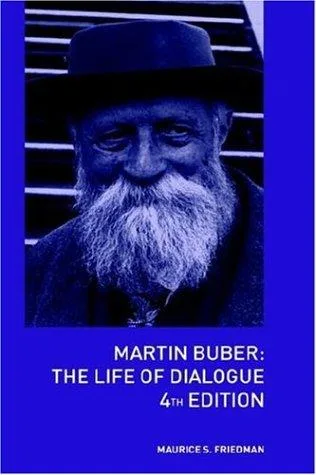
Maurice S. Friedman's "Martin Buber" is an indispensable key for unlocking the esoteric dimensions of Buber's profound philosophy. Friedman, a renowned Buber scholar, navigates the labyrinthine depths of Buber's thought with unparalleled clarity, emphasizing the Kabbalistic roots that nourish his existential theology. He illuminates the 'I and Thou' encounter not merely as a philosophical construct, but as a potent spiritual practice, a gateway to divine immanence. This work is a treasure for those seeking to understand the mystical currents flowing beneath the surface of modern thought, offering profound insights into the nature of relationship and revelation. Highly recommended for serious students of Jewish mysticism and existential spirituality.
📝 Description
65
Maurice S. Friedman's 1965 study analyzes Martin Buber's philosophy through its Kabbalistic roots.
Maurice S. Friedman's work examines Martin Buber's philosophical ideas, particularly focusing on their connection to Jewish mysticism. Friedman details how Buber's concept of the 'I and Thou' relationship draws from Kabbalistic thought. He argues that for Buber, the encounter with another person creates a sacred space where divine presence can be experienced. The book also addresses the symbolic elements within Buber's existentialism, suggesting that everyday life holds transcendent significance.
Friedman's analysis clarifies the relationship between Buber's personal philosophy and broader spiritual traditions. He highlights how Buber's teachings connect individual experience with cosmic realities. The author aims to reveal the hidden aspects of Buber's thought that link the personal realm to universal concepts, encouraging readers to find sacredness in daily life.
This book situates Martin Buber's thought within the context of Jewish mysticism, specifically the Kabbalah. It examines how concepts like divine presence and cosmic connection, often found in esoteric traditions, inform Buber's philosophical outlook. Friedman traces the threads of mystical interpretation that he believes are central to understanding Buber's 'I and Thou' philosophy. The work connects Buber's existential ideas to a lineage of thought concerned with veiled meanings and spiritual experience.
💡 Why Read This Book?
Uncover the hidden mystical dimensions of Martin Buber's philosophy, deeply rooted in Kabbalistic thought. Understand the 'I and Thou' dialogue as a path to divine encounter and explore the esoteric symbolism within existentialism. Ideal for seekers of spiritual depth, scholars of Jewish mysticism, and anyone yearning for a more profound connection to existence.
⭐ Reader Reviews
Honest opinions from readers who have explored this book.
❓ Frequently Asked Questions
What is the primary focus of this book regarding Martin Buber's work?
This book primarily focuses on the Kabbalistic and Jewish mystical foundations of Martin Buber's philosophy, particularly his seminal 'I and Thou' dialogue, presenting it as a profound spiritual and existential pathway.
How does Maurice S. Friedman connect Buber to Jewish mysticism?
Friedman masterfully traces the lineage of Buber's ideas back to ancient Kabbalistic texts and concepts, demonstrating how these esoteric traditions inform Buber's understanding of God, the world, and the human relationship with the divine.
Who is the intended audience for this book?
The intended audience includes scholars of Jewish philosophy and mysticism, students of existentialism, spiritual seekers, and anyone interested in exploring the profound intersection of faith, philosophy, and esoteric wisdom.
What is the significance of the 'I and Thou' concept in Buber's mysticism?
In Buber's mystical framework, the 'I and Thou' relationship is not just interpersonal but a sacred encounter where one can experience the presence of God, transcending objectification and embracing genuine, reciprocal connection.
Does this book offer practical guidance for spiritual practice?
While primarily an academic and interpretive work, the book offers profound insights that can inform and deepen one's spiritual practice by re-framing everyday encounters as potential moments of divine revelation and connection.
🔮 Key Themes & Symbolism
The Kabbalistic Foundations of 'I and Thou'
This theme studies the often-overlooked esoteric underpinnings of Buber's most famous concept. Friedman meticulously illustrates how the Kabbalah's intricate symbolic language and mystical cosmology provide a fertile ground for Buber's philosophy of encounter. It explores how ideas of divine immanence, the unfolding of creation, and the interconnectedness of all things, central to Kabbalistic thought, are reinterpreted and revitalized through Buber's existential lens, transforming the abstract into a tangible spiritual experience.
Dialectic as Spiritual Revelation
Beyond a mere philosophical method, this theme examines Buber's dialectic as a process of spiritual revelation. Friedman reveals how the dynamic tension between 'I' and 'Thou,' or subject and object, is not just an intellectual exercise but a sacred space where the divine can be encountered. The book explores how this constant movement and dialogue facilitate a deeper understanding of existence and offer pathways to experiencing God's presence in the lived moment, echoing the Kabbalistic concept of divine emanations and their interplay.
Existentialism and the Sacred Encounter
This theme bridges the seemingly disparate worlds of existentialism and Jewish mysticism. Friedman demonstrates how Buber's profound exploration of human existence – its anxieties, freedoms, and responsibilities – is infused with a deep sense of the sacred. The book highlights how the act of genuine encounter, of meeting another in their unique 'Thou-ness,' becomes a potent spiritual practice, a way of accessing transcendent meaning and experiencing the divine not as an external force, but as an immanent presence within the fabric of life.
💬 Memorable Quotes
Direct passages from the work, attributed to the author.
“The eternal Thou is never exhausted.”
— This refers to the inexhaustible nature of the divine, suggesting that the ultimate 'Thou' remains a source of infinite mystery and potential for encounter.
“To have an experience is to be alone.”
— This contrasts the solitary nature of personal experience with the relational depth of true 'I-Thou' encounter, suggesting that authentic connection transcends mere individual perception.
💡 Key Ideas
Editorial paraphrase of the work's core concepts — not direct quotes.
The world is not a given, but a happening.
This quote expresses Buber's dynamic view of reality, suggesting that existence is not static but a continuous process of becoming, deeply influenced by our participation and encounter.
In every human being, the whole of humanity is present.
Highlighting the profound interconnectedness of all souls, this quote reflects a mystical understanding of shared essence and the universal spirit that binds individuals.
We are at the beginning of the history of the dialogue.
This quote emphasizes Buber's belief in the ongoing and developing nature of human connection and spiritual communication, suggesting a future rich with potential for deeper understanding.
🌙 Esoteric Significance
Tradition
This work is deeply embedded within the Kabbalistic and Hasidic traditions of Jewish mysticism. It explores how Buber reinterprets ancient esoteric concepts, such as the divine emanations (Sefirot) and the concept of 'Tzimtzum' (divine contraction), through the lens of existential encounter. Friedman highlights the mystical understanding of God's immanence and the sacred potential within everyday human relationships as central to this esoteric interpretation.
Symbolism
The book studies the strong symbolism inherent in Buber's philosophy, drawing parallels with Kabbalistic imagery. Key symbols like the 'I and Thou' dialogue itself, the 'border' between worlds, and the concept of the 'hidden spark' within all beings are explored. Friedman reveals how these symbols function not merely as literary devices but as conduits for mystical insight, representing the dynamic interplay between the human and the divine, and the veiled presence of the sacred in the mundane.
Modern Relevance
In an era often characterized by isolation and digital disconnection, Buber's philosophy of genuine 'I-Thou' encounter, as illuminated by Friedman, offers profound modern relevance. It provides a framework for cultivating deeper, more authentic relationships and finding spiritual meaning not in abstract doctrines, but in the lived experience of connection. The book's exploration of how to find the divine in the everyday speaks to contemporary seekers looking for practical spirituality beyond traditional religious structures.
👥 Who Should Read This Book
Scholars of Jewish philosophy, Kabbalah, and existentialism will find this a foundational text, offering deep critical analysis and historical context. Spiritual seekers yearning for a more profound understanding of God's presence in their lives will be drawn to Buber's mystical insights into relationship and existence. Students of philosophy and theology will discover a vital bridge between modern thought and ancient wisdom. Practitioners of contemplative disciplines may find inspiration for deepening their awareness of the sacred within everyday interactions.
📜 Historical Context
Written in the mid-20th century, a period marked by the aftermath of World War II, the rise of existentialism, and a profound re-evaluation of human existence and faith, Maurice S. Friedman's "Martin Buber" emerges as a crucial dialogue between tradition and modernity. Buber, a key figure in bridging German philosophy and Jewish thought, was deeply influenced by the burgeoning interest in mysticism and the existential crisis of his time. Friedman situates Buber's work within this complex landscape, showing how his philosophy offered a powerful response to the alienation and fragmentation felt across Europe. The book reflects a growing academic and spiritual hunger for understanding the roots of meaning and connection in a world grappling with profound loss and disillusionment, particularly the impact of the Holocaust on Jewish identity and theology.
📔 Journal Prompts
Reflect on a recent 'I-Thou' encounter: what made it genuine, and what did you experience beyond the superficial exchange?
How can the Kabbalistic idea of divine sparks within all things inform your perception of the people you meet daily?
Consider a moment when you felt truly connected to something larger than yourself. What were the elements of this experience?
Explore the tension between your 'I' and your 'Thou' in a significant relationship. Where do you find dialogue and where does separation occur?
How does Buber's concept of the world as a 'happening' challenge your perception of reality and your role within it?
🗂️ Glossary
I and Thou
Buber's central concept describing a mode of relationship characterized by directness, mutuality, and the acknowledgment of the other's full being, contrasting with the objectifying 'I-It' relationship.
Kabbalah
The esoteric tradition of Jewish mysticism, concerned with the nature of God, the creation of the universe, and the spiritual interpretation of scripture, often employing complex symbolic systems.
Existentialism
A philosophical movement emphasizing individual existence, freedom, and choice, often exploring themes of anxiety, alienation, and the search for meaning in a seemingly absurd universe.
Dialectic
A method of philosophical argument that involves some receptive and cooperative means of reasoning, typically involving the process of thesis, antithesis, and synthesis, or in Buber's case, a dynamic interpersonal encounter.
Immanence
The belief that the divine is present within the material world and humanity, as opposed to transcendence, where God is seen as existing beyond the physical universe.
This book appears in 1 collection
🔮 Readers Also Liked
Browse all →









From the “Kabbalah” Collection
View all →








More Free Kabbalah & Jewish Mysticism Books
View all →