Philosophic mysticism
 61
61

Philosophic mysticism


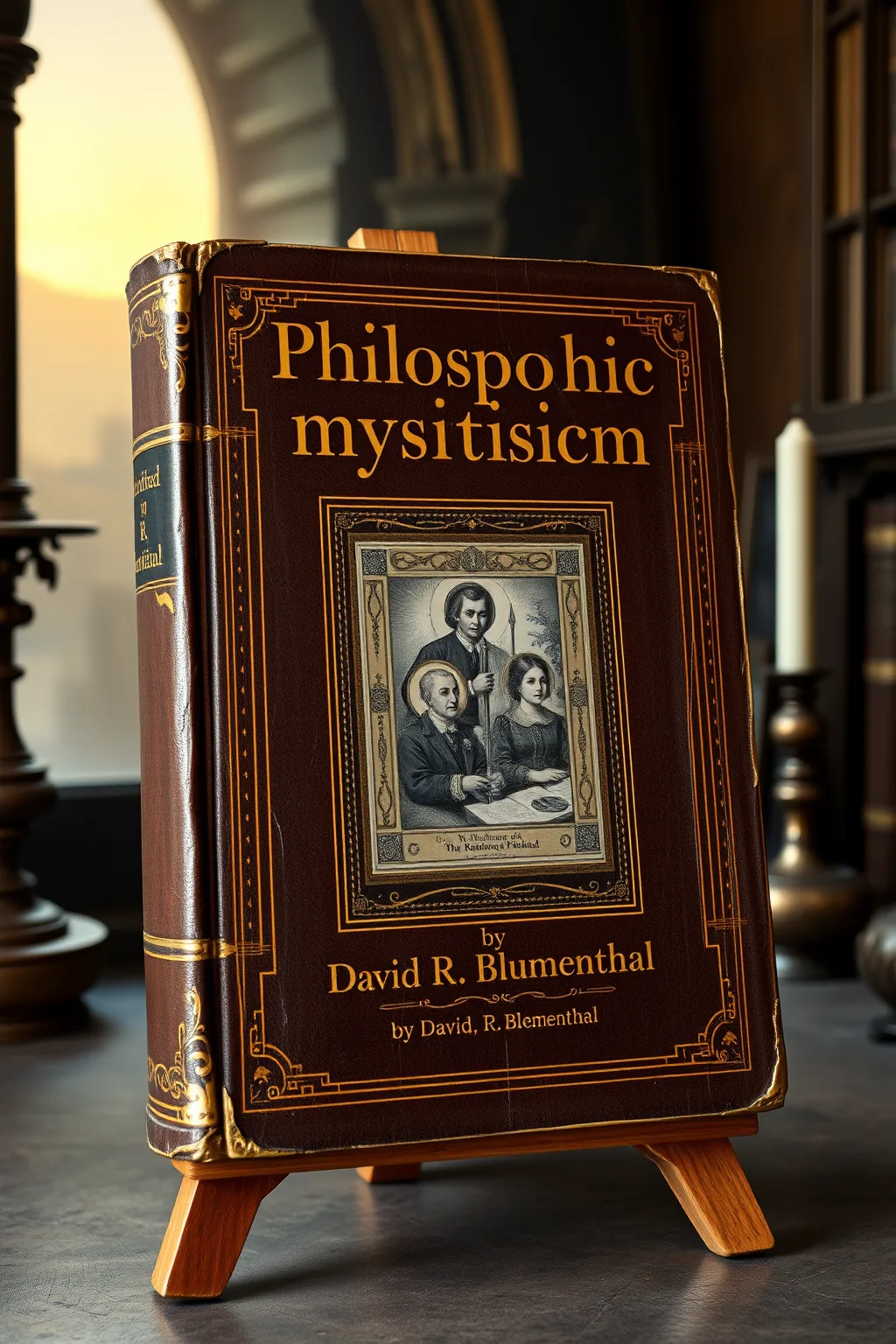
From the esteemed pen of David R. Blumenthal, 'Philosophic Mysticism' emerges as a beacon for those navigating the intricate landscape of Jewish mystical thought. This scholarly yet accessible work unravels the complex tapestry of Kabbalistic philosophy, presenting its esoteric insights with remarkable clarity. Blumenthal's profound understanding of medieval Jewish thought and mysticism is evident on every page, offering a compelling analysis that resonates with both academic rigor and spiritual depth. It is a vital resource for students of Kabbalah, Jewish philosophy, and anyone drawn to the profound quest for hidden knowledge and divine connection. An essential addition to the discerning esoteric library.
📝 Description
61
David R. Blumenthal's 'Philosophic Mysticism' analyzes the intersection of philosophy and Jewish mysticism.
In 'Philosophic Mysticism,' David R. Blumenthal examines how philosophical thought informs Jewish mystical traditions, particularly Kabbalah. The book deciphers complex symbolism and esoteric principles within Kabbalistic cosmology, tracing the intellectual lineage of those seeking hidden knowledge. Blumenthal's approach aims to bridge the gap between academic study and the direct experience of mystical union. He explores how abstract philosophical ideas connect with the desire for divine proximity, revealing the philosophical basis of a tradition that grapples with the ineffable.
The work is structured to guide both serious students and those new to these subjects. It illuminates the 'divine architecture' described in mystical texts, inviting readers to a more considered understanding. The text aims to clarify the ways in which philosophical inquiry can lead to or illuminate mystical experience. It seeks to show how concepts of God, creation, and human existence are addressed within both philosophical and mystical frameworks.
This book is situated within the study of Jewish mysticism, a tradition that emerged from various interpretations of Jewish scripture and practice. It particularly engages with Kabbalah, a body of esoteric teachings that developed from the 12th century onwards. Kabbalistic thought often uses complex symbolic systems, including the Tree of Life and divine emanations, to describe the nature of God and the structure of reality. Blumenthal's work places these mystical concepts within a broader philosophical context, considering how abstract reasoning and theological speculation intersect with the experiential aspects of seeking divine connection.
💡 Why Read This Book?
Embark on a profound journey into the heart of Jewish mystical philosophy. 'Philosophic Mysticism' offers a rare synthesis of intellectual exploration and spiritual insight, demystifying complex Kabbalistic concepts. It is ideal for scholars seeking a rigorous analysis, practitioners yearning for deeper understanding, and seekers of all kinds drawn to the wisdom of ancient contemplative traditions. Uncover the hidden connections between thought and the divine.
⭐ Reader Reviews
Honest opinions from readers who have explored this book.
❓ Frequently Asked Questions
What is the core focus of 'Philosophic Mysticism'?
The book meticulously examines the intricate relationship between philosophical reasoning and mystical experience within the Jewish tradition, particularly focusing on Kabbalistic thought and its symbolic language.
Is this book suitable for beginners?
While it offers profound insights, 'Philosophic Mysticism' is best suited for those with some foundational knowledge of philosophy or religious studies, though determined beginners will find it richly rewarding.
What does 'philosophic mysticism' entail?
It refers to the integration of philosophical inquiry and methods with the pursuit of direct spiritual experience and mystical knowledge, seeking to understand the divine through both intellect and intuition.
What are the primary Kabbalistic concepts discussed?
The book delves into concepts such as the Sephirot, Ein Sof, divine emanations, the nature of prophecy, and the soul's journey towards union with the divine.
How does this book contribute to understanding medieval Jewish thought?
It illuminates the sophisticated philosophical and mystical currents that shaped medieval Jewish intellectual life, demonstrating how abstract ideas fueled profound spiritual aspirations.
🔮 Key Themes & Symbolism
The Interplay of Intellect and Intuition
This theme explores how 'Philosophic Mysticism' bridges the perceived chasm between rigorous philosophical argumentation and the intuitive, often ecstatic, experiences characteristic of genuine mysticism. Blumenthal reveals how abstract concepts in Jewish philosophy serve not merely as intellectual exercises but as symbolic frameworks designed to guide the soul towards a direct apprehension of the divine. The book emphasizes that true understanding in this tradition arises from a harmonious interplay, where logical inquiry prepares the ground for mystical insight, and mystical experience, in turn, informs and enriches philosophical contemplation, creating a dynamic synthesis.
Decoding Kabbalistic Symbolism
A central pillar of this work is its deep dive into the rich and often enigmatic symbolic language of Kabbalah. David R. Blumenthal meticulously unpacks the meaning behind the Sephirot, the divine emanations that form the architecture of the cosmos, and other potent symbols like the Tree of Life and the divine names. The text functions as a key, unlocking the esoteric meanings embedded within these ancient representations, allowing readers to perceive the underlying metaphysical realities and the divine blueprint for existence. This exploration is crucial for understanding the practical and theoretical dimensions of Kabbalistic practice.
The Journey of the Soul to the Divine
The book powerfully articulates the Kabbalistic concept of the soul's ascent and its ultimate yearning for union with the divine source. Blumenthal traces the philosophical and mystical pathways that chart this spiritual journey, detailing the stages of purification, contemplation, and ecstatic devotion. It explores how philosophical understanding of God's nature and attributes prepares the individual for the profound, transformative experience of approaching the Infinite. This theme highlights the teleological drive within Jewish mysticism, where every intellectual pursuit and meditative practice is directed towards a reunion with the ultimate reality.
💬 Memorable Quotes
Direct passages from the work, attributed to the author.
“In the quiet chambers of the mind, the whispers of the Infinite can be heard.”
— This highlights the introspective nature of mysticism, suggesting that profound spiritual truths are revealed through inner contemplation and a quieting of external distractions.
“Symbolism is the bridge between the manifest and the unmanifest.”
— This emphasizes the crucial role of symbols in esoteric traditions, serving as essential tools to connect the tangible world with the hidden, spiritual realms.
“To know God is to know oneself reflected in the divine mirror.”
— This speaks to the concept of divine immanence and the interconnectedness of the human and the divine, suggesting self-knowledge is a path to understanding the divine.
“The map of the soul is etched in the language of the cosmos.”
— This implies that the inner field of human consciousness is mirrored in the external universe, and understanding one can lead to understanding the other.
💡 Key Ideas
Editorial paraphrase of the work's core concepts — not direct quotes.
The edifice of the divine is built not only with stone and mortar, but with the very substance of thought.
This quote suggests that the structure of reality and our understanding of the divine are as much constructs of consciousness and philosophical inquiry as they are objective manifestations.
🌙 Esoteric Significance
Tradition
This work is fundamentally significant within the esoteric tradition of Kabbalah, the mystical interpretative tradition of Judaism. It explores the hidden dimensions of Jewish religious thought, revealing the symbolic language, contemplative techniques, and metaphysical doctrines that aim for direct experience of the divine. Blumenthal bridges the gap between the exoteric (publicly accessible) and esoteric (secretive, inner) aspects of Judaism, clear the profound spiritual quest for union with God.
Symbolism
The text is rich with the exploration of Kabbalistic symbolism, such as the Tree of Life (Etz Chaim), the divine emanations (Sephirot), and the concept of Ein Sof (the Infinite). These symbols are not merely decorative but are understood as profound keys to unlocking the structure of reality, the nature of God, and the path of the soul's journey. Blumenthal elucidates how these archetypal images serve as conceptual maps for reading through the divine realms and understanding the interconnectedness of all existence.
Modern Relevance
In an age often characterized by fragmentation and a perceived disconnect from the spiritual, 'Philosophic Mysticism' offers a compelling argument for the enduring relevance of integrating intellectual inquiry with profound spiritual seeking. It provides tools for a more holistic understanding of existence, demonstrating how ancient wisdom can inform contemporary challenges. The book's exploration of consciousness, symbolism, and the human desire for meaning resonates deeply, offering pathways to inner transformation and a richer, more connected life for modern seekers and scholars alike.
👥 Who Should Read This Book
This profound work is a treasure for a diverse readership. **Scholars of Jewish Studies, Philosophy, and Religious History** will find Blumenthal's rigorous analysis and deep historical contextualization invaluable. **Students of Kabbalah and Jewish Mysticism** will gain outstanding clarity on complex doctrines and symbolism. **Spiritual Seekers** drawn to contemplative traditions and the pursuit of hidden knowledge will discover a profound guide to understanding the architecture of the divine and the soul's journey. **Practitioners** of meditation or esoteric disciplines may find philosophical underpinnings that deepen their practice. Even those new to these subjects but possessing intellectual curiosity will be richly rewarded by its clear prose.
📜 Historical Context
David R. Blumenthal's 'Philosophic Mysticism' is deeply rooted in the vibrant intellectual milieu of medieval Judaism, a period marked by profound engagement with Greek philosophy, particularly Aristotelianism, and the simultaneous flourishing of mystical traditions like Kabbalah. This era saw Jewish thinkers grappling with how to reconcile rational philosophical frameworks with the ancient, often esoteric, scriptural interpretations and mystical experiences. Thinkers like Maimonides sought to harmonize faith and reason, while Kabbalistic circles developed intricate cosmologies and contemplative practices. Blumenthal's work situates itself within this dynamic tension, exploring how philosophical discourse provided the intellectual architecture for mystical aspirations, and how mystical insights, in turn, informed and sometimes challenged philosophical assumptions. The book thus offers a window into a central era of Jewish intellectual history, demonstrating the enduring quest to understand the divine through both rigorous thought and spiritual yearning.
📔 Journal Prompts
Reflect on a personal experience where intellectual understanding enhanced your spiritual insight. How did this differ from purely intuitive spiritual moments?
Consider the Kabbalistic concept of the Sephirot. Which divine attribute resonates most with your current life journey and why?
How do the symbols discussed in the book (e.g., Tree of Life) manifest in your own life or the world around you?
Explore the tension between the desire for rational explanation and the acceptance of mystical experience in your own spiritual path.
Imagine writing a letter to a medieval Kabbalist. What questions would you ask about their understanding of the 'philosophic mysticism'?
🗂️ Glossary
Kabbalah
A complex system of Jewish mysticism that seeks to understand the nature of God, the universe, and the human soul through esoteric interpretations of scripture and contemplative practices.
Sephirot
Ten divine emanations or attributes through which God reveals Himself and interacts with the created universe, forming the structure of the Kabbalistic Tree of Life.
Ein Sof
The Kabbalistic term for the Infinite, Unknowable, and absolute Godhead, existing beyond all comprehension and description, from which all existence emanates.
Gnosis
A Greek term often translated as 'knowledge,' referring in esoteric traditions to a direct, intuitive, and salvific understanding of spiritual truths, often beyond rational comprehension.
Shekhinah
The feminine aspect of the divine presence, often understood as God's immanence in the world, dwelling among the people of Israel, and associated with divine wisdom and compassion.
This book appears in 1 collection
🔮 Readers Also Liked
Browse all →







More by David R. Blumenthal
All books →



From the “Kabbalah” Collection
View all →







More Free Kabbalah & Jewish Mysticism Books
View all →