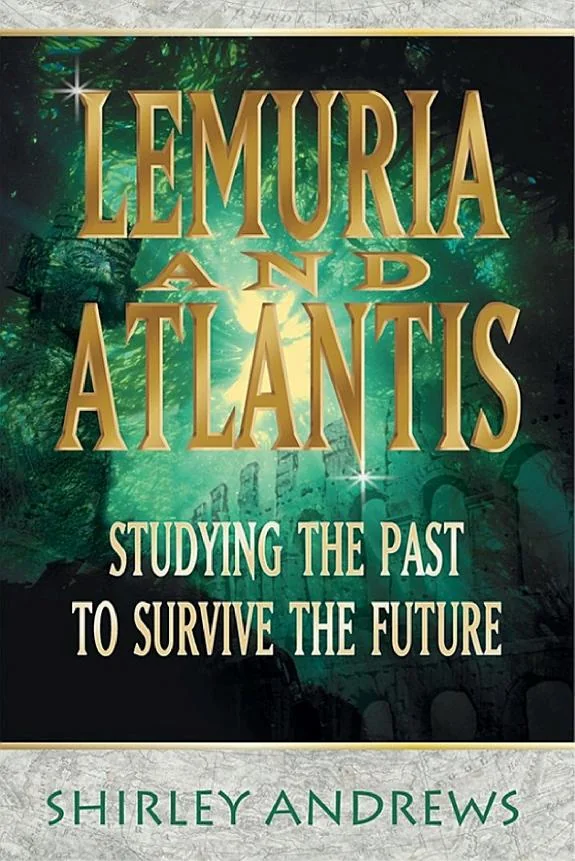
Lemuria and Atlantis
 82
82

Lemuria and Atlantis
Shirley Andrews’ "Lemuria and Atlantis" attempts a formidable synthesis, bringing together esoteric lore and scholarly material regarding two of history’s most enduring lost civilizations. The book’s strength lies in its methodical approach, wherein Andrews cites a range of sources, from geological hypotheses to channeled information, to build a case for the interconnectedness of these continents. She offers a compelling examination of Lemuria as a precursor civilization to Atlantis, suggesting a spiritual lineage that is both fascinating and intellectually stimulating. However, the sheer breadth of material sometimes leads to a lack of depth in specific areas. While Andrews mentions the work of figures like Helena Blavatsky, the engagement with the foundational Theosophical concepts could have been more robust. The limitation here is the inherent difficulty in verifying the more speculative claims, leaving the reader reliant on faith in the author's interpretation of diverse and often contradictory sources. The passage discussing the potential geographical overlap and subsequent divergence of Lemurian and Atlantean cultures, particularly as evidenced by certain geological formations Andrews references, is a notable high point. Ultimately, "Lemuria and Atlantis" offers a valuable, albeit speculative, comparative study for those dedicated to exploring the deeper currents of ancient history.
📝 Description
82
Shirley Andrews published "Lemuria and Atlantis" in 2004, comparing two legendary lost continents.
Shirley Andrews' "Lemuria and Atlantis" examines two legendary lost continents, drawing on research, scientific data, and psychic accounts. Published in 2004, the book aims to clarify details about Lemuria and its connection to Atlantis. Andrews combines various sources to connect ancient mysteries with current investigations.
This book is for readers interested in esoteric history, ancient civilizations, and comparative mythology. It is especially relevant for those who have read about Atlantis and want to learn more about Lemuria. Students of occultism, archaeology, and alternative history will find the synthesis of information useful for understanding these lands beyond simple folklore.
Andrews' work views Lemuria and Atlantis not as separate legends but as connected periods in human evolution. The book places these continents within esoteric traditions that describe global development cycles and disasters. By considering geological theories with spiritual accounts, it seeks a complete view of their possible existence and disappearance, suggesting they represent different consciousness stages.
This book fits within Theosophy and Anthroposophy, traditions that often discuss lost continents and ancient civilizations as part of human spiritual and physical development. These systems frequently posit cycles of world ages, each with distinct human races and levels of consciousness. Andrews' comparison of Lemuria and Atlantis aligns with the idea that these were significant, formative periods in Earth's history, preceding our current epoch and holding lessons about societal progress and decline.
💡 Why Read This Book?
• Gain a comparative understanding of Lemuria and Atlantis, learning how Shirley Andrews connects Lemurian spiritual foundations to Atlantean technological advancements, as detailed in her exploration of their societal evolution. • Understand the esoteric lineage connecting these lost lands, discovering how their purported legacies influenced later occult traditions and spiritual movements, a key theme explored within the book's context. • Explore the potential geographical and historical interrelation of these continents, examining the geological and psychic evidence Andrews presents to suggest their shared past and cataclysmic ends.
⭐ Reader Reviews
Honest opinions from readers who have explored this book.
❓ Frequently Asked Questions
What is the primary difference between Lemuria and Atlantis according to Shirley Andrews?
Shirley Andrews posits that Lemuria represents an earlier, spiritually focused civilization, emphasizing inner development. Atlantis, in contrast, is presented as a later civilization that achieved significant technological advancement but suffered from a decline in spiritual awareness, leading to its downfall.
What sources does Shirley Andrews use in 'Lemuria and Atlantis'?
Andrews integrates a variety of sources, including geological theories, historical accounts, and data from psychics and scholars. She aims to create a comprehensive picture by cross-referencing traditional research with esoteric insights published in 2004.
Does the book suggest a specific location for Lemuria or Atlantis?
The book explores various theories regarding the geographical placement of both continents. It discusses potential locations based on geological evidence and ancient texts, acknowledging the speculative nature of such claims in its comparative analysis.
How does 'Lemuria and Atlantis' relate to Shirley Andrews' other works?
As a follow-up to "Atlantis: Insights From a Lost Civilization," this book expands upon the themes of lost continents. It specifically focuses on Lemuria, detailing its relationship with Atlantis and offering a broader perspective on ancient global civilizations.
Is 'Lemuria and Atlantis' based on scientific evidence or spiritual interpretation?
The work attempts to bridge both. Andrews incorporates scientific and historical research but also relies heavily on psychic accounts and esoteric interpretations to reconstruct the history and nature of these lost lands.
What is the publication year of Shirley Andrews' 'Lemuria and Atlantis'?
Shirley Andrews' "Lemuria and Atlantis" was first published in 2004, reflecting a period of renewed interest in ancient mysteries and esoteric histories.
🔮 Key Themes & Symbolism
Interconnected Lost Civilizations
The central theme is the symbiotic and sequential relationship between Lemuria and Atlantis. Andrews posits that Lemuria, an ancient cradle of humanity, laid the spiritual groundwork upon which the more technologically advanced, yet spiritually compromised, civilization of Atlantis later arose. The work explores how their distinct evolutionary paths, geographical influences, and eventual cataclysms are intricately linked, suggesting that understanding one requires understanding the other. This comparative approach challenges readers to view these continents not as isolated myths but as integral parts of a grander, cyclical history of Earth and humanity.
Spiritual vs. Technological Evolution
Andrews differentiates the core essences of Lemuria and Atlantis by examining their dominant evolutionary trajectories. Lemuria is characterized by a focus on spiritual development, psychic abilities, and communal harmony, representing an era of higher consciousness. Atlantis, while possessing advanced knowledge and technology, is depicted as having gradually lost its spiritual connection, leading to societal imbalance and its eventual destruction. This dichotomy serves as a cautionary narrative, exploring the potential pitfalls of prioritizing material progress over inner wisdom and spiritual integrity.
Psychic and Esoteric Data Synthesis
A significant aspect of the book involves Andrews' methodology: integrating data from respected psychics, channeled information, and esoteric traditions with conventional research. She uses this multi-faceted approach to reconstruct the lost histories, cultures, and philosophies of Lemuria and Atlantis. The work highlights how these non-traditional sources can offer unique perspectives on ancient civilizations, providing details about their daily lives, spiritual practices, and the reasons for their disappearance that are unavailable through purely academic means.
Legacy and Influence on Modernity
The book explores the enduring impact of Lemuria and Atlantis on contemporary society and esoteric thought. Andrews suggests that remnants of their knowledge, spiritual teachings, and even genetic legacies persist, influencing modern spiritual movements, occult practices, and collective unconscious archetypes. By examining supposed psychic impressions and esoteric lore, she argues that these lost civilizations continue to shape humanity's spiritual journey and understanding of its past, offering keys to present-day challenges and future evolution.
💬 Memorable Quotes
Direct passages from the work, attributed to the author.
“Lemuria represented an earlier, more spiritually attuned phase of human development, preceding the technologically advanced but spiritually declining Atlantis.”
— This interpretation highlights Andrews' core thesis: that these lost continents were not merely contemporaneous but represented distinct stages in human evolution, with Lemuria serving as a spiritual foundation for the later Atlantean civilization.
“Geological anomalies and ancient myths offer corroborating evidence for the existence of these lost lands.”
— This points to Andrews' methodology, indicating that she seeks validation for esoteric claims not only through psychic channels but also by interpreting physical evidence and historical legends through an esoteric lens.
“The psychic legacies of Lemuria and Atlantis continue to influence humanity's collective consciousness.”
— This interpretation emphasizes the enduring, albeit subtle, impact of these civilizations. It suggests that their spiritual and cultural energies are not lost but remain embedded within the human psyche, affecting modern thought and spiritual seeking.
💡 Key Ideas
Editorial paraphrase of the work's core concepts — not direct quotes.
The cataclysm that befell Atlantis was a consequence of its citizens' detachment from their spiritual heritage.
This paraphrase suggests a moral or karmic element to the fall of Atlantis, implying that its advanced technology and societal structures were ultimately unsustainable without a strong spiritual core, a common theme in esoteric narratives.
Understanding the relationship between Lemuria and Atlantis is key to comprehending cycles of global spiritual evolution.
This paraphrase frames the study of these continents within a larger cosmological or cyclical view of history, suggesting that their rise and fall are not isolated events but part of a recurring pattern in Earth's spiritual and physical development.
🌙 Esoteric Significance
Tradition
This work sits firmly within the Theosophical and New Age traditions, which posit cyclical views of human and planetary evolution involving lost continents and advanced ancient races. Andrews draws heavily on concepts popularized by Helena Blavatsky concerning Lemuria and Atlantis as major stages in humanity's development. The book departs from strict Theosophy by integrating more contemporary psychic research and a wider array of scholarly speculation, aiming for a more comprehensive, albeit eclectic, synthesis of esoteric lore surrounding these legendary lands.
Symbolism
Key symbols explored include the Sun, often representing divine wisdom and the spiritual source from which both Lemuria and Atlantis allegedly derived their knowledge. The Crystal, frequently associated with Atlantean technology and power, symbolizes both advanced capabilities and the potential for misuse when divorced from spiritual ethics. The Serpent, a recurring motif in ancient lore, may represent primal energies, cosmic cycles, or hidden wisdom that both civilizations either embodied or lost control of during their respective histories.
Modern Relevance
Andrews' work continues to inform contemporary esoteric thinkers and practitioners interested in ancient mysteries and human origins. It is referenced in discussions on Akashic records, consciousness evolution, and comparative mythology within New Age and occult circles. Modern authors exploring themes of pre-diluvian civilizations, ancient technology, and spiritual awakenings often cite or build upon the framework established by researchers like Shirley Andrews, keeping the dialogue about Lemuria and Atlantis alive in the pursuit of hidden histories.
👥 Who Should Read This Book
• Students of comparative mythology and esoteric history seeking to understand the lore surrounding Lemuria and Atlantis beyond popular fiction. • Practitioners of spiritual disciplines interested in ancient origins and the supposed spiritual legacies of lost civilizations. • Researchers of alternative history and ancient astronaut theories who appreciate a synthesis of psychic insights and historical speculation.
📜 Historical Context
Published in 2004, Shirley Andrews' "Lemuria and Atlantis" emerged during a period of continued popular and academic interest in esoteric subjects and lost civilizations, building on a legacy established by figures like Helena Blavatsky and Ignatius Donnelly. The early 2000s saw a surge in New Age literature and speculative history, where Andrews' work found its niche. While mainstream archaeology largely dismissed theories of advanced prehistoric civilizations like Atlantis and Lemuria, alternative history circles actively explored them. Andrews' approach, synthesizing channeled material with scholarly research, placed her work alongside contemporary authors who similarly blended mysticism with historical inquiry. The book's reception within esoteric communities was generally positive, appreciating its attempt to connect disparate accounts, though it was naturally critiqued by those adhering to strictly empirical methodologies. The work engaged with the broader Theosophical tradition's concept of Root Races, of which Lemuria and Atlantis form significant parts.
📔 Journal Prompts
The spiritual foundations of Lemuria versus the technological advancements of Atlantis.
The concept of cyclical history and its application to lost civilizations.
Interpreting geological evidence through an esoteric lens.
The role of psychic data in reconstructing ancient history.
Personal reflections on the potential legacies of Lemuria and Atlantis in modern consciousness.
🗂️ Glossary
Lemuria
A legendary lost continent, often depicted in esoteric traditions as an ancient civilization predating Atlantis, characterized by spiritual development and psychic abilities.
Atlantis
A mythical island continent, famously described by Plato, often portrayed in esoteric literature as a technologically advanced civilization that ultimately succumbed to hubris and cataclysm.
Theosophy
A spiritual philosophy founded by Helena Blavatsky, which posits a cyclical view of human evolution involving different 'Root Races' and continents, including Lemuria and Atlantis.
Channeled information
Communications purportedly received from non-physical entities or higher consciousness, often used in esoteric studies to gain insights into ancient history or spiritual truths.
Cataclysm
In the context of Lemuria and Atlantis, a catastrophic event, such as earthquakes or floods, believed to have caused their disappearance from the Earth's surface.
Root Races
A Theosophical concept describing successive stages of human evolution, with Lemuria and Atlantis representing distinct Root Races or sub-races.
Esoteric
Relating to or accessible only by a relatively small number of people with a specialized knowledge or interest; inner, hidden.
This book appears in 2 collections
🔮 Readers Also Liked
Browse all →








From the “Atlantis” Collection
View all →









More Free Esoteric History & Biography Books
View all →