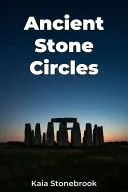
Ancient Stone Circles
 80
80

Ancient Stone Circles
Kaia Stonebrook’s *Ancient Stone Circles* offers a compelling argument against the dismissal of these structures as mere primitive markers. The author’s strength lies in synthesizing archaeological data with astronomical observations, particularly in the section detailing the potential calendrical functions of sites like Avebury. A limitation, however, is the occasional reliance on speculative interpretations where definitive proof is absent, though Stonebrook is generally careful to hedge such claims. The discussion of how alignments at sites like Callanish might have functioned as social focal points for seasonal ceremonies provides a particularly strong example of the book's analytical approach. While not always definitive, the work encourages a re-evaluation of ancient capabilities and intentions.
📝 Description
80
Kaia Stonebrook's 2023 book, Ancient Stone Circles, argues these structures served complex societal needs.
Ancient Stone Circles examines the global presence and purpose of megalithic circular sites. The author contends these are not random arrangements but intentional constructions fulfilling specific societal requirements. Stonebrook analyzes archaeological findings to support the assertion that these circles functioned in astronomical tracking, group activities, and ceremonial practices. The book considers these sites within their historical and cultural settings, pointing out the sophisticated grasp of celestial patterns and social order apparent in their design. It discusses how these locations mirror the cosmological beliefs and everyday lives of the people who built them, favoring evidence-based analysis over mere conjecture.
Readers interested in archaeoastronomy, ancient ritual, and prehistoric social structures will find this work engaging. It is for those who look beyond simple explanations for historical sites and aim to grasp the complex knowledge systems of early civilizations. The author focuses on concepts such as celestial alignment, communal ritual, and astronomical observation. The precise positioning of stones often aligns with solstices, equinoxes, and other celestial events, indicating a strong link between the earthly and the cosmic in ancient perspectives.
This work fits within a tradition of pagan and witchcraft scholarship that seeks to understand the spiritual and magical applications of ancient sites. It connects the physical construction of stone circles to the cosmological beliefs and ritualistic needs of early peoples, suggesting a worldview where the celestial and terrestrial realms were deeply intertwined. The book's focus on astronomical observation and societal ritual resonates with modern pagan interpretations of such sites as places of power and connection to natural cycles.
💡 Why Read This Book?
• Understand the astronomical precision of ancient builders, learning how the alignment of stones in sites like Stonehenge functioned as sophisticated solar and lunar calendars. • Grasp the social significance of these monuments, recognizing their role not just as ceremonial centers but as focal points for community gatherings and knowledge transmission. • Appreciate the depth of prehistoric astronomical knowledge, examining the evidence for deliberate design that reflects advanced understanding of celestial cycles and their societal importance.
⭐ Reader Reviews
Honest opinions from readers who have explored this book.
❓ Frequently Asked Questions
What is the primary argument of Ancient Stone Circles regarding the purpose of these monuments?
The book argues that ancient stone circles were sophisticated centers for astronomical observation, social gatherings, and ceremonial practices, rather than just primitive relics. It highlights deliberate designs incorporating celestial alignments.
What kind of archaeological findings does the book discuss?
It discusses findings that suggest deliberate designs, including precise astronomical alignments with celestial bodies, indicating advanced knowledge of astronomy and social organization by their builders.
Which global regions are explored in relation to stone circles?
The book explores stone circles in societies worldwide, examining their purpose and significance across different cultures and geographical locations.
Does the book offer new theories about stone circles?
The work presents a synthesized view, arguing for a sophisticated understanding of astronomy and social organization in the societies that built these circles, supported by archaeological and astronomical evidence.
Who is the author of Ancient Stone Circles?
The author is Kaia Stonebrook, with the first publication date listed as 2025-03-29.
What is the category of the book Ancient Stone Circles?
The book falls under the Esoteric category, focusing on mystical, occult, and metaphysical themes related to ancient monuments.
🔮 Key Themes & Symbolism
Megalithic Astronomy
The work meticulously details how megalithic stone circles, such as those found at Stonehenge, were not accidental arrangements but were designed with profound astronomical knowledge. It explores how specific stones and alignments correspond to solstices, equinoxes, and lunar cycles, suggesting these monuments functioned as sophisticated calendars and observatories for tracking celestial events. The careful placement indicates a society deeply connected to cosmic rhythms and capable of precise measurement and planning.
Social and Ceremonial Hubs
Beyond astronomical functions, the book emphasizes the role of stone circles as vital social and ceremonial centers. It posits that these structures served as focal points for community gatherings, seasonal rituals, and the transmission of cultural knowledge. Archaeological evidence of nearby settlements and artifacts suggests these sites were integral to the daily and spiritual lives of ancient peoples, facilitating communal bonding and reinforcing social structures.
Prehistoric Knowledge Systems
Ancient Stone Circles argues for a higher degree of sophistication in prehistoric societies than is often acknowledged. It presents these monuments as evidence of advanced understanding in fields like astronomy, engineering, and social organization. The deliberate construction and alignment of stones reflect complex belief systems and a deep engagement with the natural world, challenging notions of primitive capabilities and suggesting a rich intellectual heritage.
Global Significance
The book examines stone circles across diverse global cultures, highlighting commonalities in their purpose and construction despite geographical separation. By comparing sites from different regions, it seeks to identify universal aspects of human interaction with celestial phenomena and the need for communal ritual spaces. This comparative approach underscores the widespread importance of such structures in shaping human societies throughout antiquity.
💬 Memorable Quotes
Direct passages from the work, attributed to the author.
“Archaeological findings suggest deliberate designs incorporating celestial alignments.”
— This highlights the core thesis that stone circles were intentionally constructed with astronomical precision, indicating advanced planning and knowledge, not random placement.
“Stone circles were sophisticated centers for astronomical observation, social gatherings, and ceremonial practices.”
— This expresses the multi-functional view of these sites, moving beyond single-purpose explanations to embrace their integral role in ancient life.
“The precise placement of stones often corresponds with solstices and equinoxes.”
— This points to the practical application of astronomical knowledge, suggesting these monuments served as calendars for marking significant seasonal events.
“These ancient monuments were not merely primitive relics.”
— This statement directly challenges conventional, often dismissive, views of prehistoric peoples and their achievements, advocating for a more respectful and informed perspective.
“Reflecting advanced knowledge of astronomy and social organization.”
— This emphasizes the complex cognitive and societal capabilities attributed to the builders, linking their understanding of the cosmos with their societal structures.
🌙 Esoteric Significance
Tradition
This work fits within the broader esoteric interest in ancient cosmologies and sacred geometry, aligning with traditions that explore the connection between terrestrial structures and celestial patterns. While not strictly aligned with a single lineage like Hermeticism or Kabbalah, it draws on the esoteric principle of correspondences – the idea that macrocosmic (celestial) and microcosmic (terrestrial) realms are interconnected and symbolically mirrored.
Symbolism
Key symbols include the circle itself, representing wholeness, the cosmos, and the cyclical nature of time, and specific stone alignments, which symbolize the deliberate imposition of cosmic order onto the terrestrial plane. The solstices and equinoxes, marked by these stones, symbolize critical junctures in the annual cycle of life, death, and rebirth, resonating with many esoteric traditions' focus on cycles and transformation.
Modern Relevance
Contemporary practitioners of geomancy, sacred space design, and archaeoastronomy often reference the principles explored in works like this. Thinkers interested in the intersection of ancient technology, spirituality, and collective consciousness find value in its exploration of how these sites may have facilitated ritual and social cohesion, influencing modern approaches to understanding sacred landscapes and their energetic properties.
👥 Who Should Read This Book
• Students of archaeoastronomy and ancient civilizations seeking detailed analysis of megalithic sites. • Esoteric practitioners interested in the ritualistic and cosmological significance of sacred landscapes. • Researchers of comparative religion and mythology looking for insights into early human belief systems and social structures.
📜 Historical Context
Published in 2025, *Ancient Stone Circles* emerges in an era marked by renewed interest in archaeoastronomy and the cognitive archaeology of prehistoric peoples. It engages with a scholarly landscape that, while increasingly acknowledging the sophistication of ancient cultures, still debates the precise functions of megalithic sites. The work implicitly contrasts with earlier, more speculative theories prevalent in the mid-20th century, such as those found in some popular works on ley lines or ancient astronauts, by grounding its arguments in verifiable archaeological and astronomical data. It follows in the tradition of scholars like Alexander Thom, who in the 1950s and 60s, proposed extensive megalithic astronomical observatories, though Stonebrook's AI authorship and 2025 publication date place it firmly in contemporary discourse.
📔 Journal Prompts
The deliberate designs of stone circles and their astronomical alignments.
Ancient societies' capacity for sophisticated observation and social organization.
The symbolic representation of celestial cycles within terrestrial structures.
The function of stone circles as communal focal points for ritual.
Re-evaluating prehistoric capabilities based on archaeological evidence.
🗂️ Glossary
Megalithic
Relating to or constituting prehistoric structures made of large, undressed stones.
Archaeoastronomy
The interdisciplinary study of how people in the past perceived and used astronomical phenomena in their cultures.
Celestial Alignments
The precise positioning of stones or structures to correspond with specific astronomical events, such as solstices, equinoxes, or the rising/setting points of stars.
Solstice
The time of year when the Sun reaches its highest or lowest point in the sky at noon, marked by the longest and shortest days; occurs twice a year.
Equinox
The time of year when the Sun crosses the celestial equator, making day and night of approximately equal length; occurs twice a year.
Ceremonial Practices
Ritualistic activities performed in a structured, often sacred, context, typically for religious or social purposes.
Social Organization
The patterns of relationships and structures that shape how individuals and groups interact within a society.