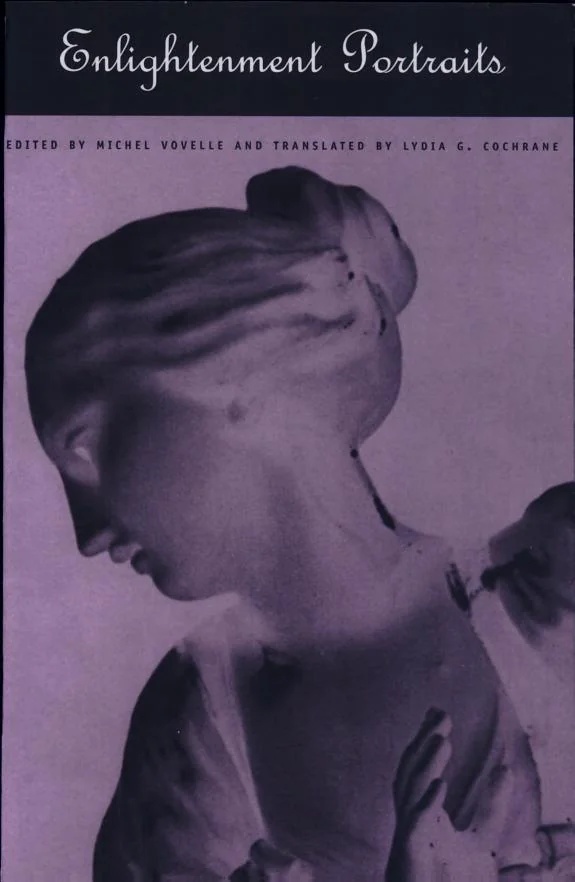
Enlightenment Portraits
 73
73

Enlightenment Portraits
Michel Vovelle's "Enlightenment Portraits" succeeds in its ambitious goal of dissecting the history of historical interpretations of the Enlightenment. The strength of the work lies in its methodical deconstruction of how later scholars have constructed their subjects. Vovelle masterfully illustrates how the "Enlightenment" we think we know is, in part, a creation of 19th and 20th-century academic and cultural currents. A notable limitation, however, is that the book assumes a high degree of familiarity with the historiography it critiques; readers new to the field might find certain discussions dense. The analysis of how 19th-century historians, influenced by Romanticism, often viewed Enlightenment figures through a lens of nascent rebellion against tradition, offers a particularly sharp insight. Vovelle provides a vital corrective to uncritical acceptance of historical narratives. The book serves as a potent reminder that understanding the past requires understanding how it has been told and retold.
📝 Description
73
Michel Vovelle's 1997 book examines how later eras constructed the Enlightenment.
Michel Vovelle's "Enlightenment Portraits" questions how historical writing has shaped our view of the Enlightenment. Instead of recounting events, Vovelle looks at the methods and biases scholars used when interpreting the 18th century throughout the 19th and 20th centuries. He shows how our understanding of Enlightenment figures and ideas is often a product of later intellectual currents.
This work is for serious students of history and how history is written. It will interest those who want to grasp the foundations of historical interpretation, not just the historical events themselves. Readers interested in the philosophy of history and how knowledge is socially constructed will find Vovelle's method of rebuilding historical narratives especially valuable. The book engages with late 20th century thought, which recognized the subjective nature of historical accounts and questioned established narratives.
While not overtly mystical, "Enlightenment Portraits" engages with a tradition of esoteric thought that questions received truths and established historical accounts. It aligns with intellectual currents that scrutinize the origins and evolution of ideas, a practice common in esoteric studies that often looks beyond surface appearances to uncover underlying structures and influences. Vovelle's focus on how later periods interpreted the Enlightenment reflects an esoteric interest in deciphering the lineage and transformation of concepts.
💡 Why Read This Book?
• Gain a critical perspective on historical narratives by understanding how scholarly interpretations of the Enlightenment have evolved since the 19th century, specifically examining how figures like Rousseau have been viewed differently across academic eras. • Learn to analyze the construction of historical memory, recognizing that our perception of the 18th century is influenced by the intellectual preoccupations of later periods, as Vovelle demonstrates when discussing the reception of Enlightenment ideas in the 20th century. • Develop a nuanced appreciation for historiography by engaging with Vovelle's critique of how scholars in the 19th and 20th centuries have shaped our understanding of Enlightenment figures and their ideas, moving beyond superficial biographical accounts.
⭐ Reader Reviews
Honest opinions from readers who have explored this book.
❓ Frequently Asked Questions
What is the primary focus of Michel Vovelle's "Enlightenment Portraits"?
The book's core concern is not the Enlightenment itself, but rather how subsequent generations of scholars, particularly in the 19th and 20th centuries, have interpreted and constructed their understanding of 18th-century figures and movements.
When was "Enlightenment Portraits" originally published?
The original publication date for Michel Vovelle's "Enlightenment Portraits" was August 18, 1997.
Who is Michel Vovelle, and what is his academic background?
Michel Vovelle was a prominent French historian known for his work on the French Revolution and the Enlightenment, often associated with the Annales School's approach to social and cultural history.
How does the book discuss the concept of 'reason' during the Enlightenment?
Vovelle explores how the notion of 'reason' as understood by Enlightenment thinkers has been reinterpreted by later historians, sometimes emphasizing its perceived limitations or its historical context rather than its universal application.
Is "Enlightenment Portraits" suitable for readers new to the Enlightenment?
While informative, the book's strength lies in its historiographical analysis. Beginners might benefit from reading introductory works on the Enlightenment first to better grasp the historical context Vovelle's critique engages with.
What is historiography, and how does Vovelle apply it?
Historiography is the study of historical writing. Vovelle applies it by examining the methods, biases, and evolution of how historians themselves have written about the Enlightenment across different eras.
🔮 Key Themes & Symbolism
Historiographical Lenses
The central theme is how successive eras of historians have projected their own concerns onto the Enlightenment. Vovelle examines how 19th-century scholars, often influenced by Romanticism or nascent nationalism, perceived Enlightenment figures differently than 20th-century historians focused on social structures or intellectual movements. This involves analyzing the selective focus and reinterpretation of ideas like secularism and progress, demonstrating that our "Enlightenment" is an evolving construct rather than a fixed historical entity.
The Construction of Intellectual Biographies
Vovelle scrutinizes the creation of "portraits" of Enlightenment figures, arguing these are often shaped by the biographer's historical moment. The work questions how figures like Diderot or Rousseau have been presented – were they proto-revolutionaries, Enlightenment rationalists, or figures whose ideas were later distorted? The book emphasizes that these "portraits" reveal as much about the historian's era as they do about the subject, highlighting the subjective nature of historical representation.
Evolution of Enlightenment Concepts
Key Enlightenment concepts such as reason, liberty, and scientific inquiry are examined not in their 18th-century context alone, but through the prism of their subsequent reception and redefinition. Vovelle shows how these ideas were embraced, rejected, or transformed by later intellectual currents, impacting how their historical significance is understood today. The work illustrates how the very definition and legacy of the Enlightenment have been subjects of ongoing historical debate and revision.
💬 Memorable Quotes
Direct passages from the work, attributed to the author.
“Scholars of the nineteenth and twentieth centuries have constructed our views on eighteenth-century people.”
— This core assertion frames the book's project: it's less about the Enlightenment itself and more about the meta-history of how it has been studied and understood by historians in later periods.
“The interpretation of Enlightenment figures is a reflection of the interpreter's own historical and cultural context.”
— This highlights Vovelle's central argument that historical understanding is not objective but is shaped by the historian's time, biases, and intellectual traditions, including those of the 19th and 20th centuries.
“The "Enlightenment" as we perceive it today is a product of its interpreters.”
— This captures the idea that the historical narrative of the Enlightenment is not a singular truth but a composite, built from the works and perspectives of numerous scholars across different eras.
“Methodologies of the 19th and 20th centuries created specific images of the 18th century.”
— This emphasizes Vovelle's focus on the *how* of historical study – the specific analytical tools and approaches used by historians that, in turn, determined the resulting historical portrayals.
💡 Key Ideas
Editorial paraphrase of the work's core concepts — not direct quotes.
Our understanding of Enlightenment reason has been shaped by post-Enlightenment critiques and reinterpretations.
This paraphrase points to how concepts like 'reason' are not static but have been analyzed, debated, and often reframed by subsequent generations of thinkers and historians.
🌙 Esoteric Significance
Tradition
While not overtly esoteric, Vovelle's work intersects with esoteric studies by examining the historical construction of foundational Western intellectual traditions. By deconstructing how the Enlightenment's emphasis on reason, secularism, and progress has been interpreted, it indirectly informs how esoteric traditions, often positioned outside or in tension with dominant rationalist frameworks, have also been historically represented and marginalized by mainstream scholarship.
Symbolism
The "portraits" themselves function symbolically, representing not just individuals but the prevailing intellectual spirit of their time and how that spirit is perceived by later eras. Concepts like "reason" and "progress," central to the Enlightenment, become symbolic battlegrounds where different historical interpretations clash, revealing underlying assumptions about humanity's trajectory and the nature of knowledge itself.
Modern Relevance
Contemporary esoteric scholars and practitioners can utilize Vovelle's framework to understand how their own traditions have been historically categorized, misinterpreted, or selectively adopted by mainstream academia. The book's critique of historiography provides tools for re-examining the historical narratives surrounding various esoteric lineages, encouraging a more critical and self-aware approach to their study and presentation.
👥 Who Should Read This Book
• Students of historiography seeking to understand how historical narratives are constructed and evolve over time, particularly concerning major intellectual periods like the Enlightenment. • Scholars of the Enlightenment who wish to move beyond standard interpretations and engage with the critical analysis of how their subject has been historically studied. • Readers interested in the philosophy of history and the sociology of knowledge, exploring how academic disciplines shape our perception of the past and its key figures.
📜 Historical Context
Published in 1997, "Enlightenment Portraits" emerged during a period of intense reflection on historical methodology and the nature of historical knowledge. The late 20th century saw significant critiques of grand narratives and a greater emphasis on the subjective construction of history, influenced by post-structuralism and the ongoing debates within the Annales School, of which Vovelle was a part. The book implicitly engages with historians like Peter Gay, whose works in the mid-20th century presented a more unified vision of the Enlightenment, and contrasts with later scholarship that emphasized internal contradictions or the limitations of Enlightenment ideals. Vovelle's work stands as a critical examination of how the Enlightenment has been continuously re-evaluated, often serving as a foil or a foundational myth for subsequent intellectual movements, rather than being understood purely on its own terms.
📔 Journal Prompts
The construction of Enlightenment figures by 19th-century scholars.
How has the concept of 'reason' been reinterpreted across different historical periods?
Analyze the influence of post-Enlightenment critiques on modern perceptions of Enlightenment ideals.
The role of historical methodology in shaping the "portraits" of Enlightenment thinkers.
Reflect on how the reception of Enlightenment ideas by 20th-century historians impacts contemporary scholarship.
🗂️ Glossary
Historiography
The study of the history of historical writing. It involves analyzing the methods, theories, and biases employed by historians in their interpretation and presentation of past events.
Annales School
A French school of historiography founded in the 1920s, emphasizing long-term social and economic history over political events, and integrating methods from other social sciences.
Post-structuralism
A late 20th-century philosophical movement that critiques structuralism, emphasizing instability of meaning, subjectivity, and the deconstruction of established categories and narratives.
Enlightenment
An 18th-century intellectual and cultural movement emphasizing reason, individualism, skepticism, and science, often associated with ideas of progress and secularism.
Romanticism
An artistic, literary, and intellectual movement originating in Europe toward the end of the 18th century, characterized by its emphasis on emotion and individualism, and glorification of the past and nature.
Positivism
A philosophical theory stating that certain ("positive") knowledge is based on natural phenomena and empirical observation. In history, it often implies seeking objective, verifiable facts.
Secularization
The process by which religious institutions, beliefs, and practices lose their social and cultural significance in society, often associated with the rise of Enlightenment rationalism.
This book appears in 1 collection
🔮 Readers Also Liked
Browse all →








From the “Enlightenment” Collection
View all →



More Free Esoteric History & Biography Books
View all →