Vedanta
 76
76

Vedanta
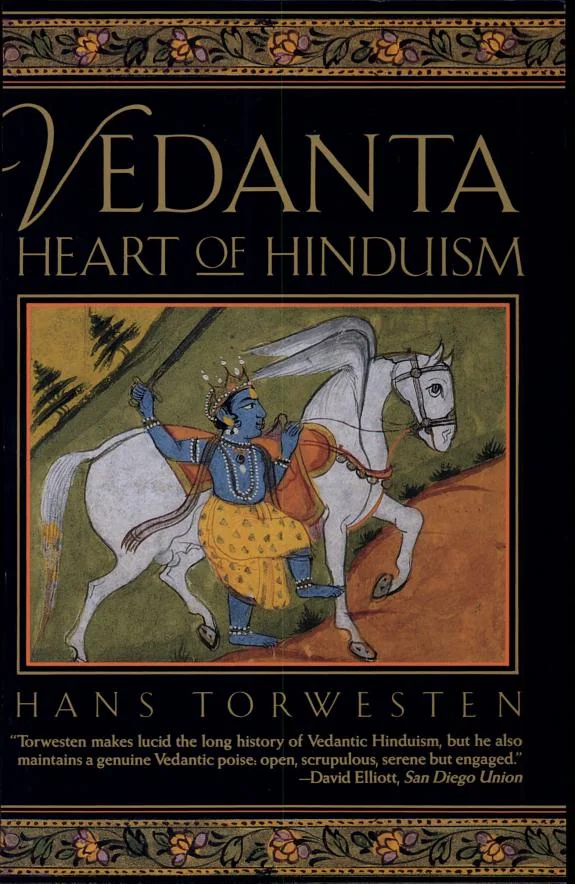
Hans Torwesten and Loly Rosset’s "Vedanta" offers a lucid entry point into one of the world's most complex philosophical systems. The strength of this work lies in its accessibility, demystifying concepts like Brahman and Atman without resorting to overly academic jargon. It effectively highlights how Vedanta, far from being an archaic doctrine, remains a vital intellectual force, particularly in its postulation of intuition as a primary source of strength and understanding. The book’s primary limitation, however, is its brevity; while it covers the essential tenets, it sometimes feels as though it sketches the vast landscape of Vedanta rather than charting its intricate contours. The discussion of Maya, for instance, while present, could benefit from more extensive elaboration to fully convey its philosophical weight. Nevertheless, for readers new to the subject, this work serves as a competent and inviting introduction.
📝 Description
76
Hans Torwesten and Loly Rosset's 1987 book unpacks the core ideas of Vedanta.
This book examines Vedanta, the philosophical and spiritual conclusion of Vedic thought from India. It presents Vedanta not as a single doctrine, but as a wide field of ideas concerned with the true nature of existence and the self. The authors detail how Vedanta addresses consciousness, the cosmos, and humanity's role within it, suggesting an underlying unity to all things.
Torwesten and Rosset aim this work at readers interested in the fundamental questions of life and the self, moving beyond superficial concerns. It will appeal to those who study comparative philosophy, ancient spiritual systems, and contemplative methods for self understanding. The book offers a perspective for individuals questioning materialistic views and looking for a structure to comprehend spiritual matters.
The philosophical roots of Vedanta trace back to ancient India, particularly the Upanishads, written between approximately 800 and 200 BCE. These texts articulate the conclusions found in the Vedas, India's earliest scriptures. Over time, thinkers like Adi Shankara, who formalized Advaita Vedanta in the 8th century CE, and Ramanuja, a proponent of Vishishtadvaita in the 11th century CE, systematized these concepts. Vedanta has significantly shaped Indian culture and religion, and gained a following in the West starting in the late 19th century.
Vedanta represents a sophisticated inquiry into the nature of ultimate reality and selfhood within the broader spiritual landscape of India. Its origins lie in the philosophical conclusions of the Vedas, particularly the Upanishads, which are considered the culmination of Vedic wisdom. The tradition developed through various schools, with key figures like Adi Shankara and Ramanuja systematizing its core tenets. Vedanta posits a fundamental unity between the individual self (Atman) and the ultimate reality (Brahman), often obscured by illusion (Maya). This contemplative tradition seeks direct realization of this unity.
💡 Why Read This Book?
• Gain a foundational understanding of Brahman and Atman, the core concepts of ultimate reality and the individual self, as presented in the Upanishads and Bhagavad Gita. • Explore the concept of Maya, the illusory nature of the perceived world, and how Vedanta offers paths to transcend it, moving beyond superficial appearances. • Understand the significance of the Upanishads and Bhagavad Gita as the textual bedrock of Vedanta, appreciating their enduring influence on Eastern thought since their compilation.
⭐ Reader Reviews
Honest opinions from readers who have explored this book.
❓ Frequently Asked Questions
What is the primary goal of Vedanta philosophy?
The primary goal of Vedanta is to achieve Moksha, or liberation, from the cycle of birth, death, and rebirth. This is realized through understanding the true nature of reality and the self, often by recognizing the identity of Atman (the individual soul) with Brahman (the absolute reality).
What are the key texts of Vedanta?
The central texts are the Upanishads, which form the philosophical conclusions of the Vedas. The Bhagavad Gita, a narrative text within the epic Mahabharata, is also a crucial scripture, offering practical guidance on spiritual realization.
Who was Adi Shankara and what is his significance in Vedanta?
Adi Shankara, an 8th-century philosopher, is a pivotal figure in Vedanta. He is most renowned for systematizing and propagating Advaita Vedanta, the non-dualistic school, which emphasizes the ultimate oneness of Brahman and Atman.
How does Vedanta view the individual self (Atman)?
Vedanta views Atman as the true, eternal self, distinct from the ego and the physical body. In many schools, particularly Advaita Vedanta, Atman is considered identical to Brahman, the universal consciousness.
What is Maya in the context of Vedanta?
Maya refers to the cosmic illusion or the power that conceals the true nature of reality (Brahman) and makes the phenomenal world appear real and distinct. It is the veil that separates individuals from their true spiritual identity.
When was Vedanta first published by Hans Torwesten and Loly Rosset?
The book 'Vedanta' by Hans Torwesten and Loly Rosset was first published on January 14, 1994, making it a relatively modern interpretation of ancient philosophical concepts.
🔮 Key Themes & Symbolism
The Unity of Existence
Vedanta posits that beneath the apparent diversity of the world lies a singular, underlying reality known as Brahman. This concept challenges the perception of separateness, suggesting that all beings and phenomena are manifestations of this one consciousness. The Upanishads, central to Vedanta, repeatedly emphasize this non-dualistic perspective, seeking to guide the practitioner toward direct realization of this unity, moving beyond the limitations of individual identity and empirical perception.
The Nature of the Self
Central to Vedanta is the exploration of Atman, the true self or soul. This is not to be confused with the ego, personality, or physical body, which are considered impermanent. Vedanta asserts that Atman is eternal, unchanging, and, in its deepest essence, identical to Brahman. Texts like the Bhagavad Gita elaborate on distinguishing the true self from transient material existence, a crucial step in the spiritual journey.
Illusion and Reality
The doctrine of Maya plays a significant role in Vedanta, explaining why the world appears as it does. Maya is often translated as illusion, but it more accurately refers to the power that veils Brahman and projects the manifold universe of names and forms. Understanding Maya is essential for recognizing the limitations of sensory perception and intellectual analysis in grasping ultimate reality, paving the way for intuitive apprehension.
Paths to Liberation
Vedanta outlines various paths (Yogas) to achieve Moksha, or liberation. These include Jnana Yoga (the path of knowledge and wisdom), Bhakti Yoga (the path of devotion and love), and Karma Yoga (the path of selfless action). The Bhagavad Gita, in particular, details how these paths can be integrated, offering practical guidance for spiritual seekers to realize their true nature regardless of their temperament or circumstances.
💬 Memorable Quotes
Direct passages from the work, attributed to the author.
“Man is a divine being whose greatest source of strength is his intuition.”
— This statement expresses a core Vedantic premise: that inherent divinity resides within each individual, and that intuition, rather than intellect alone, is the most direct means of accessing this inner truth and power.
“At the center of Vedanta lie the texts of the Upanishads and the Bhagavad Gita.”
— This highlights the foundational scriptural authority for Vedanta. The Upanishads provide the philosophical bedrock, while the Bhagavad Gita offers practical and devotional interpretations, making them indispensable for understanding the tradition.
“Vedanta is the most encompassing and open of the six orthodox systems of Hinduism.”
— This positions Vedanta as a uniquely broad philosophical framework within the Hindu tradition. Its openness suggests an inclusive approach, capable of accommodating diverse interpretations and spiritual practices.
“Vedanta is often regarded as a truly universal religion.”
— This suggests that the core principles of Vedanta transcend specific cultural or religious boundaries, offering insights into the human condition that are relevant to all people, regardless of their background.
“Man is a divine being whose greatest source of strength is his intuition.”
— This statement underscores the inherent potential within humanity according to Vedanta. It suggests that true power and wisdom stem not from external sources but from an inner, intuitive connection to a divine essence.
🌙 Esoteric Significance
Tradition
Vedanta is a core tradition within the broader spectrum of Indic philosophies, often considered the 'end' or 'essence' of the Vedas. While rooted in Hinduism, its metaphysical explorations of consciousness and reality share common ground with various esoteric traditions globally, including Neoplatonism and certain Gnostic schools, particularly in their emphasis on realizing an immanent or transcendent divine principle and understanding the illusory nature of the material world.
Symbolism
Key symbols in Vedanta include the Om (Aum) mantra, representing the primordial sound and the totality of existence; the lotus flower, symbolizing purity, spiritual enlightenment, and the unfolding of consciousness from the muddy waters of material existence; and the concept of the 'inner fire' or 'Agni' within, representing the transformative power of spiritual knowledge and self-awareness that burns away ignorance.
Modern Relevance
Contemporary thinkers and spiritual practitioners in fields ranging from consciousness studies to transpersonal psychology frequently engage with Vedantic concepts. Schools of meditation and mindfulness often draw upon Vedantic principles for their understanding of the mind and self. Modern interpretations of Vedanta continue to influence global discourse on spirituality, ethics, and the nature of reality, finding resonance with those seeking alternatives to purely materialistic worldviews.
👥 Who Should Read This Book
• Students of comparative religion and philosophy: To understand one of the most influential and intellectually rigorous traditions in Eastern thought, gaining insight into concepts like Brahman and Atman. • Seekers of spiritual knowledge: For those looking to explore the nature of consciousness, the self, and the ultimate reality beyond conventional materialist explanations. • Practitioners of meditation and contemplative practices: To deepen their understanding of the philosophical underpinnings of practices aimed at self-realization and inner peace.
📜 Historical Context
The philosophical currents that coalesced into Vedanta emerged in ancient India during the Vedic period, with the Upanishads, compiled roughly between 800 and 200 BCE, serving as their intellectual culmination. This era was marked by profound metaphysical inquiry, moving beyond ritualistic concerns to explore the nature of existence, consciousness, and the ultimate reality. Over centuries, this tradition was systematized by influential thinkers. Adi Shankara, in the 8th century CE, is credited with consolidating Advaita Vedanta, the non-dualistic school, which profoundly shaped subsequent Indian philosophy. His work provided a powerful counterpoint to other emerging or existing schools of thought, such as the various Buddhist philosophies prevalent at the time. The reception of Vedanta in the West began significantly in the late 19th century, notably through the efforts of Swami Vivekananda at the Parliament of Religions in Chicago in 1893, introducing its concepts to a global audience.
📔 Journal Prompts
The concept of Atman as the true self: How does this contrast with your everyday sense of identity?
Reflecting on Maya: Identify one instance where the perceived reality might be an illusion.
The strength of intuition: Explore a situation where your intuition guided you effectively.
Brahman as the underlying reality: Contemplate the implications of universal oneness.
The Bhagavad Gita's path of action: How can selfless action be practiced in daily life?
🗂️ Glossary
Brahman
The ultimate, unchanging, infinite reality that is the source and substratum of all existence. It is the Absolute, pure consciousness, and the ground of all being.
Atman
The individual soul or self. In Advaita Vedanta, Atman is identical to Brahman; in other schools, it is distinct but eternally connected to Brahman.
Upanishads
Ancient Sanskrit texts that form the philosophical core of the Vedas. They are considered foundational texts for Vedanta, exploring profound metaphysical questions.
Bhagavad Gita
A sacred Sanskrit scripture within the epic Mahabharata, presenting a dialogue between Krishna and Arjuna. It elaborates on dharma, karma, devotion, and the paths to spiritual liberation.
Maya
A Sanskrit term often translated as 'illusion,' referring to the power that conceals the true nature of reality (Brahman) and projects the phenomenal world of multiplicity.
Moksha
Liberation or release from the cycle of birth, death, and rebirth (samsara). It signifies the ultimate spiritual goal in many Indian religions, including Vedanta.
Advaita Vedanta
A prominent school of Vedanta founded by Adi Shankara, emphasizing non-dualism – the belief that Brahman and Atman are one and the same.
This book appears in 1 collection
🔮 Readers Also Liked
Browse all →





From the “Vedanta” Collection
View all →




More Free Esoteric History & Biography Books
View all →