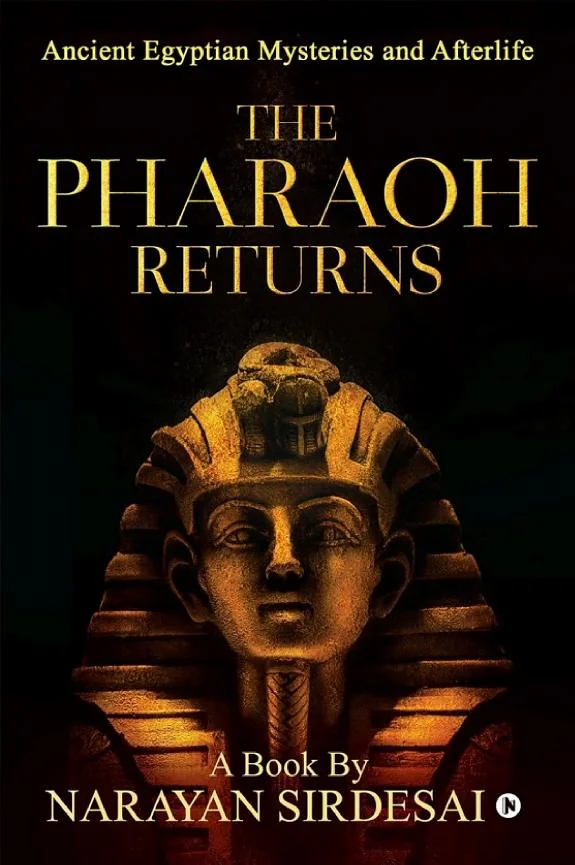
The Pharaoh Returns
 80
80

The Pharaoh Returns
Narayan Sirdesai’s "The Pharaoh Returns" tackles the monumental task of re-examining ancient Egypt through an esoteric lens, a subject that has captivated minds since Champollion’s decipherment of hieroglyphs in the 1820s. Sirdesai offers a compelling perspective on the spiritual and occult dimensions of Egyptian civilization, moving beyond conventional historical narratives. A particular strength lies in the detailed exploration of the solar cults and their impact on pharaonic ideology, such as the emphasis on Ra. However, the work occasionally suffers from a lack of concrete textual evidence to support its more speculative claims, leaving some interpretations feeling unanchored. The discussion surrounding the construction of the Great Pyramid, for instance, while intriguing, relies heavily on conjecture rather than archaeological consensus. Despite this, the book provides a valuable, albeit unconventional, framework for understanding Egypt's enduring allure.
Verdict: An imaginative, if occasionally speculative, exploration of Egypt's hidden spiritual currents.
📝 Description
80
Narayan Sirdesai's 2021 book, The Pharaoh Returns, investigates the esoteric mysteries of ancient Egypt.
The Pharaoh Returns examines the enduring enigmas of ancient Egypt, questioning modern interpretations of its megastructures, deities, rituals, and occult practices. Sirdesai probes the esoteric foundations of Egyptian society, engaging with a rich civilization that continues to spark curiosity.
This work is for those interested in Egyptology, comparative mythology, and ancient history, especially those drawn to esoteric perspectives on historical events and beliefs. Readers will find an appeal in understanding the deeper, often overlooked, spiritual and occult dimensions of this extensively studied ancient culture. Sirdesai revisits age-old questions about Egyptian cosmology and the construction of its monumental architecture.
The book connects to a long history of Western engagement with ancient Egypt, particularly the surge of interest in the late 19th and early 20th centuries. Thinkers like Helena Blavatsky and the Theosophical Society sought mystical explanations for Egypt's achievements. Sirdesai places his work within this lineage, addressing contemporary discussions on pyramid construction and Egyptian cosmology from an esoteric viewpoint.
💡 Why Read This Book?
• Understand the esoteric interpretations of Egyptian solar cults, moving beyond standard historical accounts to grasp their symbolic significance as detailed in the book's examination of Ra. • Explore the potential occult knowledge embedded within hieroglyphic inscriptions, gaining a new perspective on ancient communication and spiritual practices as presented in the text. • Reconsider the construction and purpose of Egyptian megastructures like the pyramids through an esoteric framework, challenging conventional archaeological views with concepts discussed by Sirdesai.
⭐ Reader Reviews
Honest opinions from readers who have explored this book.
❓ Frequently Asked Questions
What specific ancient Egyptian concepts does "The Pharaoh Returns" explore?
The book delves into concepts such as the spiritual significance of the pharaohs, the symbolic language of hieroglyphs, and the esoteric meanings behind ancient Egyptian rituals and deities, particularly focusing on solar cults.
When was "The Pharaoh Returns" first published?
Narayan Sirdesai's "The Pharaoh Returns" was first published on September 9, 2021.
Is "The Pharaoh Returns" based on factual historical accounts?
While it draws on the rich history of ancient Egypt, the book interprets events and beliefs through an esoteric and occult lens, which may differ from conventional historical or archaeological perspectives.
Who is Narayan Sirdesai?
Narayan Sirdesai is the author of "The Pharaoh Returns," a work that engages with the mystical aspects of ancient Egyptian civilization.
What makes this book different from standard Egyptology texts?
Unlike standard texts, "The Pharaoh Returns" focuses on the spiritual, occult, and symbolic dimensions of Egyptian culture, aiming to uncover hidden meanings rather than solely presenting historical facts.
Does the book discuss specific Egyptian gods or goddesses?
Yes, the book likely discusses various deities, with a particular emphasis on solar cults and figures like Ra, exploring their roles within the esoteric framework of Egyptian spirituality.
🔮 Key Themes & Symbolism
Pharaonic Mysticism
The work examines the pharaohs not merely as rulers but as conduits for divine or cosmic energies. It interprets their role within a spiritual hierarchy, suggesting a deeper purpose tied to maintaining cosmic order (Ma'at) and facilitating spiritual transitions. The concept of the pharaoh's return or cyclical rebirth is explored as a central tenet of Egyptian esoteric thought, linking earthly power with celestial cycles.
Symbolic Language of Hieroglyphs
Sirdesai looks at the symbolic and esoteric meanings embedded within ancient Egyptian hieroglyphs. Beyond their linguistic function, these symbols are presented as keys to unlocking hidden philosophical and occult knowledge. The book likely deciphers specific glyphs, revealing layers of meaning related to creation, death, rebirth, and the divine, illustrating how the written word served as a vehicle for spiritual transmission.
Rituals and Divine Manifestation
The book scrutinizes ancient Egyptian rituals, suggesting they were more than mere ceremonies; they were practical applications of occult principles designed to invoke divine presence and influence cosmic forces. The worship of deities, particularly the solar deity Ra, is analyzed for its role in anchoring spiritual beliefs and practices, demonstrating how rituals facilitated a connection between the human and divine realms.
Esoteric Architecture
"The Pharaoh Returns" likely touches upon the esoteric significance of Egyptian megastructures, such as the pyramids and temples. These constructions are not viewed solely as feats of engineering but as symbolic representations of cosmic principles or as energy conduits. Their alignment with celestial bodies and their intricate internal designs are interpreted as deliberate expressions of advanced occult knowledge and spiritual cosmology.
💬 Memorable Quotes
Direct passages from the work, attributed to the author.
“Egypt's ancient civilization poses more questions than answers to today’s scientists.”
— This statement highlights the enduring mystery surrounding ancient Egypt, suggesting that conventional scientific methods may be insufficient to fully comprehend its achievements and beliefs, hinting at a need for alternative interpretative frameworks.
“The life of the pharaohs, construction of megastructures like the pyramids and the Sphinx.”
— This phrase points to specific, iconic elements of ancient Egyptian history that remain subjects of intense speculation and fascination, particularly concerning their advanced capabilities and the esoteric motivations behind them.
“Their gods, temples and rituals, arts, occult.”
— This excerpt outlines the core components of Egyptian civilization that the book likely explores through an esoteric lens, emphasizing that these aspects are intertwined with occult practices and beliefs, not just historical or religious elements.
“The country’s extraordinary, ancient civilization.”
— This phrase sets the stage for the book's exploration, framing ancient Egypt as a civilization whose uniqueness and antiquity demand deeper investigation beyond superficial understanding.
“A philosopher’s learning destination.”
— This suggests that ancient Egypt offers profound lessons and intellectual challenges for those seeking wisdom, particularly in the domains of metaphysics and spiritual philosophy, as explored in the book.
🌙 Esoteric Significance
Tradition
This work draws heavily from the Hermetic and Theosophical traditions, which have long sought to uncover universal spiritual laws within ancient Egyptian cosmology. It positions itself within a lineage that views ancient Egypt not merely as a historical civilization but as a source of profound esoteric wisdom and occult practices, offering keys to understanding the divine and the human condition.
Symbolism
Key symbols explored likely include the Ankh, representing life and immortality; the Eye of Horus (Udjat), symbolizing protection, royal power, and good health; and the Scarab beetle (Khepri), representing creation, rebirth, and the morning sun. These symbols are interpreted not just as decorative or religious icons but as potent carriers of esoteric knowledge, reflecting complex metaphysical concepts about existence and cosmic cycles.
Modern Relevance
Contemporary practitioners of Western esotericism, including students of Hermeticism, astrology, and ceremonial magic, often look to ancient Egypt for foundational principles and symbolic archetypes. The work's exploration of pharaonic spirituality and occult practices provides a resource for those seeking to integrate these ancient energies and philosophies into modern spiritual paths or comparative mystical studies.
👥 Who Should Read This Book
• Students of Hermeticism and esoteric traditions: Those seeking to understand the roots of Western occult philosophy will find value in the book's exploration of Egyptian mysticism. • Comparative mythology enthusiasts: Readers interested in cross-cultural spiritual beliefs and symbolic systems will appreciate the analysis of Egyptian gods, rituals, and their potential universal archetypes. • Speculative historians and Egyptology buffs: Individuals fascinated by the unexplained aspects of ancient Egypt, such as pyramid construction and pharaonic lore, will find Sirdesai's esoteric interpretations engaging.
📜 Historical Context
Narayan Sirdesai's "The Pharaoh Returns" emerges in a range of renewed interest in esoteric interpretations of ancient history, a field significantly influenced by thinkers like Helena Blavatsky and her Theosophical Society in the late 19th century. This movement sought to uncover hidden spiritual truths in ancient civilizations, often reinterpreting Egyptian mythology and architecture. Sirdesai’s work engages with this tradition, revisiting questions about the pyramids and pharaonic power that have persisted since Egyptomania swept Europe in the wake of Napoleon's campaigns in the 1790s. While mainstream Egyptology, spurred by figures like Flinders Petrie, focused on archaeological evidence and historical timelines, esoteric scholars continued to propose alternative narratives. Sirdesai's book, published in 2021, can be seen as a contemporary contribution to this ongoing dialogue, addressing how ancient Egyptian beliefs and practices might offer insights into universal spiritual laws or forgotten occult sciences, standing apart from purely academic archaeological discourse.
📔 Journal Prompts
The pharaohs' role as spiritual conduits.
Symbolic meanings within hieroglyphic inscriptions.
The occult purpose of ancient Egyptian rituals.
Energetic significance of Egyptian megastructures.
Connections between Ra and pharaonic power.
🗂️ Glossary
Ma'at
An ancient Egyptian concept representing truth, balance, order, law, morality, and justice. It was personified as a goddess and was fundamental to the pharaoh's role in maintaining cosmic harmony.
Ankh
A hieroglyphic symbol representing 'life.' It is often depicted as a cross with a loop at the top and is a prominent symbol in ancient Egyptian art and iconography, associated with deities and the afterlife.
Udjat (Eye of Horus)
A powerful ancient Egyptian symbol of protection, royal power, and good health. It represents the healed eye of the falcon-headed god Horus, often used in amulets and as a protective symbol.
Khepri
An ancient Egyptian deity associated with the rising sun, creation, and rebirth. Often depicted as a scarab beetle, Khepri symbolized the morning sun's journey and the concept of spontaneous creation.
Solar Cults
Religious systems in ancient Egypt that centered on the worship of the sun god, primarily Ra. These cults significantly influenced pharaonic ideology, cosmology, and temple construction, emphasizing the sun's life-giving and cyclical powers.
Esotericism
A category of mystical or occult theology and philosophy that deals with the hidden meanings or inner workings of a religion or science. It focuses on inner experience and secret knowledge, often distinct from exoteric or public teachings.
Occult
Practices, rites, or traditions concerned with the supernatural or magical. In the context of ancient Egypt, it refers to hidden knowledge and practices related to spiritual power, cosmology, and the afterlife.
This book appears in 1 collection
🔮 Readers Also Liked
Browse all →







From the “Egyptian Mysteries” Collection
View all →



![The Kybalion [A Study Of The Hermetic Philosophy Of Ancient Egypt And Greece].pdf (PDFy mirror)](/img/thumb/the-kybalion-a-study-of-the-hermetic-philosophy-of-ancient-egypt-and-greece-pdf-pdfy-mirror.webp)
More Free Esoteric History & Biography Books
View all →