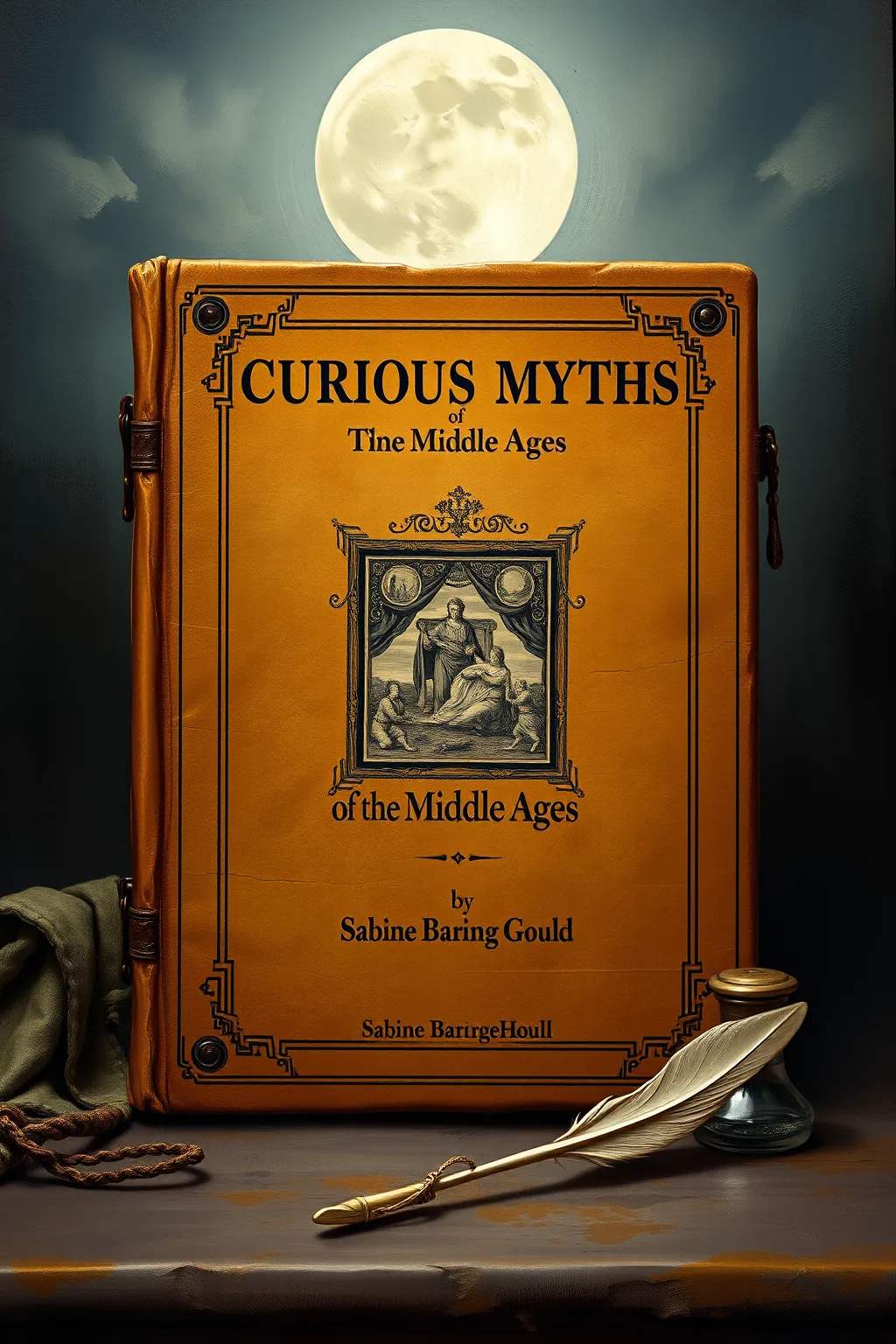
Curious Myths of the Middle Ages
 81
81

Curious Myths of the Middle Ages



Sabine Baring-Gould's "Curious Myths of the Middle Ages" remains a cornerstone for those delving into the esoteric undercurrents of Western history. Baring-Gould, a scholar of unparalleled depth, navigates obscure legends with scholarly rigor yet a captivating narrative flair. He unearths the hidden symbology within tales of the Wandering Jew, Prester John, and Pope Joan, revealing their profound connection to Gnostic ideas and alchemical processes. This work is indispensable for its meticulous research and its ability to connect seemingly disparate myths to a shared, underlying spiritual quest. Essential reading for historians of magic, folklorists, and serious practitioners seeking to understand the roots of Western esotericism.
📝 Description
81
Sabine Baring-Gould's 1866 book catalogs medieval legends that reveal the era's hidden symbolic underpinnings.
Published in 1866, Sabine Baring-Gould's "Curious Myths of the Middle Ages" assembles twenty-four chapters dedicated to medieval folklore and legend. The author examines specific stories, including the Wandering Jew, the kingdom of Prester John, Pope Joan, William Tell, and the Man in the Moon. Baring-Gould traces the origins of these narratives and their variations across different traditions. He also considers their impact on European culture and thought.
This collection goes beyond simple storytelling. It investigates the underlying archetypes and symbolic meanings present in medieval consciousness. Baring-Gould shows how these myths reflect a worldview where the mystical was closely intertwined with daily life. The book offers a look into the beliefs and imagination of the medieval period.
This work fits within the late 19th-century surge of interest in folklore and myth as expressions of collective psychology and hidden symbolic systems. Baring-Gould's approach, while rooted in historical inquiry, also touches upon the idea that myths carry deeper meanings about human experience and belief. It aligns with a broader scholarly and cultural trend that sought to understand the roots of popular beliefs and the enduring power of narrative in shaping cultural identity, often hinting at connections beyond the purely rational.
✍️ Author
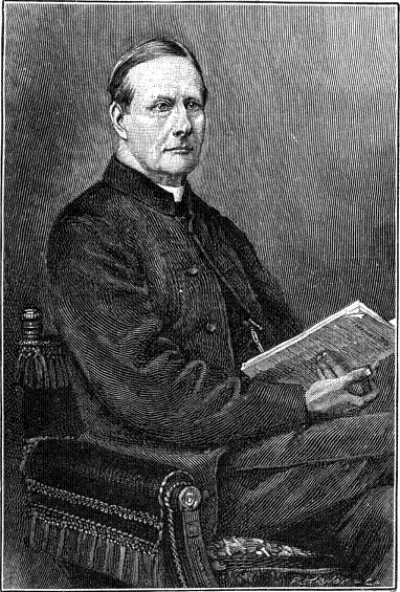
Sabine Baring Gould
Sabine Baring-Gould (; 28 January 1834 – 2 January 1924) of Lew Trenchard in Devon, England, was an Anglican priest, hagiographer, antiquarian, novelist, folk song collector and eclectic scholar. He is remembered particularly as a writer of hymns, the best-known being "Onward, Christian Soldiers", and "Now the Day Is Over".
💡 Why Read This Book?
Uncover the hidden symbology and esoteric underpinnings of Western folklore. "Curious Myths of the Middle Ages" offers a scholarly yet accessible exploration of foundational legends, revealing their deeper spiritual and philosophical meanings. Ideal for seekers of ancient wisdom, historical occultists, and anyone intrigued by the enduring power of myth to shape human understanding and consciousness.
⭐ Reader Reviews
Honest opinions from readers who have explored this book.
❓ Frequently Asked Questions
What is the primary focus of "Curious Myths of the Middle Ages"?
The book meticulously examines and traces the origins, variations, and cultural impact of numerous medieval legends, focusing on figures like the Wandering Jew, Prester John, and Pope Joan.
Who was Sabine Baring-Gould?
Sabine Baring-Gould was a prolific Anglican priest, novelist, hymn-writer, and a dedicated scholar of folklore and folk life.
What kind of reader would enjoy this book?
This book is ideal for readers interested in folklore, mythology, medieval history, occult studies, and the symbolism embedded within cultural narratives.
Does the book offer an esoteric interpretation of these myths?
While not explicitly a text of magical practice, the book deeply explores the symbolic and philosophical dimensions of these myths, making them resonate with esoteric understanding.
When was the book first published?
The book was first published in 1866, with the second part completed by 1868.
🔮 Key Themes & Symbolism
The Archetypal Hero and the Quest for the Divine
Many of the myths explored, such as William Tell or the legendary journeys of Prester John, embody the archetype of the hero on a quest. This theme studies how these narratives reflect humanity's enduring search for meaning, redemption, and a connection to the divine, often through trials and tribulations that mirror spiritual initiation.
Gnostic Echoes and Hidden Knowledge
The figure of the Wandering Jew and the mysterious Pope Joan, among others, often carry Gnostic undertones, hinting at dualistic cosmologies and the possession of secret or forbidden knowledge. This theme examines how these myths served as vessels for veiled spiritual truths and challenging established doctrines within medieval society.
The Sacred and the Profane in Folklore
Baring-Gould meticulously illustrates the permeable boundary between the sacred and the profane in medieval belief. From saintly legends intertwined with folk magic to the perversion of religious figures in myth, this theme explores how everyday life and spiritual aspirations were inextricably linked, often through symbolic and liminal figures.
💬 Memorable Quotes
Direct passages from the work, attributed to the author.
“In every legend there is a kernel of truth, however distorted.”
— This highlights the author's belief that myths, even fantastical ones, often contain elements of historical events, psychological truths, or ancient wisdom that have been transformed by time and imagination.
“The Man in the Moon is a reflection of celestial influence.”
— This points to the esoteric connection drawn between terrestrial narratives and cosmic forces, suggesting that folklore can serve as a means to understand astrological or cosmological principles.
“Prester John’s kingdom, a terrestrial paradise.”
— This evokes the idea of a hidden, utopian realm within medieval imagination, symbolizing a yearning for spiritual perfection and an ideal society beyond the earthly realm.
“The tail-men, a curious aberration of nature.”
— This phrase suggests the exploration of the monstrous and the liminal, reflecting medieval fascinations with the boundaries of the human form and the perceived anomalies in the natural world.
💡 Key Ideas
Editorial paraphrase of the work's core concepts — not direct quotes.
The myth is the popular explanation of the unknown.
This quote suggests that myths arise organically from humanity's need to comprehend mysteries beyond rational understanding, acting as a collective attempt to map the unseen.
🌙 Esoteric Significance
Tradition
This work resonates deeply with the Western Esoteric Tradition, particularly its branches concerned with folklore, comparative mythology, and the symbolic interpretation of ancient narratives. It aligns with traditions that view myths not as mere stories, but as carriers of hidden knowledge, spiritual archetypes, and psychological truths relevant to the soul's journey and the understanding of universal principles.
Symbolism
The myths examined are rich in symbolism: the Wandering Jew as a metaphor for humanity's exile and quest for redemption; Prester John's kingdom as an earthly paradise or a representation of spiritual enlightenment; Pope Joan as a commentary on hidden power and the subversion of societal norms. These symbols often echo alchemical processes, Gnostic cosmologies, and archetypal journeys of transformation.
Modern Relevance
In an era often characterized by skepticism, "Curious Myths of the Middle Ages" offers a vital reminder of the enduring power of narrative and symbolism. It illuminates how ancient myths continue to inform our collective unconscious, influence modern storytelling, and provide frameworks for understanding complex human experiences and spiritual aspirations. It encourages a re-engagement with the symbolic language of the past to foster deeper self-awareness and cultural understanding.
👥 Who Should Read This Book
This comprehensive collection is a treasure for several audiences. **Beginners** in folklore and mythology will find an accessible yet profound introduction to key medieval legends. **Scholars** of history, literature, and religious studies will appreciate the meticulous research and scholarly analysis. **Seekers** of hidden wisdom and esoteric knowledge will discover rich symbolic interpretations and archetypal patterns. **Practitioners** of occult or spiritual disciplines may find valuable insights into the roots of Western mysticism and the symbolic language that underpins many spiritual traditions.
📜 Historical Context
Published in the mid-19th century, "Curious Myths of the Middle Ages" emerged during a period of intense scholarly interest in folklore and national identity, often referred to as the Romantic era's legacy. It coincided with a burgeoning fascination with the medieval past, viewed through lenses that ranged from the picturesque and chivalrous to the mysterious and superstitious. Baring-Gould's work tapped into this zeitgeist, seeking to preserve and analyze the oral traditions and popular beliefs that were perceived as remnants of a more spiritually vibrant, albeit darker, age. The book reflects a growing awareness of the psychological and symbolic dimensions of myth, moving beyond simple historical accounts to explore the deeper currents of collective consciousness.
📔 Journal Prompts
Reflect on a personal myth or recurring dream. How might it connect to the archetypes explored in Baring-Gould's work?
Consider the figure of the Wandering Jew. What does eternal wandering symbolize in your own life or in the broader human experience?
If you were to create a modern myth, what core themes from medieval legends would you incorporate and why?
Explore the concept of 'hidden knowledge' as presented in the myths. Where do you seek hidden knowledge today, and what are its implications?
Analyze the role of faith and superstition in medieval narratives. How do these elements manifest in contemporary society?
🗂️ Glossary
Wandering Jew
A legendary figure cursed to wander the Earth until the Second Coming, often embodying themes of penance, eternal life, and alienation.
Prester John
A mythical Christian king and priest of the East, ruler of a vast kingdom said to be a Christian paradise, a popular figure in medieval European legends.
Pope Joan
A legendary female Pope who allegedly ruled the Catholic Church for a short period in the Middle Ages, disguised as a man, symbolizing hidden power and subversion.
Archetype
In mythology and psychology, a primordial, universal pattern or symbol that recurs across cultures and time, representing fundamental human experiences or concepts.
Gnosticism
A complex set of religious ideas and systems that emerged in the early Christian era, emphasizing esoteric knowledge (gnosis) for salvation and often positing a dualistic worldview.
This book appears in 1 collection
🔮 Readers Also Liked
Browse all →









More by Sabine Baring Gould
All books →

From the “Transcendental Meditation” Collection
View all →






More Free Esoteric History & Biography Books
View all →