The Catholic Enlightenment
 84
84

The Catholic Enlightenment
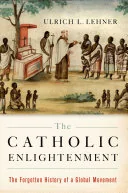
Lehner's "The Catholic Enlightenment" functions as a much-needed corrective to the prevailing narrative of a monolithic, anti-rational Catholic Church during the 18th century. He persuasively argues that numerous Catholic thinkers were not only abreast of Enlightenment discourse but were instrumental in its development, particularly concerning natural law and religious reform. A notable strength is the detailed examination of figures often overlooked in broader Enlightenment studies, such as the Jesuit historian and jurist Juan de Mariana, whose complex ideas are brought into sharper relief. However, the sheer density of intellectual history can occasionally feel overwhelming, requiring sustained attention from the reader. The book’s examination of the theological justifications for toleration, particularly in light of the revocation of the Edict of Nantes, offers a particularly compelling counterpoint to Voltaire’s secular humanism. It is a vital contribution for anyone interested in the intricate dialogue between faith and reason in the modern era.
📝 Description
84
Ulrich L. Lehner's 2019 book argues Catholic thinkers shaped the Enlightenment.
Ulrich L. Lehner's "The Catholic Enlightenment" challenges the idea that the Age of Reason was hostile to Catholic doctrine. Lehner reconstructs an intellectual history where Catholic thinkers actively engaged with and influenced Enlightenment thought. The book demonstrates that faith and reason often worked together within the Church during this period, rather than being in opposition.
This work is valuable for students of religious and intellectual history, particularly those studying the Enlightenment. It also interests readers curious about Catholic philosophy and its historical connection to modernity. Those who wish to understand religious thought beyond simple oppositions will find it informative.
The 18th century, known as the Age of Reason, saw the rise of secular philosophies and critiques of religious authority. "The Catholic Enlightenment" shows that a significant reform movement existed within the Catholic Church, one that engaged with new ideas. Scientific and political shifts during this time prompted Catholic intellectuals to reassess their stances.
While not strictly esoteric, this book engages with the historical relationship between faith and reason, a perennial concern in many esoteric traditions. It examines how established religious institutions grappled with new philosophical and scientific ideas, revealing internal intellectual currents that might be considered hidden or less known to a general audience. The book's focus on the intellectual life within Catholicism during a period of significant change offers a perspective on how tradition adapts and incorporates external influences, a process often mirrored in esoteric schools.
💡 Why Read This Book?
• Learn how Catholic intellectuals like Johann Nikolaus von Hontheim engaged with Enlightenment critiques of church authority, offering a nuanced perspective on faith and reason during the 18th century. • Discover the specific theological and philosophical arguments Catholic thinkers developed regarding natural law and religious toleration, challenging the perception of inherent conflict with Enlightenment ideals. • Understand the historical context of Catholic reform movements in the 1700s, revealing intellectual currents within the Church that actively contributed to modern thought.
⭐ Reader Reviews
Honest opinions from readers who have explored this book.
❓ Frequently Asked Questions
What is the central argument of 'The Catholic Enlightenment'?
The book argues that Catholic thinkers were not inherently opposed to Enlightenment ideals but actively participated in and shaped them, demonstrating a dynamic interplay between faith and reason within the Church during the 18th century.
Which historical period does 'The Catholic Enlightenment' cover?
The book primarily focuses on the 18th century, often referred to as the Age of Reason, examining intellectual developments within Catholicism during this era.
Who were some key figures discussed in the book?
While specific figures vary, the work explores the contributions of Catholic intellectuals and reformers who engaged with Enlightenment thought, often re-examining figures like Johann Nikolaus von Hontheim and Juan de Mariana.
How does the book challenge common perceptions of Catholicism and the Enlightenment?
It challenges the idea that Catholicism was uniformly superstitious and opposed to reason by highlighting Catholic scholars who integrated Enlightenment concepts like natural law and religious toleration into their theological frameworks.
What is the significance of the Giacomo Casanova quote at the beginning?
The quote illustrates the prevalent perception that Enlightenment reason was antithetical to faith, a perception the book aims to deconstruct by showcasing Catholic engagement with rational thought.
Does the book suggest Catholicism 'became' Enlightenment?
No, it demonstrates an active engagement and adaptation of Enlightenment ideas within Catholic intellectual traditions, rather than a wholesale adoption or transformation of the Church's core tenets.
🔮 Key Themes & Symbolism
Catholic Engagement with Reason
This theme examines how Catholic intellectuals in the 18th century navigated the burgeoning emphasis on reason and empirical observation. It moves beyond the simplistic dichotomy of faith versus reason by presenting a history of Catholic thinkers who actively integrated Enlightenment principles into their theological and philosophical discourse. The work illustrates that the Catholic Church was not a monolithic entity resistant to change, but a complex institution with internal debates and reformist movements seeking to reconcile traditional doctrine with contemporary intellectual currents.
Reform and Toleration Debates
A crucial aspect explored is the internal Catholic debate surrounding religious toleration and church reform during the Enlightenment. Lehner highlights how figures within Catholicism grappled with questions of religious freedom and the structure of ecclesiastical power, often in dialogue with secularizing philosophies. These discussions were not merely reactive but represented proactive intellectual efforts to adapt Catholic thought to a changing world, influencing concepts of governance and interfaith relations.
Natural Law Tradition
The book looks at the reinterpretation and application of the natural law tradition by Catholic scholars. It shows how these thinkers used natural law as a framework to engage with Enlightenment ideas about human rights, justice, and social order. This theme underscores the enduring influence of scholasticism and its capacity for adaptation, demonstrating that Catholic philosophy offered robust responses to the intellectual challenges posed by the era.
The 'Enlightened' Catholic Intellectual
This theme focuses on the profile of the Catholic intellectual who embraced elements of the Enlightenment without abandoning their faith. It challenges the stereotype of the Catholic as inherently superstitious by showcasing scholars, theologians, and reformers who were critically engaged with science, philosophy, and political theory. The work reclaims these figures for the history of intellectual movements, positioning them as integral to the broader European Enlightenment.
💬 Memorable Quotes
Direct passages from the work, attributed to the author.
“The work explores how Catholic thinkers engaged with natural law.”
— This highlights the book's focus on how Catholic scholars reinterpreted and applied the concept of natural law, demonstrating its compatibility with Enlightenment discussions on rights and societal structure.
“Catholic engagement with reformist impulses in the 18th century.”
— This refers to the internal movements within Catholicism during the Enlightenment that sought to modernize practices and doctrines, showing a dynamic intellectual life rather than static dogma.
“The book examines the tension between Catholic doctrine and Enlightenment ideals.”
— This points to the core of Lehner's thesis: that rather than outright opposition, there was a complex negotiation and integration of Enlightenment concepts within Catholic frameworks.
“Reconstructing a vibrant intellectual landscape within Catholicism.”
— This phrase emphasizes the book's aim to reveal a previously underappreciated intellectual milieu where Catholic scholars actively contributed to the philosophical currents of their time.
💡 Key Ideas
Editorial paraphrase of the work's core concepts — not direct quotes.
Whoever needs an act of faith to elucidate an event that can be explained by reason is a fool, and unworthy of reasonable thought.
This quote, attributed to Giacomo Casanova, expresses the perceived chasm between Enlightenment rationalism and religious belief, setting the stage for Lehner's argument that this divide was not as absolute for many Catholic thinkers.
🌙 Esoteric Significance
Tradition
While not strictly an esoteric text in the Hermetic or Gnostic sense, "The Catholic Enlightenment" speaks to a tradition of intellectual mysticism and philosophical theology within Catholicism that sought to harmonize divine revelation with human reason. It aligns with a broader philosophical lineage that views the cosmos as divinely ordered yet accessible through rational understanding, echoing aspects of Neoplatonism and Scholasticism. The work demonstrates how this tradition adapted to contemporary philosophical challenges, preserving a space for faith within the evolving field of secular thought.
Symbolism
The book implicitly engages with symbols of order and divine reason. The concept of 'natural law' itself functions as a symbolic representation of God's rational design imprinted upon the universe, knowable through human intellect. Furthermore, the historical figures discussed, like enlightened bishops and theologians, can be seen as symbolic embodiments of the Church's capacity for intellectual adaptation and reform, representing the 'light' of reason within a divinely guided structure.
Modern Relevance
Contemporary thinkers grappling with the perceived conflict between faith and science, or seeking to articulate a robust theological response to secularism, draw upon the historical precedent illuminated by Lehner's work. It provides a framework for understanding how religious traditions can engage critically and constructively with modern intellectual currents. Schools of thought focused on philosophical theology and comparative religion find value in its nuanced portrayal of historical religious adaptation.
👥 Who Should Read This Book
• Students of intellectual history: Gain a revised understanding of the Enlightenment, recognizing the significant contributions of Catholic thinkers often overlooked in secular-focused narratives. • Comparative religion scholars: Explore how a major world religion navigated and influenced a central period of Western thought, offering insights into faith-reason dialogues. • Catholic theology and philosophy enthusiasts: Discover the historical roots of internal Catholic reform movements and intellectual adaptation, enriching their understanding of the Church's engagement with modernity.
📜 Historical Context
The 18th century, the Age of Reason, was a period marked by profound intellectual shifts across Europe, characterized by the rise of secular philosophies, scientific inquiry, and challenges to traditional authority. While figures like Voltaire and Diderot championed deism and atheism, and the French Revolution later sought to de-Christianize society, "The Catholic Enlightenment" reveals a different narrative unfolding within the Catholic Church. Lehner focuses on the period roughly from the early to mid-18th century, a time when Catholic thinkers, particularly in the Holy Roman Empire, actively engaged with Enlightenment concepts. Contemporaries like Johann Nikolaus von Hontheim, an auxiliary bishop of Trier, exemplified this intellectual movement, seeking to reform church structures and reconcile theological tenets with rational inquiry. This internal reformist current stood in contrast to both staunch conservatism within the Church and the more radical secularism emanating from Enlightenment salons. The reception of these ideas was complex, often facing internal Church scrutiny while simultaneously influencing broader European intellectual discourse.
📔 Journal Prompts
The Catholic Enlightenment's engagement with natural law.
Reconciling Johann Nikolaus von Hontheim's reformist ideas with Church doctrine.
The intellectual field of 18th-century Catholic Europe.
Catholic responses to the Age of Reason.
Critiques of Enlightenment rationalism from a Catholic perspective.
🗂️ Glossary
Age of Reason
A historical period, primarily the 18th century, characterized by a strong emphasis on reason, science, and individualism, often leading to challenges against traditional religious and political authority.
Natural Law
In philosophy and theology, the concept that there exists a set of universal moral principles inherent in nature and discoverable through human reason, often seen as reflecting divine law.
Enlightenment Ideals
A range of philosophical and intellectual concepts prominent in the 18th century, including reason, liberty, equality, progress, and the separation of church and state.
Catholic Reformism
Internal movements within the Catholic Church during various periods, including the Enlightenment, that sought to update doctrines, practices, or structures in response to intellectual, social, or spiritual challenges.
Deism
A religious belief that posits a creator God who does not intervene in the universe after its creation, emphasizing reason and natural law over revelation and miracles.
Secularism
The principle of separating religious institutions from the state and public affairs, promoting a focus on worldly rather than spiritual matters.
Voltaire
A prominent French Enlightenment writer, historian, and philosopher known for his advocacy of freedom of speech, religious tolerance, and criticism of established religion and institutions.
This book appears in 1 collection
🔮 Readers Also Liked
Browse all →





From the “Enlightenment” Collection
View all →





More Free Esoteric History & Biography Books
View all →