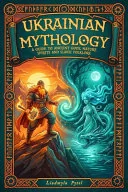
Ukrainian Mythology
 80
80

Ukrainian Mythology
Mountain Mill Editorial's *Ukrainian Mythology* offers a commendable entry point into a less-explored corner of Slavic lore. The volume is particularly strong in its concise, narrative-driven profiles of key figures like Mokosha and Veles, grounding abstract concepts in accessible stories. The inclusion of nature spirits such as the Lisovyk provides a tangible link to the animistic underpinnings of the tradition. A limitation, however, is the brevity of the historical context, which could benefit from deeper engagement with the academic discourse surrounding Ukrainian ethnography. The section on fate weavers, while informative, leaves one wishing for a more extensive exploration of their symbolic representation in ritual or art. Nevertheless, for its clear presentation of core myths and spirits, this book serves its introductory purpose effectively.
📝 Description
80
Ukrainian Mythology: A Guide to Ancient Gods, Nature Spirits, and Slavic Folklore details the nation's rich mythic heritage.
This volume presents clear, story-driven profiles of deities, spirits, and figures central to Ukrainian culture. It covers the pantheon of storm and sun gods, fate weavers, and celestial beings, alongside chthonic entities like house guardians and forest masters. The book examines creatures that shaped everyday fears and societal rules, offering context for this distinct branch of Slavic folklore. It is suited for readers interested in comparative mythology, Slavic studies, and esoteric traditions. Students of religion, history buffs, and those exploring ancestral roots will find it accessible. Practitioners of modern paganism or animism seeking diverse spiritual perspectives will also benefit. Anyone curious about Eastern European myths and supernatural beings will find this volume informative.
The study of Ukrainian mythology gained academic attention in the late 19th and early 20th centuries with scholars like Mykhailo Hrushevsky. This period saw a European focus on collecting and analyzing national myths for cultural identity. The book traces this tradition, placing Ukrainian myths within the broader Slavic context. It acknowledges the influence of pre-Christian beliefs and later Christian overlays on these narratives. Figures and concepts that endured through centuries of cultural change are highlighted.
This work engages with the esoteric tradition of exploring myth and folklore as living systems of belief and practice. It connects to a lineage of scholarship and spiritual inquiry that seeks to understand the deeper currents of human spirituality through ancient narratives. By focusing on Ukrainian and broader Slavic traditions, it taps into a rich vein of earth-based spirituality, animism, and pre-Christian cosmologies. The book’s examination of deities, nature spirits, and folkloric beings offers material for those interested in reconstructing or adapting older spiritual paths.
💡 Why Read This Book?
• Gain specific insights into the roles of Perun and Dazhbog, understanding their functions as storm and sun deities, respectively, which offers a concrete comparative element to Indo-European religious studies. • Learn about the folkloric beings like the Domovyk and Lisovyk, providing practical knowledge of household and nature spirits distinct to Ukrainian tradition, useful for animistic practitioners. • Explore the concept of Mokosha, the Great Mother figure, and her association with fate and fertility, offering a specific lens through which to study matriarchal archetypes in pre-Christian European religions.
⭐ Reader Reviews
Honest opinions from readers who have explored this book.
❓ Frequently Asked Questions
What are the main Slavic deities covered in Ukrainian Mythology?
The book covers prominent deities such as Perun, the god of thunder and war; Dazhbog, the sun deity; Svarog, the celestial smith god; and Mokosha, the Great Mother goddess associated with earth, fertility, and fate.
What types of nature spirits are discussed in the guide?
It details various nature spirits central to Ukrainian folklore, including the Lisovyk (forest master), Rusalka (water spirit, often depicted as a mermaid or nymph), and Vodyanoy (water spirit associated with rivers and lakes).
Who are the 'fate weavers' mentioned in Ukrainian Mythology?
The 'fate weavers' likely refer to figures analogous to the Moirai or Norns in other mythologies, who control the destiny of mortals. In Slavic traditions, this role is often associated with goddesses like Mokosha.
Does the book explain household spirits in Ukrainian folklore?
Yes, the book includes profiles on domestic spirits like the Domovyk, a guardian spirit of the home, explaining their role in ensuring the well-being and prosperity of a household.
When was Ukrainian Mythology originally published?
The book *Ukrainian Mythology: A Guide to Ancient Gods, Nature Spirits, and Slavic Folklore* was first published on February 10, 2026.
What is the cultural significance of Veles in Ukrainian mythology?
Veles is presented as a powerful chthonic deity associated with the underworld, magic, cattle, and wealth. He often acts as a counterpart or rival to Perun, representing the forces of chaos and the earth.
🔮 Key Themes & Symbolism
Pantheon of Gods
The book systematically introduces the principal deities of the Ukrainian pantheon, focusing on their domains and mythic roles. Figures like Perun, the thunder god, and Dazhbog, the solar deity, are presented with their cosmic responsibilities. The work also explores Svarog, the celestial craftsman, and Mokosha, the earth mother, highlighting their importance in the pre-Christian spiritual landscape and their enduring influence on cultural beliefs. This section provides a foundational understanding of the divine hierarchy and power structures within Ukrainian cosmology.
Nature and House Spirits
Beyond the major gods, Ukrainian Mythology examines the field of spirits that inhabit the natural world and domestic spaces. It offers detailed profiles of beings such as the Lisovyk, the master of the forest, and the Rusalka, spirits of water bodies. The presence of the Domovyk, the guardian of the hearth and home, illustrates the animistic perspective where spirits are integral to daily life and community well-being. These entities reflect a deep-seated belief in the interconnectedness of humanity and the environment.
Slavic Folklore and Cosmology
This theme examines the broader context of Ukrainian mythology within the Slavic cultural sphere. It explores how foundational myths shaped societal norms, fears, and rituals. Concepts of fate, represented by figures like the fate weavers, and the cyclical nature of life and death are discussed. The book connects these elements to the unique historical and geographical range of Ukraine, demonstrating how folklore served as a vital mechanism for understanding the world and maintaining cultural identity across generations.
Mythic Figures and Archetypes
The work dissects key mythical figures and archetypes that populate Ukrainian lore, including powerful deities like Veles, associated with the underworld and magic, and Lada, a goddess of love and harmony. It explores the symbolic meanings and narrative functions of these characters, tracing their origins and evolution. Understanding these archetypes provides insight into the fundamental human concerns and cultural values embedded within the mythology, offering parallels to universal mythic patterns while retaining distinct Ukrainian characteristics.
💬 Memorable Quotes
Direct passages from the work, attributed to the author.
“Perun, the storm god, wielded his hammer to enforce cosmic order.”
— This highlights Perun's role as a primary deity responsible for maintaining stability and justice through his powerful, often destructive, might, a common theme in Indo-European thunder god myths.
“Mokosha governed the threads of fate, influencing the lives of mortals.”
— This emphasizes the concept of destiny within Ukrainian mythology, portraying a powerful female deity as the arbiter of life's outcomes, underscoring the importance of feminine divine principles.
“The Domovyk ensured the prosperity and harmony of the household.”
— This points to the animistic belief in protective spirits residing within the home, reflecting the integral role of domestic well-being and spiritual guardianship in everyday life.
“Veles represented the forces of the underworld and the mysteries of magic.”
— This defines Veles's position as a chthonic deity, connecting him to the unseen realms, hidden knowledge, and potent magical forces, often seen as a counterbalance to celestial deities.
“Rusalki, spirits of water, could be both benevolent and dangerous.”
— This illustrates the dual nature often attributed to nature spirits in folklore, suggesting they were not purely good or evil but possessed a capricious power tied to their elemental domain.
🌙 Esoteric Significance
Tradition
While not strictly adhering to a single established esoteric lineage like Hermeticism or Kabbalah, *Ukrainian Mythology* engages with animistic and polytheistic frameworks that resonate with modern pagan and neo-shamanic traditions. Its focus on nature spirits, earth goddesses like Mokosha, and the interconnectedness of the cosmos aligns with contemporary earth-centered spiritualities and reconstructionist pagan movements seeking to revive pre-Christian European beliefs.
Symbolism
Key symbols include Perun's thunderbolt, representing divine power and cosmic law; Mokosha's spindle and distaff, signifying fate, combining, and the feminine principle of creation; and the Domovyk's hearth, symbolizing domestic sanctuary, ancestral connection, and household protection. These motifs are central to understanding the Ukrainian worldview, where divine forces and spiritual energies permeate natural and social structures.
Modern Relevance
Contemporary practitioners of Rodnovery (Slavic Native Faith) and various neo-pagan groups draw significantly from reconstructed Slavic mythologies, including figures like Perun and Mokosha. The book's detailed exploration of nature spirits also informs modern animistic practices and eco-spiritual movements seeking deeper connections with the land and its unseen inhabitants.
👥 Who Should Read This Book
• Students of Slavic languages and cultures seeking foundational mythological texts beyond general Eastern European folklore. • Practitioners of modern paganism and animism looking to expand their pantheon and spirit repertoire with authentic Ukrainian figures. • Comparative mythology enthusiasts interested in the unique characteristics of Ukrainian deities and folklore within the broader Indo-European context.
📜 Historical Context
The academic study of Ukrainian mythology emerged as a distinct field during the late 19th and early 20th centuries, a period marked by intensified efforts to codify national identity through folklore. Scholars like Volodymyr Hnatyuk and Mykhailo Hrushevsky were instrumental in collecting and publishing vast amounts of ethnographic material, including myths, legends, and rituals. This work fits within this scholarly tradition, aiming to present these narratives in an accessible format. The era saw a broader European interest in national epics and folk traditions, often influenced by Romantic nationalism, which sought to unearth unique cultural heritage. While this book focuses on the myths themselves, it implicitly engages with the legacy of these early collectors and the intellectual climate that prioritized such research, especially in contrast to the more formalized, state-sponsored folklore studies in neighboring empires.
📔 Journal Prompts
The role of Perun as an enforcer of cosmic order.
Mokosha's connection to fate and combining.
The presence and function of the Domovyk in the household.
Interpreting the dual nature of Rusalki.
The symbolic significance of Veles in relation to the underworld.
🗂️ Glossary
Perun
The supreme god of thunder, lightning, war, and law in Slavic mythology. Often depicted as a powerful, bearded warrior wielding a hammer or axe.
Dazhbog
A solar deity in Slavic mythology, often considered a son of Svarog. He is associated with the sun, light, warmth, and prosperity, bestowing gifts upon humanity.
Mokosha
The Great Mother goddess in Slavic folklore, associated with the earth, fertility, moisture, combining, and fate. She is often depicted spinning the threads of destiny.
Veles
A major deity associated with the underworld, magic, cattle, wealth, and trickery. He is often portrayed as a chthonic counterpart to Perun, representing the forces of chaos and the earth.
Domovyk
A household spirit or guardian in Slavic folklore, believed to protect the home and ensure its prosperity. Its presence is often tied to the hearth and the well-being of the family.
Lisovyk
A spirit or master of the forest in Ukrainian and other Slavic mythologies. He is responsible for the protection and management of the woods and its inhabitants.
Rusalka
A water spirit, often depicted as a female entity associated with rivers, lakes, or ponds. Their nature can range from benevolent to dangerous, sometimes luring humans to their demise.
This book appears in 1 collection
🔮 Readers Also Liked
Browse all →






From the “Nature Spirits” Collection
View all →




More Free Esoteric History & Biography Books
View all →