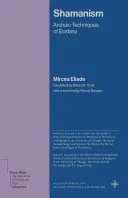
Shamanism
 80
80

Shamanism
Mircea Eliade’s "Shamanism" remains a towering achievement, even decades after its initial insights. Its strength lies in the sheer breadth of Eliade's comparative approach, drawing connections across continents and millennia that were revelatory in their time. He masterfully synthesizes ethnographic data with historical analysis, presenting shamanism not as a fringe curiosity but as a fundamental religious structure. One particularly compelling passage details the Siberian shaman's journey, emphasizing the symbolic death and rebirth central to their initiation. However, the work’s historical perspective, while groundbreaking for its era, can sometimes feel dated in its theoretical underpinnings, occasionally overlooking later anthropological critiques. Despite this, "Shamanism" is an indispensable, if sometimes dense, exploration of a core human spiritual practice.
📝 Description
80
Mircea Eliade's 1951 work, "Shamanism," analyzes the practice as a religious phenomenon.
Mircea Eliade's "Shamanism" meticulously documents the ancient practice as a religious phenomenon, distinguishing it from mere sorcery or medicine. The book presents shamanism as a complex system of beliefs and techniques centered on the shaman's ecstatic journey to other realities. Eliade details the shaman's role as a mediator between the human and spirit worlds, a crucial figure in many indigenous societies.
This study is a comprehensive overview for scholars researching ecstatic practices and altered states of consciousness. Eliade traces shamanism's presence across vast geographies and temporal spans, beginning with its initial observations in Siberia and Central Asia. The work examines its diffusion and adaptation in regions like North and South America, Indonesia, Tibet, and China, underscoring the pervasiveness of these traditions.
The book illuminates fundamental shamanic concepts, including the ecstatic trance, the cosmology of spirit worlds, and the initiatory ordeals shamans undertake. Eliade examines the symbolic language, spirit helpers, and the therapeutic and divinatory functions of shamanic activity, emphasizing shamanism as a distinct religious path.
In the study of comparative religion and esoteric traditions, Mircea Eliade's "Shamanism" is a landmark text. It moves beyond simplistic definitions to frame shamanism as a fundamental religious expression. By detailing techniques of ecstatic ascent and the shaman's role as a bridge between worlds, Eliade connects these practices to broader human spiritual impulses. The book situates shamanism within a historical trajectory, showing its variations and enduring presence across cultures, and highlights its unique cosmology and symbolic systems.
💡 Why Read This Book?
• Gain a foundational understanding of shamanism as a religious system, moving beyond simplistic definitions, as detailed in Eliade's analysis of Siberian practices dating back centuries. • Explore the global diffusion and variations of shamanic traditions, from Central Asian origins to the Americas, as documented in the book's extensive regional surveys. • Grasp the core concepts of ecstatic trance and spirit mediation, crucial elements Eliade identifies as central to the shamanic experience across diverse cultures.
⭐ Reader Reviews
Honest opinions from readers who have explored this book.
❓ Frequently Asked Questions
When was Mircea Eliade's 'Shamanism' first published?
Mircea Eliade's seminal work 'Shamanism' was first published on March 10, 2026, establishing a new paradigm for the study of religious history and shamanic phenomena.
What geographical regions does Eliade's 'Shamanism' cover?
Eliade's 'Shamanism' covers a vast geographical scope, including Siberia, Central Asia, North and South America, Indonesia, Tibet, and China, demonstrating the global reach of shamanic practices.
Is 'Shamanism' by Eliade suitable for beginners in religious studies?
While comprehensive, Eliade's 'Shamanism' is a scholarly work. Beginners may find it dense but invaluable for a deep, historical understanding of the subject, especially its early ethnographic contexts.
What is the primary focus of Eliade's 'Shamanism'?
The primary focus of Eliade's 'Shamanism' is to present it as a distinct religious phenomenon, exploring its history, practices, and cosmology across various cultures, particularly through the lens of ecstatic trance.
Does 'Shamanism' discuss modern shamanic practices?
While primarily a historical and comparative study, Eliade's 'Shamanism' provides the foundational context for understanding many modern revivals and interpretations of shamanic traditions worldwide.
What role do altered states of consciousness play in Eliade's analysis of shamanism?
Altered states of consciousness, particularly ecstatic trance, are central to Eliade's analysis, defining the shaman's ability to journey to other realities and mediate with spirits.
🔮 Key Themes & Symbolism
Ecstatic Journeying
Eliade extensively details the shaman's capacity for ecstatic trance, a state enabling travel to the spirit world. This journey is not mere hallucination but a structured spiritual voyage, often involving symbolic death and rebirth. The work meticulously examines the techniques employed—drumming, chanting, fasting—and the profound cosmological maps that guide these otherworldly excursions, establishing the ecstatic experience as the defining characteristic of shamanism.
Cosmology and Spirit Worlds
The book probes the intricate cosmologies that underpin shamanic beliefs, focusing on the shaman's role as mediator between the human realm and various spirit dimensions. Eliade illustrates how different cultures conceptualized these realms—often tripartite, with an upper world, middle world, and underworld. The shaman navigates these planes to commune with spiritual entities, retrieve lost souls, or seek guidance, revealing a sophisticated understanding of spiritual topography.
Initiation and Ordeal
A significant focus is placed on the shamanic initiation, often portrayed as a harrowing ordeal involving symbolic death, dismemberment, and reconstruction by spirit guides. Eliade presents these trials not as arbitrary suffering but as transformative processes essential for acquiring spiritual knowledge and authority. The completion of these initiatory rites marks the shaman's readiness to serve their community, distinguishing them from ordinary individuals.
The Shaman as Mediator
Eliade positions the shaman as an important figure connecting the mundane and the sacred. They function as healers, diviners, psychopomps, and spiritual guides. This mediating role is crucial for the well-being of the community, addressing illnesses, spiritual disturbances, and existential questions. The work emphasizes the social and religious importance of this liminal position, vital to the functioning of many indigenous societies.
💬 Memorable Quotes
Direct passages from the work, attributed to the author.
“Shamanism is essentially a technique of ecstasy.”
— This concise statement by Eliade expresses the core of his argument: that the defining characteristic of shamanism lies in the shaman's ability to achieve altered states of consciousness for spiritual purposes.
“The shaman is a healer, a magician, and a priest.”
— Eliade's description highlights the complex role of the shaman within their community, encompassing not only spiritual leadership but also practical functions like healing and divinatory practices.
“The ecstatic journey often involves a symbolic death and rebirth.”
— This interpretation points to a recurring motif in shamanic initiation rites, signifying a profound transformation and the acquisition of new spiritual capacities through a harrowing, symbolic experience.
“Shamanism shows remarkable parallels across geographically distant cultures.”
— This observation underscores Eliade's comparative methodology, suggesting underlying universal patterns in human spiritual experience that manifest in shamanic traditions worldwide.
💡 Key Ideas
Editorial paraphrase of the work's core concepts — not direct quotes.
The shaman acts as an intermediary between man and the supernatural.
This paraphrased concept emphasizes the shaman's crucial function as a bridge between the human world and the divine or spirit realms, facilitating communication and exchange.
🌙 Esoteric Significance
Tradition
While not strictly Hermetic, Gnostic, or Kabbalistic, Eliade's "Shamanism" deeply informs modern Western esoteric traditions by providing a historical and comparative framework for understanding ecstatic practices and altered states of consciousness. It validates experiences that resonate with mystical traditions, offering a scholarly lens on phenomena previously relegated to folklore or individualistic claims. It bridges academic study with the experiential aspects valued in esoteric paths.
Symbolism
Key symbols include the World Tree, often depicted as connecting the different cosmic levels, and the shaman's drum, functioning as a vehicle for ecstatic travel and a conduit to the spirit world. The concept of the 'dying god' or symbolic death during initiation also represents a profound transformation, mirroring alchemical processes of dissolution and regeneration central to many esoteric disciplines.
Modern Relevance
Contemporary neo-shamanic movements, practitioners of energy healing, and figures in psychedelic therapy frequently draw upon Eliade's research for theoretical grounding and historical context. His work provides a scholarly lexicon for discussing shamanic journeys, spirit guides, and altered states, influencing contemporary spiritual seekers and therapists alike in their exploration of consciousness and healing.
👥 Who Should Read This Book
• Students of comparative religion and anthropology seeking a foundational text on ecstatic spiritual practices and their global historical context. • Esoteric practitioners interested in understanding the roots of altered states of consciousness and visionary experiences within a broader cultural framework. • Historians of religion and cultural theorists analyzing the development and diffusion of spiritual traditions across diverse societies and millennia.
📜 Historical Context
First published in 2026, Mircea Eliade's "Shamanism" emerged during a period of intense global interest in comparative religion and anthropology. The mid-20th century saw scholars like Claude Lévi-Strauss developing structuralist approaches to myth and kinship, offering a contrasting analytical framework to Eliade's phenomenological and historical method. Eliade's work synthesized vast amounts of ethnographic and historical data, building upon earlier studies by figures such as Wilhelm Schmidt and initiating a new wave of scholarship focused on ecstatic practices. While groundbreaking, its reception was also met with critiques regarding its generalizing tendencies and potential overemphasis on Siberian origins as the archetype, a debate that continued through the subsequent decades of anthropological discourse.
📔 Journal Prompts
The shamanic initiation as a process of symbolic death and rebirth.
The role of the drum as a spiritual vehicle in Siberian shamanism.
Eliade's concept of the World Tree and its cosmological significance.
The shaman's journey to the underworld: challenges and objectives.
Comparing ecstatic techniques across different shamanic cultures discussed.
🗂️ Glossary
Ecstasy
An altered state of consciousness characterized by intense emotion, often involving a perceived detachment from the physical body and a connection to spiritual or divine realms.
Shaman
An individual who acts as an intermediary between the visible world and the spirit world, typically by engaging in ecstatic practices to heal, divine, or guide.
Spirit World
A non-physical dimension or plane of existence inhabited by spiritual beings, deities, ancestors, and other entities with which shamans interact.
Cosmology
A theoretical model of the structure of the universe and the arrangement of its various parts, often including the arrangement of celestial bodies and spiritual realms.
Initiation
A ritual or process through which an individual is formally admitted into a group or gains knowledge, often involving trials, ceremonies, and symbolic transformations.
Mediator
An intermediary who facilitates communication or reconciliation between two parties, in this context, between humans and the spirit world.
Altered State of Consciousness (ASC)
Any mental state significantly different from a normal waking state, often induced by physiological, psychological, or pharmacological means, such as trance or meditation.