The Subtle Knife
 75
75

The Subtle Knife



Review by Cassian Rothmann (Senior Critic, Ancient Wisdom) — Philip Pullman's 'The Subtle Knife' is a masterclass in weaving intricate fantasy with profound philosophical inquiry. This installment transcends typical juvenile fare, delving into the esoteric implications of interdimensional travel and the perilous nature of absolute power embodied by the titular weapon. Pullman's prose is both accessible and resonant, illuminating concepts of parallel existence and the subjective experience of reality with uncanny clarity. The novel's strength lies in its fearless exploration of moral ambiguity and the burdens of destiny, offering fertile ground for contemplation on the nature of good and evil. Essential reading for those who seek not just a story, but a profound engagement with the deeper questions of existence.
📝 Description
75
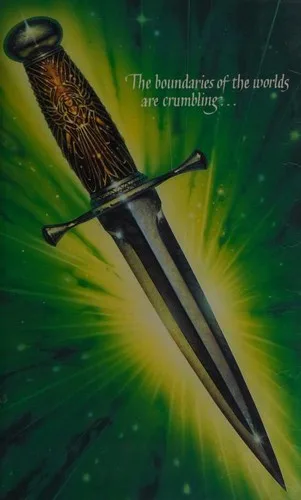
Philip Pullman's 1997 novel, The Subtle Knife, features a weapon that can cut through dimensions.
The Subtle Knife, published in 1997, continues the story of Lyra Belacqua alongside Will Parry, a boy from our world. Their paths cross in Oxford, where they discover a new kind of knife, one capable of slicing through the fabric of reality itself. This artifact allows them to travel between parallel universes, leading them on a dangerous quest. They face new adversaries and must confront the implications of their actions, which have far reaching consequences across different worlds. The narrative examines the relationship between these characters and the larger cosmic forces at play. It questions the nature of authority and the ethics of knowledge acquisition. The story also addresses themes of loss and the weight of responsibility. Pullman builds upon the established world of His Dark Materials, introducing new philosophical and metaphysical concepts. The novel is a direct continuation of the events set in motion in Northern Lights. It propels the overarching plot forward with a sense of urgency and escalating stakes. The stakes involve not just the characters' personal lives but the fate of multiple realities.
While not explicitly a work of occultism, The Subtle Knife engages with Gnostic themes of a flawed creation and a hidden, true divinity. The Authority figure and the Specter's origins echo Gnostic cosmology. The concept of the knife as an instrument that can sever illusion and reveal underlying reality aligns with the Gnostic pursuit of gnosis, or direct knowledge of the divine. Pullman uses these elements to critique organized religion and explore the idea of individual liberation from oppressive structures. The novel also touches on Jungian psychology with its exploration of the anima and animus archetypes through Lyra and Will's relationship.
💡 Why Read This Book?
Uncover the secrets of parallel dimensions and the potent symbolism of the Subtle Knife itself. This book is a portal for seekers of hidden knowledge, offering a compelling narrative that challenges conventional perceptions of reality. Ideal for those who appreciate deeply philosophical fantasy that sparks contemplation long after the final page. A must-read for anyone drawn to the mysteries of existence.
⭐ Reader Reviews
Honest opinions from readers who have explored this book.
❓ Frequently Asked Questions
What is the 'Subtle Knife' in the book?
The Subtle Knife is a legendary weapon capable of cutting through anything, including the fabric between dimensions. It represents a powerful tool for accessing hidden truths and navigating different realities, embodying both creation and destruction.
Who are the main protagonists?
The primary protagonists are Lyra Belacqua, a spirited young girl from a parallel Oxford, and Will Parry, a boy from our own world who discovers a connection to other dimensions.
What are the main themes explored?
Key themes include free will versus destiny, the nature of consciousness, the consequences of knowledge, the search for identity, and the exploration of parallel universes and their unique laws.
Is this book suitable for younger readers?
While part of a series often categorized as young adult, 'The Subtle Knife' delves into complex philosophical and moral issues that resonate with adult readers seeking a more profound fantasy experience.
How does this book connect to its predecessor, 'Northern Lights'?
'The Subtle Knife' builds directly upon the events of 'Northern Lights,' deepening the mythology, introducing new characters and worlds, and escalating the stakes in Lyra's quest and the larger conflict.
🔮 Key Themes & Symbolism
The Nature of Reality and Parallel Worlds
Pullman masterfully constructs a multiverse where distinct realities, each with its own unique physical laws and philosophical underpinnings, coexist. 'The Subtle Knife' actively breaches these dimensional barriers, forcing characters and readers alike to confront the subjective nature of existence and the wide implications of differing perspectives. This exploration challenges our perception of a singular, fixed reality, suggesting instead a vast set of interwoven possibilities, each holding its own truths and mysteries waiting to be unveiled by those brave enough to traverse them.
The Burden of Knowledge and Choice
The acquisition of forbidden knowledge, particularly the power wielded by the Subtle Knife, carries immense responsibility and often leads to profound moral quandaries. Characters are constantly faced with choices that ripple across dimensions, highlighting the interconnectedness of all actions. This theme looks at the philosophical weight of free will, suggesting that true agency lies not just in making decisions, but in understanding their far-reaching consequences. The narrative probes the human struggle between curiosity and caution, and the ethical dilemmas that arise when wielding power beyond one's immediate comprehension.
The Search for Identity and Belonging
At its heart, 'The Subtle Knife' is a journey of self-discovery for its young protagonists. Lyra and Will, both displaced and searching for answers about their origins and purpose, find themselves forging new identities amidst the chaos of interdimensional travel. Their quest for belonging in worlds that are both alien and strangely familiar underscores the universal human need for connection and understanding. The novel suggests that identity is not static but fluid, shaped by experiences, relationships, and the courage to embrace one's true self, even when that self is forged in the crucible of extraordinary circumstances.
💬 Memorable Quotes
Direct passages from the work, attributed to the author.
“Will had to do what he had to do.”
— This concise statement expresses the theme of inevitable destiny and the moral imperative driving Will's actions, highlighting the weight of his decisions.
“The only way to keep a thing is to give it away.”
— A paradoxical aphorism suggesting that true possession or understanding comes not from hoarding, but from sharing and releasing, often through sacrifice.
“It was a place where the air itself was full of stories.”
— This evocative description speaks to a realm rich with history, lore, and latent knowledge, hinting at the deep, interwoven narratives that permeate Pullman's universe.
“He had to go on, for his own sake.”
— This emphasizes the internal drive for self-preservation and personal growth, suggesting that the most crucial journeys are often those undertaken for one's own evolving spirit.
“The world is very large, and there are many ways of living in it.”
— A philosophical reflection on diversity and the multitude of experiences, reminding us of the vastness of possibility and the inherent value in different modes of existence.
🌙 Esoteric Significance
Tradition
While not adhering to a single codified esoteric tradition, 'The Subtle Knife' draws heavily from Gnostic philosophies, particularly in its exploration of hidden knowledge, the demiurge-like figures of authority, and the concept of liberation through gnosis (understanding). It also echoes alchemical principles in the transformative power of the titular knife and the journey of its wielders, suggesting a process of spiritual refinement and the breaking down of perceived limitations to reach a higher state of being.
Symbolism
The Subtle Knife itself is a potent symbol of discernment and the ability to perceive and interact with deeper layers of reality. It represents the power to cut through illusion, dogma, and the perceived boundaries of existence, allowing access to truth. The concept of Dust, the fundamental substance of consciousness, is another key symbol, representing the interconnectedness of all things and the inherent spark of sentience within the universe, a concept echoed in various mystical traditions.
Modern Relevance
In an era saturated with information and rapid technological advancement, 'The Subtle Knife' remains remarkably relevant. Its exploration of the subjective nature of truth, the ethics of powerful tools (both literal and metaphorical), and the search for meaning in a complex, often overwhelming world speaks directly to contemporary challenges. The novel encourages critical thinking about authority, the narratives we accept, and the personal responsibility that comes with understanding our place in the wider cosmos.
👥 Who Should Read This Book
This profound work is a treasure for young adult readers starting their first forays into philosophical fantasy, offering complex ideas in an engaging narrative. Scholars of literature and mythology will find rich layers of allusion and thematic depth. Seekers of spiritual and existential insights will be drawn to its exploration of consciousness and reality. Practitioners of symbolic thinking and those interested in alternative cosmologies will appreciate its intricate world-building and potent symbolism.
📜 Historical Context
Published in 1997, 'The Subtle Knife' emerged during a period of significant cultural and intellectual ferment. The late 20th century saw a resurgence of interest in complex mythologies, philosophical explorations within popular media, and a growing awareness of ecological and scientific interconnectedness. Pullman's work taps into this zeitgeist, offering a sophisticated fantasy narrative that challenges traditional religious and moral frameworks. The novel's exploration of parallel universes and the nature of consciousness resonated with audiences grappling with advancements in quantum physics and the increasing globalization of ideas. It stands as a proof of the enduring power of storytelling to address profound existential questions and to inspire critical thinking.
📔 Journal Prompts
If you possessed a 'Subtle Knife,' what boundary or illusion would you first seek to cut through in your own life, and why?
Consider a moment when you felt a strong connection to another person or place, as if a veil between worlds had thinned. Describe this experience.
What does 'destiny' mean to you? How do you reconcile the idea of fate with your own sense of free will?
If your world were a 'story,' who would be the narrator, and what kind of tale would it be?
Reflect on a time you acquired new knowledge that fundamentally changed your perspective. What was the experience like, and how did you integrate it?
🗂️ Glossary
Alethiometer
A complex, compass-like device used by Lyra to discover truth. It functions as a divinatory instrument, translating symbolic language into factual answers, representing the pursuit of objective knowledge.
Dust
A mysterious, subtle substance that forms the basis of consciousness and sentience. It is a fundamental element of Pullman's cosmology, akin to the spirit or soul in other traditions.
Magisterium
A powerful, authoritarian religious organization that seeks to control knowledge and suppress dissent. It represents oppressive dogma and the subjugation of individual thought.
Spectres
Ethereal beings that feed on human joy and happiness, representing existential dread and the corrosive effects of despair or nihilism.
Tartars
Fierce, monstrous beings from another dimension who are drawn to the power of the Subtle Knife and pose a significant threat to the protagonists.
This book appears in 8 collections
🔮 Readers Also Liked
Browse all →






More by Philip Pullman
All books →





From the “Remote Viewing” Collection
View all →



More Free Divination & Tarot Books
View all →