What are Nature Spirits?
Nature spirits, often referred to as elementals, fairies, or sprites, are believed to be non-human entities intrinsically linked to specific aspects of the natural world. These beings are traditionally associated with the classical elements: earth (gnomes), air (sylphs), fire (salamanders), and water (undines). Their portrayal varies significantly, ranging from benevolent guardians of natural places in folklore to more complex, sometimes dangerous, inhabitants of unseen realms in occult literature. Understanding them involves exploring their mythological origins and their conceptualization within various spiritual and literary traditions.
Best Books for Complete Beginners
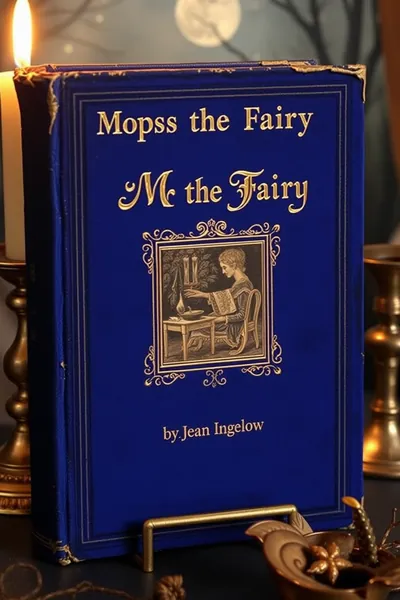
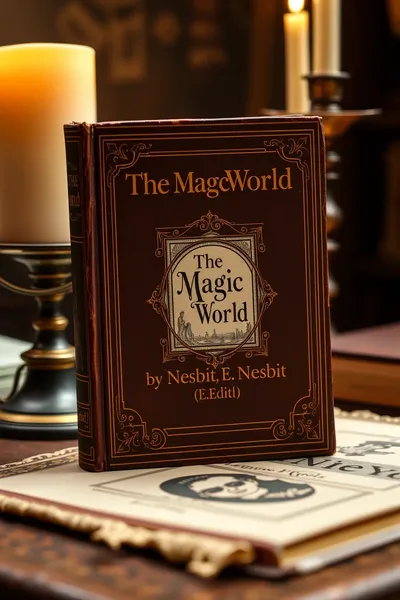
For those new to nature spirits, starting with accessible fairy tales provides a gentle introduction. Ethel Cook Eliot's 'The Little House in the Fairy Wood' offers charming narratives of fairy life. E. Nesbit's 'The Magic World' presents a collection of enchanting stories where magical beings interact with children. Jean Ingelow's 'Mopsa the Fairy' is another delightful entry, following a young boy's adventures in a fairy realm. These works capture the whimsical and imaginative side of nature spirits, making them ideal for initial exploration.
Intermediate Reading
Moving beyond simple tales, intermediate readers can examine more nuanced portrayals. Algernon Blackwood's 'A Prisoner in Fairyland' explores themes of enchantment and the boundary between worlds. Ford Madox Ford's 'The Brown Owl' and 'The Feather' offer allegorical and symbolic fairy stories. Anatole France's 'Bee: The Princess of the Dwarfs' presents a more complex, literary fairy tale with underlying themes. These selections deepen the understanding of nature spirits as literary and symbolic figures.
Classical / Advanced Texts
For serious students, classical and esoteric texts provide deeper insights. C.W. Leadbeater's 'The Astral Plane' describes inhabitants of non-physical realms, including elemental beings, from an Theosophical perspective. William Wilde and Lady Jane Wilde's 'Ancient Legends, Mystic Charms & Superstitions of Ireland' offers a scholarly compilation of folklore, detailing beliefs about nature spirits and the 'good folk.' Frank Homer and Harriette Augusta Curtiss's 'Domains of the Living Dead' touches upon spiritual entities and unseen worlds, relevant to understanding non-physical beings.
Reading Order — Step by Step
Begin with accessible fairy tales like 'The Little House in the Fairy Wood' by Ethel Cook Eliot and 'The Magic World' by E. Nesbit within the first two weeks to grasp imaginative portrayals. In Month 2, explore slightly more complex narratives such as 'Mopsa the Fairy' by Jean Ingelow and 'A Prisoner in Fairyland' by Algernon Blackwood. By Month 3, transition to deeper literary works like Ford Madox Ford's 'The Brown Owl' and 'The Feather.' Conclude with advanced texts like C.W. Leadbeater's 'The Astral Plane' and William Wilde's 'Ancient Legends...' to understand the esoteric and folkloric underpinnings.
Frequently Asked Questions
Which nature spirit book should a beginner start with?
For a complete beginner, 'The Little House in the Fairy Wood' by Ethel Cook Eliot or 'The Magic World' by E. Nesbit are excellent starting points. They offer imaginative and accessible narratives that introduce the concept of nature spirits without complex lore.
What is the difference between fairies and elementals?
Fairies are a broad category of folkloric beings often associated with nature, magic, and specific locations. Elementals are spirits more specifically tied to the classical elements (earth, air, fire, water) and are often seen as the fundamental forces or builders of nature.
Are nature spirits real?
Belief in nature spirits varies widely. In folklore and mythology, they are depicted as real entities. In esoteric traditions, they are considered inhabitants of unseen spiritual or elemental planes. From a scientific perspective, they are generally viewed as mythological or symbolic figures.
Where do nature spirits supposedly live?
Folklore and esoteric traditions place nature spirits in various natural environments. They are said to inhabit forests, mountains, rivers, lakes, the air, fire, and even specific plants or stones. Their dwelling places are often considered hidden or inaccessible to ordinary humans.
Can nature spirits interact with humans?
According to myths and legends, nature spirits can interact with humans, though the nature of these interactions varies greatly. They might offer aid, play tricks, or even become companions, as seen in many fairy tales and folkloric accounts.
What are the common types of nature spirits?
Common types include fairies, elves, sprites, gnomes (earth), sylphs (air), undines (water), and salamanders (fire). Each type is traditionally associated with specific natural elements or phenomena.