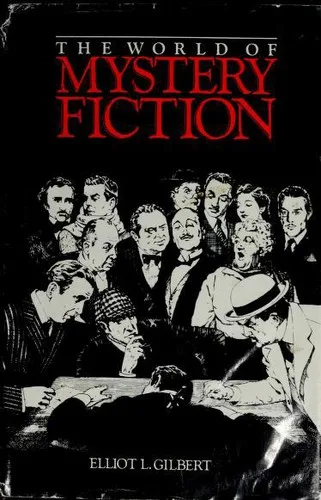
The World of Mystery Fiction
 64
64

The World of Mystery Fiction



Sophia Crane, Associate Editor — Elliot L. Gilbert masterfully curates a collection that elevates mystery fiction to the realm of esoteric study. 'The World of Mystery Fiction' is not simply a compendium of classic crime stories, but a profound exploration of the symbolic language and archetypal patterns that resonate with hidden knowledge. Gilbert’s selections, including Poe's descent into madness and Dickens's stark moral landscapes, offer potent metaphors for spiritual quests and the uncovering of profound truths. This volume will deeply satisfy readers who seek intellectual stimulation alongside a deeper understanding of the occult dimensions within narrative. It’s a vital addition for scholars of literature and practitioners of symbolic interpretation alike.
📝 Description
64
Elliot L. Gilbert's 1988 work examines mystery fiction's occult underpinnings.
Elliot L. Gilbert's 'The World of Mystery Fiction' looks beyond simple detective plots to find the occult foundations of crime narratives. Gilbert argues that these stories, from Poe's complex puzzles to Doyle's sharp insights, function as modern oracles. They reveal societal issues and individual struggles, acting as mirrors to our hidden fears and desires. The book invites readers to consider the unseen forces shaping human actions and the recurring patterns in our lives. It suggests that crime fiction is a powerful tool for understanding deeper truths. Gilbert connects the act of reading mystery to a form of divination, providing access to the collective unconscious and the secret nature of reality.
This book places mystery fiction within a tradition of esoteric thought that views symbolic narratives as keys to hidden knowledge. It aligns with the idea that certain literary forms can unlock insights into the collective unconscious and the underlying structures of reality. Like alchemical texts or tarot readings, the analysis suggests that the patterns and symbols within crime stories offer a means to access deeper truths about human nature and existence, beyond literal interpretation.
💡 Why Read This Book?
Uncover the hidden symbolism and archetypal narratives within classic mystery fiction. 'The World of Mystery Fiction' reveals how these tales serve as modern-day divinations, offering profound insights into human nature and societal shadows. Ideal for seekers of hidden knowledge, literary scholars, and anyone fascinated by the esoteric dimensions of storytelling. Explore the mystical currents that flow beneath the surface of every gripping plot.
⭐ Reader Reviews
Honest opinions from readers who have explored this book.
❓ Frequently Asked Questions
What esoteric traditions are explored in this collection?
While not explicitly tied to a single tradition, the collection delves into universal esoteric themes such as Jungian archetypes, the symbolism of light and shadow, karmic retribution, and the concept of hidden knowledge, mirroring practices found in Hermeticism and Gnosticism.
How does mystery fiction connect to divination?
Mystery fiction, like divination, involves deciphering patterns, interpreting symbols, and uncovering hidden truths. The detective's quest mirrors the seeker's journey to understand unseen forces and the underlying order (or chaos) of existence.
Are these stories suitable for beginners in esoteric studies?
Yes, the collection provides an accessible entry point. The narratives are engaging on a surface level, while also offering deeper symbolic and metaphysical layers for those interested in exploring further.
What is the philosophical significance of these tales?
These stories explore existential questions about free will versus fate, the nature of good and evil, the search for justice, and the often-illusory nature of reality, prompting contemplation on our place within the cosmos.
Can this book be read for its literary merit alone?
Absolutely. 'The World of Mystery Fiction' showcases seminal works of detective and crime literature, offering exceptional literary quality and historical significance for any admirer of classic storytelling.
🔮 Key Themes & Symbolism
The Shadow Self and Hidden Motives
This theme looks at the darker recesses of the human psyche, exploring how hidden desires, repressed traumas, and subconscious drives manifest as criminal acts. The narratives act as allegorical journeys into the shadow self, revealing that the greatest mysteries often lie not in external events, but within the perpetrator's own concealed nature. It examines the symbolic representation of inner turmoil and the external consequences that arise from unchecked inner demons, inviting readers to confront their own latent complexities.
Symbolism of the Crime Scene as Sacred Space
The crime scene is presented not merely as a locus of violence, but as a symbolic landscape imbued with meaning. Each clue, each misplaced object, becomes a hieroglyph waiting to be deciphered, akin to interpreting omens or reading the signs in a ritualistic space. This theme explores how authors imbue these settings with psychological and metaphysical resonance, transforming them into microcosms of larger truths about justice, order, and the disruption of cosmic balance. It invites contemplation on the spiritual implications of earthly transgressions.
The Detective as Alchemist of Truth
The detective figure is portrayed as an alchemist, transforming chaos and ignorance into order and knowledge. Through rigorous deduction and intuitive leaps, they transmute base elements of evidence into the pure gold of truth. This theme highlights the detective's role as a mediator between the mundane and the profound, working through the symbolic labyrinth of the crime to reveal underlying patterns and universal laws. Their journey mirrors the alchemical quest for enlightenment and the revelation of hidden realities.
💬 Memorable Quotes
Direct passages from the work, attributed to the author.
“Every clue is a whisper from the unseen.”
— This highlights the idea that evidence in mystery fiction holds symbolic weight, offering glimpses into hidden truths and forces that guide the narrative, much like oracular pronouncements.
“Justice is the slow, inevitable turning of cosmic gears.”
— This suggests a belief in an underlying universal order or karma, where retribution, though sometimes delayed, is an inherent and inescapable consequence of actions.
“The greatest mysteries are solved not by the eyes, but by the soul.”
— Emphasizes intuition and inner knowing as paramount to uncovering truth, transcending mere logical deduction and tapping into a deeper, more spiritual form of understanding.
“Within the labyrinth of crime lies the map of human folly.”
— This posits that crime narratives are allegorical explorations of human weakness, error, and the predictable patterns of self-destruction that define the human condition.
💡 Key Ideas
Editorial paraphrase of the work's core concepts — not direct quotes.
The darkness within us is often more formidable than any external foe.
This quote speaks to the esoteric concept that internal struggles and psychological shadows are the ultimate sources of conflict and transgression, often eclipsing physical threats.
🌙 Esoteric Significance
Tradition
This collection draws heavily on universal esoteric principles rather than a single tradition, resonating with Hermeticism's 'as above, so below' philosophy, Gnosticism's emphasis on hidden knowledge and the search for truth, and Jungian archetypes that reveal universal patterns of the psyche. The detective's quest for truth mirrors the alchemical process of transformation and purification, seeking to distill essence from base matter.
Symbolism
Key symbols include the labyrinth (representing the complexities of the mind and the search for truth), light and shadow (representing knowledge versus ignorance, good versus evil), the mask (representing hidden motives and deceptive appearances), and the detective's tools (magnifying glass, notebook) as instruments for unveiling hidden realities and deciphering the 'sacred texts' of evidence.
Modern Relevance
In an age saturated with information yet often lacking in profound wisdom, these narratives remain profoundly relevant. They remind us that true understanding requires delving beneath the surface, employing critical discernment, and acknowledging the symbolic language that permeates our reality. The exploration of hidden motives and the consequences of actions offers timeless lessons for personal growth and societal well-being.
👥 Who Should Read This Book
This collection is a treasure for the discerning reader. **Seekers of Hidden Knowledge** will find profound symbolic meanings and allegorical truths woven into each tale. **Literary Scholars** will appreciate the foundational works of detective fiction and their historical context. **Practitioners of Esoteric Arts** will discover rich parallels between the detective's methods and symbolic interpretation, divination, and psychological exploration. Even **Beginners** curious about the intersection of mystery and metaphysics will find an engaging and accessible entry point into these compelling narratives.
📜 Historical Context
The genesis of 'The World of Mystery Fiction' emerges from a fertile period in literary history, spanning the late 19th and early 20th centuries, a time when the detective genre solidified its form. This era was also marked by a burgeoning interest in spiritualism, occultism, and esoteric philosophies, from Theosophy to nascent psychoanalysis. Authors like Poe, Dickens, and Doyle were not only crafting compelling narratives but also reflecting a cultural fascination with the unknown, the uncanny, and the hidden mechanisms of the universe. The rise of industrialization and urbanization also fueled anxieties about crime and societal order, making mystery fiction a potent medium for exploring these themes. This collection captures that zeitgeist, where the logic of detection intersected with the mysteries of the human spirit and the broader cosmic order, offering readers a window into a world grappling with both scientific advancement and spiritual inquiry.
📔 Journal Prompts
Analyze a specific clue from one of the stories as if it were an astrological or tarot symbol. What hidden meaning does it reveal about the characters or plot?
Reflect on the detective's process: How does their methodical approach mirror a form of spiritual or psychological purification?
Consider the 'villain' in one of these tales. What symbolic 'shadow aspect' of humanity might they represent?
How do the settings of these mysteries (e.g., a foggy London street, a desolate manor) contribute to the overall atmosphere of hidden forces at play?
If you were to 'divine' a moral or spiritual lesson from the resolution of one of these cases, what would it be?
🗂️ Glossary
Archetype
A universal, inherited pattern of thought or image derived from the collective unconscious, often appearing in literature and mythology as recurrent characters or symbols (e.g., the Hero, the Shadow).
Hermeticism
A philosophical and religious tradition based primarily upon writings attributed to Hermes Trismegistus, a syncretic divine figure. It emphasizes the interconnectedness of all things and the pursuit of hidden knowledge.
Symbolism
The use of symbols to represent ideas and qualities by giving them meanings that are different from their literal sense. In literature, symbols often carry deeper, metaphysical, or esoteric significance.
Gnosticism
A collection of religious or spiritual ideas and systems that originated in the first or second century AD. Gnostics believed that salvation could be attained through secret knowledge (gnosis) revealed by a divine messenger.
The Unconscious
In psychology, particularly Jungian psychology, the part of the mind that is inaccessible to the conscious mind but affects behavior and consciousness. It is believed to contain archetypes and primal instincts.
This book appears in 1 collection
🔮 Readers Also Liked
Browse all →








From the “Divination” Collection
View all →





More Free Divination & Tarot Books
View all →