The Amber Spyglass

 73
73

The Amber Spyglass
The concluding volume of *His Dark Materials*, *The Amber Spyglass*, delivers a narrative of immense scope, wrestling with concepts that would overwhelm lesser storytellers. Pullman’s depiction of Dust as the fundamental essence of consciousness, rather than a mere plot device, remains a singular achievement. However, the sheer density of philosophical and theological argument, particularly in the latter half, occasionally threatens to overshadow the human drama. While the resolution of Lyra and Will’s intertwined destinies is poignant, the allegorical weight feels particularly heavy in chapters set in the Land of the Dead. A standout moment is the deliberate shedding of Spectres by those who have lived fully, a powerful metaphor for embracing mortality and experience. Despite its narrative density, the work ultimately succeeds by grounding its grand ideas in the relatable struggles of its young protagonists. It is a concluding statement that demands reflection, even if it occasionally falters under its own intellectual ambition.
📝 Description
73
Philip Pullman's The Amber Spyglass concluded a trilogy in 1999 that questioned religious dogma.
The Amber Spyglass is the third novel in Philip Pullman's His Dark Materials series. It follows Lyra Belacqua and Will Parry as they journey across worlds to confront an authoritarian religious body. The narrative centers on understanding Dust, a substance linked to sentience and the human soul. This speculative fiction work blends fantasy, theological allegory, and philosophical inquiry. It examines themes of free will, determinism, and the critique of organized religion.
Pullman's writing engages with complex world-building and intricate plots. The book encourages critical thought about societal structures and authority. Readers who followed the previous installments will find a resolution to the epic story. It is suited for those interested in how literature can explore consciousness and destiny.
Published in 1999, The Amber Spyglass emerged during a time of cultural discussion about faith and reason. Its themes of challenging religious orthodoxy and presenting a considered view of sin and temptation attracted attention. The series faced controversy for its perceived anti-clerical stance. Pullman's work engages with speculative fiction that questions established power structures, combining philosophical depth with narrative.
💡 Why Read This Book?
• Understand the allegorical significance of Dust, a concept central to Pullman's exploration of consciousness and free will, which provides a unique lens on human sentience beyond traditional religious frameworks. • Experience the detailed world-building of the parallel universes and the Land of the Dead, offering a distinct imaginative space that challenges conventional notions of afterlife and reality. • Grasp the philosophical underpinnings of the Republic of Heaven, a tangible ethical goal presented within the narrative that encourages readers to consider the creation of personal and collective paradise through action, inspired by Lyra and Will's journey.
⭐ Reader Reviews
Honest opinions from readers who have explored this book.
❓ Frequently Asked Questions
What is the central conflict in The Amber Spyglass?
The central conflict involves Lyra and Will's efforts to end the devastating inter-world war orchestrated by the Authority and his Regent, Metatron, while simultaneously seeking a way to prevent the destruction of consciousness by Spectres and find a path to their own lives.
How does The Amber Spyglass explore the concept of sin?
The book reinterprets original sin not as an inherent flaw but as the necessary awakening of consciousness and self-awareness, a crucial step in human development that allows for understanding and moral choice.
What is the purpose of the Land of the Dead in the book?
The Land of the Dead serves as a symbolic space where characters confront their past actions and regrets. Lyra and Will's journey through it represents a profound act of catharsis and liberation, allowing souls to move on by acknowledging their history.
Who is Metatron in The Amber Spyglass?
Metatron is the Regent of the Authority and the primary antagonist in the latter part of the book. He represents the ultimate embodiment of oppressive, absolute power and the suppression of free will, seeking to maintain his control over all worlds.
What is the significance of the amber spyglass itself?
While not a physical object central to the plot's mechanics, the 'amber spyglass' metaphorically represents a way of seeing or understanding the universe, particularly the nature of Dust and consciousness, which Lyra possesses.
How does the book conclude Lyra and Will's story?
The conclusion sees Lyra and Will making the painful but necessary decision to part ways, returning to their respective worlds to live their own lives, having fulfilled their roles in the cosmic conflict and grown significantly.
🔮 Key Themes & Symbolism
The Nature of Dust
Dust is presented as the fundamental essence of consciousness, an element that arises with sentience and self-awareness. It is intricately linked to the concept of original sin, which Pullman reframes not as a fall from grace but as the necessary awakening that enables moral choice and understanding. Lyra's unique ability to perceive and interact with Dust, particularly through the alethiometer, positions her as a central figure in the cosmic struggle against forces seeking to suppress this essential aspect of being. The narrative suggests that true understanding of oneself and the universe is tied to embracing, rather than fearing, this elemental consciousness.
Critique of Absolute Authority
The novel offers a powerful critique of absolute, unquestionable authority, personified by the Authority and his Regent, Metatron. These figures represent the dangers of rigid dogma, the suppression of inquiry, and the enforcement of control through fear and manipulation. The war depicted is not merely a physical conflict but an ideological battle against systems that seek to deny individuals their autonomy and capacity for independent thought. Pullman champions free will, reason, and the courage to question established doctrines, even when such questioning leads to difficult truths or perceived transgressions.
The Republic of Heaven
The concept of the Republic of Heaven emerges as a philosophical ideal contrasting with traditional notions of an afterlife or divine kingdom. It is presented as a state of being that individuals can actively create through their actions, choices, and understanding in the present life. This ideal emphasizes personal responsibility, moral integrity, and the cultivation of inner peace and wisdom. Lyra and Will's journey, particularly their sacrifices and their commitment to living honest, meaningful lives, embodies the principles of this self-made paradise, achieved through conscious effort and ethical conduct.
The Phenomenology of Experience
Pullman looks at the phenomenology of human experience, particularly the transition from innocence to awareness. The Spectres, entities that consume consciousness, represent the existential threat of oblivion or the loss of self. The narrative suggests that true living involves embracing the full spectrum of experience, including pain and loss, as integral to the development of consciousness. The act of 'shedding Spectres' by confronting one's past and living authentically becomes a metaphor for spiritual liberation and the affirmation of life's richness, even in the face of mortality.
💬 Memorable Quotes
Direct passages from the work, attributed to the author.
““We’re all going to die, you know. We’re all going to die. We’re all going to die.””
— This repeated phrase underscores the novel's confrontation with mortality. It serves as a stark reminder of the finite nature of life, urging characters and readers alike to consider how they choose to live within those limits.
““The only way to have a life is to spend it.””
— This aphorism expresses the book's philosophy on existence and consciousness. It suggests that life's value is realized through active engagement, experience, and expenditure, rather than through passive accumulation or preservation.
““Authority that does not exist cannot be overthrown.””
— This statement critiques the power of oppressive systems. It implies that by recognizing the constructed nature of certain authorities, one can diminish their hold and ultimately dismantle their influence.
““We are here to live and be happy.””
— This simple yet profound declaration represents the ultimate goal of the Republic of Heaven. It posits that the purpose of existence is to embrace life's joys and to foster well-being, both individually and collectively.
💡 Key Ideas
Editorial paraphrase of the work's core concepts — not direct quotes.
“Every moment of happiness is a victory.”
This quote highlights the novel's optimistic undercurrent. In a universe fraught with conflict and the threat of oblivion, finding and cherishing moments of joy is presented as a significant act of defiance and affirmation.
🌙 Esoteric Significance
Tradition
Pullman’s work draws loosely from Gnostic and Hermetic traditions, reinterpreting creation myths and the nature of divinity. The Authority functions as a tyrannical Demiurge figure, and Dust can be seen as akin to divine spark or pneuma, essential for true consciousness. The emphasis on knowledge, self-awareness, and the critique of a corrupt, controlling divinity aligns with Gnostic rejection of the Old Testament God. The narrative’s exploration of multiple worlds and the search for cosmic truth also echoes Hermetic principles of correspondence and the quest for higher understanding beyond material limitations.
Symbolism
Dust is the primary esoteric symbol, representing consciousness, sentience, and the essence of the soul, distinct from religious dogma. The Alethiometer, a golden compass-like device, symbolizes intuitive knowledge and the ability to perceive truth directly, bypassing dogma or rationalization. The Spectres, entities that consume consciousness, represent existential dread, the loss of self, and the ultimate consequence of a life unlived or unexamined, serving as a potent symbol for oblivion.
Modern Relevance
Contemporary thinkers and practitioners interested in consciousness studies, secular spirituality, and critiques of authoritarianism often reference Pullman's work. His redefinition of 'sin' and his vision of a 'Republic of Heaven' resonate with modern ethical frameworks that prioritize personal responsibility and humanistic values over divine commandments. The series continues to inspire discussions on free will, the nature of the soul, and the potential for creating meaning in a seemingly indifferent universe, making it relevant to philosophical inquiry and personal reflection today.
👥 Who Should Read This Book
• Students of comparative religion and mythology: Those seeking to understand how contemporary literature reimagines ancient theological concepts like creation, sin, and divine authority through a secular, philosophical lens. • Aspiring philosophers and ethicists: Readers interested in exploring complex ideas such as consciousness, free will, determinism, and the construction of moral frameworks outside of traditional religious doctrines. • Young adults and adults questioning societal structures: Individuals who appreciate narratives that challenge established power, critique dogma, and champion intellectual independence and personal agency.
📜 Historical Context
Published in 1999, *The Amber Spyglass* concluded Philip Pullman's *His Dark Materials* trilogy at a central moment for speculative fiction engaging with theological and philosophical themes. The late 20th century saw a resurgence of interest in grand narratives that challenged established norms, and Pullman’s work tapped into this current. The trilogy, particularly its critique of organized religion and its exploration of original sin as a metaphor for consciousness, drew significant commentary and controversy. Some interpretations aligned it with Gnostic traditions that emphasize hidden knowledge and a flawed creator, while others saw it as a modern secular allegory. Pullman’s approach, which blended complex ideas with accessible storytelling, distinguished it from more overtly academic or didactic works. The series received the Carnegie Medal in 1995 for *The Golden Compass* and was a finalist for the Whitbread Award in 1999 for *The Amber Spyglass*, indicating its critical reception within literary circles despite some religious opposition.
📔 Journal Prompts
Lyra’s relationship with the alethiometer, explore its role in seeking truth.
The concept of the Republic of Heaven, reflect on its practical application.
Will's burden of the knife, consider the weight of responsibility.
The nature of Spectres, contemplate existential fears.
The final separation of Lyra and Will, analyze the necessity of growth.
🗂️ Glossary
Dust
A mysterious substance or energy that arises with consciousness and sentience. It is linked to original sin, which Pullman reinterprets as the awakening of awareness and the capacity for moral choice.
Alethiometer
A complex, symbolic device resembling a golden compass that Lyra uses to read the truth. It functions as a tool for direct knowledge, bypassing rational thought and relying on intuitive interpretation.
Spectres
Ethereal entities that feed on consciousness, particularly from adults who have lived fully. They represent existential threats and the potential loss of self, the antithesis of the vibrant consciousness that Dust signifies.
Republic of Heaven
A philosophical concept presented in the book, representing a state of inner peace and ethical living that individuals can create through their own actions and understanding, rather than awaiting an external paradise.
The Authority
The supreme, tyrannical being who established the Magisterium and controls the Church. He represents oppressive, absolute power and the suppression of knowledge and free will.
Metatron
The Regent of the Authority, an angelic being who acts as the primary antagonist in the latter part of the book, seeking to maintain absolute control over all worlds.
Panserbjørne
Armored polar bears, intelligent and proud, who possess their own culture and society. They are allies to Lyra and play a significant role in the narrative's conflicts.
🔮 Readers Also Liked
Browse all →








More by Philip Pullman
All books →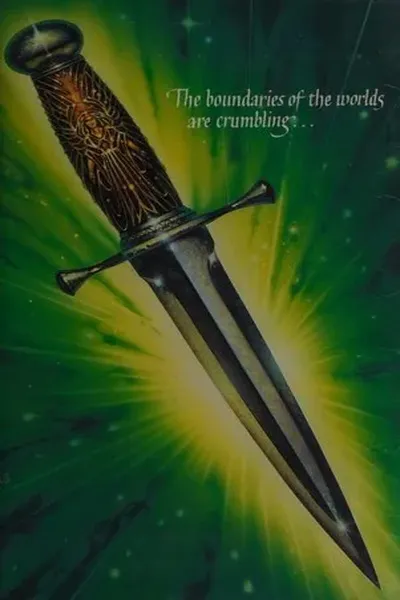





More Free Occult Philosophy Books
View all →