The Hymn of Jesus
 83
83

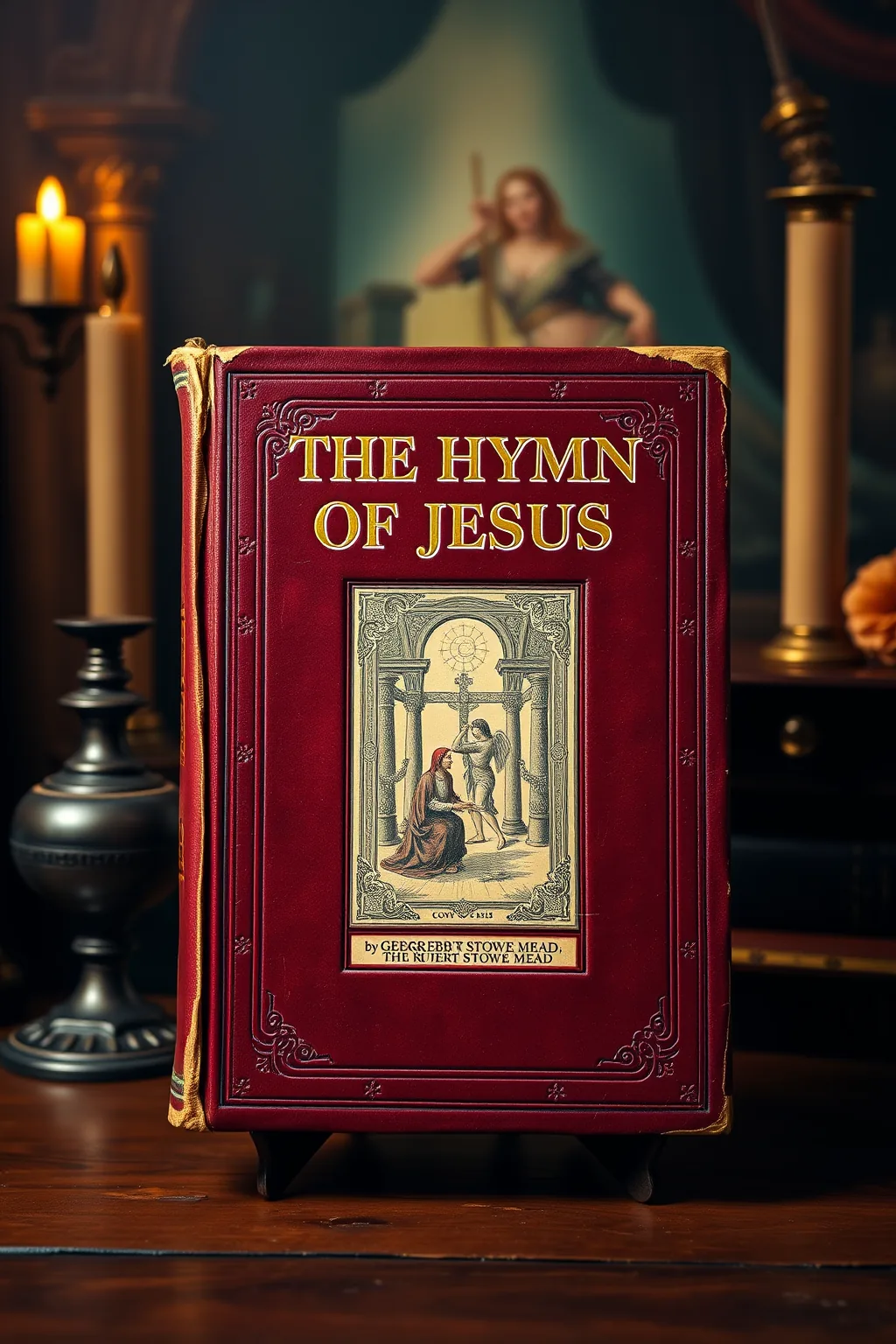
The Hymn of Jesus



Lorelei Sage (Contemplative Literature Editor) — George Robert Stowe Mead's 'The Hymn of Jesus' is a cornerstone for anyone seeking to understand the esoteric underpinnings of early Christianity. Mead's translation and commentary illuminate a Gnostic liturgical poem, revealing its profound mystical dance and symbolic language. His erudition shines, making complex Gnostic concepts accessible without sacrificing their inherent depth. This work is invaluable for scholars of early Christian mysticism and Gnosis, but equally so for the dedicated spiritual seeker yearning for direct insight into Christ's esoteric teachings. It offers a rare glimpse into a vibrant, contemplative tradition, encouraging personal reflection and spiritual growth.
📝 Description
83
George Robert Stowe Mead first published 'The Hymn of Jesus' in 1907.
First published in 1907, George Robert Stowe Mead's 'The Hymn of Jesus' presents a translation and commentary on a Gnostic liturgical poem. Mead focuses on a text he believed was central to a clandestine Christian tradition. He describes the poem as a ritual, depicting Christ and his disciples in symbolic terms. The work aims to reveal the veiled language and mystical currents of early Christian Gnosis.
Mead's analysis invites readers to engage with early Christian thought beyond mainstream historical accounts. He connects the poem to a deeper, symbolic understanding of Christian practice. The book is intended for those interested in early Christian mysticism and Gnostic liturgy. It seeks to illuminate spiritual pathways through an interpretation of this ancient text.
This work belongs to the study of Gnosticism, a diverse set of religious movements in the early Christian era. Gnostic traditions often emphasized secret knowledge (gnosis) for salvation and interpreted Christian scriptures allegorically. Mead's focus on a specific Gnostic hymn places 'The Hymn of Jesus' within scholarship that examines these alternative early Christian expressions and their unique theological and ritualistic practices.
✍️ Author

George Robert Stowe Mead
George Robert Stowe Mead was an English author and scholar of Gnosticism and early Christian mysticism.
Esoteric Writer
💡 Why Read This Book?
Uncover the hidden mystical dimensions of early Christianity. 'The Hymn of Jesus' offers a rare translation and insightful commentary on a Gnostic liturgical poem, revealing esoteric symbolism and practices. It's essential for seekers of Gnosis, scholars of early Christian mysticism, and anyone drawn to the spiritual depth and symbolic language of ancient traditions. Engage with a profound text that continues to illuminate the path of inner transformation.
⭐ Reader Reviews
Honest opinions from readers who have explored this book.
❓ Frequently Asked Questions
What is the primary focus of 'The Hymn of Jesus'?
The book centers on George Robert Stowe Mead's translation and detailed commentary of an ancient Christian-Gnostic liturgical poem, exploring its mystical themes and symbolic representation of Christ's spiritual dance.
Who was George Robert Stowe Mead?
Mead was a prominent scholar and translator of Gnostic and esoteric Christian texts, dedicated to making these ancient spiritual traditions accessible to a wider audience in the early 20th century.
What is Gnosticism?
Gnosticism refers to a diverse set of religious and philosophical movements in early Christianity that emphasized personal spiritual knowledge (gnosis) for salvation, often viewing the material world as a flawed creation.
Is this book suitable for beginners?
While rich in detail, Mead's lucid commentary makes it accessible to dedicated beginners interested in esoteric Christianity. Prior exposure to mystical concepts may enhance understanding.
What kind of 'hymn' is discussed?
It's not a typical hymn of praise, but rather a poetic, liturgical text depicting a spiritual ritual or dance of Christ and his disciples, laden with symbolic meaning and esoteric teachings.
🔮 Key Themes & Symbolism
The Esoteric Christology
This theme looks at the Gnostic understanding of Christ, not merely as a historical figure, but as a divine principle and spiritual guide embodying esoteric knowledge. Mead's work illuminates how the 'Hymn' portrays Christ as the initiator of a mystical ascent, leading disciples through stages of spiritual realization. It explores the concept of Christ as the 'Logos,' the divine word, and the intermediary between the human soul and the transcendent realms, emphasizing inner transformation and the awakening of divine consciousness within the individual.
Gnostic Liturgy and Ritual
The 'Hymn of Jesus' serves as a window into the vibrant liturgical practices of early Gnostic communities. Mead highlights how the poem functions as a sacred text for ritualistic performance, likely involving movement, chanting, and symbolic gestures. This theme explores the purpose of such rituals: to enact spiritual truths, facilitate communion with the divine, and transmit esoteric wisdom through embodied experience. It sheds light on the transformative power of sacred performance in connecting practitioners to higher realities and fostering a deeper understanding of Gnostic cosmology.
Symbolic Language of the Soul's Journey
Central to the 'Hymn' is its collection of symbolism, depicting the soul's arduous yet ultimately triumphant journey toward spiritual liberation. Mead meticulously unpacks metaphors of light and darkness, ascent and descent, celestial realms and earthly struggles. This theme explores how the poem uses these symbols to represent the process of spiritual awakening, the overcoming of material limitations, and the reunion of the individual soul with its divine source. It underscores the Gnostic belief in inherent divinity and the potential for every soul to achieve gnosis.
💬 Memorable Quotes
Direct passages from the work, attributed to the author.
“Christ, the Light, leads the way.”
— This highlights the role of Christ as the divine illuminator and guide in the Gnostic path to knowledge and salvation.
“Through the veil, truth awaits.”
— This speaks to the Gnostic concept of hidden realities and the need to transcend illusion to perceive ultimate truth.
“In communion, we ascend.”
— This emphasizes the importance of spiritual fellowship and shared practice in the process of soul-elevation.
“The inner knowing is the key.”
— This points to the Gnostic emphasis on personal, intuitive spiritual insight (gnosis) as the primary means of liberation.
💡 Key Ideas
Editorial paraphrase of the work's core concepts — not direct quotes.
The Hymn is a dance of the soul.
This quote captures the central metaphor of the text: a spiritual ritual that mirrors the soul's ecstatic journey towards divine union.
🌙 Esoteric Significance
Tradition
This work is deeply rooted in Christian Gnosticism, an early and diverse movement within or alongside nascent Christianity that emphasized salvific knowledge (gnosis). It represents a significant branch of esoteric Christianity, focusing on the direct, experiential apprehension of divine truths, often through mystical practices and symbolic interpretation of scripture, distinct from mainstream orthodox development.
Symbolism
The 'Hymn' is replete with potent Gnostic symbolism: Christ as the divine revealer and initiator, disciples as nascent souls undergoing spiritual transformation, and the ritual dance as a metaphor for the soul's journey through cosmic realms. Symbols of light, descent, ascent, and the overcoming of material ignorance are central, representing the Gnostic quest for liberation from a flawed material existence and the return to the divine Pleroma.
Modern Relevance
In an era where many seek deeper meaning beyond material pursuits, Mead's exploration of 'The Hymn of Jesus' offers profound resonance. It provides a framework for understanding the perennial quest for spiritual knowledge, the power of symbolic language in spiritual awakening, and the value of contemplative practices. Its insights into inner transformation and the divine spark within humanity continue to inspire spiritual seekers, mystics, and scholars of esoteric traditions today.
👥 Who Should Read This Book
Scholars of early Christianity, Gnosticism, and comparative religion will find 'The Hymn of Jesus' an invaluable primary source and scholarly resource. Spiritual seekers and practitioners of contemplative traditions will discover a collection of mystical symbolism and a profound pathway to understanding esoteric Christology. Beginners to Gnosticism can approach this text with confidence, guided by Mead's lucid explanations, to gain a foundational understanding of these ancient, transformative teachings. Those drawn to the hidden currents of spiritual history and the deep wells of mystical experience will find this book a most rewarding exploration.
📜 Historical Context
Published in 1907, 'The Hymn of Jesus' emerged during a period of intense revival and scholarly interest in esoteric traditions and ancient religions. The late Victorian and Edwardian eras saw a burgeoning of movements like Theosophy and the Hermetic Order of the Golden Dawn, which sought to unearth and integrate forgotten spiritual wisdom. G.R.S. Mead, a key figure in this intellectual milieu, dedicated his life to translating and interpreting Gnostic texts, making them accessible to a Western audience grappling with the perceived spiritual void of modernity. His work provided a vital bridge, connecting contemporary seekers with the profound, often challenging, spiritual insights of early Christianity's mystical and Gnostic currents, offering an alternative to dominant religious paradigms and a source of deep philosophical inquiry.
📔 Journal Prompts
Reflect on the concept of a 'spiritual dance' in your own contemplative practice. How can movement or ritual enhance your connection to the divine?
Consider the symbols of light and darkness presented in the 'Hymn.' How do these archetypes manifest in your inner and outer life?
Mead discusses Christ as an 'initiator.' In what ways have you been 'initiated' into deeper truths or understandings through spiritual experiences?
Explore the idea of 'hidden knowledge' (gnosis). What does this term mean to you, and how might one cultivate it?
Meditate on the idea of the soul's journey. What are the 'veils' or obstacles you perceive on your own spiritual path, and how might they be transcended?
🗂️ Glossary
Gnosis
A Greek term meaning 'knowledge,' specifically referring to intuitive, experiential, and salvific knowledge of divine truths, central to Gnostic traditions.
Liturgical Poem
A poetic text intended for use in religious worship or ritual, often containing symbolic language and conveying theological or spiritual concepts.
Logos
A Greek term meaning 'word,' 'reason,' or 'divine principle.' In Gnostic and philosophical contexts, it often refers to the divine mind or creative power through which the universe is manifested.
Pleroma
In Gnostic cosmology, the divine fullness or totality of God's spiritual realm, from which emanations or aeons originate.
Aeon
In Gnostic thought, divine beings or emanations that originate from the Pleroma and play roles in creation and the spiritual hierarchy.
This book appears in 1 collection
🔮 Readers Also Liked
Browse all →







More by George Robert Stowe Mead
All books →





From the “Christian Mysticism” Collection
View all →





More Free Mysticism & Contemplation Books
View all →