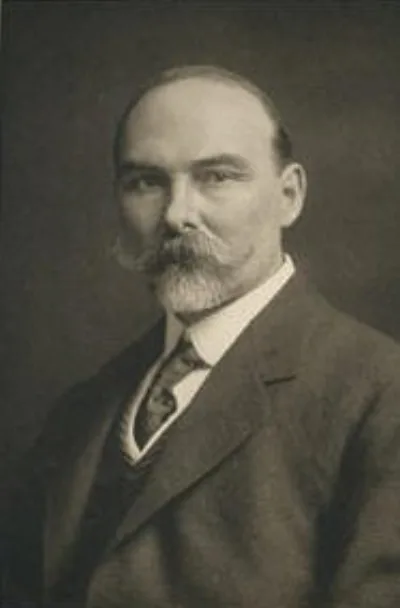
George Robert Stowe Mead
George Robert Stow Mead was a historian and influential Theosophist who founded the Quest Society, focusing on esoteric philosophy.
George Robert Stow Mead (1863-1933) was an English historian and writer known for his significant involvement in Theosophy and his founding of the Quest Society. Educated at Cambridge in mathematics and Classics, Mead's intellectual journey led him to Theosophy after reading "Esoteric Buddhism." He became a close associate of Helena Blavatsky, serving as her private secretary and holding key positions within the Esoteric Section of the Theosophical Society. Mead also co-edited the magazine "Lucifer," which was later renamed "The Theosophical Review."
Mead's departure from the Theosophical Society in 1909, alongside many other members, was primarily a protest against the reinstatement of Charles Webster Leadbeater. This event, coupled with a potential frustration with the organization's dogmatism, marked a turning point. He subsequently established the Quest Society, which aimed for a non-dogmatic approach to the comparative study of religion, philosophy, and science. The society was known for its lectures and its publication, "The Quest: A Quarterly Review."
His scholarly work delved into various religious and philosophical traditions, including Neoplatonism, Hermeticism, and Gnosticism. Mead's translations and writings played a crucial role in popularizing concepts like "Gnosis" and made ancient Gnostic texts accessible to a wider audience. His influence extended to prominent literary figures and scholars, underscoring his impact on esoteric thought.
Early Life and Education
Born in London in 1863, George Robert Stow Mead was the son of Colonel Robert Mead and Mary Stow. His early education included attending St. John's College, Cambridge, where he initially pursued mathematics. He later shifted his focus to Classics, developing a strong command of Greek and Latin. Mead earned his BA in 1884 and later an MA in 1926. Following his undergraduate studies, he began a career as a public school master.
Theosophical Society Involvement
Mead's interest in Theosophy was sparked by Alfred Percy Sinnett's "Esoteric Buddhism" while he was still at Cambridge. He joined Helena Blavatsky's Theosophical Society in 1884. His dedication led him to become Blavatsky's private secretary in 1889. He also held significant roles within the society's Esoteric Section, serving as general secretary and as a member of its Inner Group. During this period, he met Laura Mary Cooper, who would become his wife. Mead was instrumental in editing "Lucifer," a Theosophical magazine, which was eventually renamed "The Theosophical Review." He served as its sole editor until its cessation in 1909, the same year he left the society.
Founding the Quest Society and Later Work
In March 1909, following his departure from the Theosophical Society, George Robert Stow Mead founded the Quest Society. This new organization was established with the intention of providing an undogmatic platform for the comparative investigation of religion, philosophy, and science. The society attracted former Theosophists and new members, hosting lectures and publishing "The Quest: A Quarterly Review," which featured notable contributors and ran until 1931. Mead's departure from the Theosophical Society was partly motivated by his protest against Annie Besant's reinstatement of Charles Webster Leadbeater and possibly by his own frustrations with the society's rigid doctrines.
Scholarly Contributions and Influence
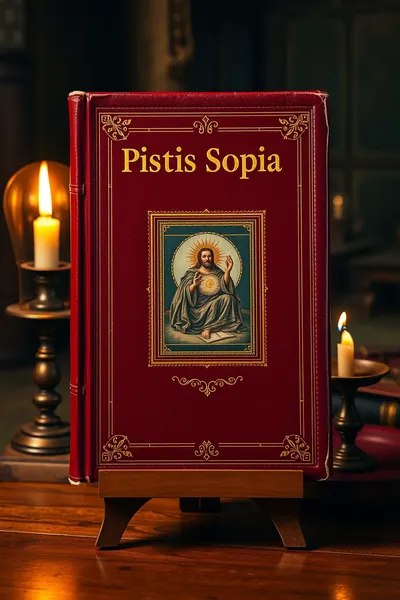
Mead's extensive body of work focused on esoteric and philosophical traditions, including Neoplatonism, Hermeticism, and Gnosticism. He was particularly influential in making Gnostic texts accessible to a Western audience, notably through his English translation of "Pistis Sophia." His writings and translations, such as "Thrice Greatest Hermes" and "Fragments of a Faith Forgotten," explored complex spiritual and philosophical ideas. His work gained recognition and influenced numerous figures, including poets like Ezra Pound and W. B. Yeats, as well as scholars like Carl Jung, whose connection to Mead's ideas has been explored by researchers.
Key Ideas
- Comparative study of religion, philosophy, and science
- Undogmatic approach to spiritual inquiry
- Popularization of Gnosticism and "Gnosis"
- Study of Neoplatonism, Hermeticism, and Gnosticism
Books by George Robert Stowe Mead
10 free public domain books · Read online or download