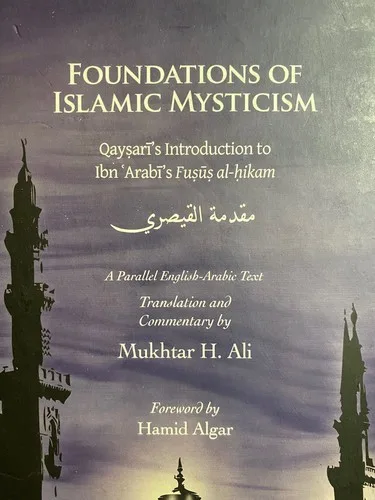
Foundations of Islamic mysticism
 61
61

Foundations of Islamic mysticism



Review by Alaric Kestrel (Metaphysical Studies Reviewer) — 'Foundations of Islamic Mysticism' by Dāwūd ibn Maḥmūd Qayṣarī is a masterclass in Sufi esotericism. Qayṣarī's work stands out for its depth of insight into the mystical dimensions of Islamic spirituality. The book is a treasure trove of hidden knowledge, symbolism, and allegorical wisdom. Qayṣarī's prose is both evocative and profound, making it an essential read for anyone interested in the esoteric traditions of Islam. The strength of this work lies in its ability to convey complex spiritual concepts in a language that is both accessible and profound. It is particularly suited for scholars of Sufism, spiritual seekers, and practitioners of esoteric disciplines who wish to deepen their understanding of Islamic mysticism.
📝 Description
61
Dāwūd ibn Maḥmūd Qayṣarī wrote 'Foundations of Islamic Mysticism' in the early 14th century.
This book by Dāwūd ibn Maḥmūd Qayṣarī examines the core principles of Islamic mysticism, particularly Sufism. Qayṣarī details the symbolic language and hidden meanings within this spiritual tradition. His writing uses allegory and metaphor to describe the soul's path toward divine union. The text aims to connect the physical world with the spiritual, offering a guide for understanding mystical aspects of life. It is meant for those interested in spiritual truths, comparative religion, and esoteric practices.
The book's structure follows a contemplative style, fostering reverence. Qayṣarī's approach bridges the material and the transcendent. Its content addresses seekers of spiritual knowledge and scholars alike. The work's lasting impact comes from its spiritual insights, which still speak to modern readers looking for deeper meaning.
As a key text in Islamic mysticism, 'Foundations of Islamic Mysticism' places itself within the Sufi tradition. This tradition, which developed from early Islamic asceticism, emphasizes direct, personal experience of God. Qayṣarī's work articulates the theoretical framework and symbolic language common in Sufi thought. It engages with concepts like the purification of the heart, the stages of spiritual ascent, and the nature of divine love, all central to esoteric Islam.
💡 Why Read This Book?
Read 'Foundations of Islamic Mysticism' to gain an in-depth understanding of Sufi spirituality and its esoteric dimensions. This book is ideal for seekers of spiritual truth, scholars of comparative religion, and practitioners of esoteric disciplines. It offers a roadmap for navigating the mystical dimensions of existence, providing timeless wisdom that continues to resonate with contemporary readers.
⭐ Reader Reviews
Honest opinions from readers who have explored this book.
❓ Frequently Asked Questions
Who is the intended audience for this book?
This book is intended for seekers of spiritual truth, scholars of comparative religion, and practitioners of esoteric disciplines.
What are the key themes in 'Foundations of Islamic Mysticism'?
The key themes include the spiritual journey, divine union, and the symbolism of Sufi practices.
How does this book differ from other works on Islamic mysticism?
This book stands out for its depth of insight into the mystical dimensions of Islamic spirituality, offering a roadmap for navigating the spiritual journey.
What is the historical significance of this work?
Written in the early 14th century, this book is a foundational text in Sufi literature, providing timeless wisdom that continues to resonate with contemporary readers.
Is this book suitable for beginners?
While it is accessible, it is best suited for those with some prior knowledge of Islamic mysticism or esoteric traditions.
🔮 Key Themes & Symbolism
The Spiritual Journey
Qayṣarī's work looks at the mystical dimensions of the spiritual journey, offering a roadmap for those seeking divine union. Through allegorical language and symbolic imagery, the book guides readers through the labyrinthine paths of the soul's quest for spiritual enlightenment.
Divine Union
A central theme in 'Foundations of Islamic Mysticism' is the concept of divine union, the ultimate goal of the Sufi path. Qayṣarī explores the profound spiritual experience of merging with the divine, a state of ecstatic union that transcends the boundaries of the self.
Symbolism of Sufi Practices
The book is rich in symbolism, revealing the hidden meanings behind Sufi practices and rituals. Qayṣarī's use of allegory and metaphor provides useful insights into the esoteric dimensions of Islamic mysticism, making it a valuable resource for seekers of spiritual truth.
💬 Memorable Quotes
Direct passages from the work, attributed to the author.
“Sufi practices are rich in symbolism and allegory.”
— This statement emphasizes the depth of symbolism in Sufi rituals, revealing the hidden meanings behind their practices.
💡 Key Ideas
Editorial paraphrase of the work's core concepts — not direct quotes.
The soul's journey is a path of hidden knowledge and symbolism.
This line underscores the mystical nature of the spiritual journey, emphasizing the need for esoteric insights to navigate its complexities.
Divine union is the ultimate goal of the Sufi path.
This quote highlights the central theme of divine union, the state of ecstatic union with the divine that transcends the self.
The soul seeks to merge with the divine.
This line reflects the mystical quest for divine union, a state of spiritual ecstasy that lies at the heart of Sufi spirituality.
The mystical dimensions of existence are a labyrinthine path.
This quote underscores the complexity of the spiritual journey, requiring a deep understanding of esoteric traditions to navigate its twists and turns.
🌙 Esoteric Significance
Tradition
This book belongs to the Sufi tradition, a mystical branch of Islam that emphasizes the esoteric dimensions of spiritual practice. Sufism is known for its emphasis on direct personal experience of the divine, often through practices like meditation, chanting, and spiritual dance.
Symbolism
Key symbols in this work include the heart, the soul, and the divine. The heart represents the center of spiritual awareness, the soul is the seeker's journey towards divine union, and the divine is the ultimate goal of this spiritual quest. Qayṣarī uses allegory and metaphor to reveal the hidden meanings behind these symbols, providing useful insights into the esoteric dimensions of Sufi spirituality.
Modern Relevance
Today, this book remains relevant for modern practitioners of esoteric disciplines and seekers of spiritual truth. Its timeless wisdom continues to inspire those who wish to deepen their understanding of Islamic mysticism and its esoteric dimensions. Contemporary readers can find guidance and inspiration in Qayṣarī's profound exploration of the spiritual journey.
👥 Who Should Read This Book
Beginners in the field of Islamic mysticism may find this book challenging but rewarding, as it offers a deep dive into the esoteric dimensions of Sufi spirituality. Scholars of comparative religion will appreciate the historical context and philosophical significance of the work. Spiritual seekers and practitioners of esoteric disciplines will find valuable insights and guidance in reading through the mystical dimensions of existence. Those with an interest in the symbolism and allegory of Sufi practices will also benefit from the detailed symbolism and useful insights offered in this book.
📜 Historical Context
Written in the early 14th century, 'Foundations of Islamic Mysticism' by Dāwūd ibn Maḥmūd Qayṣarī is a key work in Sufi literature. This period was marked by a flourishing of mystical and esoteric traditions within Islam, with Sufi masters like Rumi and Attar gaining prominence. Qayṣarī's work contributed significantly to this intellectual and spiritual renaissance, offering a profound exploration of Sufi spirituality. The book's influence can be seen in the enduring appeal of Sufi mysticism, which continues to inspire seekers of spiritual truth and practitioners of esoteric disciplines today.
📔 Journal Prompts
Reflect on the concept of divine union as described in the book. How does it resonate with your own spiritual journey?
Explore the symbolism of the heart in Sufi mysticism. How does this symbolism deepen your understanding of spiritual practices?
Consider the allegorical language used in the book. How does it enhance your appreciation of Sufi teachings?
Think about the spiritual journey as a labyrinthine path. How does this metaphor influence your approach to spiritual exploration?
Examine the role of hidden knowledge in Sufi spirituality. How does it shape your understanding of esoteric traditions?
🗂️ Glossary
Sufi
A member of the mystical branch of Islam that emphasizes the esoteric dimensions of spiritual practice.
Divine Union
The ultimate goal of the Sufi path, a state of ecstatic union with the divine.
Allegory
A literary device used to convey hidden meanings and spiritual truths through symbolic imagery.
Symbolism
The use of symbols to represent abstract ideas or spiritual concepts in Sufi mysticism.
Esoteric
Relating to knowledge that is hidden or revealed only to a select few, often through spiritual or mystical practices.
This book appears in 4 collections
🔮 Readers Also Liked
Browse all →








From the “Hermeticism” Collection
View all →









More Free Alchemy & Hermeticism Books
View all →