The Signature of All Things

 73
73

The Signature of All Things



Celeste Moreau (Divination & Symbolism Reviewer) — Jacob Boehme's "The Signature of All Things" remains an unparalleled testament to visionary insight. Published in 1621, this compact yet profoundly dense work offers a unique Christian-mystical framework where nature becomes a divine text, its forms revealing spiritual realities. Boehme's alchemically charged language, echoing Neoplatonic thought, provides potent symbols for understanding creation and fall. Its strength lies in its direct, intuitive unveiling of hidden connections between the material and the spiritual. Essential reading for mystics, alchemists, and anyone seeking a deeper, symbolic understanding of existence. A cornerstone of Western esotericism, it rewards patient contemplation.
📝 Description
73
Jacob Boehme's 1621 work, 'The Signature of All Things,' argues nature holds divine marks revealing spiritual truths.
In 1621, Jacob Boehme published 'The Signature of All Things,' a Christian-mystical cosmology. Boehme, a mystic from Silesia, proposed that the physical world contains divine 'signatures.' These are specific forms and marks found in nature, which he believed act as keys to understanding hidden spiritual realities. The book is not a conventional theological text; instead, it is a poetic account of creation, its fall, and the potential for return to divine unity. Boehme's writing draws on 17th-century alchemical symbolism and Neoplatonic thought. His dense, visionary style aims to help readers see the divine presence in all existence. It appeals to those who contemplate the spiritual, practice inner transformation, and seek to grasp divine communication through the natural world.
Boehme's work belongs to the Christian esoteric tradition, influenced by Paracelsus and German Pietism. It engages with concepts of correspondence between the material and spiritual worlds, a common theme in Hermeticism and alchemy. The idea of finding divine knowledge through natural forms connects to Renaissance Neoplatonism and earlier mystical traditions. Boehme's unique system attempts to reconcile biblical narrative with a visionary understanding of creation's inner workings, making it a distinct voice within 17th-century European esotericism.
✍️ Author
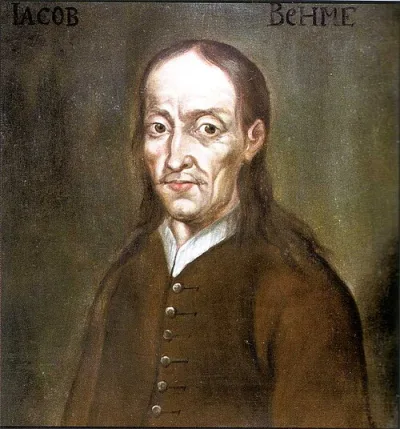
Jacob Boehme
Jakob Böhme was a German philosopher and mystic, known for his theological writings.
Mystic
💡 Why Read This Book?
Embark on a transformative journey into the heart of creation. 'The Signature of All Things' offers a unique lens through which to perceive the divine immanence in nature, revealing hidden spiritual truths through symbolic language. Ideal for seekers of esoteric wisdom, scholars of mysticism, and practitioners of contemplative arts who wish to deepen their understanding of the interconnectedness of all things.
⭐ Reader Reviews
Honest opinions from readers who have explored this book.
❓ Frequently Asked Questions
What is the central concept of 'signatures' in Boehme's work?
Boehme's 'signatures' are the inherent marks, forms, and qualities found in nature that symbolically reveal deeper spiritual truths and the divine essence of creation. They are God's language inscribed in the material world.
What is the historical context of 'The Signature of All Things'?
Published in 1621, the book emerged during a period of intense religious and philosophical ferment in early modern Europe, heavily influenced by Renaissance Neoplatonism, Hermeticism, and alchemical traditions.
Is this book suitable for beginners in mysticism?
While dense and requiring contemplation, the core concepts can be approached by determined beginners. It's recommended to have some familiarity with Christian or general mystical thought, or to read with a guiding commentary.
How does Boehme's work relate to alchemy?
Boehme uses rich alchemical imagery and metaphors to describe spiritual processes of transformation, purification, and the emergence of divine light from primal substance, mirroring the alchemical Great Work.
What is the intended outcome of reading this book?
The intended outcome is a profound shift in perception, enabling the reader to see the spiritual dimension within the material world, fostering a deeper connection with the divine and a more intuitive understanding of existence.
🔮 Key Themes & Symbolism
The Divine Immanence in Nature
Boehme posits that the entirety of creation, from the smallest plant to the grandest celestial body, is permeated by the divine. Each element carries an inherent 'signature,' a symbolic imprint that reveals the nature of God and the spiritual realm. This theme invites readers to see the world not as mere matter, but as a living, divinely infused text waiting to be deciphered, fostering a profound sense of interconnectedness and reverence for the natural world.
The Alchemical Transformation of the Soul
Employing the strong symbolism of alchemy, Boehme describes the spiritual journey as a process of inner transformation. Just as alchemists sought to transmute base metals into gold, the human soul, through understanding divine signatures and aligning with God's will, can undergo purification and achieve spiritual perfection. This theme highlights the potential for humanity to move from a state of corruption back to its original divine purity, a process of inner fire and refinement.
The Language of God Through Symbols
Boehme's central thesis is that God communicates His nature and will through the symbolic forms and qualities present in the created universe. These 'signatures' are not arbitrary but possess an inherent correspondence to spiritual realities. This theme encourages a contemplative approach to perception, urging the reader to look beyond the surface of things and to discern the deeper, divine meaning encoded within every aspect of existence, fostering a mystical epistemology.
💬 Memorable Quotes
Direct passages from the work, attributed to the author.
“The outward form is the inward power.”
— This highlights the symbolic link between the physical manifestation of a thing and its underlying spiritual essence or divine purpose.
“Nature is the book of God.”
— A concise statement emphasizing that the natural world serves as a divine revelation, filled with truths accessible to those who can read its symbolic language.
“The whole world is but one divine essence.”
— This speaks to the radical interconnectedness of all existence, suggesting a monistic undercurrent where everything originates from and is sustained by a single divine source.
“Where the Spirit of God is, there is creation.”
— This links the animating force of the divine spirit directly to the act of creation, emphasizing its ongoing and vital presence within the cosmos.
💡 Key Ideas
Editorial paraphrase of the work's core concepts — not direct quotes.
For in every creature, God hath set his mark.
This quote captures Boehme's core idea that the divine is not separate from creation, but intimately present and expressed through the unique essence of each being.
🌙 Esoteric Significance
Tradition
Boehme's work is a core part of Christian Theosophy and a significant contribution to Western Esotericism. He synthesized elements of Neoplatonism, Hermeticism, and Renaissance alchemy with his own profound mystical experiences, creating a unique cosmological system. His emphasis on the 'signatures' of nature as divine symbols places him within traditions that view the material world as a symbolic language of the divine, akin to Gnosticism and later Rosicrucianism.
Symbolism
The 'signatures' are the central symbolic device, representing the inherent divine attributes and spiritual truths encoded within all natural forms. Boehme's use of alchemical imagery – such as fire, light, darkness, and the transmutation of elements – serves as a powerful metaphor for spiritual purification and the soul's journey towards divine unity. These symbols are not mere ornamentation but integral to understanding the divine mechanics of creation and redemption.
Modern Relevance
In an age often characterized by secularism and materialism, Boehme's "The Signature of All Things" offers a potent antidote. It encourages a re-enchantment with the natural world, urging readers to see it as a source of spiritual wisdom and divine connection. His insights into the interconnectedness of all things and the transformative power of inner perception resonate deeply with contemporary seekers of consciousness, ecological spirituality, and those exploring the symbolic language of the universe.
👥 Who Should Read This Book
This profound work is essential for seasoned mystics and contemplative scholars seeking to deepen their understanding of divine immanence and symbolic theology. It is also highly recommended for practitioners of esoteric arts, such as alchemy or Hermeticism, who will find Boehme's symbolic language rich with practical insight. While its density may challenge absolute beginners, the determined seeker of spiritual wisdom will discover a transformative lens through which to view creation, offering a unique pathway to perceiving the divine within the fabric of existence.
📜 Historical Context
Jacob Boehme wrote "The Signature of All Things" in the early 17th century, a period marked by profound intellectual and spiritual upheaval in Europe. The Protestant Reformation had fractured religious unity, while the Renaissance's rediscovery of ancient wisdom, particularly Neoplatonism and Hermeticism, fueled a burgeoning interest in esoteric philosophies. Alchemy was not merely a protoscience but a spiritual discipline, seeking not just material transformation but also the purification of the soul. Boehme, a shoemaker by trade, emerged as a self-taught mystic whose work reflected this milieu, blending Christian theology with alchemical symbolism, Kabbalistic ideas, and a deep, intuitive understanding of nature as a divine manifestation. His writings offered a unique synthesis for those seeking spiritual meaning beyond established dogmas, influencing later generations of mystics, philosophers, and artists.
📔 Journal Prompts
What 'signatures' do you observe in your immediate natural surroundings, and what spiritual truths might they reveal?
How can the concept of 'alchemical transformation' be applied to your own personal growth and spiritual development?
Reflect on a time when you felt a profound connection to nature; what 'language' did it seem to speak to you?
Consider an object or phenomenon in nature that you find particularly beautiful or intriguing. What deeper meaning might it hold for you?
How does the idea of the 'outward form being the inward power' manifest in your own life or in the world around you?
🗂️ Glossary
Signature
In Boehme's philosophy, a 'signature' refers to the inherent symbolic mark, form, or quality within a created thing that reveals its divine essence, purpose, or spiritual truth. It is God's imprint on the material world.
Theosophy
A mystical philosophy that seeks direct knowledge of God through spiritual insight and contemplation, often blending elements from various religious and esoteric traditions. Boehme is a key figure in Christian Theosophy.
Neoplatonism
A school of philosophy that emerged in the 3rd century CE, based on the teachings of Plato, emphasizing the transcendent nature of the One (God) and the emanations of reality from it, often through a hierarchical structure.
Alchemy
An ancient philosophical and proto-scientific tradition that sought to purify, mature, and perfect certain materials through processes like transmutation. Esoterically, it refers to the spiritual transformation and purification of the soul.
Cosmology
The study of the origin, evolution, and structure of the universe. Boehme's work presents a complex Christian-mystical cosmology that attempts to explain the nature of reality from its divine source.
This book appears in 1 collection
🔮 Readers Also Liked
Browse all →



More by Jacob Boehme
All books →





From the “Christian Mysticism” Collection
View all →








More Free Mysticism & Contemplation Books
View all →