Esoteric Christianity
 77
77

Esoteric Christianity



Sophia Crane (Associate Editor) — Annie Besant's 'Esoteric Christianity' remains a cornerstone for understanding the deeper currents of Christian mysticism. With scholarly rigor and profound insight, Besant meticulously deciphers the symbolic language of scripture and ritual, revealing their profound spiritual implications. She masterfully bridges the gap between historical faith and esoteric wisdom, making the complex accessible to the earnest seeker. This work is indispensable for anyone interested in the comparative study of religions or the perennial philosophy, offering a lens through which to perceive the universal truths embedded within a specific tradition. Its enduring relevance lies in its ability to awaken spiritual perception.
📝 Description
77
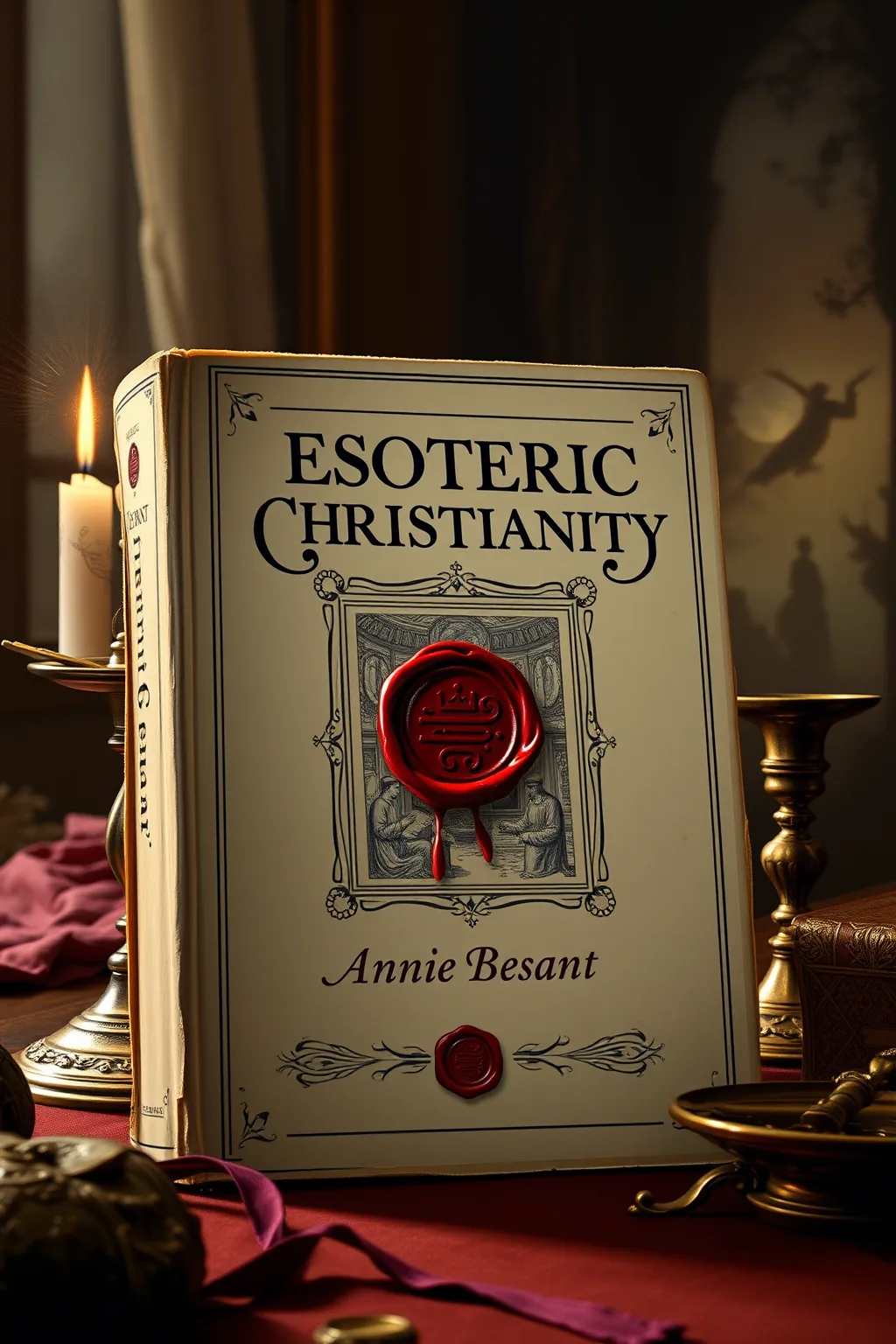
Annie Besant published 'Esoteric Christianity' in 1905, examining Christian symbols and rituals.
Annie Besant's 1905 book, 'Esoteric Christianity,' interprets Christian doctrine and practices through a symbolic and allegorical lens. Besant, associated with the Theosophical Society, argues that the outward forms of Christianity conceal deeper spiritual meanings. She examines narratives, sacraments, and iconography not as historical facts but as symbolic representations of spiritual development and inner awakening.
The work suggests that beneath the surface of conventional religion lie universal mystical principles. Besant aims to show Christianity as a living spiritual path, accessible through understanding its hidden, symbolic dimension. It is a study for those interested in a non-literal interpretation of Christian tradition, seeking the spiritual essence within its sacred forms.
This book belongs to the Theosophical movement's approach to comparative religion. Theosophy sought to find underlying unity in the world's diverse spiritual traditions, often reinterpreting exoteric religions through an esoteric, symbolic framework. Besant applies this method to Christianity, viewing its outward forms as a vehicle for transmitting occult knowledge and spiritual truths, accessible to those who look beyond the literal meaning.
✍️ Author

Annie Besant
Annie Besant (1847-1933) was an English socialist, theosophist, and women's rights activist.
Theosophist
💡 Why Read This Book?
Uncover the hidden spiritual architecture of Christianity. 'Esoteric Christianity' is essential for seekers yearning to connect with the inner life of faith, scholars exploring comparative mysticism, and practitioners wishing to deepen their understanding of sacred symbolism and ritual as pathways to transformation. Discover the universal truths that transcend dogma.
⭐ Reader Reviews
Honest opinions from readers who have explored this book.
❓ Frequently Asked Questions
What is the core message of 'Esoteric Christianity'?
The book posits that Christian scriptures, rituals, and symbols are not solely literal but contain profound, hidden spiritual teachings intended for inner development and initiation.
From what perspective does Annie Besant approach Christianity?
Besant writes from a Theosophical and comparative perspective, viewing Christianity as one manifestation of a universal spiritual wisdom that underlies all major religions.
Who is the intended audience for this book?
The book is ideal for those interested in mysticism, comparative religion, symbolism, and individuals seeking a deeper, more spiritual understanding of Christianity.
When was 'Esoteric Christianity' first published?
'Esoteric Christianity' was first published in 1905.
Does this book deny the historical Jesus or Christian events?
No, Besant does not deny historical events but interprets them through an allegorical and symbolic lens, emphasizing their spiritual significance over literal accounts.
🔮 Key Themes & Symbolism
The Christ as the Universal Logos
Besant explores the Christ not merely as a historical figure but as an eternal, divine principle—the Logos—manifesting through various spiritual traditions. This perspective transcends sectarian boundaries, revealing the Christ as the indwelling divine presence within all beings and the universe itself. The book elucidates how the life and teachings of Jesus serve as a profound allegory for the soul's journey towards union with this divine source, emphasizing the Christ consciousness as an attainable state for all humanity.
Symbolism in Christian Ritual and Doctrine
A central tenet of the book is the interpretation of Christian sacraments, parables, and symbols as rich repositories of esoteric knowledge. Besant argues that baptism, communion, the cross, and the stories of Christ's life are not merely outward observances but powerful symbolic representations of inner spiritual processes. These symbols act as keys, unlocking understanding of spiritual birth, death, resurrection, and the gradual purification and evolution of the human soul.
Spiritual Initiation and Inner Development
'Esoteric Christianity' frames the Christian path as a process of staged spiritual initiation, mirroring the mystery schools of antiquity. Besant suggests that the teachings and experiences described in the New Testament represent archetypal stages of soul awakening and transformation. The book guides the reader to recognize these stages within their own spiritual journey, highlighting the potential for personal enlightenment and union with the Divine through conscious effort and inner purification.
💬 Memorable Quotes
Direct passages from the work, attributed to the author.
“The teaching of Christ is the teaching of the soul.”
— This succinctly captures the esoteric interpretation, suggesting that Christ's message is fundamentally about understanding and developing the inner spiritual self.
“Symbolism is the language of the soul.”
— This highlights the book's core approach, asserting that symbols are the most profound way to convey spiritual truths that transcend ordinary language and intellect.
“Behind every exoteric religion lies an esoteric truth.”
— This foundational statement of Besant's philosophy underscores her belief that all outward religious forms mask deeper, universal spiritual realities accessible through esoteric study.
“The Kingdom of Heaven is within you.”
— This iconic phrase is interpreted not just as a spiritual statement but as a direct instruction to seek divine realization within one's own consciousness, the true seat of spiritual power.
💡 Key Ideas
Editorial paraphrase of the work's core concepts — not direct quotes.
The Christian religion is not a religion of dogma, but a religion of life.
This quote emphasizes Besant's view of Christianity as a dynamic, lived spiritual experience rather than a rigid set of beliefs, highlighting its focus on inner transformation and spiritual growth.
🌙 Esoteric Significance
Tradition
This book is deeply rooted in the Theosophical tradition, which seeks to uncover the universal wisdom underlying all world religions. Besant's work draws heavily on comparative mythology, Gnosticism, Neoplatonism, and ancient mystery school teachings to reinterpret Christian narratives and symbols as expressions of a universal spiritual science and path of evolution.
Symbolism
Besant meticulously unpacks Christian symbolism, viewing sacraments like baptism and communion, as well as figures and events, as potent metaphors for spiritual processes. The cross represents sacrifice and union, the resurrection signifies the soul's triumph over material limitations, and the parables are allegories for the stages of spiritual awakening and the Christ consciousness.
Modern Relevance
In an era seeking authenticity and personalized spirituality, 'Esoteric Christianity' offers a timeless framework for understanding religious traditions beyond dogma. It empowers individuals to find profound meaning in familiar symbols and rituals, fostering a deeper connection to their own inner spiritual potential and the universal truths that bind humanity.
👥 Who Should Read This Book
This profound exploration is essential for spiritual seekers yearning to uncover the deeper meaning of Christian tradition. Scholars of comparative religion and mysticism will find Besant's analytical approach invaluable. Practitioners of meditation and contemplative prayer can use this text to enrich their understanding of sacred symbolism. Even those new to esoteric thought will find Besant's clear prose and insightful interpretations an accessible gateway to a more profound spiritual understanding of what is often considered a familiar faith.
📜 Historical Context
Published in 1905, 'Esoteric Christianity' emerged during a period of intense spiritual and intellectual ferment in the West. The late Victorian and Edwardian eras witnessed a growing dissatisfaction with purely materialistic or dogmatic religious explanations, fueling interest in alternative spiritualities, mysticism, and comparative religion. The Theosophical Society, co-founded by Helena Blavatsky and of which Annie Besant was a prominent leader, was instrumental in popularizing Eastern philosophies and esoteric interpretations of Western traditions. Besant's work arrived at a time when many were seeking to reconcile science with spirituality and to find deeper, more personal meanings in ancient religious texts, positioning 'Esoteric Christianity' as a key text in this intellectual and spiritual awakening.
📔 Journal Prompts
Reflect on a Christian symbol or ritual that appeals to you. How might Besant's esoteric interpretation illuminate its deeper meaning?
Consider the concept of the 'Christ consciousness'. What does this term mean to you, and how might one cultivate it within oneself?
Besant suggests Christian teachings are about the soul's journey. Describe a personal experience that felt like a significant step in your own spiritual evolution.
How does viewing religious stories as allegories rather than literal histories change your perception of their message?
In what ways can the 'hidden' teachings of religion offer solace or guidance in contemporary life?
🗂️ Glossary
Exoteric
Relating to or denoting the outward, manifest, or common aspect of something, especially religious doctrine or practice, as opposed to the esoteric.
Esoteric
Intended for or likely to be understood by only a small number of people with a specialized knowledge or interest; relating to the hidden, inner, or spiritual meaning.
Logos
In various philosophical and theological traditions, the divine principle of reason and the creator of the universe; often associated with the Christ in Christian esotericism.
Initiation
A rite of passage or ceremony marking an important stage in a person's spiritual development, often involving the imparting of secret knowledge or spiritual insights.
Theosophy
A spiritual philosophy founded in the late 19th century, aiming to uncover the universal wisdom underlying all religions and to promote the brotherhood of humanity.
This book appears in 3 collections
🔮 Readers Also Liked
Browse all →




More by Annie Besant
All books →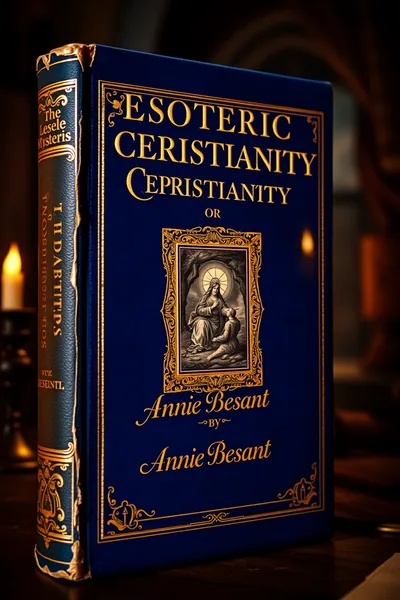




From the “Meditation” Collection
View all →






More Free Mysticism & Contemplation Books
View all →