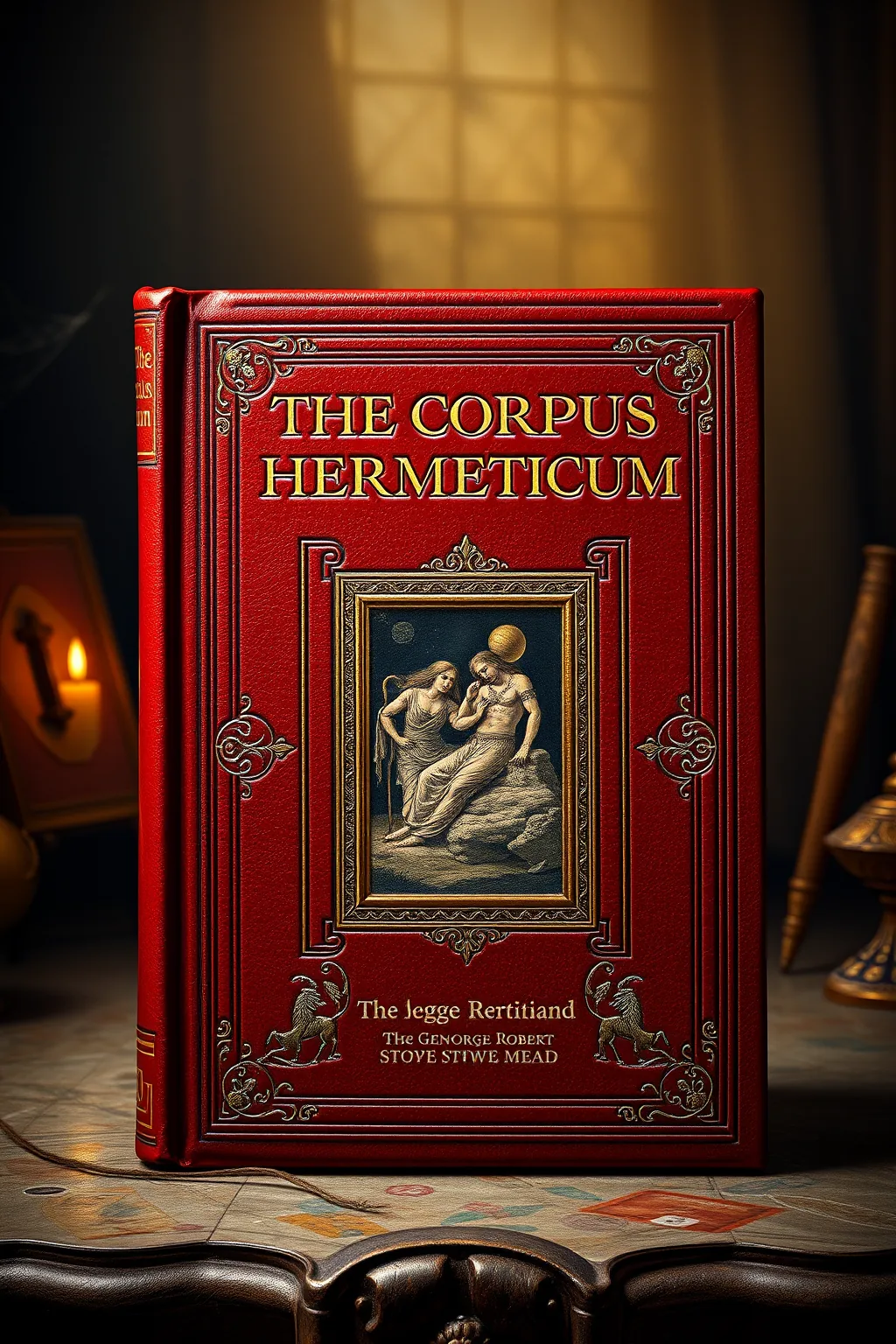
The Corpus Hermeticum
 80
80

The Corpus Hermeticum


George Robert Stowe Mead's rendition of The Corpus Hermeticum stands as a cornerstone for modern Hermetic studies. His translation masterfully captures the ethereal dialogues and profound philosophical underpinnings of these ancient texts. Mead's meticulous scholarship ensures accessibility without sacrificing the profound esoteric truths contained within. He illuminates the concepts of Nous, the cosmic order, and the soul's ascent, offering invaluable insights for scholars and spiritual seekers alike. This edition is an indispensable guide for anyone wishing to engage with the foundational wisdom of Hermeticism, providing clarity on its perennial philosophical and mystical significance.
📝 Description
80
George Robert Stowe Mead published his translation of the Corpus Hermeticum in 1906.
George Robert Stowe Mead's 1906 translation presents the Corpus Hermeticum, a collection of philosophical and religious writings attributed to Hermes Trismegistus. These texts originated in Hellenistic Egypt, blending Greek philosophy with Egyptian religious traditions. The volume includes key dialogues such as Poemandres, which describes a divine revelation, and discourses addressed to Tat and Asclepius, covering cosmology, theology, and ethics.
Mead aimed to make these complex texts accessible to a wider audience. His translation seeks to illuminate the concepts of the Divine Mind, the structure of the universe, and the process of spiritual transformation. The work offers a path toward gnosis, or direct knowledge of the divine, and personal enlightenment. It is considered a significant resource for understanding ancient esoteric thought and its enduring influence.
The Corpus Hermeticum is a foundational text within Western esotericism. It emerged from the syncretic intellectual environment of Hellenistic Egypt, a period where Greek philosophical ideas mingled with ancient Egyptian religious beliefs. Attributed to the legendary figure Hermes Trismegistus, a syncretic blend of the Greek god Hermes and the Egyptian god Thoth, these texts discuss divine wisdom, the creation of the cosmos, and humanity's place within it. They influenced Neoplatonism, Renaissance Hermeticism, and various mystical and alchemical traditions.
✍️ Author
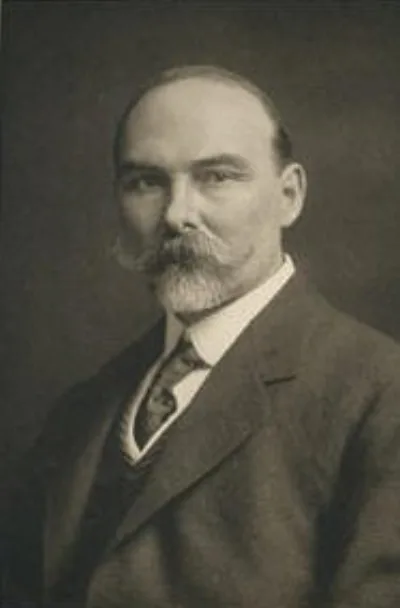
George Robert Stowe Mead
George Robert Stowe Mead was an English author and scholar of Gnosticism and early Christian mysticism.
Esoteric Writer
💡 Why Read This Book?
Embark on a profound intellectual and spiritual odyssey into the heart of ancient wisdom. The Corpus Hermeticum offers a unique synthesis of philosophy and mysticism, revealing the secrets of the cosmos and the divine within. Ideal for seekers of hidden knowledge, students of esoteric traditions, and practitioners of spiritual disciplines who yearn to connect with timeless truths.
⭐ Reader Reviews
Honest opinions from readers who have explored this book.
❓ Frequently Asked Questions
Who is Hermes Trismegistus?
Hermes Trismegistus is a legendary Hellenistic figure, a syncretic combination of the Greek god Hermes and the Egyptian god Thoth. He is considered the author of the Hermetic texts, a corpus of philosophical and religious writings.
What is the primary philosophical system presented?
The primary system is Hermeticism, a late-antique philosophical and religious tradition that blends Greek philosophy (Platonism, Stoicism) with Egyptian religious thought, focusing on gnosis, cosmology, and the divine.
What does 'Nous' refer to in these texts?
'Nous' translates to 'Mind' or 'Intellect' and represents the Divine Mind, the supreme creative intelligence from which all creation emanates. It is the source of all knowledge and being.
What is the concept of 'rebirth of the soul'?
This refers to the spiritual transformation and purification of the soul, moving from ignorance and materiality towards divine consciousness and union with the Nous through gnosis and philosophical understanding.
Is this book suitable for beginners?
Yes, Mead's translation is renowned for its clarity, making it accessible to those new to Hermetic philosophy. However, the depth of the material rewards sustained study and contemplation.
🔮 Key Themes & Symbolism
The Divine Mind (Nous) and Creation
This central theme explores the concept of the Nous as the primordial, all-encompassing intelligence from which the universe originates. The texts describe the emanation of creation from this divine source, outlining a hierarchical structure of existence. Understanding the Nous is presented as the key to comprehending the divine order and one's place within it, guiding the reader towards recognizing the divine spark within themselves and the cosmos.
The Nature of the Cosmos and the Soul
The Hermetic treatises offer a profound cosmology, detailing the interconnectedness of all things and the celestial spheres. They present a dualistic view of existence, contrasting the material world with the spiritual realm. The soul's journey is a significant focus, exploring its descent into materiality, its suffering, and its potential for liberation and ascent back to its divine origin through knowledge and spiritual practice.
Gnosis and Spiritual Rebirth
The pursuit of Gnosis, or direct spiritual knowledge, is the ultimate aim. The texts emphasize that true understanding comes not from mere intellectual belief, but from inner experience and divine revelation. This knowledge leads to the 'rebirth of the soul,' a transformation that liberates the individual from the cycle of ignorance and suffering, restoring them to their divine heritage and enabling them to participate in the cosmic consciousness.
💬 Memorable Quotes
Direct passages from the work, attributed to the author.
“To know God is to be like God.”
— This succinctly captures the essence of Gnosis and the Hermetic goal of deification. Through genuine knowledge of the divine, the practitioner becomes more aligned with, and eventually resembles, the divine nature.
“The universe is a living being, animated by a single soul.”
— This speaks to the pantheistic and panpsychic elements within Hermeticism, viewing the cosmos as an interconnected, ensouled entity. It encourages a reverence for all of existence as part of a unified divine whole.
“Ignorance is the greatest evil.”
— This statement underscores the Hermetic belief that a lack of spiritual or divine knowledge is the root of suffering and bondage. The path to liberation is through acquiring true gnosis.
“The soul is a fragment of the Divine.”
— This fundamental tenet explains the soul's divine potential and its inherent connection to the Nous. It provides hope and direction for the soul's journey of return and reunification with its source.
💡 Key Ideas
Editorial paraphrase of the work's core concepts — not direct quotes.
The eye of the mind is the only true organ of perception.
This quote highlights the Hermetic emphasis on inner vision and spiritual intuition over purely sensory experience. It suggests that true understanding comes from within, through the intellect awakened to divine truths.
🌙 Esoteric Significance
Tradition
The Corpus Hermeticum is the foundational text of Hermeticism, a mystical and philosophical tradition that profoundly influenced Western esotericism. It represents a synthesis of Platonic philosophy, Egyptian religious thought, and early Gnostic ideas, focusing on the pursuit of gnosis (spiritual knowledge) as the path to salvation and union with the divine.
Symbolism
Key symbols include the 'Nous' (Divine Mind), the 'Pleroma' (divine fullness), the cosmic spheres, and the duality of spirit and matter. The texts often employ allegorical language and visionary imagery to convey complex metaphysical concepts, such as the descent and ascent of the soul, the divine creative act, and the interconnectedness of all existence.
Modern Relevance
In contemporary times, The Corpus Hermeticum remains a vital source for those exploring consciousness, spirituality, and the nature of reality. Its teachings on self-knowledge, the divine within, and the interconnectedness of the universe offer useful insights for personal growth, spiritual development, and a holistic understanding of existence in an often fragmented world.
👥 Who Should Read This Book
This key work is essential for a broad spectrum of readers. Beginners to esoteric philosophy will find Mead's translation an accessible yet profound introduction to Hermetic thought. Scholars of ancient religions, philosophy, and comparative mysticism will discover rich source material for their studies. Spiritual seekers yearning for deeper meaning and connection to the divine will find guidance and inspiration. Practitioners of various mystical disciplines, from meditation to ceremonial magic, can draw upon its profound cosmological and psychological insights for their practice.
📜 Historical Context
The Corpus Hermeticum emerged from the fertile intellectual soil of Hellenistic Egypt, a period of intense cultural fusion between Greek and Egyptian traditions, roughly between the 1st and 3rd centuries CE. This era saw a profound philosophical and religious syncretism, where thinkers sought to reconcile diverse spiritual and metaphysical ideas. The texts, attributed to the legendary sage Hermes Trismegistus (a Hellenistic adaptation of the Egyptian god Thoth), represent a significant stream of Gnostic and Neoplatonic thought. They influenced early Christian theology, medieval alchemy, Renaissance esotericism, and continue to resonate with modern spiritual seekers, offering a bridge between ancient wisdom and contemporary inquiry into consciousness and the cosmos.
📔 Journal Prompts
Reflect on the concept of the 'Divine Mind' and how it might manifest in your daily life.
Meditate on the journey of the soul as described in the texts. Where do you see yourself on this path?
Consider the idea of 'gnosis.' What does true knowledge mean to you, and how might you pursue it?
Explore the interconnectedness of the cosmos as presented. How does this perspective shift your view of your own existence?
What practical steps can you take to cultivate a deeper awareness of the divine within yourself and the world around you?
🗂️ Glossary
Nous
The Greek term for 'Mind' or 'Intellect,' representing the Supreme Divine Mind, the source of all creation and knowledge in Hermetic philosophy.
Gnosis
Direct spiritual knowledge or insight, often attained through revelation and inner experience, considered the key to salvation and spiritual liberation in Gnostic and Hermetic traditions.
Poemandres
A key dialogue within The Corpus Hermeticum, describing a visionary encounter with the Divine Mind and the creation of the cosmos.
Asclepius
A significant Hermetic dialogue, often referred to as 'Asclepius,' which discusses cosmology, theology, and the nature of humanity's relationship with the divine.
Hermes Trismegistus
A legendary, syncretic figure combining the Greek god Hermes and the Egyptian god Thoth, considered the mythical author of the Hermetic texts.
This book appears in 1 collection
🔮 Readers Also Liked
Browse all →







More by George Robert Stowe Mead
All books →





From the “Hermeticism” Collection
View all →







More Free Alchemy & Hermeticism Books
View all →