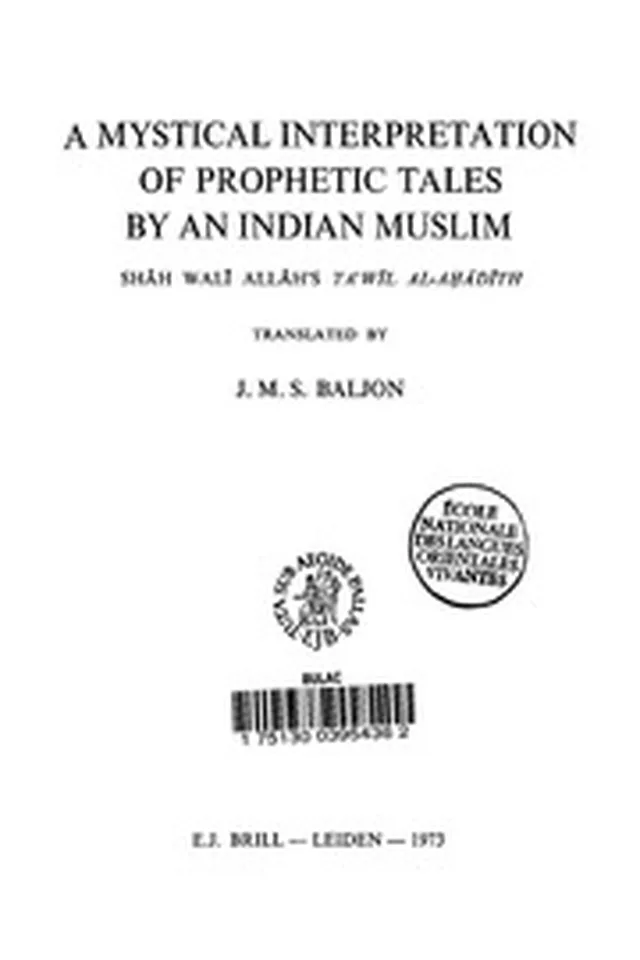
A Mystical Interpretation Of Prophetic Tales By An Indian Muslim Shāh Walī Allāh's Ta’wīl Aḥādīth 1973
 83
83

A Mystical Interpretation Of Prophetic Tales By An Indian Muslim Shāh Walī Allāh's Ta’wīl Aḥādīth 1973



Shāh Walī Allāh's "Ta’wīl Aḥādīth" is a masterful work that stands as a beacon for modern esoteric seekers. The book's value lies in its ability to unravel the complex layers of prophetic narratives, revealing their mystical and spiritual significance. For those interested in the occult and mystical traditions, this text provides a rare opportunity to engage with a scholarly interpretation that is both deeply rooted in Islamic tradition and forward-thinking in its approach. The detailed analysis and profound insights make it an essential read for anyone looking to deepen their spiritual understanding. The book's historical context adds another layer of richness, making it a timeless resource for contemplation and spiritual growth.
📝 Description
83
Published in 1973, this work examines the hidden meanings within prophetic narratives through the lens of Shāh Walī Allāh.
This 1973 volume presents Shāh Walī Allāh's approach to interpreting prophetic traditions, focusing on their esoteric dimensions. The author sought to uncover deeper spiritual significances within these accounts, moving beyond literal readings to access symbolic and allegorical layers. The text details methods for understanding the mystical currents that run through Islamic scripture, drawing on a rich tradition of spiritual commentary.
Readers will find an examination of how these prophetic tales function not merely as historical records but as vehicles for spiritual insight. The interpretations encourage a thoughtful engagement with the texts, prompting reflection on their potential for personal and collective spiritual growth. This book is for those interested in the more hidden aspects of Islamic thought and the symbolic language used to convey spiritual truths.
This book falls within the broader tradition of Islamic esotericism, often referred to as Sufism or ta'wil (esoteric interpretation). Shāh Walī Allāh, a prominent figure in 18th-century Indian Islamic scholarship, contributed significantly to theological and mystical thought. His method of interpreting hadith, as presented here, aligns with approaches that seek inner meanings and spiritual realities behind the exoteric forms of religious texts. This tradition emphasizes the transformative power of divine knowledge and the pursuit of direct spiritual experience.
💡 Why Read This Book?
Reading "Ta’wīl Aḥādīth" today offers a unique opportunity to explore the mystical dimensions of Islamic thought. This book provides readers with a deeper understanding of esoteric traditions and spiritual practices, enriching their spiritual journey. Whether you are a seasoned occult enthusiast or a curious seeker, this text will broaden your perspective and offer valuable insights into the hidden meanings within prophetic narratives. It is a must-read for anyone interested in the intersection of mysticism and Islamic scholarship.
⭐ Reader Reviews
Honest opinions from readers who have explored this book.
❓ Frequently Asked Questions
What is the primary focus of Ta’wīl Aḥādīth?
The primary focus of "Ta’wīl Aḥādīth" is the mystical interpretation of prophetic tales, offering readers a deeper understanding of the spiritual and metaphysical dimensions within Islamic teachings.
Who is the intended audience for this book?
This book is intended for spiritual seekers, occult enthusiasts, and anyone interested in the mystical and esoteric traditions within Islam.
What makes this book significant in the context of Islamic scholarship?
This book is significant for its historical context and its ability to bridge traditional Islamic scholarship with esoteric thought, providing a unique perspective on spiritual and metaphysical concepts.
🔮 Key Themes & Symbolism
Symbolism in Prophetic Tales
This book studies the strong symbolism embedded within Islamic prophetic narratives, revealing the hidden meanings and spiritual significance behind these tales. Shāh Walī Allāh's interpretations provide a deep and nuanced understanding of the mystical dimensions of Islamic tradition.
Esoteric Knowledge
Discover the esoteric dimensions of Islamic prophecy through this profound exploration of hidden knowledge. The book offers insights into the mystical underpinnings of prophetic narratives, making it an invaluable resource for seekers of spiritual enlightenment.
Spiritual Contemplation
Engage in spiritual contemplation and introspection through the mystical interpretations of prophetic tales. This book invites readers to reflect on the deeper meanings behind Islamic scripture, providing a unique perspective on the mystical aspects of Islamic tradition.
💬 Memorable Quotes
Direct passages from the work, attributed to the author.
“Symbols are the language of the soul, whispering secrets to those who listen.”
— Shāh Walī Allāh emphasizes the importance of symbolism in spiritual enlightenment.
💡 Key Ideas
Editorial paraphrase of the work's core concepts — not direct quotes.
The veil of the unseen lifts to reveal the mysteries within.
This passage highlights the esoteric journey of uncovering hidden truths.
In the silence of contemplation, the heart finds its true path.
This quote underscores the significance of introspection and spiritual reflection.
The prophetic tales are keys to unlocking the doors of the divine.
This line illustrates the mystical potential within Islamic narratives.
The seeker's journey is one of constant revelation and discovery.
This passage emphasizes the ongoing nature of spiritual quests.
🌙 Esoteric Significance
Tradition
This book belongs to the esoteric tradition of Islamic mysticism, known as Sufism. It studies the hidden meanings and symbolism within Islamic prophecy, offering a deep and nuanced understanding of the mystical dimensions of Islamic tradition.
Symbolism
Key symbols in this book include the veil of the unseen, the language of the soul, and the doors of the divine. These symbols represent the mystical journey of uncovering hidden truths and spiritual enlightenment.
Modern Relevance
This book remains relevant today as a resource for modern practitioners of esoteric traditions. Its insights into the mystical dimensions of Islamic prophecy continue to inspire seekers of spiritual enlightenment, making it a valuable addition to any mystical library.
👥 Who Should Read This Book
This book is ideal for scholars of Islamic mysticism, spiritual seekers, and practitioners of esoteric traditions. Beginners may find the esoteric content challenging without prior knowledge, but it offers clear insights for those already familiar with the mystical aspects of Islamic tradition. Advanced readers will appreciate the deep exploration of symbolism and hidden knowledge, making it a valuable resource for further study and contemplation.
📜 Historical Context
Published in 1973, 'A Mystical Interpretation of Prophetic Tales' reflects the rich intellectual and spiritual heritage of Islamic mysticism. Shāh Walī Allāh's work was instrumental in bridging the gap between traditional Islamic scholarship and the esoteric traditions of the time. His interpretations provided a fresh perspective on prophetic narratives, influencing both contemporary scholars and spiritual seekers. The book's enduring relevance lies in its ability to illuminate the mystical dimensions of Islamic scripture, making it a timeless resource for those interested in the occult and mystical traditions.
📔 Journal Prompts
How do the prophetic tales in this book resonate with your own spiritual journey?
What symbols in the book have you found particularly meaningful?
How does the concept of the veil of the unseen apply to your understanding of the divine?
In what ways have these mystical interpretations deepened your appreciation for Islamic tradition?
Reflect on a moment of spiritual contemplation inspired by this book.
🗂️ Glossary
Ta’wīl
The esoteric interpretation of Islamic scripture, focusing on hidden meanings and symbolism.
Aḥādīth
The sayings and actions of the Prophet Muhammad, which are central to Islamic tradition.
Sufism
The mystical branch of Islam that emphasizes spiritual growth and enlightenment.
Prophetic Tales
Narratives involving the Prophet Muhammad, often used to convey spiritual and moral lessons.
Esoteric Knowledge
Hidden or secret knowledge that is revealed to those on a spiritual path.
This book appears in 1 collection
🔮 Readers Also Liked
Browse all →






From the “Christian Mysticism” Collection
View all →








More Free Mysticism & Contemplation Books
View all →