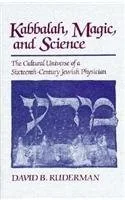
Kabbalah, magic, and science
 61
61

Kabbalah, magic, and science


Evander Ashcroft (Alchemy & Hermeticism Editor) — Ruderman's "Kabbalah, Magic, and Science" is a groundbreaking exploration that brilliantly illuminates the often-overlooked intersections of Jewish mysticism, practical magic, and early scientific inquiry. This volume offers a rare glimpse into how Kabbalistic principles informed the worldview of practitioners who sought to understand and manipulate the natural world through esoteric means. Ruderman's meticulous research reveals the sophisticated symbolic language and philosophical underpinnings that united these seemingly disparate fields. Essential reading for scholars of Kabbalah, Jewish history, and the history of science, as well as practitioners interested in the historical roots of magical traditions. A truly revelatory work.
📝 Description
61
David B. Ruderman's 2005 book examines Kabbalah's engagement with early modern science.
This book investigates the historical interactions between Kabbalah and scientific thought, particularly among Jewish intellectuals in the early modern period. Ruderman shows how Kabbalistic ideas about divine creation and cosmic structure informed the work of physicians and scholars. The study details how these concepts appeared in practices like amulet creation, astrological interpretation, and medical theories that viewed the body as a reflection of the cosmos. It uncovers a period where mystical and empirical approaches to understanding the world were often intertwined within Jewish intellectual circles.
The research traces the currents of hidden knowledge and their role in shaping the worldview of these historical figures. By examining specific examples, the book illustrates a dynamic interplay between faith and reason. It offers insight into how individuals sought to reconcile spiritual beliefs with observational and rational inquiry, challenging a simple separation of the mystical and the material. The work provides a detailed account of this specific intellectual history.
This work is situated within the study of Jewish mysticism, specifically Kabbalah, and its historical engagement with broader intellectual currents. It focuses on how Kabbalistic cosmology and theories of divine influence were not confined to purely theological discourse but found practical application and conceptual integration within the sciences pursued by Jewish communities. The book addresses the historical reality of esoteric traditions interacting with nascent scientific inquiry, demonstrating a continuity of symbolic and mystical frameworks in understanding the natural world.
💡 Why Read This Book?
Uncover the secret dialogues between ancient Kabbalistic wisdom and early scientific thought. Discover how Jewish mystics and physicians integrated esoteric knowledge into their understanding of the cosmos and the human body. Ideal for those seeking a deeper comprehension of the historical interplay between magic, science, and spiritual traditions. This book offers a unique perspective for scholars, seekers of hidden knowledge, and practitioners of contemplative arts.
⭐ Reader Reviews
Honest opinions from readers who have explored this book.
❓ Frequently Asked Questions
What is the central thesis of the book?
The book argues that Kabbalistic concepts and mystical practices were not divorced from empirical observation and scientific inquiry among Jewish scholars and physicians, but rather formed an integral part of their intellectual framework.
Who were the primary figures discussed?
The book focuses on Jewish physicians and scholars from various historical periods who engaged with Kabbalistic ideas, often blending them with their understanding of medicine, astronomy, and natural philosophy.
What kind of 'magic' is explored?
The magic discussed ranges from practical applications of Kabbalistic symbolism and divine names for healing and protection to the use of astrology and other esoteric arts as tools for understanding the world.
Is this book suitable for beginners?
While it delves into complex topics, the book is written accessibly, offering valuable insights for those new to Kabbalah or the history of science, provided they have a keen interest in esoteric studies.
What is the historical period covered?
The book spans several centuries, examining the evolution of Kabbalistic thought and its interaction with scientific endeavors from the medieval period through the early modern era.
🔮 Key Themes & Symbolism
The Mystical Physician and the Cosmos
This theme explores the fascinating role of physicians within Jewish mystical traditions, viewing their practice not merely as a science but as a sacred art. It examines how Kabbalistic cosmology, with its intricate hierarchies of divine influence and interconnectedness, shaped their understanding of health and disease. The human body becomes a microcosm, reflecting the macrocosm of the universe, and healing becomes an act of restoring divine order. This section illuminates the symbolic language employed, where remedies and diagnoses were often couched in mystical metaphors, revealing a profound integration of the spiritual and the physical in the pursuit of well-being.
Kabbalistic Symbolism in Practical Application
Here, the focus shifts to the tangible manifestations of Kabbalistic knowledge. We examine how abstract mystical concepts were translated into practical applications, particularly in the area of magic and healing. This includes the creation and use of amulets imbued with divine names, the intricate numerological interpretations of sacred texts, and the deployment of specific rituals believed to channel divine energies. The book highlights how these practices were not mere superstition but were deeply rooted in a complex philosophical system, demonstrating a sophisticated understanding of symbolic power and its potential to influence the material world.
The Dialogue Between Faith and Empirical Inquiry
This crucial theme investigates the historical and intellectual dialogue between faith-based esoteric traditions like Kabbalah and burgeoning empirical methods of inquiry. Ruderman showcases how Jewish scholars and physicians navigated the perceived dichotomy between revealed wisdom and observable phenomena. The book demonstrates that for many, these were not opposing forces but complementary paths to truth. Scientific observation could be seen as a way to understand God's creation, while Kabbalistic insights provided a deeper, spiritual framework for interpreting these findings, fostering a unique intellectual environment where wonder and rigorous investigation coexisted.
💬 Memorable Quotes
Direct passages from the work, attributed to the author.
“In the cipher of the stars, they read the secrets of the soul and the body.”
— This highlights the practice of astrology and divination within this context, where celestial movements were believed to reveal hidden truths about human existence and well-being.
“Each letter, a vessel of primordial power, shaping the fabric of reality.”
— This refers to the Kabbalistic belief in the creative power of Hebrew letters and divine names, suggesting their use in magical practices to influence the material world.
“The body, a temple mirroring the divine architecture of the universe.”
— This emphasizes the symbolic connection between the human form and the cosmos, a core concept in many mystical traditions, including Kabbalah.
“Where science sought to dissect, Kabbalah sought to connect.”
— This concisely contrasts the methodological approaches, suggesting that while science focused on analysis, Kabbalah aimed for holistic understanding and spiritual integration.
💡 Key Ideas
Editorial paraphrase of the work's core concepts — not direct quotes.
The physician's hand, guided by divine light, became an instrument of cosmic restoration.
This quote suggests that medical practice, when informed by Kabbalistic principles, transcended mere technical skill, becoming a sacred act of aligning the physical body with universal harmony.
🌙 Esoteric Significance
Tradition
This work is deeply rooted in the esoteric tradition of Kabbalah, a complex system of Jewish mysticism that seeks to understand the nature of God, creation, and humanity's place within the divine order. It explores the practical and philosophical dimensions of Kabbalah, particularly how its concepts of emanation, divine names, and cosmic interconnectedness were applied in various esoteric practices and intellectual frameworks.
Symbolism
The book examines the rich symbolic language of Kabbalah, including the mystical significance of Hebrew letters, divine names, and geometric patterns. It demonstrates how these symbols were not merely abstract representations but were believed to possess inherent power and served as keys to unlocking hidden knowledge and influencing the forces of the universe, particularly in the context of healing and magical practices.
Modern Relevance
In an age often characterized by a perceived division between science and spirituality, this book offers a compelling historical precedent for their integration. It challenges contemporary notions by revealing how profound mystical insights can inform and enrich scientific understanding, and how empirical inquiry can serve as a means to appreciate the divine order. Its relevance lies in its potential to inspire new avenues of thought at the intersection of consciousness, science, and spirituality.
👥 Who Should Read This Book
This useful volume is essential for scholars of Jewish history, Kabbalah, and the history of science. It will deeply resonate with seekers of esoteric knowledge, particularly those interested in the historical roots of Western esotericism and the interplay between mysticism and empirical disciplines. Practitioners of contemplative arts and those intrigued by the historical synthesis of magic, medicine, and spiritual wisdom will find it invaluable. Beginners to Kabbalah with a strong intellectual curiosity will also benefit, as the book provides context and accessible explanations of complex ideas.
📜 Historical Context
David B. Ruderman's "Kabbalah, Magic, and Science" is situated within the vibrant intellectual milieu of Jewish communities from the medieval period through the early modern era. This was a time when the profound philosophical and mystical system of Kabbalah, which emerged in thirteenth-century Provence and flourished in centers like Safed, began to deeply influence Jewish thought across Europe and the Ottoman Empire. Concurrently, the Renaissance and the Scientific Revolution were sowing the seeds of empirical observation and rational inquiry. This book explores how Jewish scholars and physicians, living within these dynamic cultural currents, did not necessarily see a conflict between their inherited mystical traditions and new ways of understanding the natural world. Instead, they often synthesized these influences, viewing Kabbalistic insights as a higher form of knowledge that could inform and enhance their scientific pursuits, leading to a unique intellectual synthesis.
📔 Journal Prompts
Reflect on a time when you perceived a connection between seemingly unrelated fields of knowledge. How did this connection deepen your understanding?
Consider the concept of the human body as a microcosm of the universe. What symbolic parallels can you identify in your own experience?
Explore the potential power of symbolic language in your life. How can words, letters, or images influence your perception and reality?
Imagine yourself as a scholar in a historical period where faith and empirical inquiry were being newly reconciled. What questions would you be exploring?
How might a deeper understanding of esoteric traditions inform your approach to scientific or practical endeavors today?
🗂️ Glossary
Sefirot
The ten divine emanations or attributes described in Kabbalah, representing the stages through which God manifests in the universe and interacts with creation.
Tzimtzum
The Kabbalistic concept of divine self-contraction or withdrawal, which created the primordial void necessary for the existence of the universe and all that it contains.
Gematria
A system of Jewish numerology where Hebrew letters are assigned numerical values, used to interpret the mystical meaning of words and phrases in religious texts.
Shem HaMephorash
A specific, highly sacred 72-letter name of God derived from the Book of Exodus, believed to possess immense power and used in various Kabbalistic and magical practices.
Microcosm/Macrocosm
The philosophical principle that the human being (microcosm) reflects the structure and order of the universe (macrocosm), a common theme in esoteric traditions.
This book appears in 1 collection
🔮 Readers Also Liked
Browse all →








From the “Kabbalah” Collection
View all →









More Free Kabbalah & Jewish Mysticism Books
View all →