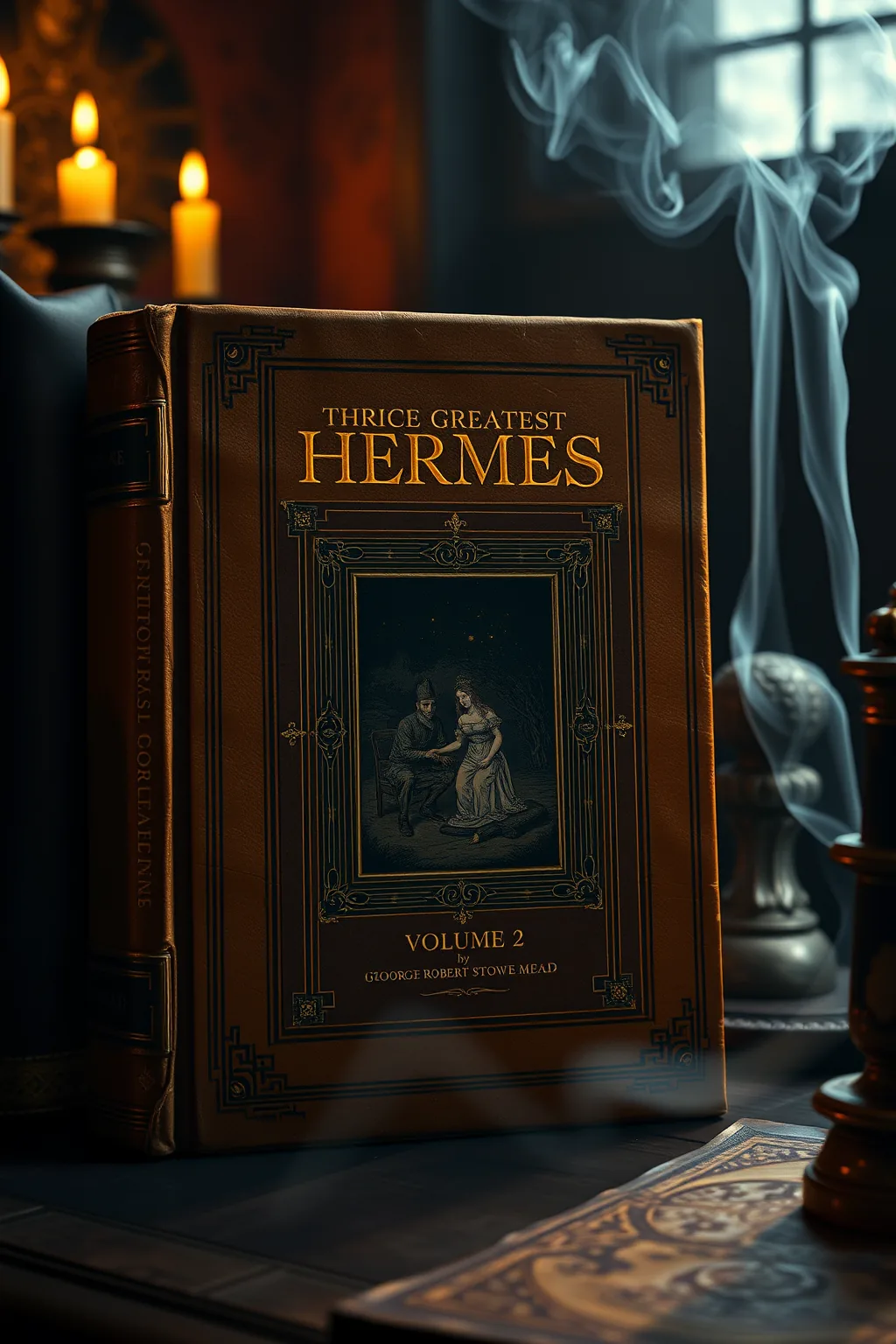
Thrice Greatest Hermes, Volume 2
 83
83

Thrice Greatest Hermes, Volume 2


George Robert Stowe Mead’s 'Thrice Greatest Hermes, Volume 2' stands as an unparalleled portal into the Hermetic tradition. Mead's scholarly yet spiritually attuned translations of the Corpus Hermeticum, particularly the core dialogues, are rendered with exceptional clarity. The extensive footnotes are a treasure trove, offering profound insights into the philosophical underpinnings and esoteric symbolism. This volume is essential for anyone serious about understanding the origins of Western occultism, Gnosticism, and early Christian mysticism. Its depth and breadth make it a cornerstone for both the academic and the devoted practitioner seeking authentic Hermetic gnosis. A truly illuminating work.
📝 Description
83
Published in 1906, George Robert Stowe Mead's 'Thrice Greatest Hermes, Volume 2' offers detailed translations of key Hermetic texts.
This second volume of George Robert Stowe Mead's work presents English translations of significant Hermetic texts, including Poemandres, To Asclepius, and The Secret Sermon on the Mountain. Mead supplements these translations with extensive footnotes, aiming to clarify the historical, philosophical, and esoteric backgrounds of these ancient writings. The book focuses on concepts such as the soul's transformation through alchemy, the structure of the cosmos, and the nature of gnosis, which connects humanity to the divine.
Mead's approach seeks to make these abstract philosophical ideas accessible to the serious student. The aim is to provide a clear path for understanding the thought of Hermes Trismegistus, as conveyed through these foundational documents of Western esotericism. The volume encourages a deep engagement with the material, treating the philosophical concepts as active principles rather than mere historical curiosities.
This volume is a significant contribution to the study of Hermeticism, a philosophical and religious tradition attributed to the legendary figure Hermes Trismegistus. It engages directly with the Corpus Hermeticum, a collection of Greek texts that were influential during the Renaissance and continue to be studied within esoteric circles. Mead's meticulous translation and annotation aim to situate these texts within their historical and intellectual milieu, bridging ancient philosophy with later esoteric developments. The work is a resource for understanding the historical roots of Western occultism and mystical thought.
✍️ Author
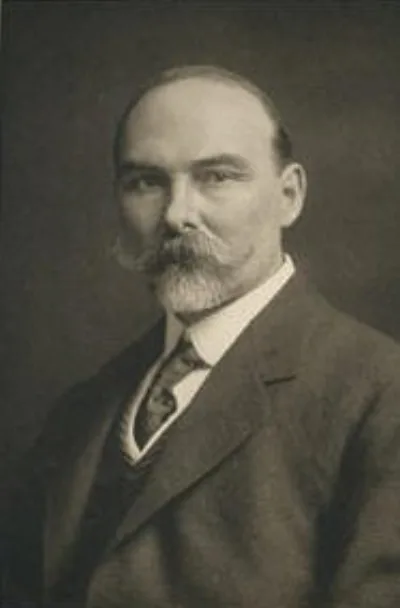
George Robert Stowe Mead
George Robert Stowe Mead was an English author and scholar of Gnosticism and early Christian mysticism.
Esoteric Writer
💡 Why Read This Book?
Uncover the foundational texts of Western esotericism directly from George Robert Stowe Mead's meticulous translation and insightful commentary. This volume offers a deep dive into Hermetic philosophy, alchemy, and the pursuit of divine knowledge. Ideal for scholars, spiritual seekers, and practitioners of occult arts who wish to grasp the roots of mystical thought.
⭐ Reader Reviews
Honest opinions from readers who have explored this book.
❓ Frequently Asked Questions
What is the Corpus Hermeticum?
The Corpus Hermeticum is a collection of ancient philosophical and religious writings attributed to Hermes Trismegistus, a syncretic figure combining the Greek god Hermes and the Egyptian god Thoth. These texts explore profound spiritual and philosophical themes.
What is the main focus of Volume 2?
Volume 2 primarily focuses on translating and commenting upon key texts within the Corpus Hermeticum, including Poemandres and To Asclepius, offering detailed explanations of their esoteric and philosophical content.
Who was George Robert Stowe Mead?
George Robert Stowe Mead (1863-1933) was a prominent scholar and translator of esoteric texts, particularly those related to Hermeticism, Gnosticism, and Theosophy. His work is highly regarded for its depth and accuracy.
What kind of knowledge can be gained from this book?
Readers can gain insights into ancient cosmological views, the nature of the divine, spiritual transformation, the principles of alchemy, and the path to gnosis (direct spiritual knowledge).
Is this book suitable for beginners?
While academically rigorous, Mead's commentary makes the complex ideas accessible. Beginners interested in the foundational texts of Western esotericism will find it a valuable, albeit deep, starting point with dedication.
🔮 Key Themes & Symbolism
The Divine Mind and Cosmic Order
This volume looks at the Hermetic conception of the Divine Mind (Nous) as the ultimate source of all existence and the architect of the cosmos. It explores how this universal intelligence manifests through various divine emanations and principles, establishing an intricate cosmic order. The texts reveal an understanding of reality not as a random occurrence, but as a divinely orchestrated system governed by immutable laws, inviting the reader to contemplate their place within this grand design and the interconnectedness of all things.
Alchemical Transformation of the Soul
Beyond its association with material transmutation, the Hermetic tradition emphasizes the alchemical transformation of the human soul. This volume illuminates the process of spiritual purification and enlightenment, often described through alchemical metaphors. It outlines the journey from ignorance and material attachment towards higher consciousness and union with the divine. The texts provide guidance on shedding the 'base metals' of the ego and the lower self to reveal the 'gold' of the perfected spirit, a profound metaphor for inner spiritual work.
Gnosis and Direct Spiritual Knowledge
A central theme is the pursuit of Gnosis, or direct, intuitive knowledge of the divine and the ultimate nature of reality. The Hermetic writings presented here posit that true understanding transcends mere intellectual reasoning and is attained through spiritual awakening and direct experience. This volume guides the reader toward recognizing the divine spark within themselves, facilitating an inner revelation that leads to liberation from illusion and the attainment of spiritual freedom and enlightenment.
💬 Memorable Quotes
Direct passages from the work, attributed to the author.
“Know thyself, and thou shalt know the universe and the gods.”
— A core part of Hermetic philosophy, this highlights that self-knowledge is the key to comprehending the greater cosmos and the divine realms.
“For the All is Mind, and it is impossible for the All to be anything else.”
— This expresses the pantheistic and mentalistic view of the Hermetic tradition, asserting that the ultimate reality is a universal consciousness or Mind.
“The soul is a spark of the divine fire.”
— This metaphor illustrates the inherent divinity within each human soul, suggesting its origin and ultimate destiny are with the divine source.
“Seek not to be known, but to know.”
— This encourages an inward focus on spiritual development and the acquisition of wisdom, rather than seeking external validation or recognition.
💡 Key Ideas
Editorial paraphrase of the work's core concepts — not direct quotes.
The eye of the mind is the only true eye.
This quote emphasizes that true perception and understanding come not from physical senses, but from inner wisdom and spiritual insight, the 'eye of the mind.'
🌙 Esoteric Significance
Tradition
This volume is a reference for understanding Hermeticism, a mystical and philosophical tradition tracing its roots to ancient Egypt and Greece, primarily attributed to Hermes Trismegistus. It forms a crucial link between ancient Greek philosophy, Egyptian religion, and later esoteric movements like Gnosticism, Renaissance magic, and Western alchemy. Hermeticism emphasizes a unified cosmos, the divine nature of humanity, and the path to spiritual illumination through gnosis.
Symbolism
The Hermetic texts teem with profound symbolism, often drawing from nature, astrology, and alchemical processes. Key symbols include the Sun (representing the divine intellect or Pleroma), the Serpent (wisdom, transformation, eternity), the number Three (divine perfection, the Trinity), and various celestial bodies. Mead's extensive annotations unpack these symbols, revealing their layered meanings related to cosmic creation, spiritual ascent, and the process of divine union.
Modern Relevance
In a world increasingly grappling with materialism and existential questions, the Hermetic emphasis on the divine within, the interconnectedness of all things, and the pursuit of inner wisdom remains profoundly relevant. The alchemical metaphor for personal transformation speaks to contemporary desires for self-improvement and spiritual growth. The concept of gnosis offers an alternative to dogma, promoting direct experience and intuitive understanding, resonating with many modern spiritual seekers.
👥 Who Should Read This Book
This volume is essential for scholars of ancient philosophy, religious studies, and the history of esotericism, offering primary source material with expert commentary. Spiritual seekers and practitioners of occult arts, particularly those interested in Hermeticism, Gnosticism, and Western alchemy, will find it an invaluable resource for deepening their understanding and practice. Beginners venturing into these complex subjects may find it challenging but immensely rewarding if approached with dedication and an open mind, guided by Mead's lucid scholarship.
📜 Historical Context
Published in 1906, 'Thrice Greatest Hermes, Volume 2' emerged during a period of intense interest in occultism, spiritualism, and ancient wisdom traditions in the West. The late Victorian and Edwardian eras saw a burgeoning of esoteric societies and a revival of interest in classical philosophies like Neoplatonism and Hermeticism, often seen as antidotes to the perceived materialism of the age. George Robert Stowe Mead, a significant figure in the Theosophical movement and later an independent scholar, produced this work as part of a larger effort to make foundational esoteric texts accessible to a wider, yet still discerning, audience. His meticulous scholarship provided a critical bridge between ancient texts and the burgeoning modern esoteric landscape, influencing generations of occultists, philosophers, and spiritual seekers.
📔 Journal Prompts
Reflect on the concept of the 'Divine Mind.' How does it manifest in your understanding of the universe and your own consciousness?
Consider the 'alchemical transformation of the soul.' What aspects of yourself do you feel are akin to 'base metals' that need refinement?
Explore the idea of 'Gnosis.' In what areas of your life have you experienced moments of direct, intuitive knowing, and how did they feel?
The Hermetic texts often speak of the interconnectedness of all things. How can you cultivate a greater awareness of this interconnectedness in your daily life?
Mead's work highlights the pursuit of wisdom. What are your personal goals in seeking wisdom, and what steps are you taking to achieve them?
🗂️ Glossary
Corpus Hermeticum
A collection of ancient philosophical and religious treatises attributed to Hermes Trismegistus, forming the core texts of Hermeticism.
Gnosis
Greek for 'knowledge,' specifically referring to spiritual or mystical knowledge, often attained through direct experience rather than intellectual reasoning.
Poemandres
A foundational text within the Corpus Hermeticum, often considered the 'shepherd of men,' which describes a vision of creation and the divine intellect.
Alchemy
An ancient practice and philosophical tradition concerned with the transformation of matter, often interpreted allegorically as the purification and perfection of the human soul.
Nous
Greek for 'mind' or 'intellect,' often referring to the divine mind or universal consciousness in Hermetic and Neoplatonic philosophy.
This book appears in 2 collections
🔮 Readers Also Liked
Browse all →








More by George Robert Stowe Mead
All books →




From the “Transcendental Meditation” Collection
View all →






More Free Alchemy & Hermeticism Books
View all →