Apollonius Of Tyana

 71
71

Apollonius Of Tyana



Isolde Whitaker, Sacred Texts Editor: George Robert Stowe Mead's "Apollonius of Tyana" is an indispensable key for unlocking the esoteric currents of the ancient world. Mead meticulously excavates the life and legend of this enigmatic philosopher, presenting him not merely as a historical figure but as a profound mystic and a master of hidden knowledge. The book offers deep insights into early Christian mysticism's potential antecedents and the enduring power of spiritual discipline. Its strength lies in Mead's scholarly yet accessible approach, making complex philosophical and spiritual concepts comprehensible. This is essential reading for anyone drawn to the mysteries of ancient wisdom, the lives of spiritual exemplars, and the perennial philosophy.
📝 Description
71
George Robert Stowe Mead published his study of Apollonius of Tyana in 1901.
George Robert Stowe Mead's 1901 book examines Apollonius of Tyana, a first-century Greek philosopher and mystic. Mead reconstructs Apollonius's life, born in Tyana, highlighting his asceticism and opposition to the materialism of his time. The work aims to illuminate the nature of spiritual power, subtle energies influencing destiny, and the potential for exceeding normal human limits. It presents a story filled with esoteric knowledge, revealing connections in ancient thought and the pursuit of divine union.
The book offers a look at a man seen by his followers as divine, a symbol of Gnosis. Mead's writing combines academic seriousness with spiritual respect. He guides readers through philosophical questions and mystical insights. Apollonius is shown not just as a historical person but as an example of an enlightened consciousness.
Published in the early days of modern esoteric movements, Mead's work engages with the revival of interest in figures outside the mainstream historical and religious narratives. It situates Apollonius of Tyana within a tradition of individuals perceived as possessing extraordinary spiritual insight and powers, often seen as bridging the gap between the human and the divine. This study aligns with a broader esoteric interest in ancient mystery traditions, Neoplatonism, and the lives of 'adepts' who embodied spiritual principles.
✍️ Author
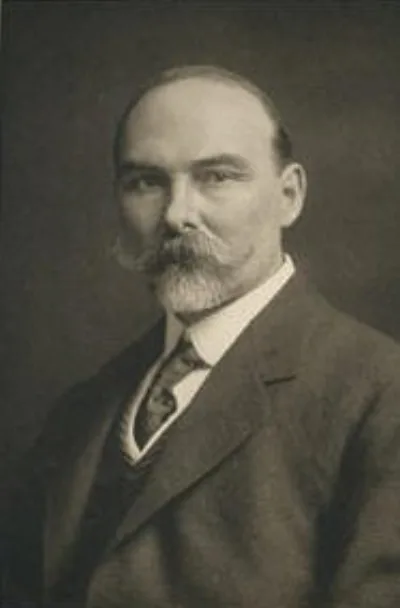
George Robert Stowe Mead
George Robert Stowe Mead was an English author and scholar of Gnosticism and early Christian mysticism.
Esoteric Writer
💡 Why Read This Book?
Unearth the life of a mystical luminary who defied convention, embodying spiritual power and wisdom. This book is for seekers yearning for ancient esoteric knowledge, scholars investigating the roots of Western mysticism, and practitioners inspired by a life dedicated to spiritual mastery and divine connection. Discover timeless teachings on asceticism, Gnosis, and the potential for human transformation.
⭐ Reader Reviews
Honest opinions from readers who have explored this book.
❓ Frequently Asked Questions
Who was Apollonius of Tyana?
Apollonius of Tyana was a Greek philosopher and mystic of the 1st century AD, revered by his followers as a sage, wonder-worker, and even a divine figure. He is often compared to Jesus Christ.
What makes this book 'esoteric'?
The book delves into Apollonius's philosophical teachings, his ascetic practices, his alleged miracles, and his opposition to materialism, all viewed through the lens of ancient esoteric traditions and hidden spiritual knowledge.
What is the significance of the author, G.R.S. Mead?
G.R.S. Mead was a prominent scholar of occultism and esoteric philosophy. His work is known for its depth, scholarship, and sympathetic yet critical examination of spiritual traditions.
What historical period does this book cover?
The book primarily focuses on the life and times of Apollonius of Tyana, who lived during the 1st century AD, a period of significant cultural and religious transition in the Roman Empire.
Is this book suitable for beginners in mysticism?
While rich in detail, Mead's clear prose makes it accessible. Beginners will find an excellent introduction to a key figure in esoteric history, though some prior interest in philosophy or mysticism is beneficial.
🔮 Key Themes & Symbolism
The Ascetic Sage and Spiritual Purity
This theme explores Apollonius's radical commitment to asceticism, viewing it not as deprivation, but as a potent tool for spiritual purification and liberation. Mead illuminates how this discipline was central to Apollonius's ability to access higher states of consciousness, align with divine principles, and achieve mastery over the material world. It examines the philosophical underpinnings of asceticism in antiquity and its role in preparing the soul for profound spiritual experiences and the manifestation of extraordinary abilities.
Gnosis and the Unveiling of Hidden Truths
Central to Apollonius's legend is his possession of Gnosis – direct, intuitive knowledge of the divine. This theme investigates how Apollonius served as a conduit for esoteric wisdom, challenging the prevailing materialistic philosophies of his age. Mead unpacks the symbolic language and allegorical narratives surrounding Apollonius's teachings, revealing a path towards self-realization and the understanding of cosmic laws. It highlights the pursuit of spiritual enlightenment as a journey of inner discovery and the unveiling of truths concealed from the uninitiated.
Miracles as Manifestations of Divine Law
Mead reframes the 'miraculous' feats attributed to Apollonius not as supernatural aberrations, but as the natural outcomes of profound spiritual understanding and alignment with universal principles. This theme explores the esoteric interpretation of miracles, suggesting they are demonstrations of a perfected will and a deep communion with the divine forces. It explores the concept of the adept as one who can consciously manipulate subtle energies, bringing about phenomena that appear wondrous to those unaware of the underlying spiritual mechanics.
💬 Memorable Quotes
Direct passages from the work, attributed to the author.
“The material is but a shadow of the real.”
— This highlights Apollonius's Platonic or Neoplatonic leaning, emphasizing the primacy of the spiritual or ideal realm over the transient physical world.
“Wisdom is the light that dispels ignorance.”
— This simple yet profound statement underscores the transformative power of Gnosis and intellectual/spiritual illumination in overcoming the darkness of unknowing.
“True power lies in self-mastery.”
— This points to Apollonius's asceticism and discipline as the foundation of his alleged extraordinary abilities, emphasizing internal control over external force.
“The universe speaks to those who listen.”
— This suggests a belief in cosmic intelligence and the possibility of receiving divine guidance or insight through attunement and spiritual receptivity.
💡 Key Ideas
Editorial paraphrase of the work's core concepts — not direct quotes.
He was a man who lived for the divine.
This quote expresses Apollonius's primary orientation, suggesting his life was a evidence of devotion, spiritual pursuit, and alignment with higher cosmic forces.
🌙 Esoteric Significance
Tradition
This work is deeply rooted in the Hermetic, Neoplatonic, and Pythagorean traditions, exploring Apollonius as an embodiment of the philosopher-sage ideal. It aligns with the Gnostic pursuit of direct spiritual knowledge (Gnosis) and the understanding of the material world as a lower manifestation of the divine. Mead positions Apollonius within a lineage of spiritual masters who understood and manipulated subtle energies, echoing themes found in ancient mystery schools and esoteric philosophies concerned with the ascent of the soul.
Symbolism
The symbolism surrounding Apollonius is rich, encompassing his ascetic lifestyle as a purification ritual, his travels as a spiritual quest, and his miracles as manifestations of divine will and cosmic law. His opposition to materialism symbolizes the triumph of spirit over matter. The serpent, often associated with wisdom and healing in antiquity, is also a recurring symbol. Mead interprets these elements not as mere narrative devices, but as keys to understanding Apollonius's profound connection to the underlying spiritual order of the cosmos.
Modern Relevance
In an era still grappling with materialism and seeking deeper meaning, Apollonius's life and teachings resonate powerfully. His emphasis on inner discipline, spiritual awareness, and the potential for human transformation offers a timeless blueprint for personal growth. The book encourages modern readers to question societal norms, seek authentic spiritual experiences, and explore the untapped potential of the human spirit, providing an ancient archetype for conscious living and spiritual mastery.
👥 Who Should Read This Book
This book is a treasure for the dedicated **seeker** yearning for ancient wisdom and spiritual exemplars. **Scholars** of comparative religion, classical philosophy, and esoteric history will find Mead's meticulous research invaluable. **Practitioners** of spiritual disciplines, particularly those interested in asceticism, meditation, and the nature of divine power, will discover profound inspiration. Even **beginners** with a genuine curiosity about the intersection of history, philosophy, and mysticism will find themselves drawn into the compelling narrative of Apollonius, guided by Mead's accessible yet profound scholarship.
📜 Historical Context
Published in 1901, George Robert Stowe Mead's "Apollonius of Tyana" emerged during a period of intense resurgence in esoteric and occult studies. The late Victorian and Edwardian eras witnessed a widespread fascination with ancient mysteries, Eastern philosophies, and alternative spiritualities, often as a reaction against the perceived materialism and rationalism of the age. Figures like Helena Blavatsky and the Theosophical Society had already reignited interest in ancient wisdom traditions. Mead, a prominent figure in this milieu, sought to illuminate figures like Apollonius who represented a bridge between classical philosophy, early Christianity, and the perennial wisdom traditions. The book was part of a larger effort to re-evaluate historical narratives through an esoteric lens, offering a counter-history that emphasized spiritual adepts and hidden lineages of knowledge, positioning Apollonius as a significant pre-Christian spiritual master.
📔 Journal Prompts
Reflect on the concept of asceticism: Is it a path to spiritual liberation or a form of self-denial? How might one practice mindful self-discipline in modern life?
Consider the idea of 'miracles' as manifestations of divine law. What does this perspective suggest about the relationship between the spiritual and the material worlds?
Apollonius opposed the materialism of his age. What are the dominant 'materialistic' forces in contemporary society, and how can one cultivate a spiritual counter-balance?
Explore the concept of 'Gnosis' or direct spiritual knowledge. How does this differ from intellectual understanding, and what practices might cultivate it?
Imagine you are a follower of Apollonius in the 1st century AD. What would be the most impactful aspect of his teachings or presence for you?
🗂️ Glossary
Gnosis
Greek for 'knowledge,' referring to intuitive, direct, and spiritual knowledge of divine realities, often contrasted with intellectual or empirical knowledge. It is central to Gnostic traditions.
Asceticism
A lifestyle characterized by abstinence from worldly pleasures and material possessions, often undertaken for spiritual reasons or self-discipline, aiming for purification and enlightenment.
Neoplatonism
A philosophical system originating with Plotinus, elaborating on Plato's ideas, emphasizing the divine 'One' as the source of all existence and the goal of spiritual ascent.
Hermeticism
A philosophical and religious tradition based on writings attributed to Hermes Trismegistus, emphasizing divine wisdom, the unity of all things, and the power of spiritual knowledge.
Theosophy
A spiritual movement, popularized in the 19th century, that seeks to understand the divine nature of reality and the relationship between humanity and the cosmos through study of ancient wisdom traditions.
This book appears in 2 collections
🔮 Readers Also Liked
Browse all →





More by George Robert Stowe Mead
All books →





From the “Meditation” Collection
View all →


![The mystic oracle, or, The complete fortune-teller and dream book / [F.M. Lupton].](/img/thumb/the-mystic-oracle-or-the-complete-fortune-teller-and-dream-book-f-m-lupton.webp)

More Free Mysticism & Contemplation Books
View all →