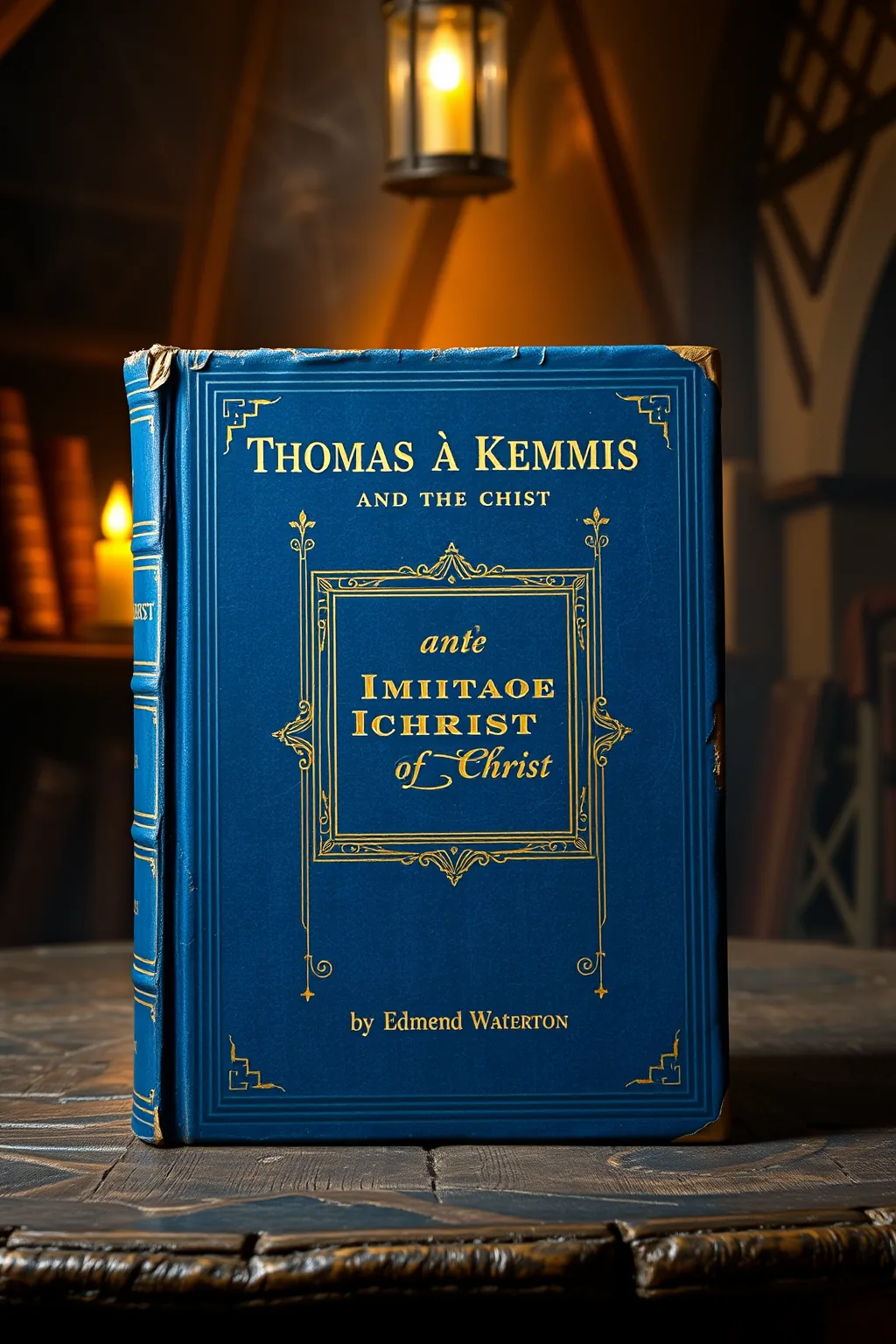
Thomas à Kempis and the Imitation of Christ
 82
82

Thomas à Kempis and the Imitation of Christ



Edmund Waterton's 'Thomas à Kempis and the Imitation of Christ' is a masterful blend of historical scholarship and spiritual insight. Published in 1883, this esoteric text offers a meticulous examination of Thomas à Kempis's mystical teachings, making it an invaluable resource for modern esoteric seekers. Waterton's commentary not only provides a detailed analysis of 'The Imitation of Christ' but also situates it within the broader context of Christian mysticism. This makes the book particularly relevant for those interested in the historical development of mystical practices within Christianity. The text is rich with devotional exercises and spiritual reflections that can be applied to contemporary spiritual practices. Waterton's writing is both scholarly and accessible, making complex theological concepts understandable to a wide audience. For anyone seeking to deepen their spiritual journey through the lens of Christian mysticism, this book is a must-read.
📝 Description
82
Edmund Waterton's 1889 study examines Thomas à Kempis's 'Imitation of Christ' and its place in medieval spirituality.
Edmund Waterton's 1889 book analyzes the 'Imitation of Christ,' a key devotional text attributed to Thomas à Kempis. Waterton investigates the book's spiritual teachings and its symbolic language. He positions à Kempis as a significant figure in medieval mysticism, drawing connections between his work and the broader spiritual climate of the era.
The study highlights the 'Imitation of Christ's' focus on inner peace and the pursuit of divine connection. Waterton discusses how these themes are conveyed through the text's contemplative tone and its emphasis on personal devotion. The book invites readers to consider the enduring appeal of these spiritual concepts, suggesting their continued relevance for those interested in contemplative practices and medieval religious thought.
This work fits within the study of Christian mysticism, specifically examining a text often considered a cornerstone of contemplative practice. The 'Imitation of Christ' itself, while widely devotional, contains elements that resonate with esoteric traditions focused on direct spiritual experience and the inner life. Waterton's analysis bridges the gap between mainstream religious study and the more specialized interest in the symbolic and psychological dimensions of medieval spirituality, touching on themes relevant to practitioners seeking deeper personal connection to the divine.
✍️ Author

Waterton, Edmund
Charles Waterton (3 June 1782 – 27 May 1865) was an English naturalist, plantation overseer and explorer best known for his pioneering work regarding conservation..
💡 Why Read This Book?
Reading 'Thomas à Kempis and the Imitation of Christ' today offers a unique opportunity to connect with the timeless wisdom of Christian mysticism. This book provides valuable insights into spiritual disciplines and devotional practices that can enrich your personal spiritual journey. By understanding the mystical teachings of Thomas à Kempis, you can gain a deeper appreciation for the inner dimensions of faith and the path to divine union. This text is particularly beneficial for those interested in exploring the esoteric aspects of Christianity and seeking to integrate spiritual practices into their daily lives.
⭐ Reader Reviews
Honest opinions from readers who have explored this book.
❓ Frequently Asked Questions
What is the significance of 'The Imitation of Christ'?
The Imitation of Christ is one of the most influential devotional works in Christian mysticism, providing guidance on spiritual disciplines and the pursuit of a life devoted to Christ.
Who is Edmund Waterton and why is his commentary important?
Edmund Waterton was a scholar and author who provided detailed commentary on Thomas à Kempis's mystical teachings, making the esoteric aspects of 'The Imitation of Christ' more accessible to modern readers.
How can this book benefit modern esoteric seekers?
This book offers a deep dive into the mystical practices and spiritual reflections that can enrich contemporary spiritual journeys, providing historical context and practical applications.
🔮 Key Themes & Symbolism
Spiritual Quest
The book looks at the spiritual journey of Thomas à Kempis, highlighting the quest for inner peace and union with the divine. It explores the mystical and esoteric dimensions of this quest, making it a valuable resource for seekers of spiritual enlightenment.
Hidden Knowledge
Waterton's work uncovers the hidden knowledge and symbolism embedded within the 'Imitation of Christ.' This theme is particularly appealing to those interested in the esoteric traditions of the Middle Ages, offering insights that are both enlightening and transformative.
Symbolism and Mysticism
The book is rich in symbolism, drawing on medieval mystical traditions to provide a deeper understanding of spiritual teachings. This theme is essential for scholars and practitioners of esoteric disciplines, offering a wealth of mystical insights.
💬 Memorable Quotes
Direct passages from the work, attributed to the author.
“The more you know, the more you feel your ignorance.”
— This wisdom highlights the humility that comes with deep spiritual knowledge, a key aspect of mystical traditions.
💡 Key Ideas
Editorial paraphrase of the work's core concepts — not direct quotes.
In quietness and trust shall be your strength.
This passage emphasizes the importance of inner peace and trust in the divine, a central theme in medieval mysticism.
He who follows Me, walks not in darkness.
This quote underscores the guiding light of spiritual devotion, leading the seeker away from darkness and toward enlightenment.
God is found in the inner chamber of the heart.
This passage speaks to the intimate connection between the divine and the human heart, a core belief in mystical spirituality.
The soul finds rest by leaning on God.
This quote emphasizes the restorative power of divine connection, a central theme in the quest for spiritual enlightenment.
🌙 Esoteric Significance
Tradition
This book belongs to the tradition of Christian mysticism, drawing on the rich esoteric teachings of the Middle Ages. It explores themes of inner peace, divine connection, and spiritual enlightenment, making it a valuable resource for those interested in mystical traditions.
Symbolism
Key symbols in the book include the heart as a dwelling place for the divine, the inner chamber as a place of spiritual retreat, and the guiding light of devotion. These symbols are central to the mystical and esoteric teachings of the 'Imitation of Christ.'
Modern Relevance
This work remains relevant today, as modern practitioners of spiritual disciplines seek to understand and apply the mystical teachings of the Middle Ages. It offers insights into the timeless quest for inner peace and divine connection, making it a valuable resource for contemporary seekers.
👥 Who Should Read This Book
Beginners interested in medieval mysticism will find this book accessible and enlightening, offering a gateway into the esoteric traditions of the time. Scholars of religious studies and esoteric disciplines will appreciate the deep analysis and historical context provided. Spiritual seekers will find inspiration and guidance in the mystical teachings, while practitioners of contemplative disciplines will benefit from the insights into inner peace and divine connection.
📜 Historical Context
The Middle Ages were a time of profound spiritual seeking and mystical exploration. Thomas à Kempis' 'Imitation of Christ' emerged as a central work in this era, offering guidance to those on a spiritual journey. Waterton's analysis of this work provides insights into the mystical and esoteric traditions of the time, highlighting its enduring influence on modern spirituality.
📔 Journal Prompts
Reflect on the concept of inner peace as described in the book. How can you cultivate this in your daily life?
Consider the symbolism of the heart as a dwelling place for the divine. What does this mean to you personally?
Explore the idea of the inner chamber as a place of spiritual retreat. How can you create a similar space in your own life?
Think about the guiding light of devotion. How does this concept influence your spiritual journey?
Reflect on the importance of humility in the quest for spiritual enlightenment. How can you practice humility in your daily life?
🗂️ Glossary
Mysticism
The belief in the possibility of union with or absorption into the divine, often through contemplation and spiritual practices.
Esoteric
Relating to knowledge that is restricted to a small group or is difficult to understand.
Symbolism
The use of symbols to represent ideas or qualities, often in a mystical or spiritual context.
Divine Connection
The spiritual bond between the individual and the divine, often sought through contemplative practices.
Inner Peace
A state of being mentally and spiritually calm, often achieved through spiritual practices and contemplation.
This book appears in 1 collection
🔮 Readers Also Liked
Browse all →





From the “Christian Mysticism” Collection
View all →









More Free Mysticism & Contemplation Books
View all →