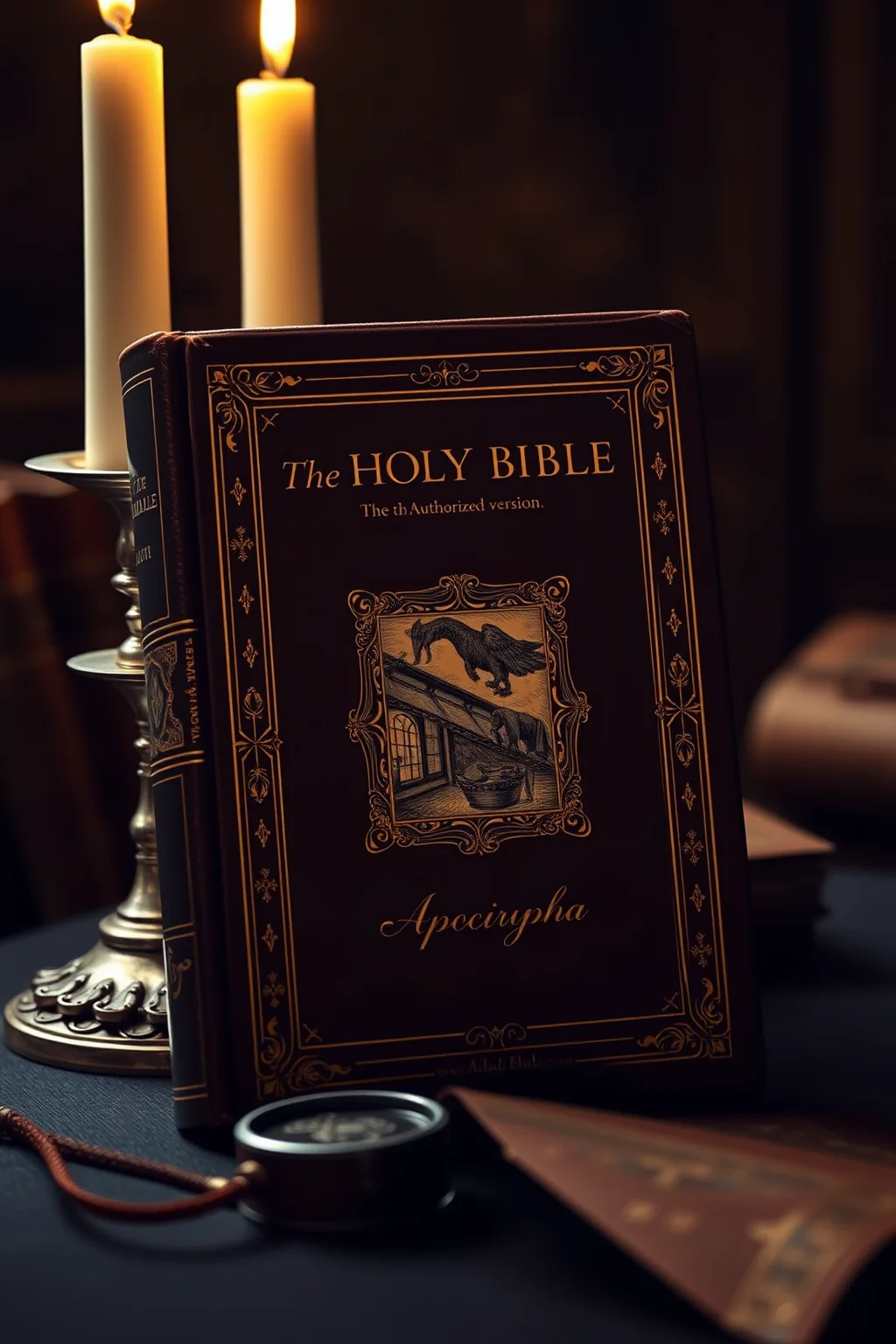
The Holy Bible, according to the Authorized version (A. D. 1611), with an explanatory and critical commentary and a revision of the translation : Apocrypha
 79
79

The Holy Bible, according to the Authorized version (A. D. 1611), with an explanatory and critical commentary and a revision of the translation : Apocrypha



Henry Wace's The Holy Bible Apocrypha is a treasure trove for modern esoteric seekers. The book's detailed commentary and revised translation provide a fresh perspective on the apocryphal texts, making it an essential read for anyone interested in Gnosticism and the occult. Wace's scholarly approach demystifies the esoteric, offering clear insights into the hidden meanings and symbolism within these ancient writings. The book's historical context enriches the reading experience, connecting modern readers with the spiritual traditions of the past. For those seeking to deepen their understanding of the Bible's lesser-known texts, this work is an invaluable resource. The meticulous research and insightful commentary make it a must-have for both academic and spiritual pursuits.
📝 Description
79
Published in 1906, this edition of the Apocrypha features Henry Wace's critical commentary.
This 1906 edition presents the Apocrypha, a collection of texts often found between the Old and New Testaments, with Henry Wace's extensive commentary and revised translation. These writings, though not included in the Protestant canon, hold significant historical and theological interest. Wace's work aims to clarify the language and context of these books, which discuss topics like divine wisdom, angels, and the afterlife. The commentary seeks to illuminate the symbolic and philosophical aspects of the Apocrypha, making its complex narratives more accessible. It is presented as a resource for understanding these ancient texts more deeply, particularly for those interested in the historical development of religious thought.
The Apocrypha, as presented here, touches upon themes often explored within esoteric traditions. Concepts such as the interpretation of angelic beings, discussions of the afterlife, and the search for hidden or divine wisdom align with broader esoteric interests. While not overtly occult, these texts offer a window into ancient Hebraic and Hellenistic thought that influenced later mystical and gnostic movements. Wace's commentary attempts to ground these texts historically and theologically, but their content inherently invites contemplation on spiritual realities beyond the conventionally accepted.
💡 Why Read This Book?
Reading The Holy Bible Apocrypha today offers readers a unique opportunity to explore the esoteric and occult dimensions of biblical texts. This book provides a deep dive into the apocryphal writings, shedding light on their hidden meanings and symbolism. Whether you are a scholar, a spiritual seeker, or simply curious about the mysteries of the Bible, this work offers invaluable insights. By understanding these lesser-known texts, readers can gain a broader perspective on early Christian thought and Gnosticism, enriching their spiritual journey.
⭐ Reader Reviews
Honest opinions from readers who have explored this book.
❓ Frequently Asked Questions
What are the Apocryphal books?
The Apocryphal books are texts that were not included in the canonical Bible but are considered sacred by some Christian traditions. They include writings like I. Esdras, Wisdom, Ecclesiasticus, and II. Maccabees.
Who is Henry Wace?
Henry Wace (1836-1924) was a prominent Anglican theologian and church historian known for his extensive work on early Christian texts and their historical context.
Why is this book important for esoteric studies?
This book is important for esoteric studies because it provides detailed commentary and a revised translation of the Apocryphal texts, which are rich in symbolism and hidden meanings. These texts are often explored in Gnosticism and other esoteric traditions.
🔮 Key Themes & Symbolism
Divine Mystery
The Apocrypha explores the enigmatic and mystical aspects of the divine, inviting readers to contemplate the unseen and unknowable. These texts often reveal glimpses of celestial realms and divine interactions, fostering a sense of awe and wonder.
Hidden Knowledge
One of the central themes of the Apocrypha is the exploration of hidden or esoteric knowledge. These texts often contain coded messages and symbolism that require deep contemplation and interpretation, making them a rich source of spiritual insight.
Symbolism and Allegory
The Apocrypha is replete with symbolic language and allegorical narratives that convey profound spiritual truths. These symbols and allegories serve as keys to unlocking the deeper meanings of the texts, guiding readers on a journey of spiritual discovery.
💡 Key Ideas
Editorial paraphrase of the work's core concepts — not direct quotes.
For those who are worthy of these mysteries, the veil is lifted.
This quote underscores the idea that esoteric knowledge is revealed only to those who are spiritually prepared.
The path to enlightenment is narrow and hidden.
This passage highlights the challenging and often obscure nature of the spiritual journey.
In the silence of the night, the divine whispers.
This quote suggests that deep spiritual insights can be gained through quiet contemplation and inner reflection.
The symbols of the ancient ones hold the keys to the universe.
This passage emphasizes the importance of symbolism in uncovering the mysteries of the cosmos.
The wise seeker finds treasure in the depths of the soul.
This quote encourages readers to look within for spiritual treasure and enlightenment.
🌙 Esoteric Significance
Tradition
The Apocrypha belongs to the esoteric tradition of Gnosticism, which emphasizes the pursuit of hidden knowledge and spiritual enlightenment. These texts are rich in symbolism and allegory, making them a valuable resource for those exploring the mystical dimensions of religion and spirituality.
Symbolism
Key symbols in the Apocrypha include celestial bodies, mystical creatures, and sacred numbers. These symbols often represent deeper spiritual truths and serve as guides on the path to enlightenment. For example, the number seven is frequently used to symbolize completeness and divine perfection.
Modern Relevance
The Apocrypha remains relevant today for modern practitioners of the occult and spiritual seekers. These texts offer timeless insights into the nature of the divine and the human quest for spiritual enlightenment. Many contemporary scholars and practitioners use the Apocrypha as a source of inspiration and guidance in their esoteric studies.
👥 Who Should Read This Book
Beginners will find the Apocrypha an intriguing introduction to the mystical and occult dimensions of biblical literature. Scholars will appreciate the deep esoteric insights and historical context provided by Henry Wace's commentary. Spiritual seekers will be drawn to the profound symbolism and allegorical narratives that invite contemplation and inner exploration. Practitioners of the occult will find valuable resources for their spiritual and esoteric studies.
📜 Historical Context
The Apocrypha was written during a time of significant religious and cultural transition, bridging the gap between the Old and New Testaments. These texts were composed in the centuries leading up to and following the life of Jesus, reflecting the diverse spiritual and philosophical currents of the era. The Apocrypha's influence can be seen in various religious and esoteric traditions, shaping the development of Gnosticism, Hermeticism, and other mystical paths.
📔 Journal Prompts
What hidden knowledge do you believe the Apocrypha reveals about the divine?
How do the symbols and allegories in the Apocrypha resonate with your spiritual journey?
In what ways does the Apocrypha challenge or affirm your understanding of biblical literature?
How can the esoteric insights from the Apocrypha be applied to modern spiritual practices?
What themes in the Apocrypha speak to your deepest spiritual questions and desires?
🗂️ Glossary
Gnosticism
A mystical and esoteric tradition that emphasizes the pursuit of hidden knowledge and spiritual enlightenment.
Apocrypha
A collection of ancient texts that were not included in the canonical Bible but are considered significant for their spiritual and esoteric insights.
Symbolism
The use of symbols to represent deeper spiritual truths and concepts in esoteric literature.
Allegory
A narrative technique in which characters, events, and settings represent abstract ideas or principles.
Esoteric
Relating to knowledge that is intended for a small, select group of people with special knowledge or interests.
This book appears in 9 collections
🔮 Readers Also Liked
Browse all →








From the “Gnosticism” Collection
View all →


More Free Sacred Texts & Gnosticism Books
View all →