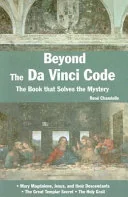
Beyond The Da Vinci Code
 82
82

Beyond The Da Vinci Code
The premise of Beyond The Da Vinci Code, that Mary Magdalene was the wife of Jesus and bore his child, Sarah, whose descendants founded the Merovingian dynasty, is certainly provocative. The work attempts to connect this alleged bloodline to the Knights Templar and the Priory of Sion, suggesting a vast conspiracy to hide this lineage. While the ambition to unearth hidden histories is commendable, the execution often relies on assertion rather than rigorous evidence. A notable strength is the exploration of how alternative narratives can challenge established dogma. However, a significant limitation is the lack of primary source material presented to substantiate claims about the Vatican's suppression efforts or the direct lineage to the Merovingians. The book's treatment of the Merovingian dynasty, while intriguing, could benefit from a more nuanced engagement with established historical scholarship on the period. Ultimately, Beyond The Da Vinci Code offers an engaging, if speculative, look at a contested aspect of early Christian history.
📝 Description
82
Packages' book advances a theory of Jesus Christ's lineage through Mary Magdalene and the Merovingian dynasty.
This work advances a controversial thesis concerning the lineage of Jesus Christ, suggesting a historical continuity through Mary Magdalene. The author argues that Magdalene, after the crucifixion, fled to France carrying Christ's child. This narrative posits that her descendants established the Merovingian dynasty, a claim that challenges conventional religious and historical accounts. The book investigates alleged efforts by the Vatican to suppress this information. It also examines the role of secret societies, specifically the Knights Templar and the Priory of Sion, in safeguarding this hidden history.
The volume is written for readers interested in alternative interpretations of Christian history, Gnostic traditions, and the historical narratives surrounding secret societies. It appeals to those who question established doctrines and seek to explore esoteric interpretations of religious events and figures. Individuals fascinated by the Merovingian dynasty, the Knights Templar, and the Priory of Sion will find specific attention given to their purported connections to Jesus Christ and Mary Magdalene.
This book engages with historical and theological debates that gained significant traction following the publication of Dan Brown's *The Da Vinci Code*. It touches upon theories concerning the existence and activities of the Priory of Sion and the Knights Templar, groups often linked in popular and esoteric literature to hidden Christian lineages and sacred secrets. The work situates itself within a broader tradition of Gnostic and esoteric interpretations of early Christianity, which often emphasize the role of figures like Mary Magdalene and question orthodox Christian narratives.
💡 Why Read This Book?
• Understand the controversial theory of Jesus and Mary Magdalene's marital union and its alleged impact on the Merovingian dynasty, providing a counter-narrative to orthodox Christian history. • Explore the purported role of the Knights Templar and the Priory of Sion in protecting a hidden lineage, offering a glimpse into esoteric interpretations of these medieval orders. • Gain insight into the historical context and ongoing debates surrounding suppressed Christian lineages and sacred feminine interpretations, particularly relevant after the popularization of such ideas in the early 2000s.
⭐ Reader Reviews
Honest opinions from readers who have explored this book.
❓ Frequently Asked Questions
What is the central claim about Mary Magdalene in Beyond The Da Vinci Code?
The book posits that Mary Magdalene was the wife of Jesus Christ and bore his child, Sarah, thereby establishing a bloodline that allegedly continued through the Merovingian dynasty.
Which historical dynasties are linked to Jesus's supposed descendants?
The primary dynasty linked in the book is the Merovingian dynasty, with the claim that its founders were direct descendants of Jesus Christ through Mary Magdalene.
What role do the Knights Templar and Priory of Sion play in the book's narrative?
They are presented as ancient allies and protectors of Jesus Christ's lineage, allegedly working for centuries to safeguard the truth of his descendants and their royal connections.
Does the book offer definitive proof of Jesus and Mary Magdalene's marriage?
The work explores and presents theories and interpretations, suggesting a suppressed history. It does not claim to offer absolute, universally accepted proof but rather an alternative historical narrative.
How does the book address the Vatican's alleged involvement?
It suggests that the Vatican has actively worked to conceal the truth about Jesus's descendants, employing various means to suppress this lineage and its historical implications.
What is the publication date of the original work?
The original publication date for this work is May 24, 2000.
🔮 Key Themes & Symbolism
The Magdalene Bloodline
This theme centers on the radical assertion that Mary Magdalene was not merely a follower but the wife of Jesus Christ, and that their union produced offspring. The work posits that this bloodline, particularly a daughter named Sarah, escaped persecution and eventually established the Merovingian dynasty in France. This narrative challenges the orthodox depiction of Jesus and reframes the role of the feminine in early Christianity, suggesting a suppressed matriarchal lineage of immense historical significance.
The Merovingian Dynasty Connection
The book directly links the supposed descendants of Jesus and Mary Magdalene to the historical Merovingian dynasty, the ruling Frankish dynasty from the 5th to the 8th centuries CE. It suggests that the Merovingian kings were the inheritors of a sacred bloodline, a secret that powerful institutions have sought to erase. This connection is presented as a core part of hidden history, implying that royal power in Europe has esoteric roots.
Secret Societies and Suppression
A significant aspect of the work involves the alleged efforts by entities like the Vatican to conceal the truth of Christ's lineage. Counterbalancing this suppression, the book highlights the purported role of secret societies, most notably the Knights Templar and the Priory of Sion. These organizations are portrayed as guardians of this hidden history, tasked with protecting the bloodline and its associated knowledge across centuries of clandestine operations.
Gnostic Echoes and Sacred Feminine
The themes explored in Beyond The Da Vinci Code resonate with Gnostic traditions that often elevate figures like Mary Magdalene and question orthodox interpretations of Christ's divinity and humanity. The emphasis on a suppressed feminine lineage taps into modern explorations of the 'sacred feminine,' suggesting that a vital aspect of spiritual and historical truth has been marginalized by patriarchal structures. The work invites readers to reconsider established religious narratives through an esoteric lens.
💬 Memorable Quotes
Direct passages from the work, attributed to the author.
“When he was crucified a pregnant Mary Magdalene fled to France escaping persecution.”
— This statement expresses the core premise of a physical lineage for Jesus, positioning Mary Magdalene as not just a follower but a mother who carried his child to safety and established a new beginning.
“Sarah's descendants became the Merovingion dynasty.”
— This directly connects the alleged offspring of Jesus and Mary Magdalene to one of Europe's most significant early royal houses, suggesting a direct, hidden royal succession rooted in early Christianity.
“The Vatican has done, and still does, everything in its power to conceat this truth.”
— This highlights the narrative of a powerful, ongoing conspiracy by the Catholic Church to suppress the existence of Jesus's bloodline, framing the book's thesis as a revelation against institutional control.
“Christ's descendants have had their own allies from the beginning in the Knights Templar and the Priory of Sion.”
— This introduces the concept of secret societies as protectors of the alleged lineage, providing a historical framework for how such a secret might have been maintained across centuries.
“Mary Magdalene was the wife of Jesus Christ.”
— This is the foundational assertion of the book, directly challenging the celibate portrayal of Jesus and proposing a marital relationship that has wide implications for Christian theology and history.
🌙 Esoteric Significance
Tradition
This work draws heavily from Gnostic and alternative Christian traditions, which often emphasize the spiritual significance of Mary Magdalene and question orthodox interpretations of Christ's life and teachings. It aligns with esoteric lineages that explore hidden histories and secret knowledge, suggesting that mainstream religion has suppressed vital truths, particularly concerning the divine feminine and Christ's human relationships.
Symbolism
Key symbols include Mary Magdalene herself, representing the sacred feminine and direct spiritual knowledge often contrasted with institutionalized religion. The Merovingian dynasty symbolizes a hidden, divinely sanctioned royal bloodline. The Knights Templar and Priory of Sion function as symbols of hidden guardianship, representing ancient orders dedicated to protecting sacred secrets and lineages against perceived patriarchal suppression.
Modern Relevance
The book's themes remain relevant in contemporary discussions about the sacred feminine, alternative spirituality, and critical re-examinations of religious history. It speaks to modern seekers interested in Gnostic texts, conspiracy theories concerning religious institutions, and the ongoing popular fascination with groups like the Knights Templar and the historical mysteries surrounding early Christianity.
👥 Who Should Read This Book
• Students of Gnostic Gospels and alternative Christian histories seeking to explore theories about Mary Magdalene's role beyond traditional portrayals. • Enthusiasts of secret societies and medieval history interested in the purported connections between the Knights Templar, Priory of Sion, and early Christian lineages. • Readers questioning orthodox religious narratives and seeking esoteric interpretations of historical events and figures, particularly those intrigued by the Merovingian dynasty's origins.
📜 Historical Context
Published in the wake of Dan Brown's *The Da Vinci Code* (2003), this work taps into a popular resurgence of interest in theories about the historical Jesus, Mary Magdalene, and secret societies. The early 2000s saw a surge in books and documentaries exploring Gnostic Gospels, alternative Christian histories, and the purported secrets of groups like the Knights Templar and the Priory of Sion. This book operates within that milieu, presenting a specific, controversial narrative about a hidden bloodline. While popular authors like Graham Hancock were exploring ancient mysteries, and scholars debated the historicity of Jesus, this book focused on a direct, dynastic link. Its claims about the Merovingian dynasty and Vatican suppression place it firmly within the genre of esoteric historical speculation, engaging with but diverging from strictly academic historical discourse.
📔 Journal Prompts
The Merovingian dynasty's alleged connection to Christ's lineage.
The role of the Knights Templar in safeguarding hidden truths.
Mary Magdalene's position as wife and mother in alternative Christian narratives.
The Vatican's purported efforts to conceal the existence of a Christ bloodline.
The concept of a suppressed sacred feminine within historical Christianity.
🗂️ Glossary
Mary Magdalene
A prominent female follower of Jesus Christ. While traditionally depicted as a repentant sinner, some esoteric traditions and alternative theories propose she was Jesus's wife and mother of his child.
Merovingian Dynasty
The first dynasty of Frankish kings, ruling in a region of modern-day France and Germany from the 5th to the 8th century CE. The book claims their lineage traces back to Jesus Christ.
Knights Templar
A medieval Catholic military order founded around 1119. Popular theories link them to secret knowledge and the protection of sacred relics or bloodlines, including that of Jesus.
Priory of Sion
A purported secret society mentioned in connection with the Knights Templar and claims of protecting a hidden lineage descending from Jesus Christ. Its historical authenticity is debated.
Vatican
The ecclesiastical jurisdiction of the Pope, head of the Catholic Church. In this context, it is portrayed as an institution that has actively suppressed information about Jesus's bloodline.
Gnosticism
A collection of religious ideas and systems that originated in the first century AD among Jewish and early Christian sects. Gnostics believed they possessed secret knowledge (gnosis) that would lead to salvation.
Sacred Feminine
A concept referring to the divine aspects associated with the feminine principle, often seen as suppressed or marginalized in patriarchal religious structures. Mary Magdalene is frequently invoked in this context.
This book appears in 1 collection
🔮 Readers Also Liked
Browse all →





From the “Templar Knights” Collection
View all →








More Free Sacred Texts & Gnosticism Books
View all →