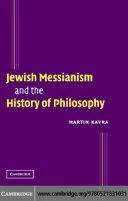
Jewish Messianism and the History of Philosophy
 82
82

Jewish Messianism and the History of Philosophy
Martin Kavka's exploration of Jewish messianism through the lens of philosophy is a rigorous academic undertaking that successfully reframes the 'Athens vs. Jerusalem' debate. By focusing on the concept of meontology, or the doctrine of nonbeing, Kavka reveals a subtle but crucial dialogue between Greek thought and Jewish theology. He convincingly demonstrates how figures like Hermann Cohen and Emmanuel Levinas, far from simply rejecting Greek philosophy, strategically employed its concepts, particularly the understanding of nonbeing as both lack and possibility, to articulate uniquely Jewish ideas about life and redemption. The book's strength lies in its detailed analysis of these intellectual maneuvers. A potential limitation for some readers might be its dense academic prose, which, while precise, demands significant prior knowledge of both philosophical traditions. The discussion of Maimonides' engagement with Aristotelian concepts of nonbeing is particularly illuminating, showing the historical depth of this intellectual negotiation. This is a vital work for understanding the philosophical architecture of Jewish messianism.
📝 Description
82
Martin Kavka's 2004 book examines how Jewish thinkers engaged with Greek philosophy.
Jewish Messianism and the History of Philosophy, published in 2004, confronts the traditional separation between Greek philosophical thought and Jewish tradition. Martin Kavka argues that key figures in Jewish philosophy did not merely absorb Greek ideas but actively transformed them to serve their own theological and existential frameworks. The book details how thinkers used concepts originating in Hellenistic thought to articulate distinctively Jewish ideas about redemption and existence.
This work is primarily for academics in philosophy, Jewish studies, and religious thought. It also interests readers of comparative philosophy, especially those looking at the connections between Hellenistic and Abrahamic traditions. Advanced students and researchers concerned with the intellectual foundations of Jewish messianic thought will find this study particularly useful. Kavka's book joins a long academic discussion on the complex relationship between Greek philosophy and Judeo-Christian intellectual history.
This book engages with a tradition that has long sought to synthesize or contrast Hellenistic philosophical frameworks with Jewish mystical and theological concepts. From Maimonides' engagement with Aristotle to later developments in Kabbalah and Hasidism, Jewish thinkers have consistently grappled with external philosophical systems. Kavka's study specifically focuses on how these interactions shaped messianic thought, viewing concepts like 'nonbeing' not just as abstract philosophical problems but as tools for articulating profound spiritual and historical aspirations within Judaism.
💡 Why Read This Book?
• Gain insight into how Jewish thinkers like Franz Rosenzweig strategically employed Greek philosophical concepts of nonbeing to articulate their unique theological vision, challenging the notion of a simple opposition between Athens and Jerusalem. • Understand the concept of meontology as developed within Jewish philosophical and theological traditions, as explored through figures like Emmanuel Levinas and Moses Maimonides. • Appreciate the intellectual history of the 'Athens vs. Jerusalem' debate, tracing how Jewish thinkers from Maimonides onward have engaged with and repurposed Greek philosophical tools, as detailed in the book's historical analysis.
⭐ Reader Reviews
Honest opinions from readers who have explored this book.
❓ Frequently Asked Questions
What is the central philosophical concept explored in Jewish Messianism and the History of Philosophy?
The book's central concept is 'meontology,' the doctrine of nonbeing. Kavka argues this concept, derived from Greek philosophy, is crucial for understanding Jewish messianic thought and was actively utilized by thinkers like Emmanuel Levinas and Franz Rosenzweig.
Which Jewish philosophers does Martin Kavka focus on?
Kavka examines several key figures in Jewish philosophy, including Moses Maimonides, Hermann Cohen, Franz Rosenzweig, and Emmanuel Levinas, analyzing their engagement with Greek philosophical traditions.
What is the 'Athens vs. Jerusalem' dichotomy Kavka addresses?
This refers to the perceived historical conflict or fundamental difference between Greek philosophy (Athens) and Jewish religious tradition (Jerusalem). Kavka contests this opposition by showing how Jewish thinkers integrated Greek concepts.
When was Jewish Messianism and the History of Philosophy first published?
The book was first published on May 10, 2004, positioning it as a significant contribution to 21st-century scholarship on Jewish philosophy and its historical dialogues.
How does the book reinterpret the concept of nonbeing?
Kavka reinterprets nonbeing not merely as absence but as a source of possibility and potentiality, demonstrating how Jewish philosophers used this nuanced understanding to explore themes of creation, redemption, and existence.
What is the significance of meontology in Jewish thought according to Kavka?
Kavka posits that meontology, the doctrine of nonbeing, illuminates the meaning of Jewish life and messianic aspirations. He shows how it was employed by thinkers like Rosenzweig and Levinas to articulate core Jewish ideas.
🔮 Key Themes & Symbolism
Meontology and Jewish Existence
The book centers on 'meontology,' the doctrine of nonbeing, positing it as a critical conceptual tool for understanding Jewish philosophical and theological traditions. Kavka demonstrates how thinkers like Emmanuel Levinas and Franz Rosenzweig engaged with the Greek philosophical concept of nonbeing – not as mere absence, but as a field of possibility and potentiality. This reinterpretation is shown to be fundamental to articulating the meaning of Jewish life and the nature of messianic hope, challenging traditional oppositions between Hellenistic and Hebraic thought.
Reconciling Athens and Jerusalem
A core argument is the contestation of the ancient opposition between Greek philosophy ('Athens') and Jewish tradition ('Jerusalem'). Kavka meticulously traces how influential Jewish thinkers, from Moses Maimonides in the 12th century to modern philosophers, did not merely reject Hellenistic thought but actively incorporated and re-purposed its concepts. This intellectual strategy allowed them to enrich and articulate Jewish ideas, demonstrating a dynamic synthesis rather than a conflict.
Messianism as Philosophical Concept
The work re-examines Jewish messianism not solely as a religious doctrine but as a rich philosophical concept deeply intertwined with ideas of nonbeing and possibility. By analyzing figures like Hermann Cohen and Rosenzweig, Kavka reveals how messianic thought engaged with existential questions about the human condition, time, and redemption. The philosophical exploration of nonbeing becomes a key to unlocking the enduring relevance of Jewish messianic aspirations.
The Philosophical Legacy of Maimonides
Martin Kavka situates his analysis within a long tradition of Jewish philosophical engagement, highlighting the foundational role of Moses Maimonides. The book explores how Maimonides' own complex relationship with Aristotelian philosophy, particularly concerning concepts that touch upon nonbeing and creation, set a precedent for subsequent Jewish thinkers. This historical perspective underscores the continuous dialogue between Jewish thought and the broader philosophical landscape.
💬 Memorable Quotes
Direct passages from the work, attributed to the author.
“The Greek concept of nonbeing (understood as both lack and possibility) clarifies the meaning of Jewish life.”
— This central idea expresses Kavka's thesis: that Jewish thinkers strategically utilized the philosophical notion of nonbeing, not as a void, but as a dynamic space of potential, to articulate profound aspects of Jewish existence and messianic thought.
“These thinkers of 'Jerusalem' use 'Athens' for Jewish ends, just [as they always have].”
— This highlights the adaptive and synthetic nature of Jewish philosophy. It suggests that the engagement with Greek thought was not a capitulation but a sophisticated appropriation, where Hellenistic concepts were bent to serve and illuminate specifically Jewish theological and existential concerns.
“The work contests the ancient opposition between Athens and Jerusalem.”
— This statement frames the book's central objective: to dismantle the simplistic dichotomy that pits Greek philosophy against Jewish tradition, arguing instead for a history of complex interaction and mutual influence where Jewish thought creatively engaged with its philosophical interlocutors.
“Retrieving the concept of meontology – the doctrine of nonbeing – from the Jewish philosophical and theological tradition.”
— This emphasizes Kavka's focus on meontology as a key, perhaps underappreciated, conceptual framework within Jewish thought. It signals the book's project of excavating and re-examining this specific philosophical doctrine's significance for understanding Jewish messianism.
“For Emmanuel Levinas, as well as for Franz Rosenzweig, Hermann Cohen and Moses Maimonides, the Greek concept of nonbeing [...] clarifies the meaning of Jewish life.”
— This points to the specific figures whose work is analyzed to support the central thesis. By linking these disparate thinkers across centuries, Kavka builds a historical argument for the sustained relevance and philosophical utility of engaging with nonbeing in Jewish thought.
🌙 Esoteric Significance
Tradition
While not strictly adhering to a singular esoteric lineage like Kabbalah or Hermeticism, Kavka's work engages with themes that resonate with esoteric traditions. The exploration of 'nonbeing' (meontology) as a generative force connects to mystical concepts of the divine void (Ayin in Kabbalah) or the primordial chaos from which creation emerges. It reframes philosophical discourse in ways that can inform esoteric interpretations of creation, emanation, and redemption, particularly within Jewish mystical thought.
Symbolism
The primary 'symbol' explored is nonbeing itself (meontology), reframed from a philosophical concept into a potent idea. In esoteric contexts, nonbeing can symbolize the unknowable divine essence prior to manifestation, the potentiality inherent in the void, or the state of dissolution necessary for spiritual renewal. The book's reinterpretation of this concept offers a philosophical parallel to esoteric notions of the transcendent and the generative power of emptiness.
Modern Relevance
Contemporary thinkers exploring post-structuralist interpretations of religion, continental philosophy of religion, and comparative mysticism may find Kavka's work highly relevant. Scholars interested in Emmanuel Levinas's ethical philosophy, particularly its roots in Jewish thought, and those examining the philosophical underpinnings of messianic movements or concepts of redemption in diverse traditions, draw upon Kavka's arguments about the philosophical utility of meontology.
👥 Who Should Read This Book
• Scholars of Jewish philosophy and theology seeking to understand the sophisticated engagement of key figures with Hellenistic thought. • Students of comparative religion and philosophy interested in how different traditions have historically interacted and borrowed concepts. • Readers fascinated by the philosophical underpinnings of messianism and concepts of redemption, particularly those open to nuanced interpretations of nonbeing and potentiality.
📜 Historical Context
Published in 2004, Martin Kavka's Jewish Messianism and the History of Philosophy emerged during a period of renewed interest in the philosophy of religion and comparative intellectual history. It engages with a long-standing debate concerning the relationship between Hellenistic philosophy and Jewish thought, a conversation that has occupied scholars since medieval figures like Moses Maimonides grappled with Aristotelianism. Kavka's work enters this discourse by challenging the notion of an inherent conflict between 'Athens' and 'Jerusalem.' His analysis specifically builds upon and dialogues with the work of 20th-century thinkers such as Franz Rosenzweig and Emmanuel Levinas, who themselves navigated these intellectual currents. The book's focus on meontology as a bridging concept can be seen as a response to scholarship seeking to identify shared philosophical vocabularies or transformative appropriations across traditions, rather than simply asserting difference.
📔 Journal Prompts
The philosophical concept of meontology and its role in clarifying Jewish life.
Moses Maimonides's strategies for integrating Greek philosophical ideas into Jewish thought.
Emmanuel Levinas's conceptualization of nonbeing as possibility.
Franz Rosenzweig's interpretation of the Athens-Jerusalem dialogue.
The implications of using 'Athens' for 'Jerusalem's' ends in philosophical discourse.
🗂️ Glossary
Meontology
The philosophical doctrine or study of nonbeing. Kavka uses this term to describe how Jewish thinkers engaged with concepts of absence, void, and potentiality derived from Greek philosophy.
Athens and Jerusalem
A common metaphor representing the perceived dichotomy between Greek philosophy (Athens) and Jewish religious tradition (Jerusalem). Kavka argues this opposition is not absolute but a site of complex interaction.
Messianism
In a Jewish context, the belief in a future messiah or messianic era that will bring about a period of peace, justice, and redemption. Kavka explores its philosophical dimensions.
Nonbeing (as lack and possibility)
Kavka's interpretation of the Greek philosophical concept of nonbeing, moving beyond mere absence to include its potential as a source of creation, change, and future realization.
Hermann Cohen
A prominent German-Jewish philosopher (1842-1918) known for his neo-Kantian philosophy and his efforts to synthesize Jewish thought with modern philosophy.
Emmanuel Levinas
A Lithuanian-French philosopher (1906-1995) whose work focused on ethics, phenomenology, and the philosophy of religion, significantly influenced by Jewish thought.
Moses Maimonides
A preeminent medieval Sephardic Jewish philosopher and astronomer (1138-1204), best known for his legal code 'Mishneh Torah' and philosophical work 'The Guide for the Perplexed'.