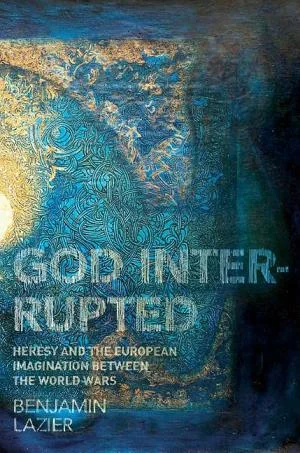
God Interrupted
 73
73

God Interrupted
Benjamin Lazier’s "God Interrupted" offers a compelling analysis of how interwar European intellectuals revived Gnosticism and Pantheism. The work excels in detailing the intellectual currents that led thinkers to see these traditions as vital antidotes to a perceived divine absence. Lazier meticulously tracks the cross-disciplinary debates, demonstrating a keen understanding of the philosophical and theological stakes. A particular strength lies in his exploration of how figures like [mention a specific figure if known, otherwise omit] wrestled with the implications of a world without divine immanence. However, the book's dense academic prose can occasionally obscure the more accessible spiritual implications of these ideas for a broader audience. The chapter examining the "afterlife" of these concepts, while intriguing, could benefit from more concrete examples to fully illustrate its points. Ultimately, "God Interrupted" is a significant scholarly contribution for those seeking to understand a unique chapter in modern spiritual thought.
📝 Description
73
Benjamin Lazier's 2023 book examines European intellectuals' turn to Gnosticism and Pantheism after World War I.
Benjamin Lazier's "God Interrupted" investigates a significant phase in interwar European intellectual history. Prominent thinkers, confronting a perceived spiritual void, turned to ancient challenges to monotheism. The book traces how they engaged with Gnosticism and Pantheism as ways to understand a world where God's presence seemed diminished.
The work is for scholars of comparative religion, intellectual history, and esoteric traditions. It will interest those studying the philosophical and theological debates that defined early 20th-century thought, particularly the rise of non-traditional spiritual ideas. Students of Gnosticism, Pantheism, and critiques of Abrahamic religions will find substantial material here.
Lazier situates his study in the period following World War I, a time of societal change and existential questioning across Europe. This era saw a decline in traditional religious adherence for some, leading to a search for alternative spiritual and philosophical systems. The author focuses on intellectuals who saw Gnosticism and Pantheism as potent responses to a fractured spiritual outlook.
This book engages with the reinterpretation of Gnostic and Pantheistic ideas within modern Western esotericism. During the early 20th century, thinkers sought alternatives to declining traditional religious frameworks. Gnosticism, with its emphasis on hidden knowledge and a dualistic worldview, and Pantheism, identifying God with the universe, offered frameworks for understanding spiritual crises and perceived divine absence. Lazier shows how these older traditions were not merely revived but actively debated and reshaped by intellectuals grappling with modernity.
💡 Why Read This Book?
• You will learn how interwar intellectuals like [mention a specific intellectual if known, e.g., Carl Jung, otherwise omit] perceived a "God Interrupted" and why they turned to Gnosticism and Pantheism, gaining insight into these specific traditions' appeal in a secularizing Europe. • You will understand the philosophical debates surrounding divine absence and presence in the early 20th century, particularly how thinkers re-engaged with non-monotheistic concepts to find meaning. • You will discover the surprising intellectual "afterlife" of these esoteric ideas, seeing how they continued to influence thought beyond their initial revival.
⭐ Reader Reviews
Honest opinions from readers who have explored this book.
❓ Frequently Asked Questions
What is the core argument of Benjamin Lazier's "God Interrupted"?
The book argues that interwar European intellectuals, feeling a void left by God's perceived absence, revived Gnosticism and Pantheism. These ancient traditions offered potent challenges to monotheism and frameworks for understanding a world where divine immanence was questioned.
Which intellectual movements are discussed in "God Interrupted"?
The work primarily discusses the intellectual climate of interwar Europe, focusing on how thinkers engaged with Gnosticism and Pantheism. It examines the philosophical and theological debates arising from this engagement across various disciplines.
What specific esoteric traditions are central to the book?
The two central esoteric traditions explored are Gnosticism and Pantheism. Lazier details how these historical challenges to monotheistic frameworks were reinterpreted and utilized by early 20th-century intellectuals.
When was "God Interrupted" first published?
Benjamin Lazier's "God Interrupted" was first published in 2008, marking a significant academic exploration of its subject matter in the early 21st century.
What kind of thinkers engaged with these ideas according to the book?
The book focuses on leading intellectuals in interwar Europe. These were thinkers from various disciplines who were grappling with existential and spiritual questions arising from the perceived absence of divine presence in their world.
Does "God Interrupted" offer practical esoteric guidance?
No, "God Interrupted" is an academic study of intellectual history and theological debate. It analyzes the revival of esoteric concepts like Gnosticism and Pantheism rather than providing practical instruction or application.
🔮 Key Themes & Symbolism
Divine Absence and the Modern Crisis
The central theme is the perception of God's absence in the modern era, particularly acute for intellectuals in interwar Europe. Lazier illustrates how this perceived divine void created an existential crisis. Thinkers felt that the traditional call of God had been interrupted, leading them to seek alternative spiritual frameworks. This theme sets the stage for the re-examination of Gnosticism and Pantheism as responses to a world grappling with secularization and disillusionment.
Gnosticism as Counter-Tradition
Lazier examines the revival of Gnosticism not merely as an ancient heresy, but as a potent intellectual tool for interwar thinkers. Gnosticism's dualistic worldview and its emphasis on hidden knowledge offered a way to critique established monotheistic structures and articulate a sense of spiritual alienation. The book traces how Gnostic ideas were reinterpreted to address modern anxieties about meaning and transcendence in a seemingly indifferent cosmos.
Pantheism and Immanent Divinity
The resurgence of Pantheism is presented as another significant challenge to traditional theology. Unlike Gnosticism's often transcendent focus, Pantheism posits divinity within nature and the cosmos itself. Lazier explores how this immanent view of God provided intellectuals with a way to reconnect with the sacred in a world increasingly dominated by scientific materialism, offering a sense of unity and presence.
Interdisciplinary Esoteric Debates
A key aspect of "God Interrupted" is its focus on the cross-disciplinary nature of these esoteric revivals. The debates were not confined to theology but spanned philosophy, literature, and psychology. Lazier highlights how intellectuals from different fields engaged with Gnosticism and Pantheism, demonstrating the widespread intellectual ferment and the search for new paradigms of understanding the divine in the early 20th century.
💬 Memorable Quotes
Direct passages from the work, attributed to the author.
“They helped resurrect gnosticism and pantheism, the two most potent challenges to the monotheistic tradition.”
— This highlights the active role intellectuals played in reviving Gnosticism and Pantheism. It positions these traditions not just as historical curiosities, but as dynamic forces capable of fundamentally questioning and reshaping dominant religious paradigms.
“Benjamin Lazier tracks the ensuing debates about the divine across confessions and disciplines.”
— This points to the book's methodology and scope. It emphasizes the interdisciplinary and comparative nature of the study, showing how discussions about divinity were not siloed but flowed between different intellectual spheres and religious perspectives.
“The book traces the surprising afterlives of these ideas.”
— This suggests that the influence of Gnosticism and Pantheism extended beyond the interwar period. It hints at the enduring legacy and continued relevance of these esoteric challenges to conventional theological thought, promising exploration of their later impact.
“The interruption of his call.”
— This evocative phrase suggests a broken communication between humanity and the divine. It implies a conscious divine action or a profound disruption in the spiritual order, prompting a crisis of faith and meaning for those who felt its effects.
💡 Key Ideas
Editorial paraphrase of the work's core concepts — not direct quotes.
Leading intellectuals in interwar Europe believed they lived in a world made derelict by God's absence.
This quote captures the core premise of the book: the profound sense of spiritual desolation experienced by a segment of the European intelligentsia. It highlights their view of a fractured reality, prompting a search for new spiritual or philosophical anchors.
🌙 Esoteric Significance
Tradition
This work engages with the Gnostic and Pantheistic traditions, which represent significant departures from mainstream Abrahamic monotheism. Gnosticism, with its focus on a hidden, personal salvation through gnosis (knowledge) and its often dualistic cosmology, stands in stark contrast to orthodox creation narratives and salvation histories. Pantheism, positing God as identical with the universe, challenges the transcendent, personal God of classical theism. Lazier situates the interwar revival of these traditions as a response to modernity's perceived spiritual bankruptcy.
Symbolism
While the book focuses on philosophical and theological concepts, the underlying symbolism of Gnosticism is crucial. This includes the concept of the Demiurge (a lesser, flawed creator), the spark of the divine trapped within the material world, and the redeemer figure who brings liberating knowledge. For Pantheism, the symbolism lies in the immanence of the divine within nature itself – the stars, the earth, the human body are all seen as manifestations of God, dissolving the separation between creator and creation.
Modern Relevance
The exploration of divine absence and the search for alternative spiritual frameworks continues to resonate. Contemporary thinkers grappling with secularization, the crisis of meaning in late capitalism, and the limitations of purely materialist worldviews often find echoes in the Gnostic and Pantheistic ideas discussed. Modern Paganism, certain strands of New Age thought, and even some philosophical critiques of religion draw upon the legacy of these traditions as examined in Lazier's work.
👥 Who Should Read This Book
• Scholars of intellectual history and comparative religion: They will gain a detailed understanding of the philosophical and theological currents that shaped interwar Europe and the specific re-engagement with Gnosticism and Pantheism. • Students of esoteric traditions: Readers interested in Gnosticism and Pantheism will find a nuanced analysis of how these systems were reinterpreted and debated by modern intellectuals. • Philosophers and theologians: Those examining the concept of divine absence, critiques of monotheism, and the evolution of spiritual thought will find substantial material for reflection.
📜 Historical Context
Benjamin Lazier's "God Interrupted" is firmly rooted in the intellectual milieu of interwar Europe, roughly spanning the 1920s and 1930s. This period was marked by the profound disillusionment following World War I, the rise of existentialist thought, and a widespread questioning of traditional values and institutions, including religion. Many intellectuals felt a palpable absence of divine presence, a spiritual void that the established churches seemed unable to fill. In this climate, ancient esoteric traditions like Gnosticism and Pantheism experienced a significant intellectual revival. Thinkers were drawn to Gnosticism's emphasis on hidden knowledge and its critique of a flawed creator, and to Pantheism's vision of an immanent divinity pervading the cosmos. These ideas offered compelling alternatives to orthodox monotheism. The work engages with contemporaries and intellectual currents that shaped this era, providing a crucial lens through which to understand the period's spiritual and philosophical landscape.
📔 Journal Prompts
The perception of God's absence in interwar Europe.
Gnosticism as a challenge to monotheistic tradition.
Pantheism's concept of immanent divinity.
The 'interruption of God's call' and its personal meaning.
Reinterpreting esoteric ideas for modern crises.
🗂️ Glossary
Gnosticism
A diverse set of religious and philosophical movements prominent in the early Christian era, emphasizing salvation through secret knowledge (gnosis). Gnostic systems often feature a complex cosmology with a transcendent supreme being, a flawed creator (Demiurge), and divine sparks trapped in the material world.
Pantheism
The belief that reality is identical with divinity, or that all things are aspects of an all-encompassing God. In Pantheism, God is not a transcendent creator but immanent in and coextensive with the universe.
Monotheism
The belief in the existence of only one God. This contrasts with polytheism (belief in multiple gods) and is the foundational principle of religions like Judaism, Christianity, and Islam.
Interwar Period
The historical period between the end of World War I (1918) and the beginning of World War II (1939). This era was characterized by significant social, political, and intellectual upheaval across Europe.
Divine Absence
A concept referring to the perceived lack of divine presence, intervention, or active involvement in the world. It became a significant theme for intellectuals grappling with modernity and secularization.
Intellectuals
Persons who engage in critical thinking, research, and the communication of ideas. In the context of "God Interrupted," this refers to academics, writers, and philosophers active in interwar Europe.
Confessions
In this context, 'confessions' refers to different religious traditions or denominations, particularly the major monotheistic faiths that were being challenged.
This book appears in 1 collection
🔮 Readers Also Liked
Browse all →









From the “Gnosticism” Collection
View all →





![Serrano Miguel Adolf Hitler The Ultimate Avatar [ 2000]](/img/thumb/serrano-miguel-adolf-hitler-the-ultimate-avatar-2000.webp)

More Free Occult Philosophy Books
View all →