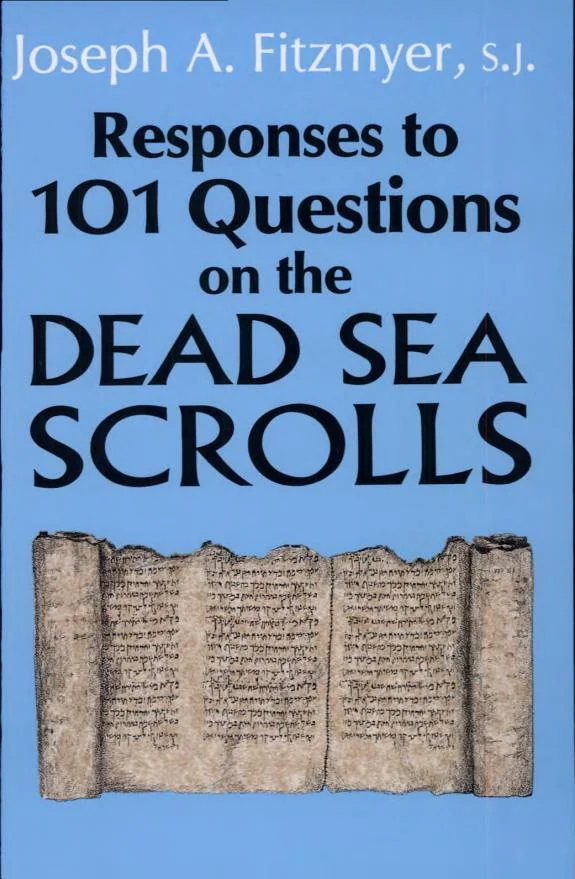
Responses to 101 Questions on the Dead Sea Scrolls
 83
83

Responses to 101 Questions on the Dead Sea Scrolls
Fitzmyer's "Responses to 101 Questions on the Dead Sea Scrolls" provides a much-needed antidote to the sensationalism that often surrounds these ancient manuscripts. The author excels at distilling complex scholarly consensus into comprehensible answers, a feat particularly evident in his explanation of the Qumran community's likely identity. While the book is commendably factual, it occasionally feels more like an extended FAQ than a critical examination, lacking deeper interpretive engagement with the more esoteric aspects of the scrolls. For instance, the discussion on the "Son of Man" title, while accurate, could benefit from more exploration of its broader theological implications within the Qumran sect's worldview. Nevertheless, for clarity and accuracy regarding foundational questions, this work is a solid, if somewhat dry, resource. It serves its purpose effectively as an introductory guide.
📝 Description
83
Joseph A. Fitzmyer published 'Responses to 101 Questions on the Dead Sea Scrolls' in 1992 to clarify debates.
Joseph A. Fitzmyer's 1992 book systematically answers 101 common questions about the Dead Sea Scrolls. It aims to make complex academic discussions accessible to a general audience and students. The work addresses the scrolls' origins, their content, and their wider implications for historical and religious studies. Fitzmyer simplifies intricate scholarly debates, presenting clear, factual information without resorting to specialized terminology.
This book is for anyone curious about the Dead Sea Scrolls, including students of religious history and those interested in the historical Jesus or early Christianity. It is particularly helpful for readers who find more technical academic works too dense. The volume also serves as an introduction for those beginning to study ancient Near Eastern texts and archaeology. It synthesizes decades of research following the scrolls' discovery in 1947, illuminating their connection to groups like the Essenes and their textual variations.
While not strictly an esoteric text, the Dead Sea Scrolls themselves represent a significant body of ancient Jewish literature that has long captivated those interested in hidden religious knowledge and alternative interpretations of scripture. Fitzmyer's work, by addressing the specific questions surrounding these texts, touches upon the historical context of groups whose beliefs and practices were not mainstream. It helps demystify a collection that has been a focal point for various interpretations, some bordering on the mystical, by grounding discussions in scholarly consensus.
💡 Why Read This Book?
• Gain precise answers regarding the Qumran community's relationship to the Dead Sea Scrolls, understanding their sectarian beliefs as detailed in the book's explanations. • Grasp the specific historical context of the scrolls' discovery, including the period of intense academic debate that followed their unearthing in 1947. • Understand key theological concepts present in the scrolls, such as the community's conception of God and their interpretations of biblical prophecy, as presented by Fitzmyer.
⭐ Reader Reviews
Honest opinions from readers who have explored this book.
❓ Frequently Asked Questions
What is the primary significance of the Dead Sea Scrolls for understanding ancient Judaism?
The Dead Sea Scrolls reveal the diversity of Jewish thought and practice in the Second Temple period. They show variations in biblical interpretation and the existence of distinct sectarian groups, offering a richer picture than previously available from sources like Josephus.
Who were the Essenes, and what is their connection to the Dead Sea Scrolls?
The Essenes are widely considered by scholars to be the community that produced or collected many of the Dead Sea Scrolls at Qumran. Fitzmyer explores this connection, detailing the similarities in beliefs and practices between the Essene sect described by ancient authors and the community evident in the scrolls.
Where are the Dead Sea Scrolls housed today?
Following their discovery and acquisition, the majority of the Dead Sea Scrolls are housed in the Shrine of the Book at the Israel Museum in Jerusalem. Portions are also held in other institutions, and access is carefully controlled for preservation.
Do the Dead Sea Scrolls mention Jesus or early Christianity?
The scrolls do not directly mention Jesus or specific events from early Christianity. However, they provide crucial context for understanding the religious and political environment in which Christianity emerged, including messianic expectations and interpretations of Hebrew scripture.
What is the "Son of Man" title, and does it appear in the Dead Sea Scrolls?
The 'Son of Man' is a complex messianic title. While it appears in the Hebrew Bible (Daniel), its specific usage and interpretation in the Dead Sea Scrolls, particularly in texts like 4Q530 (The Son of Man Vision), are explored by Fitzmyer, shedding light on messianic concepts of the era.
How do the Dead Sea Scrolls inform our understanding of the Hebrew Bible (Old Testament)?
The scrolls contain the oldest known manuscripts of books from the Hebrew Bible, predating previously known copies by a millennium. They reveal textual variations and confirm the general accuracy of later texts, while also showing differences in canon and textual tradition.
🔮 Key Themes & Symbolism
Qumran Community Beliefs
Fitzmyer meticulously details the theological field of the Qumran sect, likely the Essenes, responsible for many Dead Sea Scrolls. The work explores their dualistic worldview, strict adherence to purity laws, and unique interpretations of biblical prophecy. It examines their eschatological fervor and anticipation of a coming messianic age, often contrasting their communal living and distinct covenantal understanding with other Jewish groups of the Second Temple period. Understanding their conception of God and their community rules provides a crucial lens for interpreting the sectarian documents found among the scrolls.
Textual History of Scripture
A significant portion of the Dead Sea Scrolls consists of biblical manuscripts, offering exceptional insight into the textual transmission of the Hebrew Bible. Fitzmyer addresses the variations found, comparing them to the Masoretic Text that would later become standard. This theme covers the process of scribal copying, the development of textual traditions, and how these ancient texts illuminate the state of scripture in the centuries leading up to the Common Era. It touches upon the canonization process and the existence of different textual families.
Messianic Expectations
The scrolls are rich with discussions of messianic figures and concepts, reflecting the diverse hopes prevalent in ancient Judaism. Fitzmyer examines references to potential messianic claimants, including the 'Son of Man' and priestly or kingly figures. The work explores how these texts portray expectations for divine intervention, the restoration of Israel, and the establishment of a new covenant. This theme is vital for understanding the religious milieu from which movements like early Christianity emerged, providing a comparative basis for its own messianic claims.
Second Temple Judaism
Fitzmyer uses the Dead Sea Scrolls as a gateway to understanding the broader spectrum of Jewish life and thought during the Second Temple period (c. 516 BCE – 70 CE). The book elucidates the interactions between different Jewish groups, the influence of Hellenism, and the socio-religious dynamics of Judea. It highlights how the scrolls reveal a Judaism far more varied than often depicted, encompassing different legal interpretations, ritual practices, and theological perspectives beyond the Pharisaic tradition. This provides essential background for the origins of both Rabbinic Judaism and Christianity.
💬 Memorable Quotes
Direct passages from the work, attributed to the author.
“What are the Dead Sea Scrolls?”
— This fundamental question, posed at the outset, frames the entire work as an essential primer for anyone seeking clear, factual answers about this monumental discovery and its contents.
“What is Qumran and what relation do the Dead Sea Scrolls have to it?”
— This inquiry highlights the central puzzle connecting the archaeological site of Qumran with the textual finds, focusing on the community that likely produced or preserved these ancient manuscripts.
“How do the authors of the scrolls conceive of God?”
— This question probes the theological heart of the scrolls, seeking to understand the divine attributes, actions, and relationship to humanity as understood by the Qumran sect.
“What do these scrolls tell us about first-century Judaism?”
— This probes the broader historical and religious significance of the scrolls, positioning them as critical evidence for the diverse field of Jewish belief and practice during Jesus' time.
“Does the title 'Son of Man' occur in the scrolls?”
— This specific question addresses a key messianic term and its presence, or absence, within the Qumran texts, revealing insights into contemporary messianic expectations.
🌙 Esoteric Significance
Tradition
While not explicitly an esoteric text itself, Fitzmyer's work illuminates a community whose practices and beliefs hold deep significance for various esoteric traditions, particularly those focused on early Jewish mysticism and the roots of Western esotericism. The Essenes, often linked to the scrolls, represent a significant branch of Jewish asceticism and communalism that speaks to Hermetic and Gnostic ideals of seeking hidden knowledge and spiritual purity. The scrolls themselves, as ancient documents preserved through a unique historical circumstance, are viewed by some esotericists as containing lost wisdom or prefiguring later mystical developments.
Symbolism
The scrolls offer rich symbolic material relevant to esoteric interpretation. The emphasis on light versus darkness in Qumran theology mirrors dualistic cosmologies found in Gnosticism and Zoroastrianism. Purity rituals, central to the Qumran community, symbolize the purification of the soul necessary for spiritual ascent. Furthermore, the very act of finding and preserving these ancient texts can be seen as symbolic of uncovering hidden spiritual truths, a core tenet in many esoteric paths. The 'Teacher of Righteousness' figure also represents an archetype of the illuminated master guiding disciples.
Modern Relevance
Contemporary esoteric thinkers and practitioners, particularly those interested in Jewish mysticism (Kabbalah) and the historical context of Western esotericism, draw upon the Dead Sea Scrolls. Movements exploring early Christian origins from a mystical perspective often reference the scrolls for comparative analysis. The scrolls' portrayal of communal living, apocalyptic visions, and unique scriptural interpretations continue to inspire groups seeking alternative spiritual communities or deeper understanding of ancient wisdom traditions. Scholars of comparative religion and mysticism also utilize Fitzmyer's clear explanations to anchor their studies.
👥 Who Should Read This Book
• Students of comparative religion seeking to understand the diverse field of Second Temple Judaism, providing foundational knowledge on the Qumran sect. • Individuals interested in the historical context of early Christianity, offering insights into the religious milieu from which Jesus and his followers emerged. • General readers curious about significant archaeological discoveries, providing clear, factual answers to common questions about the Dead Sea Scrolls and their impact.
📜 Historical Context
The Dead Sea Scrolls emerged into a world already grappling with the critical study of ancient texts, a field significantly advanced by scholars like Julius Wellhausen. Their discovery, beginning in 1947 near the ancient settlement of Qumran, sent shockwaves through biblical scholarship and the public imagination. Fitzmyer's work, published in 1992, arrived after decades of intense debate and preliminary publication. It sought to synthesize the findings and address persistent questions that had fueled both academic discourse and popular speculation. Key figures like Roland de Vaux led early excavations, while scholars like Yigael Yadin and Geza Vermes played crucial roles in deciphering and interpreting the texts. The reception was initially marred by slow publication and controversies over access, but by the early 1990s, a broader consensus was forming, which Fitzmyer’s book aimed to clarify for a wider audience, reading through the complexities of sectarian identities and textual criticism.
📔 Journal Prompts
The Qumran community's conception of God and its implications for their daily practices.
The role of purity laws within the Qumran sect and their symbolic meaning.
How the 'Son of Man' title appears in the scrolls and its potential messianic significance.
Comparing the Dead Sea Scrolls' biblical texts with later versions, noting key variations.
The historical context surrounding the discovery of the scrolls in 1947 and its academic reception.
🗂️ Glossary
Dead Sea Scrolls
A collection of ancient Jewish manuscripts discovered between 1947 and 1956 in caves near the ancient settlement of Qumran on the northwest shores of the Dead Sea. They include biblical texts, apocryphal writings, and sectarian documents.
Qumran
An archaeological site on the northwest shore of the Dead Sea, believed by many scholars to be the settlement of the Essene sect that produced or preserved many of the Dead Sea Scrolls.
Essenes
A Jewish sect during the Second Temple period known for its asceticism, communal living, and adherence to strict purity laws. Many scholars associate them with the Qumran community and the Dead Sea Scrolls.
Second Temple Period
The era of Jewish history from the rebuilding of the Second Temple in Jerusalem (c. 516 BCE) until its destruction by the Romans in 70 CE. This period saw significant religious and political developments in Judaism.
Masoretic Text
The standardized medieval text of the Hebrew Bible, established by Jewish scribes (Masoretes) between the 7th and 10th centuries CE. It serves as the basis for most modern translations of the Old Testament.
Son of Man
A title appearing in the Hebrew Bible (e.g., Daniel) and later Jewish and Christian literature. Its precise meaning and application in the Dead Sea Scrolls are subjects of scholarly discussion, often linked to messianic expectations.
Sectarian Documents
Texts found among the Dead Sea Scrolls that originated from specific Jewish religious groups (sects), such as the Qumran community. These documents outline their unique beliefs, rules, and interpretations of scripture.
This book appears in 1 collection
🔮 Readers Also Liked
Browse all →








From the “Dead Sea Scrolls” Collection
View all →




More Free Sacred Texts & Gnosticism Books
View all →