The Golden Bough
 73
73

The Golden Bough
Frazer's ambition in The Golden Bough is undeniable; the sheer breadth of his research into global myths and rituals remains astonishing. His meticulous collation of disparate practices—from the sacred grove at Nemi to the practices of Indigenous Australian peoples—offers an unparalleled survey of human spiritual expression. The strength lies in this encyclopedic catalog, providing raw material that subsequent generations of scholars have mined extensively. However, Frazer's overarching theory of a linear progression from magic to religion, and his tendency to interpret all phenomena through the lens of ancient Mediterranean cults, now appears overly speculative and ethnocentric. The infamous analysis of the priesthood at Nemi, while vividly described, exemplifies this interpretive overreach. Despite its theoretical limitations, the work’s value as a comprehensive compendium of ritualistic and mythological data is immense. It stands as a foundational, albeit flawed, monument in the study of human belief.
📝 Description
73
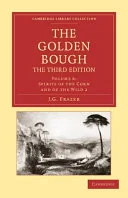
James George Frazer's The Golden Bough first appeared in its complete form between 1911 and 1915.
This extensive comparative study collects myths and religious practices from across the globe. Frazer compiled details on magic, ritual, and beliefs about divine rulers, seeking patterns in human spiritual development. He paid particular attention to the figure of the dying and reviving god, a motif he found recurring in various cultures. This edition represents the third, much expanded version of his work, reflecting years of dedicated research. Frazer's research gathered information from ancient texts, missionary accounts, and colonial reports, creating a vast compilation of human customs and beliefs. His analysis focused on the perceived progression from magic to religion and then to science, a theory that has since been re-examined.
The book systematically examines concepts such as the sacred king, whose existence was tied to the well-being of his people, and the pervasive influence of sympathetic magic. Frazer details widespread myths of fertility gods who die and are reborn, linking these narratives to agricultural cycles and societal structures. His work also touches on taboos, shamanism, and the origins of exogamy. While influential, Frazer's evolutionary approach and his interpretations have been subject to considerable scholarly debate and revision.
The Golden Bough became a significant text for early 20th-century occultists and esoteric thinkers, though Frazer himself was an academic anthropologist. Its vast compilation of myth and ritual, particularly concerning fertility cults and the figure of the divine king, provided a rich source of material for those seeking connections between ancient traditions and modern spiritual movements. The book's broad scope and its attempt to find universal patterns in human belief resonated with a desire for unifying spiritual principles. Many later esoteric writers drew inspiration from Frazer's descriptions of archaic beliefs and practices, integrating them into their own systems of thought.
💡 Why Read This Book?
• Gain a comprehensive understanding of the evolution of ritualistic practices and magical beliefs across diverse ancient cultures, as detailed in Frazer's extensive survey of sympathetic magic and its purported precursors to organized religion. • Explore the concept of the 'dying and reviving god' motif as a unifying element across disparate mythologies, offering a framework for interpreting seasonal cycles and agricultural fertility rites. • Examine the historical development of anthropological thought by engaging with Frazer's 1911-1915 work, understanding its impact and subsequent scholarly critiques regarding evolutionary theories of religion.
⭐ Reader Reviews
Honest opinions from readers who have explored this book.
❓ Frequently Asked Questions
What is the primary focus of James George Frazer's The Golden Bough?
The primary focus is a comparative study of mythology and religion, exploring the evolution of human belief systems through extensive examination of magical practices, rituals, and the concept of the dying and reviving god across various cultures.
When was the third edition of The Golden Bough published?
The greatly revised and enlarged third edition of The Golden Bough was published in twelve volumes between 1911 and 1915.
What is sympathetic magic as discussed in The Golden Bough?
Sympathetic magic, as described by Frazer, operates on two principles: like produces like (homeopathic magic) and things once in contact continue to act on each other at a distance (contagious magic).
What is the significance of the 'sacred king' in Frazer's work?
Frazer posits that the 'sacred king' or 'divine king' was a central figure in many ancient societies, whose life, death, and ritualistic duties were believed to be intrinsically linked to the prosperity and fertility of their land.
Is The Golden Bough considered an accurate representation of all ancient religions today?
While a monumental compilation of data, Frazer's interpretative framework, particularly his evolutionary theories and emphasis on Mediterranean cults, has been widely debated and revised by modern anthropologists and religious scholars.
What role does the motif of the dying and reviving god play?
This recurring motif, explored extensively by Frazer, is presented as a fundamental archetype across numerous cultures, often associated with seasonal cycles, agricultural renewal, and the enduring human hope for rebirth.
🔮 Key Themes & Symbolism
The Evolution of Belief
Frazer posits a developmental trajectory for human thought, moving from magic, which he viewed as a primitive form of science, to religion, and finally to rationalism. This work meticulously catalogs beliefs and practices across cultures to support this thesis. The concept of sympathetic magic, with its homeopathic and contagious principles, serves as a reference for understanding these early belief systems and their supposed transition towards more formalized religious structures. The sheer volume of examples, from European folklore to African tribal customs, underscores Frazer's attempt to find universal patterns in spiritual evolution.
The Sacred King and Dying God
Central to Frazer's argument is the figure of the sacred king, whose life and ritualistic death were believed to ensure the land's fertility and prosperity. This concept is intrinsically linked to the pervasive motif of the dying and reviving god found in numerous mythologies. Frazer draws parallels between figures like Attis, Adonis, and Osiris, arguing that these narratives reflect fundamental human concerns with mortality, renewal, and the cyclical nature of life, particularly as tied to agricultural seasons. The analysis of these figures and their associated rituals provides a significant portion of the book's compelling narrative.
Magic and Ritualistic Practice
The Golden Bough is a vast compendium of magical practices, from ancient Greek and Roman rites to contemporary (for Frazer's time) tribal customs. It details various forms of spellcasting, amulet use, and ritualistic purification, often linking them to underlying principles of sympathetic magic. Frazer's exploration highlights the practical, often imitative, nature of early magic, intended to influence natural events or human affairs. The book examines the societal roles these practices played, often distinguishing between malevolent sorcery and beneficial magic aimed at ensuring good harvests or warding off illness.
Comparative Mythology
By drawing on a staggering array of myths, legends, and folklore from across the globe, Frazer constructs a grand comparative mythology. He seeks common threads and archetypes that suggest a shared human psychological or developmental foundation. The work's strength lies in its unprecedented collection of stories and rituals, allowing readers to see the elements of similar themes—creation myths, flood narratives, hero quests, and sacrificial rites—in seemingly unrelated cultures. This comparative approach was foundational for the nascent field of anthropology, even as its conclusions later faced substantial revision.
💬 Memorable Quotes
Direct passages from the work, attributed to the author.
“In the long run, humanity is governed by ideas, not by facts.”
— This statement suggests that while empirical data is important, the underlying beliefs, ideologies, and conceptual frameworks held by people ultimately shape their actions and societal structures more profoundly than mere objective realities.
“The world is the subject of man's desires and his efforts to satisfy them.”
— This highlights a human-centric view of existence, where the natural and social world is perceived primarily through the lens of human needs, aspirations, and the continuous striving to fulfill them through various means, including ritual and magic.
“Magic is the belief that the world is governed by laws which are the same as those of nature, but which man can manipulate.”
— This interpretation defines magic as an early, albeit flawed, understanding of natural causation, where individuals believe they can influence events by adhering to or exploiting perceived universal principles, distinct from appeals to supernatural deities.
“The study of religion is the study of human psychology.”
— This implies that religious beliefs, practices, and mythologies are not arbitrary but are deeply rooted in the fundamental workings of the human mind, reflecting universal psychological needs, fears, and aspirations.
“The worship of the dead is the oldest form of religion.”
— This concept suggests that reverence for ancestors and the deceased predates the development of more complex pantheons or theological systems, pointing to a primal human concern with mortality and the afterlife.
🌙 Esoteric Significance
Tradition
While not strictly a text of a specific esoteric lineage like Hermeticism or Kabbalah, The Golden Bough profoundly impacted later esoteric movements, particularly Theosophy and various forms of Neopaganism and Western Esotericism that emerged in the 20th century. Frazer’s systematic exploration of ancient myths, fertility cults, and the archetype of the dying and reviving god provided a rich source of material and theoretical justification for these traditions. It offered a scholarly, albeit secular, framework for understanding practices that resonated with older, pre-Christian spiritual systems, validating their perceived ancient origins and universal relevance.
Symbolism
The 'golden bough' itself, referencing the myth of Aeneas's journey into the underworld, symbolizes a key or passport to hidden realms and knowledge, often associated with initiation and a passage through death to rebirth. The dying and reviving god motif, prevalent throughout the work, symbolizes the cyclical nature of life, death, and resurrection, a core concept in many esoteric traditions concerning spiritual transformation and the perennial renewal of the cosmos and the individual soul. The sacred grove, particularly the one at Nemi, symbolizes a place of primal power, mystery, and often taboo ritualistic practice, representing the untamed forces of nature and the subconscious.
Modern Relevance
Contemporary Neopagan movements, especially those focused on Wicca and Druidry, frequently draw upon Frazer’s analyses of ancient fertility rites and nature-based spirituality, viewing his work as a foundational text for understanding pre-Christian European traditions. Psychologists and mythologists, such as Carl Jung, engaged with Frazer's concepts of archetypes and the collective unconscious, finding elements of his findings in their own theories of the human psyche. His extensive catalog of global myths continues to inform comparative literature studies and provides rich symbolic material for artists and writers exploring universal human themes.
👥 Who Should Read This Book
• Students of comparative mythology and anthropology: To engage with a foundational, albeit debated, text that shaped early academic understanding of religious origins and ritualistic practices worldwide. • Practitioners of Neopagan and Earth-based spiritual traditions: To explore the historical scholarship that informs many modern interpretations of ancient fertility cults, nature worship, and the archetype of the dying and reviving god. • Scholars of Western Esotericism: To understand the source material and conceptual frameworks that influenced the development of 20th-century esoteric thought, particularly regarding the continuity of ancient mysteries.
📜 Historical Context
The Golden Bough, with its third edition appearing between 1911 and 1915, emerged at the zenith of the Victorian and Edwardian eras, a period marked by immense imperial expansion and a fervent interest in classifying and understanding the world's diverse cultures. Anthropology was solidifying as an academic discipline, heavily influenced by evolutionary theories. Frazer’s work was a landmark, synthesizing vast amounts of ethnographic and classical data, arguing for a universal progression from magic to religion. He was a contemporary of figures like E.B. Tylor, whose work on animism also explored early religious beliefs. While lauded for its scope, Frazer's evolutionary framework and his tendency to view non-Western cultures through a lens of 'primitive survivals' drew criticism even then. His work was highly influential, cited by thinkers across disciplines, but also challenged by emerging anthropological methodologies that emphasized fieldwork and functional analysis, such as those pioneered by Bronisław Malinowski.
📔 Journal Prompts
The concept of sympathetic magic, as detailed in Frazer's work, and its potential parallels in modern belief.
The recurring motif of the dying and reviving god across diverse cultures and its psychological resonance.
The role and perceived power of the 'sacred king' in ancient societies and its symbolic implications.
Frazer's theory of the transition from magic to religion: areas of agreement or divergence with contemporary thought.
The symbolism of the 'golden bough' itself as a key to understanding hidden knowledge or passage.
🗂️ Glossary
Sympathetic Magic
A form of magic based on the principle that like produces like (homeopathic magic) or that things once in contact continue to act on each other at a distance (contagious magic).
Dying and Reviving God
An archetype found in various mythologies where a deity or divine figure undergoes death and subsequent resurrection, often symbolizing the cyclical nature of seasons, fertility, and life itself.
Sacred King
A ruler whose person was considered divine or sacred, with his life and ritualistic actions believed to be essential for the welfare and fertility of his domain and people.
Homeopathic Magic
A subset of sympathetic magic where the magician believes that by imitating an effect, they can produce it; for example, causing rain by mimicking the sound of rain.
Contagious Magic
A subset of sympathetic magic where the magician believes that objects or individuals once connected will retain a magical link, allowing influence through the manipulation of one part (e.g., hair or nail clippings).
Animism
The belief that natural objects, phenomena, and the universe itself possess souls or consciousness; a concept explored by Frazer as a potential stage in religious development.
The Golden Bough
The titular object, taken from Virgil's Aeneid, which Aeneas uses to gain passage to the underworld; symbolizes initiation, hidden knowledge, and a journey through death.
This book appears in 1 collection
🔮 Readers Also Liked
Browse all →








From the “Superstition” Collection
View all →



More Free Esoteric History & Biography Books
View all →