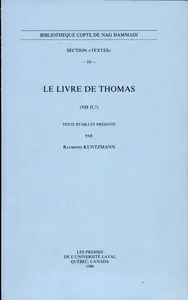
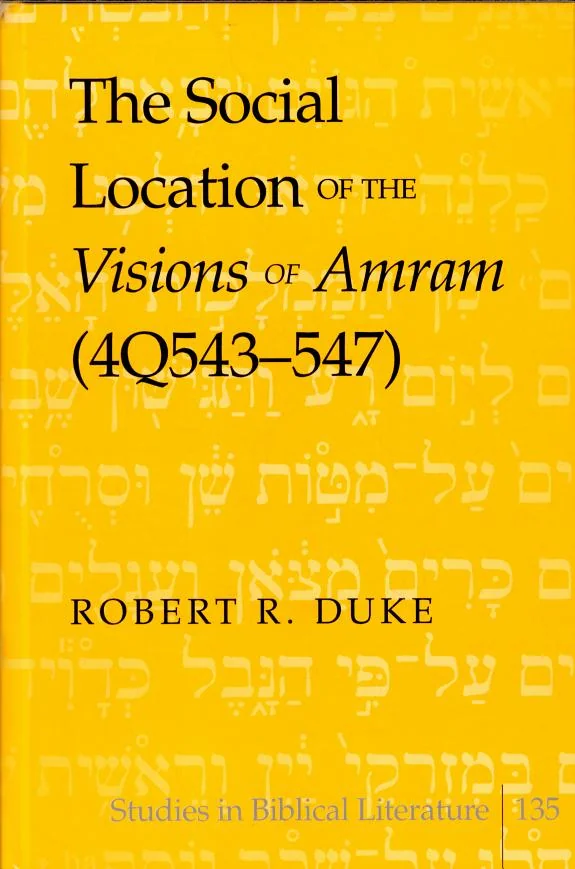
The Social Location of the Visions of Amram (4Q543-547)
 79
79

The Social Location of the Visions of Amram (4Q543-547)
Robert R. Duke’s "The Social Location of the Visions of Amram (4Q543-547)" moves beyond simple textual exegesis to firmly anchor these ancient fragments within their socio-historical matrix. The strength of this study lies in its meticulous reconstruction of the likely community that produced and valued these visions. Duke expertly details how Amram’s purported revelations served to consolidate identity and articulate a distinct worldview for his followers. A point of contention, however, might be the sheer speculative nature required to bridge the gaps in the damaged manuscripts; while Duke is commendably cautious, the interpretations, though well-argued, remain inherently conjectural. The detailed discussion of the angelic hierarchies presented in the visions, particularly the exploration of their function as conduits of divine authority, is a standout section. Ultimately, Duke provides a vital, if challenging, contribution to understanding the diversity within ancient Judaism.
📝 Description
79
Robert R. Duke's 2016 study examines the sectarian Jewish "Visions of Amram" (4Q543-547).
This book offers a scholarly look at the "Visions of Amram," a collection of sectarian Jewish texts from the Second Temple period. Robert R. Duke revisits his doctoral work to analyze these fragments in detail. The study concentrates on the social and ideological setting that produced these visions, aiming to understand their purpose and meaning for their original community. The "Visions of Amram" date to a time of significant religious and political change in Judea, roughly from the 3rd century BCE to the 1st century CE. This period saw many different Jewish groups and a rise in apocalyptic writings. Duke places the Amram texts within this active intellectual climate, considering their possible links to known groups and their specific contributions to discussions about divine revelation and the end times.
The analysis considers concepts like the social position of prophecy, the identity of sectarian groups, the role of angels in communication, and expectations for the future. It looks at how the visions of Amram, a figure from early biblical narratives, were adapted for the particular needs and beliefs of a specific community. The interpretation of journeys to heaven and the function of divine messengers are central to grasping the theological basis of the text.
The "Visions of Amram" belong to the rich tradition of Second Temple Jewish apocalyptic and revelatory literature. These texts often shared concerns with early Gnostic movements regarding hidden knowledge, angelic hierarchies, and the interpretation of divine messages. Amram's visions, with their heavenly journeys and intermediaries, fit within a broader pattern of seeking access to celestial secrets and understanding cosmic order. Such writings reflect a desire for divine insight during periods of societal upheaval, a characteristic also found in many esoteric traditions that aim to illuminate the spiritual world and humanity's place within it.
💡 Why Read This Book?
• Understand the specific community that produced the "Visions of Amram" by examining their social location, offering a unique perspective on sectarian identity in the Second Temple period. • Grasp the function of angelic mediation within the Amram traditions, providing concrete examples of how divine authority was understood and transmitted in early Jewish apocalyptic literature. • Analyze the eschatological outlook of the Amram community, learning how their specific interpretations of divine revelation shed light on broader trends in 1st-century Judean religious thought.
⭐ Reader Reviews
Honest opinions from readers who have explored this book.
❓ Frequently Asked Questions
What is the primary focus of Robert R. Duke's analysis in "The Social Location of the Visions of Amram"?
The book's primary focus is on understanding the social and ideological context from which the "Visions of Amram" (4Q543-547) emerged. Duke examines how these texts functioned within their original sectarian community during the Second Temple period.
When was "The Social Location of the Visions of Amram" first published?
The book was first published in 2010. It is a revised version of the author's doctoral dissertation completed at the University of California, Los Angeles.
What historical period does "The Social Location of the Visions of Amram" pertain to?
The work pertains to the Second Temple period of Judaism, roughly from the 3rd century BCE to the 1st century CE. This was a time of significant religious diversity and the production of apocalyptic literature.
Are the "Visions of Amram" related to the Book of Enoch?
While both are examples of apocalyptic literature from the Second Temple period, the "Visions of Amram" (4Q543-547) are distinct texts. Duke's work explores their unique characteristics and potential connections to other contemporary writings like Enoch.
What is the significance of Amram in these texts?
Amram, traditionally Moses' father, is presented in these visions as a revelatory figure. The texts reinterpret his experiences to serve the theological and social needs of a specific sectarian group in ancient Judea.
Is "The Social Location of the Visions of Amram" suitable for beginners in religious studies?
While rigorous and scholarly, the book offers valuable insights for advanced students and scholars. Beginners might find its detailed analysis of sectarian dynamics and ancient textual fragments challenging without prior background in Second Temple Judaism.
🔮 Key Themes & Symbolism
Sectarian Identity Formation
The study meticulously investigates how the "Visions of Amram" functioned as a tool for solidifying the identity of a specific Jewish sect during the Second Temple era. By reinterpreting biblical figures and divine pronouncements, the community established its unique theological boundaries and social cohesion. The work highlights how shared visionary experiences and interpretations of heavenly realities served to differentiate this group from broader Jewish society and potential rivals, underscoring the text's role in communal self-definition.
Angelology and Divine Authority
A central theme is the exploration of the angelic hierarchies and intermediaries described in the Amram visions. Duke examines how these celestial beings served as conduits for divine knowledge and authority, shaping the community's understanding of God's interaction with the world. The specific roles and names of these angels are analyzed not just for their theological implications but also for their function in legitimizing the sect's teachings and leadership, providing a framework for understanding early Jewish mystical ascent traditions.
Apocalyptic Frameworks
The book situates the "Visions of Amram" within the broader field of Second Temple apocalyptic literature. It analyzes how these texts employed visionary experiences, heavenly journeys, and eschatological predictions to address the concerns and aspirations of their audience. The focus is on understanding the specific apocalyptic worldview presented, including its conceptions of time, divine judgment, and the ultimate destiny of the righteous, offering a nuanced view of early Jewish eschatology beyond common interpretations.
Social Location of Revelation
Duke's core argument revolves around the 'social location' of these revelations. This concept emphasizes understanding who produced these texts, for whom they were intended, and what social functions they served. The analysis considers the implications of the visions being attributed to an ancient figure like Amram for the community's perceived legitimacy and historical continuity. It scrutinizes how the content of the visions likely reflected and reinforced the social structures, beliefs, and challenges faced by this particular ancient group.
💬 Memorable Quotes
Direct passages from the work, attributed to the author.
“The reinterpretation of Amram's figure served the community's need for historical continuity.”
— This interpretation points to how the sect likely used the figure of Amram, a biblical patriarch, to establish a connection with ancient Israelite tradition. By attributing new revelations to him, they could bolster their own claims to authenticity and divine favor.
“Examining the fragments requires careful consideration of their original socio-historical milieu.”
— This captures the methodological emphasis of the work, stressing that understanding the 'Visions of Amram' necessitates looking beyond the text itself to the specific social, political, and religious environment in which it was created and received.
💡 Key Ideas
Editorial paraphrase of the work's core concepts — not direct quotes.
The visions of Amram served to articulate and reinforce a particular sectarian identity.
This paraphrased concept highlights the book's central thesis: that these ancient texts were not merely theological treatises but active instruments in community building and differentiation within the complex religious field of the Second Temple period.
Angelology provided a framework for understanding divine access and authority.
This summarizes Duke's analysis of the role of angels within the Amram traditions. It suggests that the detailed descriptions of celestial beings were crucial for the sect's members to comprehend how divine will was conveyed and how their leadership derived its legitimacy.
Apocalyptic motifs functioned to address the anxieties and hopes of the sectarian audience.
This paraphrased concept emphasizes the purpose of the apocalyptic elements within the visions. It suggests they provided a narrative framework for understanding contemporary challenges and offered a vision of future divine intervention and vindication.
🌙 Esoteric Significance
Tradition
This work engages with the esoteric dimensions of Second Temple Judaism, particularly its nascent apocalyptic and visionary traditions, which form a bedrock for later mystical developments. It doesn't strictly adhere to a single lineage like Kabbalah or Hermeticism but rather illuminates the fertile ground from which these traditions would later sprout. The Amram texts, as analyzed by Duke, reveal an early form of Jewish mysticism focused on divine revelation, angelic mediation, and the interpretation of heavenly realities, providing crucial context for understanding the evolution of esoteric thought within Judaism.
Symbolism
Key symbols include the heavenly journey, representing direct access to divine knowledge and realms otherwise inaccessible. Angelic figures, often with specific names and hierarchical roles, symbolize the structured nature of the divine cosmos and the intermediaries through which God communicates. The figure of Amram himself becomes a symbol of prophetic authority and continuity with ancient tradition, reinterpreted to legitimize the sect's unique claims and teachings within their historical context.
Modern Relevance
Contemporary scholars of Jewish mysticism and early Christianity frequently reference studies on Second Temple visionary literature, including analyses of the Amram texts, to trace the development of concepts like angelic encounters and divine ascent. Thinkers exploring the roots of Gnosticism and other esoteric movements find value in understanding these early Jewish expressions of revelatory experience. The work's focus on the social construction of religious knowledge remains relevant for modern sociological and historical analyses of belief systems and sectarian communities.
👥 Who Should Read This Book
• Scholars of Second Temple Judaism seeking to understand sectarian diversity and the formation of early Jewish mystical traditions. • Students of apocalyptic literature interested in detailed textual analysis and the socio-historical context of revelatory texts. • Comparative religion researchers examining the development of angelology and divine intermediary concepts in ancient Near Eastern thought.
📜 Historical Context
Written during the dynamic Second Temple period (c. 3rd century BCE – 1st century CE), "The Social Location of the Visions of Amram" engages with a milieu rich in diverse Jewish thought and practice. This era witnessed the rise of numerous sectarian movements, each interpreting Mosaic law and divine revelation through distinct lenses, as seen in contemporary groups like the Essenes or the proto-Mandaeans. The proliferation of apocalyptic literature, including the Book of Enoch and the Qumran scrolls, reflects a widespread fascination with heavenly realms and eschatological outcomes. Robert R. Duke's work situates the Amram texts within this ferment, exploring their potential interactions with, and divergences from, prevailing currents of thought. The analysis considers how these visions might have functioned within a community seeking to distinguish itself, possibly in dialogue or tension with Pharisaic or Sadducean interpretations of Judaism.
📔 Journal Prompts
The function of angelic hierarchies in the Amram visions and their relation to perceived divine authority.
Amram's reinterpretation as a symbol of sectarian continuity.
The social location of the Amram community and its impact on textual production.
Comparing the eschatological outlook in the Amram texts with other Second Temple apocalyptic works.
The role of heavenly journeys in conveying divine knowledge within the Amram traditions.
🗂️ Glossary
Second Temple Period
The era of Jewish history extending from the rebuilding of the Second Temple in Jerusalem (c. 516 BCE) until its destruction by the Romans in 70 CE. It was a time of significant religious and political development.
Visions of Amram (4Q543-547)
A collection of fragmentary Aramaic texts discovered among the Dead Sea Scrolls, attributed to the biblical figure Amram, Moses' father, detailing his visionary experiences.
Social Location
Refers to the socio-economic, cultural, and political position of an individual or group, influencing their perspective, experiences, and the way they create and interpret texts.
Sectarian
Pertaining to a sect, a group of people with slightly different beliefs or practices from those of a larger, more established group, often implying a degree of separation or distinctiveness.
Apocalyptic Literature
A genre of literature, prominent in ancient Judaism and Christianity, that typically reveals divine mysteries about the end times, often through visions, symbolic language, and otherworldly journeys.
Angelology
The study of angels, including their nature, roles, hierarchies, and significance within religious and theological contexts.
Eschatology
The branch of theology concerned with death, judgment, and the final destiny of the soul and of humankind; the study of end times.
This book appears in 1 collection
🔮 Readers Also Liked
Browse all →








From the “Dead Sea Scrolls” Collection
View all →








More Free Esoteric History & Biography Books
View all →