Devil in the Delta
 84
84

Devil in the Delta
Rich Newman’s Devil in the Delta offers a visceral account of a haunting that transgresses typical poltergeist phenomena. The chilling descent from auditory disturbances to overt spiritual assault within the Martin house is rendered with a palpable sense of dread. Newman's direct involvement and his struggle to comprehend the escalating occult dimensions of the case lend the narrative significant weight. However, the narrative occasionally strains under the weight of its own intensity, with the rapid escalation of events sometimes feeling overwhelming rather than meticulously paced. A particularly striking passage details Newman’s growing realization that the haunting is not merely residual energy but a targeted, intelligent attack rooted in dark ritual. The book’s strength lies in its unflinching portrayal of terrifying spiritual encounters, though its resolution might leave some readers seeking more concrete explanations. It is a disturbing, if uneven, exploration of profound spiritual darkness.
📝 Description
84
Rich Newman investigated a severe haunting at the Martin house in Mississippi in 2013.
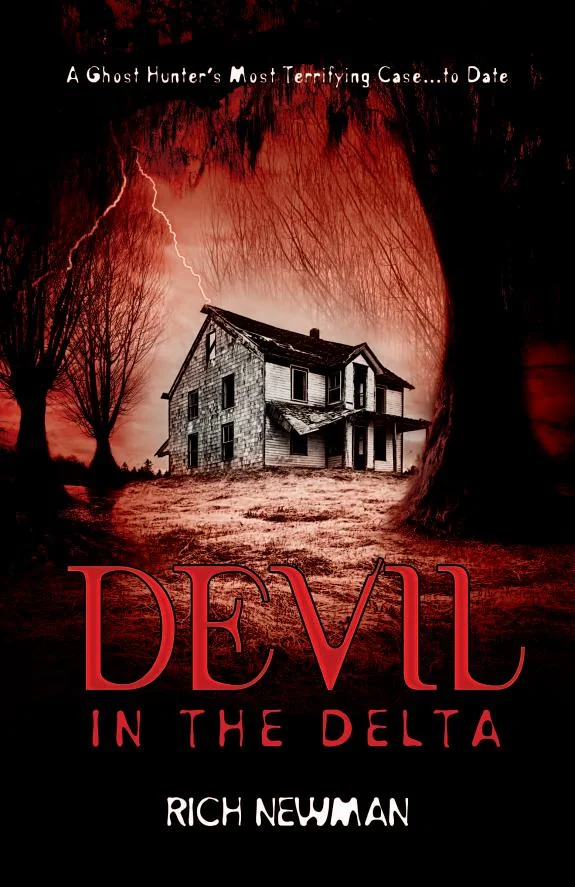
Devil in the Delta recounts Rich Newman's intense investigation into a disturbed haunting at the Martin house in Mississippi. Called in to assist a local ghost hunting team, Newman encountered a malevolent force unlike typical spectral activity. The phenomena intensified from disembodied sounds to direct assaults, drawing Newman into the study of dark occult practices.
This work is for readers interested in the more unsettling aspects of paranormal investigation, especially cases involving witchcraft, possession, and murder. It appeals to those who appreciate a narrative that mixes personal harrowing experience with careful, though terrifying, investigation. Readers seeking accounts that move beyond standard ghost stories will find it noteworthy.
Published in 2013, Devil in the Delta appeared during a time of strong public interest in paranormal television and online ghost hunting groups. Newman's method, while rooted in investigative techniques, reaches into spiritual and occult areas that set it apart from purely scientific or skeptical approaches. The book aligns with a wider cultural interest in folk magic and Southern Gothic stories.
This book engages with traditions of Western esotericism and occultism, particularly as they intersect with American folk magic and localized spiritual beliefs. It examines concepts such as spiritual warfare and demonic possession, aligning with certain interpretations within demonology and ceremonial magic. The focus on the land itself holding dark energy also connects to animistic beliefs and certain strains of earth-based spirituality, often found in regional folk practices.
💡 Why Read This Book?
• Gain insight into the specific manifestation of spiritual warfare described in the Martin house haunting, offering a case study distinct from typical paranormal investigations. • Understand the alleged connection between folk magic practices and intense spiritual oppression as detailed in the book's investigation. • Experience a narrative that confronts the psychological and spiritual impact of confronting malevolent entities, as documented by Rich Newman’s personal account.
⭐ Reader Reviews
Honest opinions from readers who have explored this book.
❓ Frequently Asked Questions
What year was Devil in the Delta first published?
Devil in the Delta was first published in 2013, marking its entry into the contemporary literature of paranormal investigation and esoteric experiences.
Who is the author of Devil in the Delta?
The author of Devil in the Delta is Rich Newman, who recounts his personal experiences during a particularly terrifying investigation.
What are the main themes explored in Devil in the Delta?
The book explores themes of intense hauntings, spiritual assault, possession, witchcraft, murder, and the darker aspects of occult practices.
Where does the haunting in Devil in the Delta take place?
The haunting investigated in Devil in the Delta occurs in a battered doublewide trailer located deep in the Mississippi Delta.
What distinguishes this haunting from ordinary ones?
This haunting is distinguished by its malicious intensity, escalating from deep rumbling sounds to allegations of possession, witchcraft, and murder, indicating a complex, malevolent force.
What is the author's role in the investigation?
Rich Newman is called from Memphis to assist a local ghost hunting team, becoming the primary investigator of the terrifying events at the Martin house.
🔮 Key Themes & Symbolism
Spiritual Warfare and Assault
The narrative vividly depicts a haunting that transcends mere residual energy, presenting it as an active, malicious spiritual assault. Newman's account details phenomena escalating to direct attacks, suggesting a deliberate, intelligent malevolence at play. This theme positions the haunting not just as a paranormal event but as a form of spiritual warfare, challenging the boundaries of the investigator's faith and resilience.
Folk Magic and Witchcraft Allegations
A central element of the investigation involves uncovering potential links to witchcraft and dark folk magic practices within the Mississippi Delta setting. The book explores how these ancient, often misunderstood, traditions might be invoked to create or sustain profound spiritual disturbances. This aspect examines the regional occult undercurrents and their tangible, terrifying manifestations.
Possession and Obsession
The haunting of the Martin house is portrayed as potentially leading to possession or deep obsession, blurring the lines between the victim's psyche and the external spiritual force. Newman's investigation grapples with evidence suggesting an external entity influencing or controlling individuals within the household, raising questions about agency and spiritual vulnerability.
The Investigator's Ordeal
Beyond the phenomena themselves, the book documents the profound psychological and spiritual toll the investigation takes on Rich Newman. His personal journey through terror, doubt, and the confrontation with overwhelming evidence forms a critical part of the narrative. This theme highlights the personal cost of engaging with deeply disturbing occult realities.
💬 Memorable Quotes
Direct passages from the work, attributed to the author.
“When author Rich Newman first arrives at the battered doublewide trailer deep in the Mississippi Delta, it's clear that this is no ordinary haunting.”
— This opening sets a tone of immediate unease and distinguishes the Martin house case from typical paranormal encounters, signaling the unusual and dangerous nature of the investigation.
“When the evidence becomes overwhelming, lon”
— This fragment suggests a point of crisis where the sheer weight of terrifying evidence forces a confrontation with the darkest aspects of the haunting.
“The Martin house investigation has become his most terrifying and mysterious case.”
— This statement underscores the extreme nature of the phenomena encountered, marking it as a singular event in Newman's experience.
💡 Key Ideas
Editorial paraphrase of the work's core concepts — not direct quotes.
What starts out as a malicious assault manifesting as deep rumbling sounds quickly spirals into a story of obsession, possession, witchcraft, and murder.
This passage expresses the book's trajectory, highlighting the rapid escalation from subtle disturbances to profound occult horrors, setting the stage for a deeply disturbing investigation.
Called from Memphis to assist a local ghost hunting team, Newman's investigation of the Martin house has become his most terrifying and mysterious case.
This quote emphasizes the personal stakes for the author and frames the investigation as a pinnacle of his career in terms of fear and enigma.
🌙 Esoteric Significance
Tradition
Devil in the Delta engages with traditions of spiritual warfare and deliverance ministry, often found within certain branches of Christianity and broader folk magic practices. It operates outside established Hermetic, Gnostic, or Kabbalistic lineages, instead focusing on direct confrontation with malevolent entities and the potential for demonic influence, a theme resonant in various folk spiritualism and deliverance-focused esoteric traditions.
Symbolism
The 'battered doublewide trailer' itself can be seen as a symbol of vulnerability and a site where the veil between worlds is thinned. The 'deep rumbling sounds' represent primal fear and the unseen force's initial assertion of power. The implied 'witchcraft' suggests ancient, earth-bound forces actively being wielded for destructive purposes, contrasting with celestial or purely spiritual powers.
Modern Relevance
Contemporary practitioners of deliverance ministry and those exploring the darker aspects of spiritual warfare in personal practice might draw parallels to Newman's account. The book's raw depiction of an intense, localized haunting also appeals to modern urban exploration and paranormal investigation communities seeking verifiable, high-strangeness encounters rooted in specific locations and alleged occult activity.
👥 Who Should Read This Book
• Individuals fascinated by intense, high-strangeness paranormal cases that venture beyond typical ghost sightings into alleged demonic activity and spiritual assault. • Researchers and practitioners interested in the intersection of folk magic, regional occult traditions, and alleged supernatural possession within the American South. • Readers seeking personal narrative accounts of paranormal investigators confronting deeply disturbing phenomena that test their psychological and spiritual fortitude.
📜 Historical Context
Published in 2013, Rich Newman's Devil in the Delta emerged during a period where the paranormal investigation genre was heavily influenced by reality television. While shows like *Ghost Hunters* often focused on technological sweeps and skeptical analysis, Newman's work studied more overtly spiritual and occult dimensions. The cultural field of the early 2010s saw continued fascination with demonology, possession narratives, and folk magic traditions, particularly within Southern Gothic literature and folklore studies. Unlike the more detached, observational style common in broadcast paranormal investigations, Newman’s narrative is deeply personal and confrontational. The book’s exploration of witchcraft and possession aligns with a resurgence of interest in these topics within esoteric circles, contrasting with the more secularized approach favored by some contemporary paranormal investigators. Its reception within these communities would have positioned it as a raw, unfiltered account of extreme spiritual encounters.
📔 Journal Prompts
The Martin house haunting's escalation from rumbling sounds to obsession and murder.
Allegations of witchcraft and their role in the Delta investigation.
Rich Newman's personal experience of confronting malevolent spiritual forces.
The concept of a haunting becoming a 'terrifying and mysterious case'.
Interpreting the phenomena described as spiritual warfare rather than mere haunting.
🗂️ Glossary
Haunting
The persistent presence of a ghost or other supernatural entity in a place, often associated with unexplained phenomena, disturbances, or a sense of unease.
Malicious Assault
An aggressive and harmful action directed by a perceived entity or force, going beyond passive presence to active, detrimental engagement.
Obsession
In a spiritual context, a state where an individual's thoughts and actions are dominated by an external malevolent influence, often precursory to possession.
Possession
A state where a spirit or entity is believed to have taken control of a person's body and mind, overriding their will.
Witchcraft
The practice of magic, typically involving the use of spells, curses, or rituals, often associated with malevolent intent in folklore and occult studies.
Mississippi Delta
A geographical region in western Mississippi and parts of surrounding states, known for its fertile soil, unique cultural history, and often associated with folklore and esoteric traditions.
Occult Practices
Secret or hidden knowledge and practices related to magic, mysticism, and the supernatural, often involving rituals and symbolic systems.
This book appears in 1 collection
🔮 Readers Also Liked
Browse all →







From the “Haunted Places” Collection
View all →





More Free Esoteric History & Biography Books
View all →