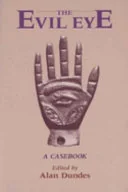
The Evil Eye
 84
84

The Evil Eye
Alan Dundes's "The Evil Eye" offers a rigorous, if somewhat dry, dissection of a belief as old as civilization. Rather than sensationalizing, Dundes approaches the topic with academic detachment, presenting evidence from Sumerian cuneiform to modern-day gestures. His strength lies in the sheer breadth of cross-cultural examples he marshers, demonstrating the evil eye's pervasive nature. A limitation, however, is the text's density; it's a scholar's tool, not a casual reader's delight. The discussion on how even seemingly innocent acts like tipping waiters or blessing sneezers can be interpreted as remnants of anti-evil eye practices is particularly illuminating, showing how deeply ingrained these beliefs are. This work stands as a definitive, albeit dense, academic exploration of a potent and enduring superstition.
📝 Description
84
Alan Dundes' 1980 book analyzes the ancient belief that a malevolent gaze can cause harm.
Alan Dundes' The Evil Eye is a detailed examination of a widespread folk belief. The book investigates the origins and cultural persistence of the idea that a malevolent gaze can inflict harm. Dundes, a noted folklorist, traces this superstition from its earliest appearances in Sumerian texts around 3000 BCE and its mention in the Hebrew Bible through its presence in various Indo-European and Semitic cultures.
The work considers how this belief functions across different societies, identifying common patterns in its expression and the protective measures people have devised against it. Dundes explores the psychological underpinnings of such superstitions, looking at anxiety, envy, and the role of praise in potentially triggering the evil eye. The book also discusses apotropaic rituals, which are protective customs and objects used to ward off the harm believed to be caused by the evil eye. It demonstrates how these beliefs, far from being outdated, continue to shape social interactions and rituals.
This work fits within the study of folk belief systems, examining a phenomenon that touches on anxieties about the unseen and the power of intention. While not strictly occult, the study of the evil eye taps into ancient human concerns about malevolent forces and the need for protection, a theme found in many traditions that seek to understand and counter perceived spiritual or psychological threats. Dundes' anthropological approach grounds these beliefs in observable cultural practices and psychological patterns.
💡 Why Read This Book?
• Understand the ancient origins and global spread of the evil eye belief, tracing its roots back to Sumerian texts from approximately 3000 BCE, a historical depth unmatched in popular accounts. • Learn about apotropaic rituals and their diverse forms, as explored through specific examples Dundes presents, revealing how cultures historically ward off malevolent gazes. • Gain insight into the psychological underpinnings of superstitions, examining the role of envy and social anxieties that fuel the evil eye belief, as analyzed in Dundes's ethnographic approach.
⭐ Reader Reviews
Honest opinions from readers who have explored this book.
❓ Frequently Asked Questions
When was Alan Dundes's "The Evil Eye" first published?
Alan Dundes's seminal work "The Evil Eye" was first published in 1992, making it a foundational text for modern folkloristic studies on the subject.
What historical periods does "The Evil Eye" cover?
The book spans millennia, referencing ancient Sumerian texts from approximately 3000 BCE, the Hebrew Bible, and extending to contemporary cultural practices in the 20th century.
What cultures are primarily discussed in relation to the evil eye?
Dundes focuses extensively on Indo-European and Semitic cultures, examining the evil eye belief across regions from the Mediterranean to the Middle East and parts of Europe.
What is an 'apotropaic' ritual as discussed by Dundes?
Apotropaic rituals are protective measures or charms designed to avert evil, such as the evil eye. Dundes details various forms these take across different cultures studied.
Is "The Evil Eye" by Alan Dundes a scholarly or popular work?
It is primarily a scholarly work, drawing on extensive ethnographic and textual research. While accessible to dedicated lay readers, its depth and analytical rigor are geared towards academic study.
What is the significance of praise in the context of the evil eye?
Dundes explores how excessive or envious praise can be perceived as a trigger for the evil eye, leading to misfortune. This highlights the complex relationship between social interaction and belief in malevolent forces.
🔮 Key Themes & Symbolism
Pervasiveness of Superstition
The work meticulously documents how the belief in the evil eye, the power to harm through a glance, is not an isolated phenomenon but a widespread and enduring aspect of human culture. Dundes presents evidence from ancient Sumerian texts and the Bible, demonstrating its deep historical roots, and connects these to contemporary practices like toasts and blessings, illustrating its persistent presence across millennia and diverse societies, particularly within Indo-European and Semitic traditions.
Apotropaic Practices
A significant focus is placed on the various countermeasures developed to ward off the evil eye. These 'apotropaic' practices range from specific gestures and amulets to social customs like veiling or avoiding direct eye contact. Dundes analyzes these protective mechanisms not as mere superstitions but as vital cultural responses to perceived threats, reflecting anxieties about envy, misfortune, and the need for social order across different historical periods and geographical locations.
Psychology of Envy and Fear
Dundes explores the underlying psychological drivers of the evil eye belief, prominently featuring envy as a key motivator. The fear of harm resulting from another's envious gaze is examined as a fundamental human anxiety. The book posits that this belief provides a framework for understanding misfortune, attributing it to interpersonal malevolence rather than random chance, thereby offering a form of psychological or social control, even if based on superstition.
Cultural Transmission and Evolution
This study examines how the belief in the evil eye has been transmitted and adapted across cultures and through time. Dundes highlights the continuity of certain themes and symbols, while also noting variations in how the belief manifests and how protective measures evolve. The book serves as a case study in cultural transmission, showing how ancient fears and interpretations can persist and transform, influencing modern social behaviors and rituals.
💬 Memorable Quotes
Direct passages from the work, attributed to the author.
“The evil eye--the power to inflict illness, damage to property, or even death simply by gazing at or praising someone--is among the most pervasive and powerful folk beliefs in the Indo-European and Semitic world.”
— This foundational statement defines the core concept of the evil eye, emphasizing its potency and widespread presence across major cultural spheres, setting the stage for Dundes's extensive analysis.
“It is also one of the oldest, judging from its appearance in the Bible and in Sumerian texts five thousand years old.”
— This highlights the deep historical antiquity of the evil eye belief, grounding its study in some of the earliest written records of human civilization and underscoring its enduring nature.
“Remnants of the superstition persist today when we drink toasts, tip waiters, and bless sneezers.”
— This observation connects ancient fears to mundane modern practices, suggesting that seemingly innocuous customs often carry elements of older beliefs and rituals designed to ward off harm.
“To avert the evil eye, Muslim women wear veils, baseball players avoid [unspecified actions].”
— This illustrates the practical, everyday measures taken to counter the evil eye, showing how the belief influences behavior and social norms, from religious dress to secular superstitions in sports.
“The work explores how this belief functions across diverse societies.”
— This interpretive summary points to the comparative and anthropological scope of Dundes's research, indicating an examination of the evil eye's role in various cultural contexts.
🌙 Esoteric Significance
Tradition
While not strictly belonging to a single esoteric lineage like Kabbalah or Theosophy, Dundes's work on the evil eye engages with themes central to many folk magic and pre-Abrahamic religious traditions. It examines a belief system that predates and often coexists with organized esoteric schools, touching upon primal fears and protective rituals common in Hermetic and Gnostic thought concerning malevolent influences and the power of the unseen world.
Symbolism
The primary symbol is the 'gaze' itself, representing the transmission of envy and ill will. Other symbols include specific apotropaic signs (like the 'fig sign' or the eye symbol itself), which function to deflect or neutralize the harmful gaze. Dundes also implicitly explores the symbolism of praise, showing how even positive social expressions can be imbued with dangerous potential within this belief system.
Modern Relevance
Contemporary practitioners of folk magic, curse-breaking, and certain forms of protective spirituality often draw upon the understanding of psychic attacks and energetic smudging that echo the concepts explored in "The Evil Eye." Thinkers in psychological astrology and modern witchcraft may reference the enduring power of envy and the need for energetic shielding, concepts directly illuminated by Dundes's analysis of this ancient superstition.
👥 Who Should Read This Book
["• Scholars of Folklore and Anthropology: Researchers studying belief systems, comparative mythology, and the evolution of cultural practices will find Dundes's rigorous analysis and extensive cross-cultural data invaluable.", '• Students of Ancient Religions: Those interested in the origins of religious thought and the persistence of ancient superstitions in Abrahamic and Indo-European traditions will gain deep historical context.', '• Readers Fascinated by Psychology of Belief: Individuals curious about why humans hold onto superstitions, the role of envy, and the psychological mechanisms behind fear and protection will find ample material for reflection.']
📜 Historical Context
When Alan Dundes's "The Evil Eye" was first published in 1992, the study of folklore was well-established, with scholars like Dundes himself championing a more analytical and cross-cultural approach. The intellectual currents favored examining universal human experiences through the lens of specific cultural practices. Dundes's work on the evil eye fit within this tradition, drawing connections between ancient Near Eastern beliefs, evident in texts predating 3000 BCE, and contemporary Western superstitions. Unlike purely historical accounts, Dundes's folkloristic method focused on the lived reality and social function of the belief. His contemporaries included scholars like William Bascom, who also emphasized the functional aspects of folklore. The reception of Dundes's work was generally positive within academic circles for its thoroughness, though its dense, analytical style made it more a resource for specialists than a widely popular read.
📔 Journal Prompts
The pervasive nature of the evil eye belief across cultures.
The psychological function of attributing misfortune to envy.
Apotropaic rituals as expressions of cultural anxiety.
The persistence of ancient superstitions in modern life.
The symbolic meaning of the gaze in folk belief.
🗂️ Glossary
Evil Eye
A belief that a malevolent gaze can cause harm, illness, or misfortune to the person or object looked upon, often stemming from envy or ill will.
Apotropaic
Relating to or designed to ward off evil or misfortune; protective charms, rituals, or gestures used to counteract harmful influences like the evil eye.
Folk Belief
A traditional belief held by a community or group, often transmitted orally and existing alongside or outside of formal religious or scientific doctrines.
Indo-European Cultures
A broad classification of cultures and languages originating from a hypothetical ancient linguistic ancestor, encompassing much of Europe and parts of Asia.
Semitic Cultures
Cultures and peoples originating from the Semitic language family, including ancient Hebrews, Arabs, and Assyrians, primarily from the Middle East.
Sumerian Texts
Written documents from ancient Sumer in Mesopotamia (modern-day Iraq), dating back to the 4th and 3rd millennia BCE, providing early records of human civilization.
Superstition
An irrational belief or practice based on superstition or luck, often involving a belief in supernatural causation or the influence of unseen forces.
This book appears in 1 collection
🔮 Readers Also Liked
Browse all →








From the “Superstition” Collection
View all →







More Free Occult Philosophy Books
View all →