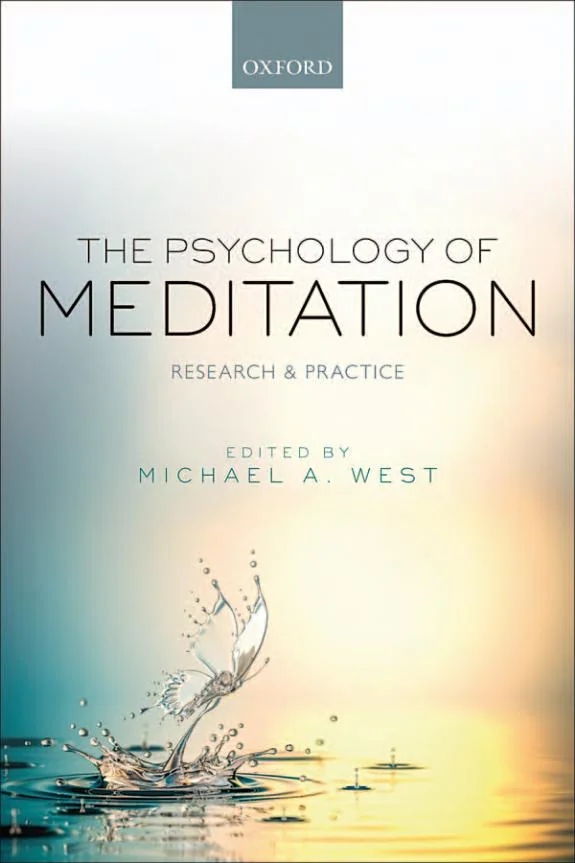
The Psychology of Meditation
 76
76

The Psychology of Meditation
Michael A. West’s examination of meditation bypasses the usual spiritual platitudes, focusing instead on the measurable psychological effects. The strength lies in its systematic approach, dissecting cognitive processes like attention and self-monitoring with a clinical lens. West meticulously details how states of awareness shift, drawing on research that charts these changes. A particular point of interest is the discussion of altered states, where the book clarifies the distinction between common misconceptions and empirically observable phenomena. However, the academic tone, while precise, can feel dense for the casual practitioner seeking only personal application. The limitation is its primary audience: it’s written more for the academic psychologist than the everyday meditator. Nonetheless, for those seeking a scientifically robust understanding of what happens in the mind during meditation, this work provides a valuable, data-driven perspective.
📝 Description
76
Michael A. West's 2016 book, The Psychology of Meditation, examines the cognitive and emotional mechanisms activated during meditation.
Published in 2016, Michael A. West's The Psychology of Meditation provides a scholarly look at meditative practices. The book moves past personal stories to investigate the mental and emotional processes that happen during meditation. It details how specific techniques build sustained attention, different states of consciousness, and self-awareness. West also looks into the brain activity and psychological changes that occur, supporting its points with research findings and established theories.
This book is primarily for psychologists, therapists, and researchers interested in the scientific basis of meditation. It also appeals to those in the meditation community who want a deeper, evidence-based understanding of their practice. Professionals in clinical psychology, cognitive science, and contemplative studies will find its analyses especially useful. It is for anyone seeking to connect subjective experience with objective study.
While this book focuses on the scientific investigation of meditation, it emerges within a broader historical context where contemplative practices have long been understood through spiritual and philosophical lenses. For centuries, traditions like Buddhism and Hinduism have explored altered states of consciousness, mindfulness, and self-awareness as paths to spiritual development and insight. West's work engages with this long-standing tradition by applying modern scientific methods to understand phenomena previously described through introspection and spiritual doctrine, bridging the gap between ancient contemplative aims and contemporary empirical research.
💡 Why Read This Book?
• Gain an understanding of the specific cognitive processes, such as focused attention and open monitoring, that are engaged during meditative states, as detailed in West's analysis of clinical research. • Explore the empirical evidence behind meditation's effects on emotional regulation and stress reduction, moving beyond anecdotal claims to scientific findings presented in the book. • Differentiate between subjective meditative experiences and their measurable psychological correlates, learning how concepts like metacognitive awareness are studied, as discussed in the book's chapters.
⭐ Reader Reviews
Honest opinions from readers who have explored this book.
❓ Frequently Asked Questions
What is the primary focus of The Psychology of Meditation?
The book focuses on the cognitive and emotional processes elicited during meditation, examining the psychological mechanisms and empirical findings related to its practice, rather than its spiritual aspects.
Who is the intended audience for this book?
The primary audience includes psychologists, therapists, and researchers in cognitive science and contemplative studies who are interested in the scientific and clinical applications of meditation.
When was The Psychology of Meditation first published?
The book was first published in 2016, reflecting a period of significant growth in the scientific study and secular adoption of meditation practices worldwide.
Does the book discuss the historical origins of meditation?
While it situates meditation within its modern scientific context, the book's emphasis is on the psychological and cognitive aspects rather than a comprehensive historical or religious overview.
What specific concepts does the book explore regarding meditation?
It explores concepts such as focused attention, open monitoring, altered states of consciousness, metacognitive awareness, and the implications for emotional regulation and insight.
Is this book suitable for someone new to meditation?
While informative, the book's academic and research-oriented approach might be dense for absolute beginners. It's best suited for those with some existing knowledge or a strong scientific curiosity about the practice.
🔮 Key Themes & Symbolism
Cognitive Mechanisms of Awareness
The work dissects how meditation cultivates specific cognitive skills. It details the interplay between focused attention, the ability to sustain concentration on a chosen object, and open monitoring, which involves non-judgmental awareness of unfolding experience. West explores how these practices alter attentional networks in the brain, leading to enhanced self-regulation and a deeper understanding of mental phenomena. The book examines the neurobiological underpinnings of these shifts, connecting subjective reports with objective findings from studies conducted in research settings.
Phenomenology of Altered States
West investigates the subjective experience of meditation, particularly the altered states of consciousness it can induce. He distinguishes between common, often sensationalized, accounts of altered states and those that are empirically observable and psychologically significant. The book discusses how techniques like sustained introspection can lead to profound changes in self-perception and awareness, offering a framework for understanding these shifts within a psychological context, rather than purely mystical terms.
Meditation and Emotional Regulation
A significant theme is the impact of meditation on emotional well-being. The book details how practices fostering metacognitive awareness—the ability to observe one's own thoughts and feelings without immediate identification—contribute to improved emotional regulation. West presents evidence suggesting that regular meditation can reduce reactivity to stressors and enhance resilience. This section explores the psychological pathways through which mindfulness and other contemplative techniques can lead to greater emotional stability and psychological health.
Scientific Integration of Practice
The book bridges the gap between traditional contemplative practices and modern scientific inquiry. West highlights the growing body of research conducted since the late 20th century that validates the psychological benefits of meditation. He discusses how clinical psychology has begun to integrate these practices, moving beyond purely theoretical discussions to applied therapeutic interventions. This theme underscores the book's role in presenting meditation as a subject of rigorous empirical study.
💬 Memorable Quotes
Direct passages from the work, attributed to the author.
“Meditation involves the cultivation of specific attentional and awareness skills.”
— This highlights the book's core argument that meditation is not merely passive relaxation but an active training of the mind, involving deliberate development of cognitive faculties.
“The practice elicits distinct cognitive and emotional processes.”
— This points to the book's empirical approach, suggesting that meditation produces measurable psychological changes that can be studied and understood through scientific investigation.
“Metacognitive awareness is central to observing mental phenomena without judgment.”
— This emphasizes the development of detached observation as a key outcome of meditation, allowing individuals to relate to their thoughts and feelings in a more objective manner.
“Integration into clinical practice reflects growing empirical validation.”
— This indicates the book's perspective on meditation's increasing acceptance in secular fields, driven by research findings that demonstrate its therapeutic potential.
“Understanding the phenomenology of altered states requires careful empirical study.”
— This suggests a cautious, research-based approach to extraordinary mental experiences, distinguishing them from scientifically observable psychological shifts.
🌙 Esoteric Significance
Tradition
While not strictly an esoteric text, the book engages with practices historically rooted in contemplative traditions. It approaches meditation from a psychological and cognitive science perspective, which can be seen as a modern, secular interpretation of ancient mind-training disciplines. It departs from traditional esoteric lineages by focusing on empirical verification and clinical application, eschewing metaphysical claims or ritualistic elements common in Hermetic or Kabbalistic studies.
Symbolism
The book's focus is primarily on cognitive and psychological processes rather than overt symbolism. However, the concept of the 'observer self' can be interpreted symbolically as a higher, detached awareness, a motif present in many esoteric traditions, representing the inner witness. The process of 'emptying the mind' can symbolize a return to primal potential or a shedding of egoic constructs, aligning with alchemical ideas of purification.
Modern Relevance
Contemporary thinkers and practitioners in fields like neurofeedback, positive psychology, and even secularized Buddhist studies draw upon the kind of empirically grounded understanding of meditation that West provides. His work informs current research into the neurological basis of well-being and the development of evidence-based mindfulness programs used in therapeutic settings and corporate wellness initiatives worldwide.
👥 Who Should Read This Book
• Clinical psychologists and psychotherapists seeking to understand the empirical basis of mindfulness-based therapies and integrate contemplative techniques into their practice. • Cognitive scientists and neuro researchers investigating the effects of meditation on attention, self-awareness, and altered states of consciousness. • Advanced practitioners of meditation who desire a deeper, scientifically informed comprehension of the psychological mechanisms underlying their experiences.
📜 Historical Context
Published in 2016, Michael A. West's The Psychology of Meditation emerged during a period of intense scientific scrutiny of contemplative practices. The preceding two decades saw a dramatic increase in research, particularly from institutions like the University of Massachusetts Medical School's Center for Mindfulness, which popularized mindfulness-based interventions. This era marked a departure from earlier, more spiritual interpretations, aligning with a secular, empirical approach to understanding consciousness. West's work situates itself within this movement, contrasting with the more philosophical explorations of consciousness prevalent in earlier 20th-century psychology, such as the work of William James. While authors like Jon Kabat-Zinn were instrumental in secularizing mindfulness, West's book provides a more detailed psychological analysis of the mechanisms involved. The reception was largely within academic circles, appreciating its systematic review of research findings rather than popularizing the practice itself.
📔 Journal Prompts
The cultivation of focused attention: how does your practice align with West's description?
Metacognitive awareness during meditation: what patterns of thought do you observe without judgment?
The phenomenology of altered states: reflect on subtle shifts in your perception during practice.
Emotional regulation: how has your meditation practice influenced your response to daily stressors?
The integration of cognitive skills: identify specific attentional improvements observed through your practice.
🗂️ Glossary
Focused Attention
A type of meditation training that involves concentrating on a single object, such as the breath, to develop sustained concentration and reduce mind-wandering.
Open Monitoring
A meditative practice characterized by a broad, non-judgmental awareness of all that arises in experience, including thoughts, feelings, and sensations, without fixating on any one object.
Metacognitive Awareness
The capacity to observe one's own mental processes, such as thoughts and emotions, with a degree of detachment, recognizing them as transient phenomena rather than absolute truths.
Altered States of Consciousness
Subjective experiences of consciousness that differ significantly from ordinary waking consciousness, often induced by practices like meditation, and characterized by changes in perception, thought, and self-awareness.
Phenomenology
The study of subjective experience and consciousness, focusing on the qualitative aspects of how things appear to the observer.
Cognitive Processes
Mental operations involved in acquiring knowledge and understanding, including attention, memory, perception, thinking, and problem-solving, as examined in the context of meditation.
Clinical Psychology
The branch of psychology concerned with the assessment, diagnosis, treatment, and prevention of mental disorders and emotional dysfunctions, where meditation is increasingly applied.
This book appears in 1 collection
🔮 Readers Also Liked
Browse all →









From the “Mindfulness” Collection
View all →









More Free Esoteric History & Biography Books
View all →