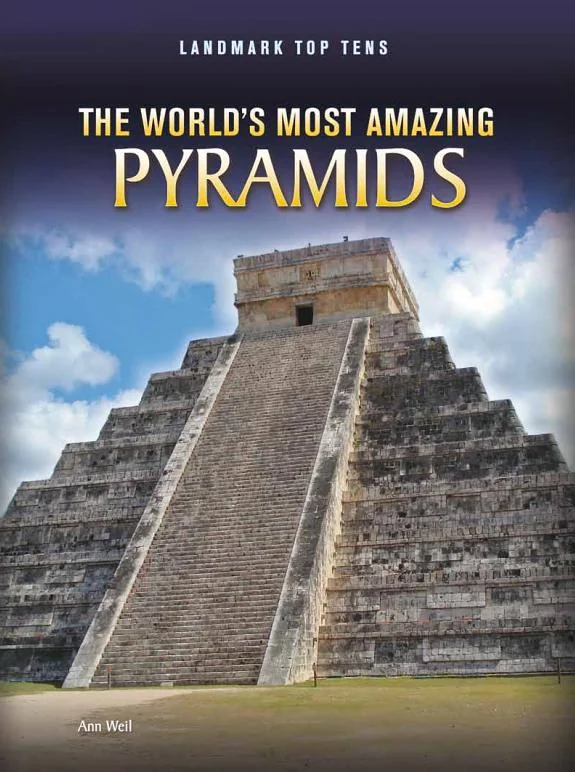
The World's Most Amazing Pyramids
 84
84

The World's Most Amazing Pyramids
Ann Weil’s "The World's Most Amazing Pyramids" offers a broad, if somewhat superficial, tour of its titular structures. The strength lies in its sheer scope, moving from the familiar Egyptian plateau to the less-discussed mounds of the Americas and Asia. Weil’s accessible prose makes complex geographical and historical information digestible for a general audience. However, the book’s primary limitation is its lack of deep engagement with any single site or theory. For instance, while mentioning the astronomical alignments at Teotihuacan, the discussion remains at a descriptive level without exploring the intricate mathematical or cosmological frameworks proposed by scholars like Hugh Harleston Jr. The text frequently presents intriguing possibilities about pyramid functions without substantial evidence or detailed analysis, leaving the reader with a sense of wonder but little concrete understanding. It serves as a competent, introductory gazetteer for those new to the subject, but scholars will find it lacking in critical depth.
📝 Description
84
Ann Weil's 2011 book surveys pyramid structures globally, moving beyond Egypt.
Published in July 2011, The World's Most Amazing Pyramids by Ann Weil surveys pyramidal structures worldwide. The book moves past the well-known Egyptian examples to investigate lesser-known sites, considering their construction, possible uses, and the cultural stories linked to them. Weil provides a broad overview, referencing various global locations and historical eras where these significant architectural forms appeared. This work is for readers interested in ancient architecture, comparative mythology, and the persistent human drive to erect monumental buildings. It will appeal to those curious about the widespread presence of pyramid shapes across cultures and their possible links to astronomical observation, spiritual beliefs, or lost technologies. Individuals looking for a wide introduction to global pyramid sites, rather than a deep dive into one location, will find it useful. Weil's book enters a long-standing discussion about ancient megaliths and monumental architecture. While mainstream archaeology often focuses on the practical aspects of these structures, works like this engage a continuous interest in their more mysterious dimensions.
Weil's work taps into a persistent interest in the mysterious dimensions of ancient megaliths, a discourse active for centuries. It joins a tradition of exploring monumental architecture beyond purely functional interpretations, suggesting potential spiritual or lost technological purposes. This book contributes to a public fascination with enduring symbols of ancient ingenuity and belief systems, particularly as they relate to a perceived common origin or shared symbolic meaning across disparate cultures.
💡 Why Read This Book?
• Gain an understanding of the global distribution and varied forms of pyramid construction, moving beyond the Egyptian examples to sites like the Mesoamerican pyramids discussed in Chapter 3. • Explore the recurring symbolic meanings attributed to pyramids across cultures, such as their potential use as cosmic maps, as referenced in discussions of Mayan cosmology. • Contemplate the engineering feats and societal organization required for ancient pyramid construction, drawing parallels between different civilizations’ approaches to monumental building.
⭐ Reader Reviews
Honest opinions from readers who have explored this book.
❓ Frequently Asked Questions
Does "The World's Most Amazing Pyramids" focus only on Egyptian pyramids?
No, Ann Weil's book deliberately expands its scope beyond Egypt. It investigates numerous pyramid sites across the globe, including those in Mesoamerica, Asia, and other regions, offering a comparative perspective on these ancient structures.
What time periods does Ann Weil cover in her exploration of pyramids?
The book spans a wide range of historical periods, from ancient civilizations that constructed the earliest known pyramids to later examples. It aims to show the enduring presence of pyramidal architecture across millennia.
Are there any specific theories about the purpose of pyramids discussed?
Yes, the book touches on various theories, including their use as astronomical observatories, spiritual centers, tombs, or even as repositories of ancient knowledge. It presents these ideas without necessarily endorsing one over others.
Is "The World's Most Amazing Pyramids" suitable for academic study?
While it provides a broad overview for general readers, its lack of in-depth analysis and extensive citation may limit its utility for advanced academic research. It functions best as an introductory text.
What distinguishes this book from other books on pyramids?
Its primary distinction is its global perspective, actively seeking out and describing a wider array of pyramid sites than commonly found in introductory texts. It emphasizes the cross-cultural prevalence of the form.
When was "The World's Most Amazing Pyramids" first published?
The book was first published in July 2011, making it a relatively contemporary survey of global pyramid sites.
🔮 Key Themes & Symbolism
Global Pyramidal Architecture
This theme examines the widespread phenomenon of pyramid construction across diverse geographical locations and cultures. It moves beyond the typical focus on Egypt to include significant examples from Mesoamerica, such as those at Chichen Itza, and lesser-known sites in Asia and Europe. The book highlights the architectural similarities and differences, prompting questions about diffusion of knowledge or independent invention of the pyramid form as a monumental structure.
Symbolism and Purpose
Weil explores the potential symbolic and functional meanings attributed to pyramids throughout history. These range from sacred mountains and cosmological maps to astronomical observatories and energy conduits. The text discusses how these structures might have served spiritual, ritualistic, or practical purposes for the societies that built them, reflecting a deep human engagement with the heavens and the earth.
Ancient Engineering and Society
A significant aspect of the book involves contemplating the immense engineering challenges and societal organization required to build these massive structures. It touches upon the ingenuity of ancient peoples in quarrying, transporting, and assembling colossal stone blocks. This theme invites reflection on the social hierarchies, labor management, and technological capabilities present in civilizations capable of such ambitious undertakings.
Cross-Cultural Connections
The book implicitly and explicitly draws connections between seemingly disparate cultures through the shared architectural motif of the pyramid. It prompts readers to consider whether these similarities suggest ancient global contact, shared archetypes, or parallel developments driven by similar environmental or spiritual impulses. This theme encourages a comparative approach to understanding human history and belief.
💬 Memorable Quotes
Direct passages from the work, attributed to the author.
“The pyramid shape appears in many cultures, not just Egypt.”
— This observation highlights the central thesis of the book: that the pyramid is a recurring form in human civilization, suggesting a universal appeal or function beyond a single geographical origin.
“Ancient builders achieved remarkable feats of engineering.”
— This statement underscores the awe and mystery surrounding the construction of large-scale ancient monuments. It points to the skill, planning, and labor mobilization that characterized these societies.
“Pyramids may have served as connection points between earth and sky.”
— This interpretation suggests a spiritual or cosmological function for these structures, viewing them as symbolic bridges or conduits linking the terrestrial realm with celestial or divine planes.
“Understanding pyramid construction requires looking at societal organization.”
— This concept emphasizes that the creation of monumental architecture was not merely a technical endeavor but also a reflection of a society's structure, leadership, and collective capacity.
“The purpose of many pyramids remains a subject of speculation.”
— This acknowledges the ongoing debates and mysteries surrounding ancient sites. It frames the exploration of pyramids as an inquiry into the unknown aspects of past civilizations.
🌙 Esoteric Significance
Tradition
This work aligns with a broad interest in ancient cosmology and sacred geometry that touches upon various esoteric traditions, including Hermeticism and Pythagorean thought, without strictly adhering to any single lineage. It explores the idea of universal symbolic forms and their potential connection to cosmic principles, a common theme in Theosophical and New Age literature, focusing on the enduring human search for meaning through monumental architecture.
Symbolism
The pyramid itself serves as a primary symbol, often interpreted esoterically as representing the earthly body or material world reaching towards the divine or spiritual realm. Other symbols explored might include astronomical alignments within pyramid complexes, suggesting a connection to celestial cycles and divine order, or the representation of cosmic mountains, linking terrestrial sacred sites to universal spiritual geography.
Modern Relevance
Contemporary interest in sacred geometry, ancient astronaut theories, and alternative history continues to draw from the exploration of global pyramid sites. Thinkers and practitioners in fields like consciousness studies and holistic spirituality often reference these structures as evidence of advanced ancient knowledge or as sites of energetic significance, making Weil's survey relevant to modern seekers of esoteric wisdom.
👥 Who Should Read This Book
• Enthusiasts of comparative mythology and ancient architecture seeking a broad overview of global pyramid sites beyond the most famous examples. • Readers interested in the symbolic meanings and potential esoteric functions attributed to ancient monumental structures. • Individuals curious about the engineering capabilities and societal organization of ancient civilizations that undertook massive construction projects.
📜 Historical Context
Ann Weil's "The World's Most Amazing Pyramids" was published in 2011, a period marked by continued popular fascination with ancient mysteries and monumental architecture. The book entered a field already rich with works exploring sites like Giza, Teotihuacan, and Mayan pyramids, but it distinguished itself by aiming for a broader, more global survey. It arrived after decades of archaeological discovery and anthropological study, yet it also tapped into a persistent undercurrent of speculative and esoteric interpretations of ancient structures, often at odds with strict archaeological consensus. While mainstream archaeology focused on function and chronology, Weil's work engaged with the enduring questions about purpose, symbolism, and potential lost knowledge. The intellectual currents at the time included ongoing debates about diffusionism versus independent invention in ancient cultures, and the book implicitly contributes to this by highlighting cross-cultural architectural parallels.
📔 Journal Prompts
The prevalence of the pyramid form across disparate cultures.
The engineering challenges of constructing ancient pyramids like those at Giza.
Interpreting the potential astronomical alignments within Mayan pyramids.
Reflecting on the symbolic connection between earth and sky in pyramid architecture.
Societal organization required for monumental construction projects.
🗂️ Glossary
Mesoamerica
A historical and cultural region that encompasses most of Mexico and Central America. It is known for its ancient civilizations, including the Maya and Aztec, who built significant pyramid structures.
Sacred Geometry
The study of the spiritual and symbolic properties of geometric shapes and proportions. It is often applied to ancient architecture, including pyramids, to understand their design principles and potential metaphysical significance.
Cosmological Map
An interpretation of a structure, such as a pyramid, as representing the perceived order of the universe or the relationship between the earthly and celestial realms according to a specific culture's worldview.
Diffusionism
A theory in anthropology that suggests cultural traits spread from one society to another, often implying contact or migration. Applied to pyramids, it questions whether similar structures arose independently or were spread from a common origin.
Monolithic Architecture
Architecture characterized by the use of large, single pieces of stone (monoliths) or by structures built from massive stone blocks, often requiring significant engineering and labor.
Chichen Itza
A famous Mayan archaeological site in Mexico, known for its iconic El Castillo pyramid (Temple of Kukulcan) and other significant structures displaying advanced astronomical and architectural knowledge.
Giza Plateau
An arid plateau in Egypt on the outskirts of Cairo, famous as the location of the Great Pyramid of Giza, the Pyramid of Khafre, the Pyramid of Menkaure, and the Great Sphinx.
This book appears in 1 collection
🔮 Readers Also Liked
Browse all →








From the “Pyramids” Collection
View all →



More Free Esoteric History & Biography Books
View all →