The Gnostic philosophy

 75
75

The Gnostic philosophy
Tobias Churton's exploration of Gnosticism is an admirably thorough endeavor, charting a course through a labyrinthine subject with commendable clarity. He effectively situates Gnostic thought within its historical milieu, detailing its complex relationship with early Christianity and Hellenistic philosophy. One particular strength lies in Churton's meticulous cataloging of various Gnostic schools and their distinct cosmologies, moving beyond the popular, often oversimplified, notion of a single Gnostic doctrine. For instance, his detailed exposition of the Valentinian system, with its intricate aeonology, offers a substantive look at one of the most influential branches. A limitation, however, is that at times the sheer volume of detail can feel overwhelming, occasionally obscuring the forest for the trees. Despite this, the work provides an indispensable resource for understanding this vital, yet often marginalized, spiritual tradition. It serves as a solid scholarly overview.
📝 Description
75
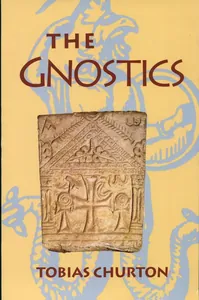
Tobias Churton's The Gnostic Philosophy examines the diverse movements flourishing in the early Common Era.
This book looks at the varied theological, cosmological, and ethical systems of Gnostic groups. It goes beyond simple definitions to show how these thinkers understood creation and the pursuit of gnosis, a direct knowledge of the divine. Churton presents Gnosticism not as a single idea but as a range of beliefs and practices.
The work details the Gnostic rejection of material creation by a lesser deity. It follows the historical development of these ideas, showing their interactions with other philosophical and religious systems of the Roman Empire. The book discusses how Gnostic views, often known through the writings of their critics, challenged established ideas about the cosmos and the divine.
It is written for those interested in early Christianity, comparative religion, and esoteric traditions. Readers seeking to understand the historical context of early Christian thought and its alternative paths will find material here. Those interested in dualistic worldviews, consciousness, and the search for transcendent truth will also find this book valuable. It engages with complex theological arguments and historical scholarship.
Gnosticism emerged in the 2nd and 3rd centuries CE, a time of significant intellectual and religious activity in the Roman Empire. It existed alongside developing orthodox Christianity, Stoicism, Neoplatonism, and mystery religions. Gnostic ideas offered a distinct perspective on the divine, the material world, and the path to salvation. The suppression of many Gnostic groups by the emerging Church influenced how their history and beliefs were later understood.
💡 Why Read This Book?
• Gain an understanding of the Demiurge and its role in Gnostic cosmology, differentiating it from the orthodox Christian creator God, as explored in Churton's analysis of Gnostic creation myths. • Learn about the historical interactions between Gnosticism and early Christianity, particularly the theological debates and condemnations documented by figures like Irenaeus of Lyons in the 2nd century. • Discover the concept of Gnosis as salvific knowledge, understanding its significance as a pathway to liberation from the material world within various Gnostic schools described in the text.
⭐ Reader Reviews
Honest opinions from readers who have explored this book.
❓ Frequently Asked Questions
What is the primary difference between Gnosticism and mainstream Christianity according to Tobias Churton?
Churton highlights Gnosticism's core belief in a flawed Demiurge as creator of the material world, contrasting with mainstream Christianity's view of an all-good, omnipotent God as creator. This fundamental difference shapes Gnostic cosmology and their path to salvation.
Which historical figures are central to understanding Gnosticism's early reception?
Key figures include early Church Fathers like Irenaeus of Lyons and Tertullian, whose writings largely documented and condemned Gnostic beliefs from an orthodox perspective, preserving much of what we know about them.
What does 'Gnosis' mean in the context of Gnostic philosophy?
Gnosis refers to a special, intuitive, salvific knowledge of the divine and the true nature of reality. It is not intellectual but experiential, seen as the key to liberation from the material world.
How did Gnosticism view the material world?
Gnostics generally viewed the material world as an imperfect or even malevolent creation, brought into being by a lesser, ignorant, or evil deity (the Demiurge), in contrast to the spiritual perfection of the true God.
When did Gnostic thought primarily emerge and flourish?
Gnostic ideas gained prominence in the 2nd and 3rd centuries CE, developing alongside and in dialogue with early Christianity and various Hellenistic philosophical traditions.
Does The Gnostic Philosophy discuss specific Gnostic texts?
Yes, the work references and discusses concepts derived from various Gnostic texts, including those discovered at Nag Hammadi, as well as those cited by early Church opponents.
🔮 Key Themes & Symbolism
The Dualistic Worldview
The work meticulously details the pervasive dualism within Gnostic systems, positing a radical separation between a transcendent, good, unknowable God and the flawed, material realm overseen by a lesser creator. This ontological division is fundamental, explaining the Gnostic perception of the material world as a prison. Churton illustrates how this framework informed their ethics, eschatology, and understanding of human existence as a divine spark trapped within an alien environment, seeking escape through enlightenment.
The Path of Gnosis
Central to Gnostic philosophy is the concept of Gnosis—direct, intuitive knowledge of the divine that leads to salvation. Churton differentiates this from mere intellectual assent, emphasizing its experiential and salvific nature. The book explores how various Gnostic schools posited different methods for attaining this knowledge, often involving complex mythologies, esoteric rituals, and the interpretation of secret teachings passed down through spiritual lineages.
Gnosticism and Orthodoxy
A significant focus is placed on the historical relationship and conflict between Gnostic movements and the emerging orthodox Christian Church. Churton examines the theological disputes over the nature of Christ, the creation, and salvation. He highlights how early Church Fathers like Irenaeus of Lyons played a central role in defining orthodox doctrine by polemically engaging with and often misrepresenting Gnostic ideas, thereby shaping the historical narrative.
Cosmology and the Divine Hierarchy
The book explores the intricate cosmologies developed by Gnostic thinkers, often featuring a hierarchy of divine beings or aeons emanating from the supreme God. Churton explains the role of figures like Sophia (Wisdom) in the fall from the divine pleroma and the subsequent creation of the material universe by the Demiurge. This complex celestial bureaucracy provided a framework for understanding the spiritual universe and humanity's place within it.
💬 Memorable Quotes
Direct passages from the work, attributed to the author.
“The material world is seen not as God's intended creation, but as a flawed imitation or even a prison.”
— This concisely captures the Gnostic rejection of the material realm, positing it as the work of an inferior deity, fundamentally distinct from the perfect spiritual cosmos.
“Salvation comes not through faith or works, but through direct, intuitive knowledge of the divine.”
— This highlights the central Gnostic emphasis on Gnosis as the exclusive means of liberation, contrasting sharply with soteriological models reliant on external mediators or adherence to dogma.
“Gnostic systems often feature complex mythologies of divine emanations and the entrapment of spirit.”
— This points to the elaborate cosmogonies found in Gnosticism, where divine energies descend and become ensnared within the material creation, necessitating a path of spiritual awakening.
“The search for true knowledge is the essential human endeavor in Gnostic thought.”
— This interpretation emphasizes the core Gnostic pursuit: the acquisition of spiritual insight as the primary means to transcend worldly limitations and achieve union with the divine.
💡 Key Ideas
Editorial paraphrase of the work's core concepts — not direct quotes.
The figure of the Demiurge represents ignorance or malice, responsible for the imperfections of existence.
This paraphrase explains the critical Gnostic concept of the Demiurge, identifying this creator figure as the source of suffering and limitation in the material world.
🌙 Esoteric Significance
Tradition
The Gnostic philosophy aligns primarily with the Gnostic esoteric tradition, a complex and diverse set of beliefs and practices that flourished in the early centuries CE. While often associated with early Christianity due to shared historical periods and texts, Gnosticism represents a distinct spiritual lineage emphasizing immediate, experiential knowledge (gnosis) as the path to salvation, differing significantly from orthodox Christian doctrines of faith and grace. Churton's work places it within this specific esoteric context, exploring its unique cosmological, anthropological, and soteriological frameworks.
Symbolism
Key symbols explored include the figure of the Demiurge, representing the flawed creator of the material universe and a primary obstacle to spiritual realization. Another significant symbol is Sophia (Wisdom), whose fall from the divine realm often initiates the creation process and the subsequent entrapment of divine sparks within humanity. The concept of the Pleroma, the fullness of the divine realm, symbolizes the ultimate spiritual reality from which the material world is a fallen or alienated manifestation.
Modern Relevance
Contemporary esoteric thinkers, comparative religion scholars, and spiritual seekers continue to draw upon Gnostic ideas. Modern interpretations often focus on Gnosticism's critique of oppressive societal structures, its emphasis on individual spiritual awakening, and its exploration of consciousness. Movements interested in psychological archetypes, the nature of reality, and alternative spiritual paths often find resonance in Gnostic themes of liberation and the search for transcendent truth beyond material constraints.
👥 Who Should Read This Book
• Students of comparative religion and early Christian history seeking to understand the diverse spiritual field of the Roman Empire beyond orthodox narratives. • Practitioners of esoteric traditions interested in the philosophical underpinnings of dualistic worldviews and the concept of salvific knowledge (gnosis). • Academic researchers investigating heterodox religious movements and the historical development of Western esotericism, requiring a detailed overview of Gnostic schools.
📜 Historical Context
Tobias Churton's work situates Gnosticism firmly within the intellectual ferment of the 2nd and 3rd centuries CE. This era saw the consolidation of Roman power alongside a proliferation of diverse religious and philosophical ideas. Gnosticism emerged as a significant current, often intertwined with, yet distinct from, nascent Christianity. It contended with philosophical schools like Stoicism and Neoplatonism, and shared certain thematic concerns with mystery religions. The primary source of information about many Gnostic groups historically came from their opponents, notably Church Fathers such as Irenaeus of Lyons, whose treatise *Against Heresies* (circa 180 CE) sought to refute Gnostic doctrines. This adversarial relationship profoundly shaped the historical record, making Churton's synthesis an important effort to reconstruct Gnostic perspectives on their own terms, offering a counter-narrative to the dominant orthodox Christian viewpoint that eventually prevailed and suppressed many Gnostic traditions.
📔 Journal Prompts
The concept of the Demiurge and its implications for understanding the material world.
Reflecting on the nature of Gnosis as presented by Churton.
The role of Sophia in Gnostic creation myths and its symbolic meaning.
Contrasting the Gnostic view of salvation with other historical religious frameworks discussed.
The historical reception of Gnosticism by early Church Fathers like Irenaeus.
🗂️ Glossary
Gnosis
A Greek term meaning 'knowledge,' specifically referring to intuitive, experiential, salvific knowledge of the divine and the true nature of reality, central to Gnostic belief systems.
Demiurge
In Gnosticism, the creator deity of the material universe, often depicted as ignorant, flawed, or malevolent, distinct from the supreme, transcendent God.
Aeons
Divine emanations or beings within the Pleroma (the divine fullness) in many Gnostic cosmologies, representing aspects of the supreme God.
Pleroma
The totality of divine powers and beings emanating from the supreme God in Gnostic cosmology; the spiritual realm or fullness.
Sophia
Greek for 'Wisdom,' a significant figure in many Gnostic myths, often depicted as an aeon whose fall or error leads to the creation of the material world.
Barbelo
A Gnostic term for the first emanation of the true God, often considered a supreme divine being or principle, sometimes identified with Sophia.
Valentinianism
A prominent Gnostic system founded by Valentinus in the 2nd century CE, known for its complex cosmology involving numerous aeons and intricate mythologies.
🔮 Readers Also Liked
Browse all →







More by Tobias Churton
All books →



More Free Sacred Texts & Gnosticism Books
View all →