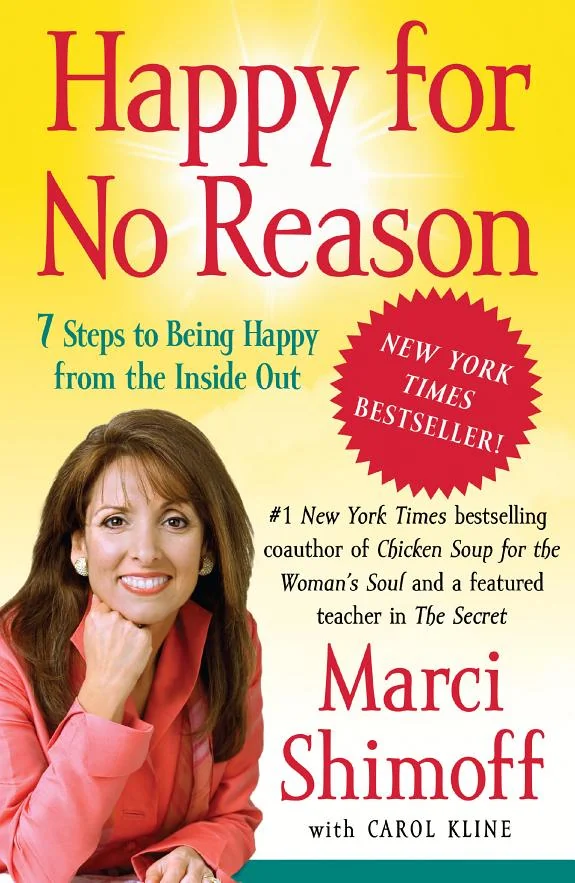
Happy for No Reason
 80
80

Happy for No Reason
Marci Shimoff and Carol Kline's "Happy for No Reason" offers a pragmatic approach to a concept often shrouded in mystique. The strength of this 2009 work lies in its accessible breakdown of complex psychological and spiritual principles into manageable steps. The authors’ insistence on happiness as a skill, rather than a gift, is particularly compelling, moving beyond aspirational platitudes to actionable advice. However, while the "Seven Secrets" provide a solid structure, the sheer breadth of topics covered can sometimes feel overwhelming, potentially diluting the impact of individual practices for readers seeking a single, profound shift. The discussion around physical health, for instance, while important, feels somewhat conventional compared to the more esoteric elements. Ultimately, "Happy for No Reason" serves as a robust, encouraging manual for anyone committed to actively building a more joyful existence.
📝 Description
80
"Happy for No Reason" was published in 2009 to help readers find lasting joy.
Marci Shimoff and Carol Kline's 2009 book, "Happy for No Reason," offers a system for achieving a stable sense of happiness, separate from external events. It moves past temporary feelings to build a more constant well-being. The authors combine insights from spiritual traditions and modern psychology to give readers tools for lasting joy.
The book is for anyone wanting to understand and practice genuine happiness. It speaks to those feeling trapped by dissatisfaction or needing outside approval. Readers interested in self-help, spiritual growth, and practical psychology will find it useful. It is especially helpful for people who have read other happiness books but want concrete steps to use daily.
Published in 2009, "Happy for No Reason" emerged during a time of growing interest in positive psychology and mindfulness. It draws from self-help and spiritual development traditions. The book connects with earlier thinkers like Dale Carnegie and those focused on inner peace. Its appearance amid global economic uncertainty made the search for internal resilience and contentment especially relevant.
💡 Why Read This Book?
• You will learn a systematic approach to internal happiness cultivation, moving beyond transient emotional highs, as detailed in the "Seven Secrets" presented in the book. • You will gain practical techniques for reframing negative thought patterns and fostering positive emotions, directly applicable to daily life as outlined in the book's actionable guidance. • You will understand happiness as an internal skill, not dependent on external circumstances, a core principle reinforced throughout the text and its emphasis on inner work.
⭐ Reader Reviews
Honest opinions from readers who have explored this book.
❓ Frequently Asked Questions
What are the "Seven Secrets" of happiness discussed in "Happy for No Reason"?
The "Seven Secrets" include cultivating love, enhancing physical health, finding your purpose, embracing spirituality, developing your inner strengths, mastering your mind, and living in the present moment.
Can happiness truly be achieved "for no reason" as the title suggests?
Yes, the book proposes that true happiness is an internal state, cultivated through specific practices and mindset shifts, making it less dependent on external conditions or reasons.
Who are the authors of "Happy for No Reason"?
The book was co-authored by Marci Shimoff, a New York Times bestselling author and transformational speaker, and Carol Kline, a writer and coach.
When was "Happy for No Reason" first published?
The book was first published on March 3, 2009, positioning it within the early 21st-century discourse on positive psychology and well-being.
Does the book offer scientific backing for its happiness strategies?
Yes, "Happy for No Reason" draws upon research in positive psychology and neuroscience, alongside wisdom traditions, to support its proposed methods for cultivating happiness.
Is "Happy for No Reason" suitable for someone new to self-help books?
Absolutely. The book is structured with practical exercises and clear explanations, making its principles accessible and actionable for beginners in the self-help genre.
🔮 Key Themes & Symbolism
Cultivating Inner Joy
The central theme revolves around understanding happiness not as a destination dependent on external validation, but as an internal state that can be actively cultivated. This involves shifting one's perspective and adopting practices that foster contentment and peace irrespective of life's challenges. The book posits that true happiness is an inside job, accessible through consistent application of specific techniques and a conscious choice to focus on well-being.
The Seven Secrets Framework
This structured approach breaks down the path to happiness into seven actionable components: cultivating love, improving physical health, finding purpose, embracing spirituality, developing inner strengths, mastering one's mind, and living in the present. Each secret offers specific strategies and exercises designed to integrate these aspects into daily life, providing a comprehensive roadmap for sustained joy.
Happiness as a Skill
Contrary to the notion that happiness is a passive state or a matter of luck, the book strongly advocates for happiness as a skill that can be learned and honed. This perspective empowers readers by suggesting that through practice and dedication, anyone can increase their capacity for joy and resilience, moving beyond a fixed baseline of emotional experience.
Mindset and Perception
A significant portion of the book addresses the power of mindset in shaping our experience of happiness. It explores how reframing negative thought patterns, practicing gratitude, and consciously choosing positive interpretations of events can fundamentally alter one's emotional landscape, demonstrating the profound link between our thoughts and our feelings.
💬 Memorable Quotes
Direct passages from the work, attributed to the author.
“Happiness is an inside job.”
— This core tenet suggests that our internal state, rather than external circumstances, is the primary determinant of our happiness. It emphasizes personal agency and the power of cultivating inner resources.
“You can be happy for no reason.”
— This concept challenges the common reliance on external triggers for happiness, proposing that a deep, sustainable joy can be cultivated from within, independent of life's ups and downs.
“Happiness is a skill, not a feeling.”
— This interpretation emphasizes that joy is not merely an ephemeral emotion but a capacity that can be developed through consistent practice and intentional effort, much like any other skill.
💡 Key Ideas
Editorial paraphrase of the work's core concepts — not direct quotes.
The greatest gift you can give yourself is happiness.
This quote highlights the intrinsic value of personal well-being, framing happiness not as a reward for achievement but as a fundamental right and a practice of self-care and love.
The path to happiness is paved with gratitude.
This paraphrased concept underscores the transformative power of gratitude. It suggests that consciously appreciating what one has is a direct and effective route to experiencing greater joy and contentment.
🌙 Esoteric Significance
Tradition
While not explicitly tied to a single esoteric lineage, "Happy for No Reason" draws heavily on principles found in various self-help and New Thought movements, which often incorporate Gnostic ideas of inner potential and Hermetic concepts of mental alchemy. Its emphasis on cultivating internal states and consciously shaping reality aligns with philosophies that view consciousness as primary. The book synthesizes psychological techniques with spiritual concepts, bridging the gap between secular self-improvement and deeper metaphysical inquiry.
Symbolism
The book's symbolism is less about overt mystical symbols and more about the symbolic representation of internal states. 'Happiness' itself functions as a symbol for a state of enlightened being or inner peace. The "Seven Secrets" can be seen as symbolic pillars supporting this state. The concept of 'inner strength' and 'purpose' also act as symbolic anchors for a self-directed, empowered existence, moving away from external reliance towards an internal locus of control.
Modern Relevance
Contemporary thinkers and practitioners in positive psychology, mindfulness-based stress reduction (MBSR), and life coaching continue to echo the book's core tenets. Its emphasis on actionable techniques and the mind-body connection is reflected in modern wellness trends. Therapists and coaches often recommend its practical strategies for clients seeking to improve emotional regulation and overall life satisfaction, demonstrating its lasting influence on accessible self-improvement and well-being methodologies.
👥 Who Should Read This Book
• Individuals feeling persistently unfulfilled and seeking concrete methods to enhance their daily sense of joy, as the book provides actionable strategies for cultivating happiness. • Students of positive psychology or consciousness studies looking for accessible applications of psychological and spiritual principles, offering practical examples of mind-body integration. • Anyone interested in self-improvement and spiritual growth who desires a structured approach to developing lasting contentment, moving beyond fleeting positive emotions.
📜 Historical Context
Published in 2009, "Happy for No Reason" emerged during a period of heightened interest in positive psychology and personal development. This era saw a proliferation of books and workshops focused on cultivating well-being, influenced by figures like Martin Seligman, a pioneer in positive psychology. The work can be seen as a popular synthesis of emerging scientific research on happiness and enduring wisdom traditions, offering practical applications for a broad audience. It arrived in the wake of the 2008 financial crisis, a time when many sought internal sources of stability and contentment, making its message of inner resilience particularly resonant. While not directly engaged in academic debate, it contributed to a broader cultural conversation about mental health and self-improvement, often drawing parallels with mindfulness practices that were gaining traction.
📔 Journal Prompts
Reflect on your personal "Seven Secrets" for cultivating happiness beyond external circumstances.
Analyze a recent negative thought pattern using the book's reframing techniques.
Identify one concrete practice from the book to enhance your sense of purpose this week.
Consider how your physical health directly impacts your emotional state, as discussed in the book.
Explore the concept of "happiness as a skill" and how you can actively practice it daily.
🗂️ Glossary
Seven Secrets
A framework presented in the book outlining seven key areas (love, health, purpose, spirituality, inner strengths, mastering the mind, living in the present) for cultivating sustained happiness.
Happiness as a Skill
The concept that happiness is not a fixed trait but a learnable ability that can be developed through consistent practice, conscious effort, and specific techniques.
Inner Locus of Control
The belief that one's own actions and choices are the primary determinants of life events and outcomes, rather than external forces or fate.
Mindset Shift
A deliberate change in one's perspective, beliefs, or attitudes to foster a more positive and constructive outlook on life and its challenges.
Purpose
In the context of the book, purpose refers to having a sense of meaning and direction in life, often derived from contributing to something larger than oneself.
Spirituality
The book defines spirituality broadly as a connection to something larger than oneself, encompassing a sense of awe, wonder, and meaning, not necessarily tied to organized religion.
Present Moment Awareness
The practice of focusing one's attention on the current experience without judgment, a key component for reducing worry and enhancing appreciation for life.
This book appears in 1 collection
🔮 Readers Also Liked
Browse all →![The Byrhtferth's Manuscript (MS 17) † Saint John’s College † Oxford † [1111]](/img/thumb/the-byrhtferth-s-manuscript-ms-17-saint-john-s-college-oxford-1111-the-monk-byrhtferth.webp)








From the “Self-Realization” Collection
View all →








More Free Sacred Texts & Gnosticism Books
View all →