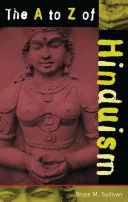
The A to Z of Hinduism
 74
74

The A to Z of Hinduism
Bruce M. Sullivan’s "The A to Z of Hinduism" provides a commendable structural approach to a tradition often presented in a more fluid or devotional manner. The alphabetical organization, while practical for reference, sometimes sacrifices narrative flow. However, its strength lies in its clear delineation of concepts and historical periods, offering a solid foundation for understanding. For instance, the detailed explanation of the various interpretations of 'dharma' across different Hindu schools is particularly well-handled, demonstrating the work's scholarly rigor. A limitation might be its academic tone, which, while precise, can feel somewhat distant for readers seeking a more experiential engagement with the subject matter. Nevertheless, for its intended purpose as a reference and introductory text, it succeeds admirably. It serves as a reliable, if not always animating, guide to Hindu thought and practice.
📝 Description
74
Bruce M. Sullivan's 2001 book systematically unpacks the diverse nature of Hinduism.
Published in 2001, "The A to Z of Hinduism" by Bruce M. Sullivan offers a clear guide to a major world religion. The book moves past simple definitions to examine Hinduism's long history and varied practices. It is structured to make a complex subject understandable, using an encyclopedic format for easy reference.
This volume is useful for students of religion, comparative theology, and cultural history. It is particularly helpful for those wanting a structured introduction to Hindu philosophy, mythology, and its impact on society. Readers interested in how religious thought and practice change over time will find this a valuable resource.
Sullivan's work covers key Hindu ideas such as karma, dharma, and moksha, along with different deities and philosophical systems. It explains the importance of major texts like the Vedas and Upanishads. The book also describes the practices and beliefs of various Hindu sects, including pilgrimage sites and rituals, to give a full picture of Hindu religious life.
While not strictly an esoteric text itself, Sullivan's work provides a scholarly framework for understanding traditions often studied within esoteric circles. Hinduism's concepts of karma, dharma, and the pursuit of moksha (liberation) are central to many Western esoteric interpretations of Eastern thought. The book's detailed examination of its philosophical schools and sacred texts offers a grounding in the source material that informs later mystical and philosophical developments, both within and outside of India.
💡 Why Read This Book?
• Gain a structured understanding of Hinduism's vast theological landscape by exploring its alphabetical entries, which detail concepts like 'karma' and deities such as 'Shiva,' providing clarity on their historical and philosophical contexts. • Trace the evolution of Hindu religious thought from its ancient origins through its development in various historical periods, as detailed in the book's historical contextualization sections. • Comprehend the practical dimensions of Hindu practice by examining descriptions of pilgrimage sites like Varanasi and specific rituals, offering insight into how beliefs manifest in daily life and devotional acts.
⭐ Reader Reviews
Honest opinions from readers who have explored this book.
❓ Frequently Asked Questions
What is the historical scope of "The A to Z of Hinduism"?
The book covers Hinduism's history spanning over three and a half millennia, from its ancient origins to the early 21st century, detailing its development through various historical periods.
Does the book explain key Hindu concepts?
Yes, "The A to Z of Hinduism" systematically explains major concepts such as karma, dharma, moksha, and the roles of various deities and philosophical schools.
Who is Bruce M. Sullivan?
Bruce M. Sullivan is the author of "The A to Z of Hinduism." The first edition of the work was published in 2001.
What kind of Hindu texts are discussed?
The book examines significant Hindu religious texts, including foundational scriptures like the Vedas and Upanishads, within the context of their historical development.
Does it cover Hindu rituals and practices?
Yes, the work details rituals performed as religious practices and sacred Hindu pilgrimage sites, offering insights into the lived experience of adherents.
How does this book approach the diversity within Hinduism?
It presents Hinduism's major events, individuals, texts, sects, and concepts in the context of its historical development, acknowledging its diverse nature.
🔮 Key Themes & Symbolism
Historical Development
Sullivan's work situates Hinduism not as a static entity but as a tradition that has evolved significantly over its long history. The book meticulously charts this evolution, from its ancient roots to its modern manifestations, highlighting key periods and shifts in thought and practice. This historical perspective is crucial for understanding the diversity within Hinduism, showing how different sects and philosophical schools emerged and interacted over centuries. It provides a framework for appreciating the continuity and change that characterize this enduring religious tradition.
Core Concepts and Philosophy
Central to the book is the systematic exploration of foundational Hindu concepts. Terms like karma, dharma, and moksha are not merely defined but are examined in their historical and philosophical contexts, revealing their many-sided interpretations across different schools of thought. The work also examines the complex pantheon of Hindu deities, explaining their significance and symbolic representations, and discusses major philosophical schools that have shaped Hindu thought, offering readers a clear path through its intricate theological landscape.
Practice and Ritual
Beyond theoretical frameworks, "The A to Z of Hinduism" illuminates the practical dimensions of the faith. It details the importance of rituals, from daily observances to major festivals, and highlights the spiritual significance of pilgrimage sites across India, such as the sacred city of Varanasi. The book explores how religious sensibilities are expressed through biography and art, demonstrating the integration of faith into the broader cultural fabric. This focus on practice provides a tangible connection to the living tradition.
Diversity of Sects
Recognizing Hinduism as a tradition with immense internal diversity, Sullivan's work dedicates attention to its various sects and movements. It outlines the distinct beliefs, practices, and historical trajectories of major groups, such as Shaivism, Vaishnavism, and Shaktism. By presenting these different branches, the book underscores that Hinduism is not monolithic but a dynamic confluence of traditions, offering a more nuanced and accurate understanding for the reader.
💬 Memorable Quotes
Direct passages from the work, attributed to the author.
“Hinduism is one of the world's largest and most diverse religious traditions.”
— This foundational statement underscores the book's primary objective: to map the vast and varied field of Hindu beliefs and practices, acknowledging its global reach and internal complexity from the outset.
“The book presents the Hindu religious tradition's major events, individuals, texts, sects, and concepts in the context of its historical development.”
— This highlights the work's methodological approach, emphasizing historical analysis and contextualization as key tools for understanding the many-sided nature of Hinduism.
“Sacred Hindu pilgrimage sites, the rituals performed as religious practices, the manifestations of Hindu religious sensibilities in biography, art...”
— This indicates the book's comprehensive scope, moving beyond doctrine to explore how Hindu faith is lived, expressed, and embodied through cultural practices and artistic creation.
“The work explores the historical development through various periods.”
— This emphasizes the book's chronological structure, suggesting that understanding Hinduism requires tracing its evolution and transformations across different eras.
“Over 800 million adherents.”
— This statistic grounds the discussion of Hinduism in its contemporary reality, highlighting its status as a major global religion with a significant number of followers worldwide.
🌙 Esoteric Significance
Tradition
While "The A to Z of Hinduism" is primarily an academic and historical reference work, its detailed exploration of concepts like karma, dharma, and moksha provides foundational knowledge relevant to various esoteric traditions that draw upon Eastern thought. It serves as a crucial bridge, offering a scholarly grounding for practitioners and students of Western esotericism who engage with Hindu philosophy, yoga, and meditation, often within Theosophical or New Age frameworks.
Symbolism
The book's examination of Hindu deities offers insight into rich symbolic systems. For instance, the many-sided representations of Shiva, encompassing destruction and regeneration, or Vishnu's avatars as manifestations of cosmic order, provide profound symbolic language. The symbol of 'Om' (Aum), representing the primordial sound and the essence of ultimate reality, is a key motif explored, connecting the audible to the ineffable, a common theme in esoteric studies.
Modern Relevance
Contemporary practitioners of yoga and mindfulness, often seeking deeper philosophical underpinnings for their practices, frequently consult works like Sullivan's for accurate information on Hindu origins and concepts. Thinkers and spiritual seekers exploring comparative mysticism or non-dual philosophies find the book's clear explanations of Vedanta and other schools useful for understanding traditions that influence modern spiritual movements globally.
👥 Who Should Read This Book
• Beginning students of comparative religion and theology seeking a clear, structured introduction to the foundational elements of Hinduism, including its history, core concepts, and major figures. • Researchers in cultural history and religious studies who require a reliable reference work to contextualize Hindu traditions within their historical development and societal impact. • Individuals interested in the philosophical and ethical dimensions of Eastern religions, looking for an accessible guide to concepts like karma and dharma as understood within their historical and textual frameworks.
📜 Historical Context
Published in 2001, Bruce M. Sullivan's "The A to Z of Hinduism" arrived at a time when academic and public interest in global religions was ascendant. The early 21st century saw a growing demand for accessible yet scholarly introductions to non-Western traditions, particularly those with significant global followings. Sullivan's work contributed to this academic discourse by providing a structured, encyclopedic overview, contrasting with more philosophical or devotional treatises prevalent at the time. It was a period where comparative religion studies were increasingly emphasizing historical development and cultural context. While not facing direct censorship, its academic approach positioned it within scholarly debates about the best methods for representing Hinduism, which ranged from textual analysis to ethnographic studies. Sullivan's contemporaries in the field were producing works that also sought to explain complex religious systems for a broader audience.
📔 Journal Prompts
The concept of dharma as presented across different Hindu periods.
The historical development of a specific Hindu sect discussed in the text.
The symbolic meaning of a deity like Vishnu or Shiva.
The role of pilgrimage sites such as Varanasi in Hindu practice.
The relationship between Vedic texts and later Upanishadic philosophy.
🗂️ Glossary
Dharma
A central concept in Hinduism, often translated as duty, righteousness, law, or cosmic order. Its meaning can vary depending on context, encompassing social obligations, ethical conduct, and the underlying principles governing the universe.
Karma
The principle of cause and effect, where actions (karma) in this life and past lives influence one's destiny and future rebirths. It is a fundamental concept shaping ethical considerations and the cycle of reincarnation (samsara).
Moksha
Liberation or release from the cycle of birth, death, and rebirth (samsara). It represents the ultimate spiritual goal in Hinduism, achieved through various paths like knowledge, devotion, or action.
Vedas
The oldest and most sacred scriptures of Hinduism, believed to be divinely revealed. They contain hymns, rituals, philosophical insights, and foundational knowledge for the tradition.
Upanishads
Later Vedic texts that form the philosophical core of Hinduism, focusing on concepts like Brahman (ultimate reality) and Atman (the self). They are crucial for understanding Vedanta philosophy.
Samsara
The continuous cycle of birth, death, and rebirth, driven by karma and ignorance. Liberation (moksha) from samsara is a primary spiritual aim in Hinduism.
Brahman
The ultimate, unchanging reality or supreme cosmic spirit in Hinduism. It is the source and sustainer of all existence, often understood as formless and infinite.