Creativity and Taoism
 80
80

Creativity and Taoism
Chung-yuan Chang’s *Creativity and Taoism* succeeds admirably in its goal of making the philosophical underpinnings of Chinese art accessible. The author’s lucid narrative is a significant strength, particularly in his explication of how concepts like *Wu Wei* are not just passive resignation but active, intuitive participation in the natural order. The limitation, perhaps, lies in the book's initial publication date; while scholarly, its presentation of visual art lacks the high-fidelity reproductions common in contemporary art history texts. A passage that particularly lingers is Chang's discussion of the void in ink wash painting, where negative space is as crucial as the brushstrokes themselves, embodying the Taoist principle of emptiness being fullness. This work offers a valuable perspective for understanding artistic creation as a spiritual practice, though it would benefit from updated visual aids for modern readers.
This book is a solid scholarly bridge between Eastern philosophy and artistic practice.
📝 Description
80
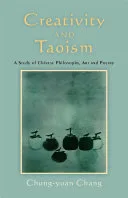
First published in 1963, Chung-yuan Chang's Creativity and Taoism connects Chinese art and poetry to Taoist principles.
Chung-yuan Chang's 1963 book connects traditional Chinese art and poetry to Taoist philosophy. Chang analyzes how classical Chinese creative works embody the Taoist way of life. He translates abstract Taoist ideas into concrete artistic expressions, showing the link between the Tao and the act of creation. The book is for readers interested in the relationship between Eastern philosophy and art. It suits students of religion and art history, particularly those studying non-Western traditions. Anyone curious about how spiritual ideas appear in creative work will find it valuable. Readers who value clear scholarship and thoughtful perspectives on art and life will benefit from this text.
Written in the mid-20th century, the book emerged as Western interest in Eastern thought grew after World War II. Chang's work contrasts with more abstract philosophical writings by grounding Taoist ideas in examples from Chinese ink wash painting and poetry. It moves away from the Western focus on individual artistic genius, highlighting a philosophy of natural action and harmony with the environment, as described by thinkers like Lao Tzu. The book explains core Taoist concepts such as Wu Wei (non-action), the cyclical nature of existence, and emptiness as a source of potential. Chang illustrates how these ideas are not just abstract beliefs but are actively practiced in artistic creation. The creative process, as shown in the book, is about allowing the natural flow of the Tao rather than imposing one's will.
This book is situated within the study of Taoism, a tradition that emphasizes living in accordance with the Tao, the fundamental principle of the universe. Chang examines how the visual and poetic arts of China became vessels for Taoist thought, particularly during periods of its flourishing. He draws connections to classical Taoist texts and thinkers, illustrating how concepts like effortless action and the appreciation of natural spontaneity are expressed through artistic practice. The work bridges the gap between philosophical abstraction and concrete artistic manifestation, revealing the spiritual underpinnings of traditional Chinese creative expression.
💡 Why Read This Book?
• Gain insight into the Taoist concept of *Wu Wei* as demonstrated through classical Chinese painting techniques, offering a practical understanding of effortless action beyond mere idleness. • Explore how the aesthetic principles of Chinese art, specifically the use of negative space as discussed in the book, reflect the Taoist understanding of emptiness as a generative force. • Understand the historical context of mid-20th century intellectual exchange, appreciating Chang's contribution to introducing Eastern philosophies to a Western audience through the lens of art, referencing Lao Tzu's influence.
⭐ Reader Reviews
Honest opinions from readers who have explored this book.
❓ Frequently Asked Questions
What is the primary focus of Chung-yuan Chang's 'Creativity and Taoism'?
The book focuses on the philosophical and aesthetic principles of Chinese art and poetry, explaining how they express the Taoist approach to existence and creativity. It explores the relationship between the Tao and artistic expression.
When was 'Creativity and Taoism' first published?
The book was first published on July 15, 2011, though its roots and scholarship likely stem from earlier work by the author.
What key Taoist concept is explored in relation to art?
A key concept explored is *Wu Wei*, or non-action, which the book illustrates as a principle of effortless creation and harmony with the natural flow of the Tao, evident in artistic practice.
Does the book discuss specific artists or movements?
Yes, the book introduces classic Chinese paintings and poems to illustrate Taoist principles. While not focusing on individual artist biographies, it uses these examples to bring Taoism to life.
Who is the author, Chung-yuan Chang?
Chung-yuan Chang was a scholar who dedicated his work to bridging Eastern philosophical traditions, particularly Taoism and Zen Buddhism, with Western thought and artistic expression.
Is this book suitable for beginners in Taoism?
Yes, the book is described as accessible and scholarly, making it suitable for beginners interested in understanding Taoist philosophy through the concrete examples of art and poetry.
🔮 Key Themes & Symbolism
Wu Wei in Artistic Creation
The book elucidates *Wu Wei* (non-action) not as passivity, but as spontaneous, effortless action aligned with natural processes. Chang argues that true creativity, particularly in the context of Taoism, stems from this principle. Artists practicing *Wu Wei* do not impose their will but allow the essence of their subject and the flow of the Tao to guide their hand, resulting in art that feels inherently natural and alive. This is exemplified in the fluid brushstrokes of ink wash painting and the evocative simplicity of classical poetry.
Emptiness as Potential (Xu)
Chang explores the Taoist concept of *Xu* (emptiness or void) as a fundamental source of creativity and potential. In Chinese art, negative space is not merely background but an active element that defines form and suggests boundless possibility. This aligns with the Taoist view that the unmanifest is the origin of all manifest things. The book illustrates how empty spaces in paintings or pauses in poetry create resonance and invite contemplation, mirroring the Taoist understanding of the universe arising from the Great Void.
Harmony with the Tao
The central thesis connects the expression of Taoism with the practice of art. Chang posits that the highest form of creativity involves achieving harmony with the Tao, the fundamental principle of the universe. This harmony is reflected in art that mirrors the natural world’s rhythms, balances, and inherent order. The book demonstrates how Chinese artistic traditions, when viewed through a Taoist lens, become a pathway to understanding and embodying this cosmic balance, moving beyond mere representation to a spiritual communion.
The Expressive Power of Nature
Nature serves as the ultimate teacher and model in Taoist aesthetics. Chang highlights how Chinese art often seeks to capture the spirit, rather than just the appearance, of natural phenomena like mountains, water, and bamboo. The book interprets these artistic choices as an embodiment of Taoist reverence for the natural world and its inherent wisdom. By emulating nature's processes and forms, artists tap into the universal principles of the Tao, creating works that possess a profound vitality and truth.
💬 Memorable Quotes
Direct passages from the work, attributed to the author.
“The Tao is the source of all things.”
— This fundamental statement underscores the book's premise: that the ultimate reality and creative principle, the Tao, is the wellspring from which all existence, including artistic expression, emerges.
“Art is an expression of the Taoist approach to existence.”
— This interpretation highlights the book's core argument that Chinese art is not merely decorative or representational but a direct manifestation of Taoist philosophy and its way of engaging with life.
“The void in painting is as important as the strokes.”
— This interpretation emphasizes the significance of negative space in Chinese art, linking it to the Taoist concept of emptiness (*Xu*) as a vital source of potential and meaning within a composition.
💡 Key Ideas
Editorial paraphrase of the work's core concepts — not direct quotes.
Wu Wei leads to naturalness in creation.
This paraphrased concept suggests that by practicing non-action or effortless action, the artist achieves a state where their creative output becomes spontaneous and inherently authentic, mirroring the natural order.
Poetry reveals the spirit of the Tao.
This paraphrase suggests that classical Chinese poetry, through its striking prose and structure, offers glimpses into the profound principles and subtle workings of the Tao, making it a spiritual practice.
🌙 Esoteric Significance
Tradition
This work is firmly rooted in the Taoist tradition, exploring its philosophical and practical applications. While not strictly 'esoteric' in the Western sense of hidden magical traditions, it looks at the profound, often non-rational, aspects of Taoist cosmology and its manifestation in human endeavor. It aligns with contemplative and wisdom traditions that seek understanding through observation of natural principles and inner cultivation, rather than through ritual or dogma.
Symbolism
Key symbols include the *Ink Wash Painting*, representing the spontaneous manifestation of form from void and the harmony of *Yin* and *Yang*; *Water*, symbolizing adaptability, yielding strength, and the flow of the Tao; and *Mountains*, embodying permanence, stability, and connection to the cosmic order. These elements are not merely decorative but are imbued with philosophical meaning, reflecting Taoist principles of balance, change, and the interconnectedness of all things.
Modern Relevance
Contemporary thinkers and practitioners in fields like mindfulness, art therapy, and minimalist design draw on the principles discussed. The emphasis on *Wu Wei* appeals to modern productivity philosophies that advocate for flow states and reduced burnout. Artists and writers seeking authentic expression find inspiration in the Taoist ideal of aligning creative work with natural rhythms, echoing themes found in ecological philosophy and deep ecology movements.
👥 Who Should Read This Book
• Students of comparative philosophy and religion seeking to understand the practical application of Taoist thought beyond theoretical texts. • Art historians and practitioners interested in the philosophical underpinnings of traditional Chinese aesthetics and their connection to worldview. • Individuals exploring mindfulness, contemplative practices, and the relationship between inner states and creative output, looking for cross-cultural perspectives.
📜 Historical Context
First published in 2011, *Creativity and Taoism* arrived in a landscape where Western academic interest in Eastern philosophies had been growing since the mid-20th century, spurred by figures like Alan Watts. Chung-yuan Chang’s work offered a scholarly bridge, grounding abstract Taoist concepts in the tangible forms of Chinese art and poetry. This approach contrasted with more purely philosophical or religious studies of Taoism, providing a visual and aesthetic dimension often overlooked. While the book’s scholarship is rooted in earlier traditions of Sinology, its publication date places it in dialogue with contemporary scholarship that increasingly values interdisciplinary approaches. Its reception was part of a broader trend recognizing the universal applicability of Eastern wisdom traditions, moving beyond exoticism to serious academic engagement, positioning it alongside works that explored Zen Buddhism and its artistic expressions.
📔 Journal Prompts
Reflect on the concept of *Wu Wei* as applied to a recent creative endeavor.
Consider the role of emptiness (*Xu*) in a piece of art or music you admire.
How does the natural world around you embody the principles of the Tao?
Analyze a poem or artwork through the lens of harmony with the Tao.
Explore the idea of effortless action in your daily routines.
🗂️ Glossary
Tao (or Dao)
The fundamental, ineffable principle underlying all reality in Taoism. It is the natural order, the source, and the force that guides the universe, often described as the 'Way'.
Wu Wei
Literally 'non-action' or 'effortless action'. It signifies acting in accordance with the natural flow of things, without forcing or striving, leading to spontaneous and effective results.
Xu (Emptiness/Void)
A key concept in Taoism and Chinese art, representing not nothingness, but a state of potentiality, receptivity, and boundless possibility from which all things arise.
Yin and Yang
The complementary, interdependent, and opposing forces that are believed to govern the natural world. Their dynamic balance is central to Taoist philosophy and cosmic order.
Ink Wash Painting (Shui-mo)
A traditional Chinese form of painting using black ink, emphasizing brushwork, composition, and the expressive qualities of line and tone, often capturing the spirit of subjects.
Ch'i (Qi)
Vital energy or life force that flows through all things. In art, it refers to the perceived spirit or animation within a work, conveyed through dynamic brushstrokes and composition.
Lao Tzu
The semi-legendary author of the Tao Te Ching, considered one of the central figures of Taoism. His teachings form the foundation of Taoist philosophy.