The Gospels of Mary
 83
83

The Gospels of Mary
Meyer and De Boer’s compilation, *The Gospels of Mary*, offers a crucial counterpoint to the dominant, often patriarchal, narratives of early Christianity. By foregrounding the Gospel of Mary and other associated texts, they present a compelling case for Mary Magdalene’s prominence as an apostle and evangelist. The translation is clear, making accessible material that has long been obscured. A particular strength lies in the contextualization provided, situating these texts within the broader Gnostic landscape. However, the volume could benefit from a more extensive engagement with contemporary feminist theological critiques, which might further enrich the interpretation of Magdalene's role. The passage describing Mary's spiritual ascent and her unique understanding of the Savior's teachings is particularly illuminating, though some readers might find the Gnostic cosmology challenging without prior familiarity. This collection serves as an essential resource for understanding a suppressed dimension of Christian origins.
📝 Description
83
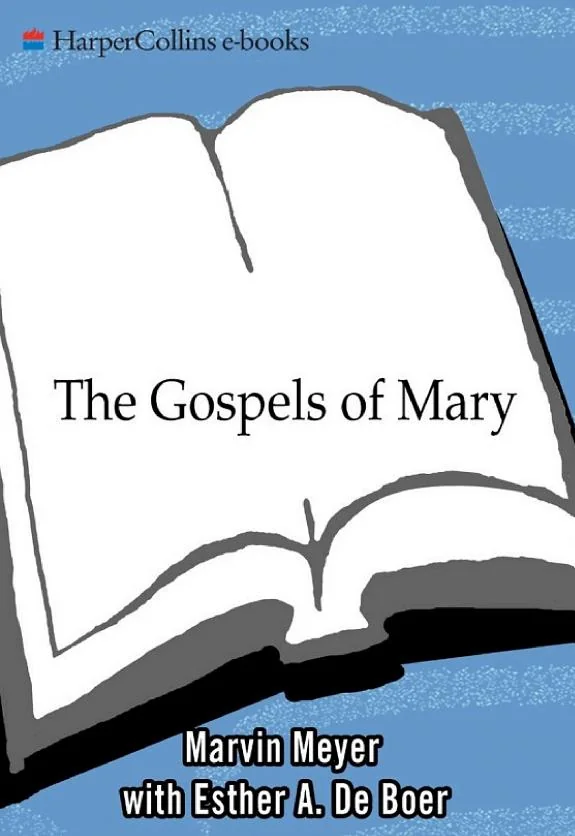
Published in 2009, The Gospels of Mary offers English translations of early Christian texts centered on Mary Magdalene.
Edited by Marvin W. Meyer and Esther A. De Boer, this collection translates early Christian texts that highlight Mary Magdalene. The editors aim to show her important role, a position often overlooked in historical accounts. The book includes the Gospel of Mary along with other Gnostic writings that give a different view of early Christian traditions and the people involved.
This volume is suited for academics and students studying early Christianity, Gnosticism, and women's roles in religion. It will interest anyone looking for different ways to interpret biblical stories and understand how women were positioned in religious groups. Readers wanting to learn about the development of Christian beliefs outside the standard biblical texts will find this useful.
The book's publication in 2009 follows decades of scholarly review of Gnostic writings, especially after the 1945 Nag Hammadi discoveries. These finds provided original documents that questioned common ideas about early Christianity. The work directly addresses the ongoing academic discussion about the genuineness and importance of Gnostic Gospels and the figures they feature, such as Mary Magdalene.
The Gospels of Mary sits within the study of Gnosticism, a diverse set of early religious movements that emphasized direct spiritual knowledge (gnosis). These traditions often presented alternative interpretations of Jesus' teachings and the nature of reality, frequently featuring prominent female figures like Mary Magdalene in roles distinct from orthodox accounts. The book engages with the scholarly understanding of these movements, particularly as illuminated by primary sources discovered in the mid-20th century, which challenged established narratives of early Christian development.
💡 Why Read This Book?
• Gain direct access to translations of the Gospel of Mary, offering insights into a Gnostic understanding of Jesus' teachings and Mary Magdalene's spiritual authority, distinct from later orthodox interpretations. • Understand the historical forces that led to the marginalization of figures like Mary Magdalene within the early Church, evidenced by the inclusion of texts challenging canonical narratives. • Explore the concept of 'gnosis' as presented in these texts, providing a framework for understanding spiritual knowledge and the divine feminine as interpreted by early Christian communities outside the mainstream.
⭐ Reader Reviews
Honest opinions from readers who have explored this book.
❓ Frequently Asked Questions
What is the primary significance of the Gospel of Mary?
The Gospel of Mary is significant because it portrays Mary Magdalene as a key disciple, receiving special revelations from Jesus and acting as an apostle, a stark contrast to her traditional portrayal.
Who were the main editors of The Gospels of Mary?
The primary editors and translators of The Gospels of Mary were Marvin W. Meyer and Esther A. De Boer, who compiled and presented these early Christian texts.
When was The Gospels of Mary first published?
The Gospels of Mary, edited by Marvin W. Meyer and Esther A. De Boer, was first published on September 15, 2009.
What historical period do these texts relate to?
These texts relate to the early Christian period, specifically the 2nd century CE, offering Gnostic perspectives that emerged alongside or in dialogue with nascent orthodox Christianity.
What is Gnosticism as presented in these Gospels?
Gnosticism, as presented in these Gospels, emphasizes direct spiritual knowledge (gnosis) and often views the material world as flawed, with salvation achieved through esoteric understanding imparted by a divine revealer.
How do these texts challenge traditional Christian views?
They challenge traditional views by elevating Mary Magdalene's status, presenting a more egalitarian spiritual hierarchy, and offering alternative interpretations of Jesus' teachings that emphasize inner knowledge over dogma.
🔮 Key Themes & Symbolism
Mary Magdalene's Apostolic Authority
This theme centers on Mary Magdalene's portrayal not as a repentant sinner, but as a primary disciple and apostle who received special teachings from Jesus. Texts like the Gospel of Mary depict her as a spiritual leader, commissioned to share clear insights with other disciples, including Peter. This challenges the patriarchal structures that later dominated the early Church, highlighting her active role in evangelism and spiritual guidance.
Gnosis and the Divine Feminine
The collection explores the Gnostic concept of gnosis, or direct spiritual knowledge, as a path to salvation. Within this framework, the divine feminine plays a crucial role, often embodied by figures like Mary Magdalene. These texts suggest a more integrated understanding of the divine, where feminine wisdom is essential for spiritual realization, contrasting with later interpretations that emphasized a solely masculine divine authority.
Suppression and Rediscovery
A significant theme is the historical suppression of Gnostic texts and the figures they champion. The early Church, in establishing its orthodoxy, actively worked to marginalize or discredit alternative Christian movements and their leaders, including Mary Magdalene. The rediscovery and translation of texts like the Gospel of Mary in the 20th century represent a crucial step in reclaiming these suppressed narratives and understanding the diversity of early Christianity.
Interpretation of Jesus' Teachings
The Gospels of Mary offer alternative interpretations of Jesus' sayings and parables, focusing on their inner, spiritual meaning rather than their literal or historical application. These interpretations often emphasize the importance of self-knowledge and the direct experience of the divine, contrasting with the developing orthodox emphasis on sacraments and hierarchical structures.
💬 Memorable Quotes
Direct passages from the work, attributed to the author.
“When Mary had said this, she turned to the others and said to them, 'Do not weep and do not grieve nor let your hearts be troubled, since he will go before you to his own place.'”
— This statement from the Gospel of Mary highlights Mary's leadership and her role in comforting and guiding the disciples after Jesus' departure, presenting her as a source of spiritual strength and assurance.
“Peter said to Mary, 'Sister, we know that the Savior loved you more than the rest of women.'”
— This dialogue underscores Mary Magdalene's unique and favored position with Jesus, as acknowledged even by prominent male disciples like Peter within the context of these early texts.
💡 Key Ideas
Editorial paraphrase of the work's core concepts — not direct quotes.
But the Savior said to me, 'What is concealed from you I will reveal to you.'
This paraphrased concept illustrates the Gnostic belief that certain individuals, particularly Mary Magdalene, were privy to esoteric knowledge directly imparted by the divine revealer, Jesus.
The Lord’s sister and mother and companion.
This is an interpretive phrase summarizing the elevated status Mary Magdalene holds in some Gnostic traditions, suggesting familial, spiritual, and intimate connections to Jesus beyond conventional discipleship.
I saw the Master in a vision, and I said to him, 'Lord, I saw you today in a vision.'
This paraphrase represents the direct, personal, and visionary relationship Mary Magdalene had with the divine, a common motif in Gnostic spirituality emphasizing inner experience.
🌙 Esoteric Significance
Tradition
This work is firmly rooted in Gnosticism, a diverse set of early religious movements that flourished alongside nascent Christianity. Gnosticism typically emphasizes salvation through secret knowledge (gnosis) and often presents a dualistic worldview. *The Gospels of Mary* fits within this tradition by highlighting texts that prioritize inner spiritual experience and esoteric revelation, particularly through the figure of Mary Magdalene, a prominent female figure in some Gnostic cosmologies.
Symbolism
Key symbols include light and darkness, representing spiritual illumination versus ignorance or the material realm. Water often symbolizes purification and the passage into spiritual understanding. The concept of the 'inner self' or 'true self' is paramount, representing the divine spark within the individual that seeks reunion with the Pleroma (divine fullness). These symbols collectively point towards a path of inner awakening and transcendence.
Modern Relevance
Contemporary thinkers and movements in spiritual feminism, comparative religion, and esoteric studies frequently draw upon Gnostic texts like the Gospel of Mary. Modern esoteric practitioners interested in the divine feminine, non-dualistic spirituality, and alternative interpretations of Christ's teachings find resonance here. It informs discussions on the historical marginalization of women in religion and provides source material for those seeking a more mystical or experiential approach to spirituality.
👥 Who Should Read This Book
• Scholars of early Christianity and Gnosticism: To access key primary source translations and engage with the scholarly discourse on Mary Magdalene's historical role. • Students of feminist theology: To examine texts that present a more egalitarian spiritual hierarchy and highlight the authority of female figures in early religious movements. • Esoteric practitioners and spiritual seekers: To explore alternative interpretations of Jesus' teachings, the concept of gnosis, and the significance of the divine feminine within a historical context.
📜 Historical Context
The publication of *The Gospels of Mary* in 2009 places it within a long tradition of scholarship examining Gnostic texts, significantly boosted by the 1945 discovery of the Nag Hammadi library. This collection engages with the intellectual currents of the late 20th and early 21st centuries, which saw a resurgence of interest in early Christian diversity and the role of women in antiquity. It confronts the historical narrative established by early Church Fathers like Irenaeus, who actively sought to define orthodoxy and condemn Gnostic deviations. The work implicitly challenges the Council of Nicaea's (325 CE) influence in shaping Christian doctrine by presenting alternative theological frameworks. While not a direct response to a specific contemporary review, it contributes to ongoing academic debates, particularly with scholars like Elaine Pagels, who have popularized Gnostic studies.
📔 Journal Prompts
The revelation of hidden knowledge to Mary: Reflect on what spiritual truths might be considered 'hidden' in contemporary religious discourse.
Peter's acknowledgment of Mary's favored status: Consider instances where leadership or authority is recognized beyond conventional structures.
The concept of the Savior's 'own place': Explore different interpretations of Jesus' final destination and its spiritual implications.
Mary's role in comforting the disciples: Analyze the function of spiritual guidance during times of crisis or loss.
The contrast between Mary's teachings and the disciples' understanding: Examine moments where differing levels of spiritual insight create tension.
🗂️ Glossary
Gnosis
Greek for 'knowledge'. In Gnosticism, it refers to direct, intuitive, spiritual insight or knowledge of the divine, often considered essential for salvation and liberation from the material world.
Gnosticism
A diverse group of ancient religious movements, flourishing in the 1st-3rd centuries CE, that emphasized salvation through esoteric knowledge (gnosis) and often posited a complex cosmology involving a transcendent God and a flawed material creation.
Orthodoxy
In the context of early Christianity, 'orthodoxy' refers to the set of beliefs and practices that eventually became accepted as correct or standard by the dominant Church hierarchy, often in contrast to 'heretical' or Gnostic views.
Apostle
Literally 'one who is sent forth'. In early Christianity, apostles were key figures, often disciples of Jesus, who spread the gospel and established churches. The texts here argue for Mary Magdalene's status as one.
Divine Feminine
A concept representing the sacred feminine aspect of the divine, often associated with wisdom, creation, intuition, and nurturing, which is seen as a vital component of the spiritual whole.
Pleroma
A Gnostic term referring to the fullness or totality of the divine realm, the totality of divine powers and emanations emanating from the ultimate God.
Nag Hammadi Library
A collection of thirteen Coptic Gnostic texts discovered near the town of Nag Hammadi in Upper Egypt in 1945, providing crucial primary source material for understanding Gnosticism.
This book appears in 1 collection
🔮 Readers Also Liked
Browse all →







From the “Gnostic Gospels” Collection
View all →







More Free Sacred Texts & Gnosticism Books
View all →