The Gnostics
 77
77

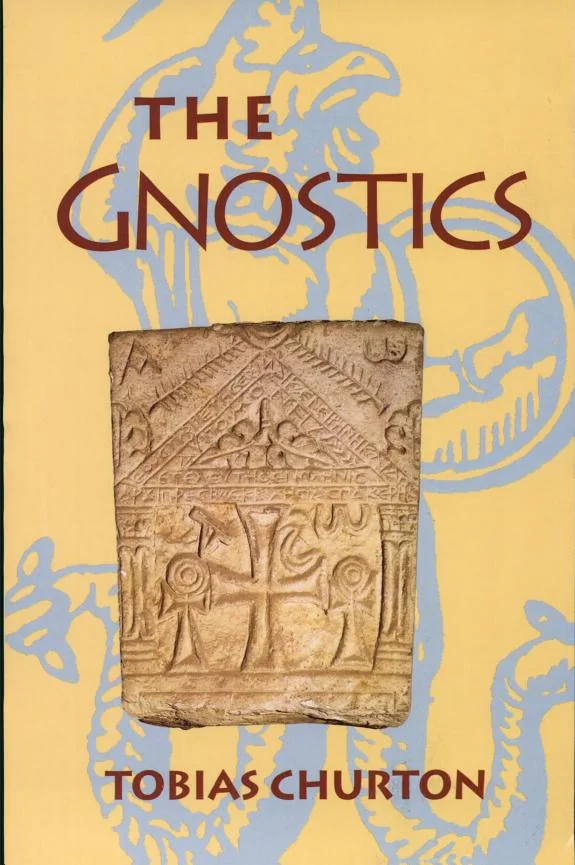
The Gnostics
Churton’s "The Gnostics" provides a much-needed corrective to the sensationalized or overly simplistic portrayals often found in popular literature. The author meticulously reconstructs the Gnostic worldview, drawing from fragmented texts and the refutations of Church Fathers. A particular strength lies in the detailed examination of the Nag Hammadi library, discovered in 1945, which offered direct access to previously unknown Gnostic scriptures. However, the sheer density of information can, at times, feel overwhelming, especially for readers new to the subject matter. The section detailing the Valentinian system, for instance, while accurate, requires sustained concentration. Churton’s work is an indispensable, if demanding, guide to a crucial, yet often overlooked, spiritual tradition.
📝 Description
77
Tobias Churton's 2009 book examines the Gnostics' radical cosmology and their place in early religious history.
Tobias Churton's "The Gnostics" examines a complex spiritual tradition often misrepresented. The book details Gnosticism's core ideas, including its cosmology which posited a flawed creator and a material world separate from the divine. Churton situates this movement within the Hellenistic world of the 2nd century CE, a time of intense philosophical and mystical thought that stood in contrast to emerging orthodox Christianity. Early Church figures like Irenaeus of Lyons wrote against Gnostic beliefs, contributing to their later obscurity.
The work clarifies central Gnostic concepts. These include the separation between the supreme God and the Demiurge responsible for the material universe. It also covers the Gnostic belief in a 'divine spark' within humans, awakened by special knowledge, or 'gnosis'. The book further discusses the roles of aeons and spiritual intermediaries in Gnostic mythologies, with a significant focus on Sophia, her fall, and her involvement in creation.
This book engages with Gnosticism, a diverse set of religious and philosophical systems that emerged in the first centuries CE. Gnosticism often posited a transcendent, unknowable God distinct from the creator of the material world, whom they identified as the Demiurge. Salvation was achieved through direct, intuitive knowledge, or 'gnosis', of the divine. Gnostic traditions frequently featured complex mythologies involving divine emanations called aeons and a significant role for figures like Sophia. These ideas presented a challenge to the developing doctrines of mainstream Christianity.
💡 Why Read This Book?
• Gain a precise understanding of the Gnostic concept of the Demiurge, distinguishing it from the supreme, unknowable God, as detailed in Churton's analysis of early Gnostic cosmologies. • Explore the significance of the Nag Hammadi library discovery in 1945, which provided direct access to primary Gnostic texts, fundamentally altering scholarly understanding. • Grasp the Gnostic notion of the 'divine spark' within humanity, and how the acquisition of 'gnosis' was believed to facilitate liberation from the material world, as presented in the book's core philosophical sections.
⭐ Reader Reviews
Honest opinions from readers who have explored this book.
❓ Frequently Asked Questions
When did Gnosticism emerge as a distinct movement?
Gnosticism began to coalesce as a distinct spiritual movement during the 1st and 2nd centuries CE, flourishing in the Hellenistic world alongside early Christianity and other philosophical schools.
What is the primary difference between Gnosticism and orthodox Christianity?
Orthodox Christianity generally views the material world as divinely created and good, with salvation through faith and sacraments. Gnosticism, conversely, often saw the material world as flawed or evil, created by a lesser deity, with salvation achieved through esoteric knowledge ('gnosis').
What role did the Nag Hammadi library play in understanding Gnosticism?
The discovery of the Nag Hammadi library in Egypt in 1945 provided scholars with a wealth of original Gnostic texts, such as the Gospel of Thomas and the Gospel of Philip, offering direct insights into Gnostic beliefs previously known only through the writings of their opponents.
Who were some key figures associated with Gnosticism?
Prominent Gnostic teachers included Valentinus, Basilides, and Marcion, whose teachings, though diverse, shared a common emphasis on revealed knowledge for spiritual liberation.
How did early Church leaders react to Gnosticism?
Influential Church Fathers like Irenaeus of Lyons, Tertullian, and Hippolytus of Rome vehemently opposed Gnostic teachings, writing extensively to refute them and contributing to their marginalization within historical Christianity.
What does the term 'Gnostic' literally mean?
The term 'Gnostic' derives from the Greek word 'gnosis,' meaning knowledge. Gnostics believed this special, salvific knowledge was essential for understanding the true nature of reality and achieving spiritual redemption.
🔮 Key Themes & Symbolism
The Flawed Creator
Churton meticulously details the Gnostic concept of the Demiurge, a subordinate, often ignorant or malevolent, deity responsible for the imperfect material universe. This contrasts sharply with the transcendent, unknowable God of Gnostic cosmology. The work explores how this dualistic view informed their rejection of the material world as inherently flawed and a prison for the divine spark within humanity.
Gnosis as Salvation
Central to Gnostic thought, as presented in the book, is the concept of 'gnosis' – a special, intuitive, and direct spiritual knowledge. This knowledge is not merely intellectual but experiential, leading to awakening and liberation from the cycles of reincarnation and the material realm. The book examines how this salvific knowledge was transmitted and understood within various Gnostic schools.
Dualistic Worldview
The work elucidates the profound dualism inherent in Gnosticism, separating the spiritual area of light from the material area of darkness. This separation extended to humanity, seen as containing a divine essence (the spark) trapped within a physical body and a corruptible world. The path to redemption involved recognizing this inner divinity and escaping the material illusion.
Alternative Christianities
Churton situates Gnosticism not as a separate religion, but as a spectrum of early Christian interpretations that diverged significantly from what would become orthodox dogma. The book analyzes Gnostic interpretations of Christ, scripture, and salvation, highlighting their radical departure from mainstream theology and the resulting conflict with figures like Irenaeus.
💬 Memorable Quotes
Direct passages from the work, attributed to the author.
“Gnosticism offered a radical alternative to the prevailing religious and philosophical orthodoxies of its time.”
— This statement highlights the revolutionary nature of Gnostic thought within the early centuries CE. It positions Gnosticism as a significant counter-movement that challenged established beliefs, proposing a fundamentally different understanding of divinity, creation, and human destiny.
“The material universe was seen by Gnostics as a prison from which the soul sought escape.”
— This captures the core Gnostic rejection of the material world. It emphasizes their belief that physical existence is a form of bondage, and the ultimate spiritual goal is liberation from its limitations and illusions through esoteric knowledge.
“The discovery of the Nag Hammadi texts in 1945 revolutionized the study of Gnosticism.”
— This points to the central impact of archaeological findings on our understanding of Gnostic traditions. Before 1945, knowledge was largely derived from hostile accounts; these texts provided direct, unfiltered Gnostic perspectives.
“Orthodox Christian authorities viewed Gnosticism as a dangerous heresy.”
— This reflects the historical antagonism between nascent Gnostic movements and the developing mainstream Church. It underscores the suppression and persecution Gnostics faced, contributing to the scarcity of their original writings and the dominance of orthodox narratives.
“Salvation was achieved through direct spiritual insight, or 'gnosis'.”
— This defines the primary mechanism of redemption in Gnostic systems. It contrasts with faith-based or works-based salvation, emphasizing the personal, clear experience of spiritual knowledge as the key to liberation.
🌙 Esoteric Significance
Tradition
This work is firmly situated within the study of Gnosticism, a complex esoteric tradition often considered a mystical interpretation of early Christianity, though its roots and influences are debated, potentially drawing from Hermeticism, Neoplatonism, and Eastern philosophies. Churton's approach aligns with scholarly efforts to reconstruct Gnostic systems, placing them as a significant, albeit suppressed, lineage of Western esotericism that offered a distinct path to spiritual realization outside orthodox religious structures.
Symbolism
Key symbols explored include the Pleroma, representing the fullness of the divine realm, and the Aeons, emanations of the supreme God. The Serpent, often misinterpreted, is frequently seen in Gnostic texts as a bringer of knowledge and liberation, contrasting with its traditional Abrahamic portrayal. The material world itself functions as a symbol of entrapment, a shadowy imitation of the true spiritual reality from which the divine spark within humanity must escape.
Modern Relevance
Contemporary esoteric thinkers and practitioners, particularly those in Hermetic and Neo-Gnostic circles, continue to draw inspiration from Gnostic ideas. Movements like the Ecclesia Gnostica and individual scholars exploring consciousness, spirituality, and the critique of oppressive systems find resonance in Gnostic cosmology and its emphasis on inner knowledge and liberation from perceived material constraints. The critique of established authority and the search for hidden truths remain potent themes.
👥 Who Should Read This Book
• Students of comparative religion and early Christianity seeking to understand heterodox movements that challenged established doctrines in the 2nd century CE. • Esoteric practitioners and philosophers interested in the historical roots of dualistic cosmologies and salvation through knowledge ('gnosis'). • Researchers of the Nag Hammadi library and its impact on our understanding of ancient mystical traditions, exploring texts previously unknown to the wider world.
📜 Historical Context
Tobias Churton's "The Gnostics" was first published in 1997, building upon decades of scholarship spurred by the 1945 discovery of the Nag Hammadi library. The book situates Gnosticism within the vibrant, syncretic religious field of the Hellenistic world, particularly the 2nd century CE. This era saw a significant intellectual ferment, with emerging Christianity grappling with diverse philosophical schools like Platonism and Stoicism, as well as other mystery cults and esoteric traditions. Gnosticism presented a radical challenge to the developing orthodox Christian doctrine, emphasizing a transcendent, unknowable God and a material creation overseen by a flawed Demiurge, rather than the benevolent creator described in Genesis. The Church Fathers, notably Irenaeus of Lyons in his "Against Heresies" around 175 CE, actively engaged in refuting Gnostic doctrines, contributing significantly to their historical marginalization and condemnation as heresy. Churton's work leverages these patristic accounts alongside the newly accessible Gnostic scriptures to provide a more balanced perspective.
📔 Journal Prompts
The Gnostic concept of the Demiurge: how does this figure's flawed creation contrast with conventional notions of divine perfection?
Reflecting on Sophia's role: what does her 'fall' symbolize regarding the origin of material existence in Gnostic thought?
The nature of 'gnosis': consider the difference between intellectual understanding and direct, salvific spiritual knowledge.
Irenaeus's refutations: how did the early Church's opposition shape the historical narrative of Gnosticism?
The 'divine spark': explore the idea of a trapped, essential self within the material body and its implications for personal liberation.
🗂️ Glossary
Gnosis
The Greek word for 'knowledge,' central to Gnosticism, referring to a special, intuitive, and salvific spiritual knowledge required for liberation from the material world.
Demiurge
In Gnostic cosmology, a lesser, often ignorant or malevolent, creator deity responsible for the imperfect material universe, distinct from the true, supreme God.
Pleroma
The totality of divine powers and emanations in Gnostic cosmology; the spiritual realm or fullness of God, from which the material world is seen as a fallen or imperfect offshoot.
Aeons
Divine beings or spiritual emanations that comprise the Pleroma in Gnostic systems. They represent various aspects or powers of the supreme God.
Sophia
A prominent female Aeon in many Gnostic systems, often associated with wisdom. Her fall or transgression is frequently depicted as initiating the creation of the material world and the Demiurge.
Divine Spark
The concept of a fragment of the divine essence trapped within human beings, which must be awakened through gnosis to achieve salvation and return to the spiritual realm.
Nag Hammadi Library
A collection of early Christian and Gnostic texts discovered near Nag Hammadi, Egypt, in 1945. It provided invaluable primary sources for understanding Gnosticism directly.
This book appears in 1 collection
🔮 Readers Also Liked
Browse all →





From the “Gnosticism” Collection
View all →
![EBOOK COLLECTION ( PART 8) [ CSI][h 33t]](/img/thumb/ebook-collection-part-8-csi-h-33t.webp)
More Free Sacred Texts & Gnosticism Books
View all →