Aleister Crowley in Paris
 84
84

Aleister Crowley in Paris
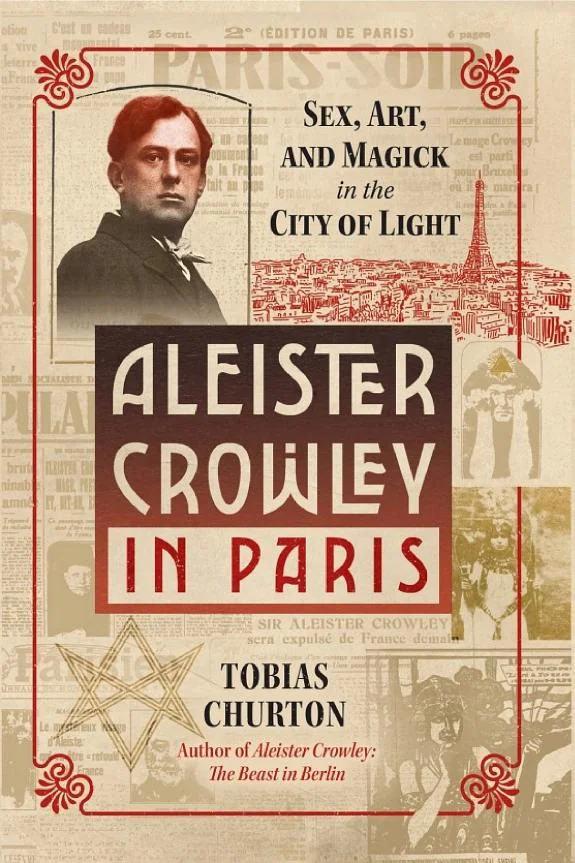
Tobias Churton's "Aleister Crowley in Paris" offers a compellingly detailed look at a crucial, yet often mythologized, period of the Great Beast's life. Churton excels at situating Crowley within the vibrant Parisian scene of the Belle Époque and the Roaring Twenties, detailing his interactions with figures like Auguste Rodin and Man Ray with scholarly precision. The book's strength lies in its deep dive into the sensational rumors surrounding Crowley's Parisian activities—gay sex magick, Pan-raising rituals—providing a nuanced perspective that moves beyond sensationalism. A notable limitation, however, is the occasional density of the prose, which, while thorough, can sometimes slow the narrative momentum. The exploration of the 1929 'expulsion' as a conspiracy is particularly illuminating, presenting a fresh angle on a well-trodden event. Churton's work is an essential addition for anyone seeking a more grounded understanding of Crowley's complex Parisian sojourn.
📝 Description
84
Tobias Churton's 2015 book details Aleister Crowley's three decades in Paris.
Tobias Churton's "Aleister Crowley in Paris" examines the occultist's complex relationship with the city across thirty years, from the Belle Époque through the 1920s. The book investigates sensational claims about Crowley's magical practices, such as the alleged raising of Pan and his involvement in sexual rituals, placing them within the context of Parisian artistic and intellectual life. Churton also details Crowley's connections with prominent figures of the era, including Auguste Rodin, Man Ray, André Gide, and Nancy Cunard. These relationships show Crowley as an active participant in early modernist movements, not an isolated figure. The work further scrutinizes the 1929 expulsion of Crowley from Paris, challenging standard accounts. Churton presents arguments for a conspiracy behind the banishment, exploring its implications for Crowley's ongoing struggle with societal and occult powers. The book also acknowledges Crowley's work as a painter, considering how his various artistic endeavors influenced his occult pursuits.
This book situates Aleister Crowley's Parisian activities within the broader currents of Western esotericism and occultism that flourished in the early 20th century. It connects his personal magical work and public persona to the intellectual and artistic milieu of the time, a period of significant development in fields like Thelema, ceremonial magic, and various mystical traditions. The narrative addresses how figures like Crowley engaged with, and were perceived by, both esoteric circles and the wider cultural landscape.
💡 Why Read This Book?
• Gain specific insights into Aleister Crowley's interactions with key Belle Époque and 1920s Parisian figures like Auguste Rodin and Man Ray, understanding how these relationships influenced his occult work. • Understand the historical context of Crowley's alleged "expulsion" from Paris in 1929, presented not as a simple banishment but as a potential high-level conspiracy. • Explore the intersection of Crowley's esoteric philosophy with the artistic and bohemian movements of early 20th-century Paris, particularly during the period of his extensive stays.
⭐ Reader Reviews
Honest opinions from readers who have explored this book.
❓ Frequently Asked Questions
What specific artistic movements did Aleister Crowley engage with in Paris?
During his Paris sojourns, particularly in the 1920s, Aleister Crowley engaged with figures associated with Surrealism and broader avant-garde circles, interacting with artists like Man Ray and writers such as André Gide.
Did Aleister Crowley perform sex magic in Paris?
Yes, the book "Aleister Crowley in Paris" investigates tales and alleged instances of Crowley engaging in gay sex magick rituals during his time in the city, exploring these narratives within their historical context.
Who was Auguste Rodin in relation to Aleister Crowley?
Tobias Churton's work examines Aleister Crowley's association with the renowned sculptor Auguste Rodin during the Belle Époque in Paris, highlighting their interactions within the city's artistic milieu.
What is the significance of the 1929 event in "Aleister Crowley in Paris"?
The book frames Crowley's "expulsion" from Paris in 1929 not as a straightforward event, but as a potential high-level conspiracy orchestrated against him, offering a re-evaluation of this incident.
Which other notable figures did Crowley associate with in Paris?
Beyond Rodin, "Aleister Crowley in Paris" details his involvement with figures like Berenice Abbott, Nancy Cunard, Man Ray, André Gide, and Aimée Crocker during his extended stays.
Does the book cover Crowley's artistic pursuits beyond writing?
Yes, "Aleister Crowley in Paris" acknowledges and explores Aleister Crowley's activities as a painter, examining how his visual art integrated with his occult philosophy and life in Paris.
🔮 Key Themes & Symbolism
Paris as Occult Crucible
The book positions Paris not merely as a backdrop but as an active crucible for Aleister Crowley's occult development over three decades. Churton details how the city's bohemian atmosphere, artistic ferment, and clandestine undercurrents directly influenced Crowley's magical practices, philosophical inquiries, and personal life. From the Belle Époque to the 1920s, Paris provided the unique environment for rituals, intellectual exchanges, and the cultivation of his notorious persona, making the city integral to his esoteric journey.
Sex Magick and Pan
A central focus is the exploration of sensational narratives surrounding Crowley's activities in Paris, specifically his alleged engagement in gay sex magick and rituals aimed at 'raising Pan.' Churton critically examines these accounts, seeking to contextualize them within Crowley's broader magical theory and the libertine culture of the eras he inhabited. The work probes the reality and symbolism behind these controversial practices, distinguishing between myth and documented interaction.
Crowley and the Avant-Garde
Churton meticulously traces Crowley's intricate connections with the Parisian avant-garde, spanning artists, writers, and intellectuals. The book details his associations with figures such as sculptor Auguste Rodin, photographer Man Ray, and writer André Gide. These relationships illuminate Crowley's presence within the broader modernist movement, demonstrating how his esoteric worldview intersected with, and sometimes influenced, the cutting edge of 20th-century art and literature.
The 1929 Conspiracy
A significant portion of the book is dedicated to re-examining Aleister Crowley's purported "expulsion" from Paris in 1929. Churton presents evidence suggesting this event was not a simple societal rejection but a calculated, high-level conspiracy aimed at discrediting or removing Crowley. This narrative angle offers a critical perspective on the incident, exploring the political and occult machinations that may have been at play.
💬 Memorable Quotes
Direct passages from the work, attributed to the author.
“Crowley's Paris was a theatre for his most audacious magical experiments.”
— This interpretation highlights Paris as a central stage for Crowley's most daring and experimental occult practices, suggesting the city's unique environment facilitated his magical endeavors.
“The tales of Pan-raising and sex magick in Paris demand a critical lens.”
— This suggests that sensational accounts of Crowley's Parisian rituals, particularly those involving sex magick and the evocation of Pan, require careful historical and critical examination rather than blind acceptance.
“The 1929 expulsion appears less a banishment and more a targeted conspiracy.”
— This interpretation posits that Crowley's removal from Paris in 1929 was not a spontaneous societal rejection but a deliberately orchestrated operation by powerful forces.
“Crowley's Parisian life intertwined esoteric pursuits with bohemian existence.”
— This concept emphasizes the seamless integration of Crowley's magical and philosophical work with the vibrant, often unconventional, lifestyle characteristic of Parisian bohemian circles.
💡 Key Ideas
Editorial paraphrase of the work's core concepts — not direct quotes.
Interactions with Rodin and Man Ray placed Crowley within the era's artistic vanguard.
This paraphrased concept underscores Crowley's engagement with prominent artists like Auguste Rodin and Man Ray, positioning him as a participant in the significant artistic and cultural movements of his time.
🌙 Esoteric Significance
Tradition
Crowley's work fundamentally belongs to the Western Esoteric Tradition, particularly its Hermetic and ceremonial magic lineages. "Aleister Crowley in Paris" examines how his practical application of magick, often intertwined with tantric and Gnostic ideas, evolved within the context of Parisian spiritual and artistic subcultures. It showcases his departure from more rigid Victorian occultism towards a more liberated, experimental form of magic, influenced by the modernism he encountered.
Symbolism
Key symbols explored include Pan, representing untamed nature, ecstatic experience, and the primal forces Crowley sought to evoke or embody. The act of 'raising Pan' signifies a profound engagement with these energies. Additionally, the book touches upon the symbolism inherent in Crowley's ritualistic sexual practices, which he viewed as potent channels for magical transformation and the manifestation of the Will.
Modern Relevance
Contemporary practitioners of chaos magic and post-Thelemic occultism often draw inspiration from Crowley's experimental approach and his willingness to integrate diverse influences. His Parisian activities, as detailed in Churton's work, serve as case studies in the practical application of magical theory in unconventional environments, relevant to modern occultists seeking to adapt ancient principles to contemporary life and artistic expression.
👥 Who Should Read This Book
• Students of Western Esotericism: Those studying the evolution of magical thought and practice in the late 19th and early 20th centuries will find detailed accounts of Crowley's activities and influences. • Biographers of Aleister Crowley: Readers seeking a deeper, context-rich understanding of Crowley's life beyond his infamous reputation will benefit from the specific focus on his Parisian years. • Historians of Art and Culture: Individuals interested in the intersection of occultism with the Parisian avant-garde, particularly figures like Auguste Rodin and Man Ray, will find valuable insights.
📜 Historical Context
Aleister Crowley's extensive stays in Paris spanned a transformative period in Western culture, from the artistic exuberance of the Belle Époque through the tumultuous 1920s. This era saw the rise of modernism, psychoanalysis, and burgeoning esoteric movements. Churton situates Crowley's activities against this backdrop, noting his interactions with figures like the sculptor Auguste Rodin and the avant-garde photographer Man Ray. While Crowley was a notorious figure, his engagement with Parisian society occurred alongside a broader fascination with the occult, spiritualism, and alternative philosophies that permeated intellectual circles. The period was marked by significant artistic innovation, notably with the emergence of Surrealism, a movement that, while not directly joined by Crowley, shared a similar interest in the subconscious and the irrational. The book also implicitly contrasts Crowley's individualistic magical path with more organized esoteric groups of the time, such as Theosophy or the Hermetic Order of the Golden Dawn's own Parisian connections.
📔 Journal Prompts
Crowley's Parisian sex magick rituals and their symbolic aims.
The significance of the 1929 'expulsion' as a conspiracy.
Connections between Crowley's art and his occult philosophy in Paris.
The role of Paris in shaping Crowley's 'raising Pan' narrative.
Crowley's interactions with Auguste Rodin and the Belle Époque milieu.
🗂️ Glossary
The Great Beast
A moniker given to Aleister Crowley, derived from the Book of Revelation, which he embraced as a symbol of his perceived role as a prophet and transgressor.
Belle Époque
A period of French and European history, roughly from 1871 to 1914, characterized by optimism, relative peace, and cultural prosperity, particularly in Paris.
Sex Magick
A branch of ceremonial magic that utilizes sexual energy and orgasm as a means to achieve altered states of consciousness and manifest magical intent.
Raising Pan
Refers to rituals allegedly performed by Crowley in Paris aimed at invoking or embodying the primal, ecstatic energies associated with the Greek deity Pan.
Avant-garde
New and experimental ideas and methods in art, music, literature, or philosophy. In Paris, this included movements like Cubism and early Surrealism.
The Will
A central concept in Thelema, Crowley's philosophy, referring to one's unique destiny or true purpose in life, which the magician strives to discover and fulfill.
Magick
As defined by Crowley, the science and art of causing Change to occur in conformity with Will. He intentionally spelled it with a 'k' to distinguish it from stage magic.
This book appears in 1 collection
🔮 Readers Also Liked
Browse all →








From the “Western Esotericism” Collection
View all →








More Free Occult Philosophy Books
View all →