Mild Altered States of Consciousness
 82
82

Mild Altered States of Consciousness
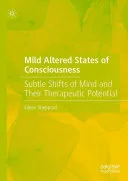
Eileen Sheppard’s "Mild Altered States of Consciousness" approaches a surprisingly fertile, yet often overlooked, domain of human experience. By focusing on the subtle shifts in awareness that pepper our everyday lives, Sheppard avoids the sensationalism that can plague discussions of consciousness. Her grounding in transpersonal anthropology and psychology provides a robust theoretical scaffold for her empirical investigations. A notable strength is the detailed mapping of these states, offering a nuanced taxonomy that is both academically rigorous and intuitively resonant. However, the book's dense academic prose, while precise, can occasionally obscure the lived experience it seeks to illuminate. The chapter detailing original research findings is particularly compelling, offering concrete data on the phenomenology of mild ASCs. While not a popularizing account, this work provides a valuable, evidence-based framework for understanding the spectrum of human consciousness.
📝 Description
82
Eileen Sheppard's 2010 book maps everyday shifts in awareness, moving beyond dramatic states.
Eileen Sheppard's "Mild Altered States of Consciousness" examines subtle changes in human awareness that occur outside of dramatic or pathological experiences. The book's analysis draws from transpersonal anthropology and psychology, tracing the history of consciousness studies and specifically research into altered states. It then details an empirical mapping of these less pronounced, yet still significant, shifts in perception and experience. Sheppard's work is founded on original research, aiming to provide a structured understanding of these common phenomena.
This volume is primarily for academics, researchers, and advanced students in psychology, anthropology, and consciousness studies. It will also interest individuals seeking a scientifically grounded exploration of subjective experience, especially those wanting to understand awareness beyond peak moments. Readers who value empirical data and theoretical frameworks applied to the study of the mind will find this book particularly useful. Sheppard distinguishes her contribution by focusing on 'everyday' altered states, aligning her empirical approach with contemporary scientific methods while engaging with the transpersonal psychology movement.
While the study of altered states of consciousness has a long history, often intersecting with mystical traditions, Eileen Sheppard's work from 2010 positions itself within a contemporary scientific framework. It acknowledges earlier explorations, such as those by William James, but distinguishes itself by focusing on 'mild' or everyday states rather than solely on profound experiences like those induced by psychedelics or deep meditation. The book aligns with the transpersonal psychology movement, which seeks to integrate spiritual and transcendent aspects of human experience with psychological understanding, often employing empirical methods to examine subjective states.
💡 Why Read This Book?
• Gain a structured understanding of "mild altered states of consciousness" through empirical mapping, moving beyond dramatic or pathological states as presented in Chapter 3. • Explore the connection between everyday awareness shifts and transpersonal psychology, drawing on Sheppard's synthesis of anthropological and psychological research. • Understand the historical development of consciousness studies, specifically the focus on less extreme ASCs, as outlined in the initial overview of the field.
⭐ Reader Reviews
Honest opinions from readers who have explored this book.
❓ Frequently Asked Questions
What distinguishes 'mild altered states' from other states of consciousness?
Mild altered states, as explored in the book, are subtle shifts in perception, cognition, or emotion that occur during ordinary waking life. They differ from normative consciousness by a noticeable, though not extreme, deviation, and from pathological or profound states by their transient nature and lack of significant impairment.
What academic fields does Eileen Sheppard draw upon?
The book integrates principles from transpersonal anthropology and transpersonal psychology. It builds upon the historical development of consciousness studies and empirical research methodologies.
Does the book offer practical techniques for inducing altered states?
The primary focus is on the empirical study and mapping of naturally occurring mild altered states. While it provides an understanding of these states, it does not offer a manual for induction or control.
Is this book suitable for someone with no prior knowledge of psychology?
While grounded in academic research, the initial chapters provide a clear overview of consciousness studies. However, the detailed empirical exploration may be best suited for those with some background or a strong interest in psychological research.
What is the significance of 'transpersonal anthropology' in this context?
Transpersonal anthropology examines how different cultures understand and experience altered states and consciousness. Sheppard uses this lens to contextualize the 'everyday' ASCs within broader human experiences and belief systems.
When was 'Mild Altered States of Consciousness' first published?
The book was first published on April 17, 2024, reflecting a contemporary contribution to the ongoing study of consciousness.
🔮 Key Themes & Symbolism
Mapping Everyday Awareness
The core of Sheppard's work lies in the empirical mapping of 'mild altered states of consciousness' (ASCs). This involves meticulously charting the characteristics, duration, and subjective phenomenology of these subtle shifts. By focusing on states commonly experienced—such as moments of deep absorption, hypnagogic imagery, or shifts in time perception—the book provides a structured framework that moves beyond the more dramatic dissociative or trance states often associated with ASC research. This detailed categorization offers a new lens through which to view ordinary human experience.
Transpersonal Framework
Sheppard grounds her investigation in transpersonal anthropology and psychology. This perspective allows for an exploration of consciousness that transcends the purely individual ego, considering the broader spectrum of human experience and its potential for self-transcendence or altered meaning. By integrating insights from how different cultures and historical periods have understood consciousness, the book situates the 'everyday' ASCs within a larger, cross-cultural context, suggesting their universality and potential significance.
Empirical Rigor
A significant aspect of this study is its commitment to empirical research. Sheppard presents original data collected to map mild ASCs, moving the discussion from purely theoretical speculation to evidence-based analysis. This approach distinguishes the book within the broader field of consciousness studies, offering concrete findings on the nature and prevalence of these states. The methodology employed aims to provide a reliable and replicable framework for understanding these subtle shifts in awareness.
The Continuum of Consciousness
The book implicitly and explicitly operates on the principle of a continuum of consciousness, rather than discrete, separate states. Mild ASCs are presented as points along a spectrum that bridges ordinary waking consciousness and more pronounced deviations. This perspective encourages readers to view their own shifts in awareness not as anomalies, but as natural variations. Understanding this continuum helps in appreciating the fluid nature of subjective experience and its potential for profound personal insight.
💬 Memorable Quotes
Direct passages from the work, attributed to the author.
“The study of consciousness, particularly altered states, has historically gravitated towards the dramatic, leaving the subtle and commonplace largely unexamined.”
— This observation highlights the book's central thesis: that significant aspects of human awareness occur in mild, everyday shifts, which have been comparatively neglected in academic research.
“Mild ASCs are characterized by a perceptible, yet non-disruptive, alteration in perceptual or cognitive processing.”
— This defines the core subject matter, differentiating these states from more extreme dissociative or pathological conditions by their subtle and integrated nature within daily life.
“Transpersonal anthropology provides a crucial lens for understanding the subjective experience of altered states across diverse cultural contexts.”
— This points to the book's methodological approach, emphasizing how cross-cultural perspectives enrich the understanding of individual consciousness and its variations.
“The empirical mapping of mild ASCs reveals patterns in their triggers, duration, and subjective phenomenology.”
— This statement underscores the book's reliance on original research and its aim to provide a data-driven, structured account of these subtle shifts in awareness.
“Understanding the continuum of consciousness encourages an appreciation for the fluid and varied nature of subjective experience.”
— This reflects the book's underlying philosophy, suggesting that everyday states of awareness are not fixed but exist along a spectrum, offering a more nuanced view of the mind.
🌙 Esoteric Significance
Tradition
While not explicitly rooted in a single esoteric lineage like Hermeticism or Gnosticism, Sheppard's work engages with themes central to many esoteric traditions: the nature of consciousness, subjective experience, and the potential for expanded awareness. The transpersonal framework she employs shares common ground with mystical and contemplative paths that seek to understand the self beyond egoic boundaries. Her focus on subtle shifts can be seen as an empirical investigation into phenomena often described metaphorically in esoteric texts.
Symbolism
The book's symbolism is less about overt mystical symbols and more about the phenomenology of altered states themselves. Concepts like 'flow states' or 'hypnagogic imagery' become symbolic of transitional consciousness. The 'everyday' nature of these states acts as a symbol for the idea that profound psychological and potentially spiritual insights are not confined to extreme experiences but are accessible within the mundane, challenging the notion that true spiritual work requires radical departure from ordinary life.
Modern Relevance
Sheppard's work is highly relevant to contemporary discussions in mindfulness, contemplative science, and positive psychology. Thinkers and practitioners exploring the science of well-being, attention regulation, and subjective experience can draw upon her empirical mapping of mild ASCs. It provides a scientific vocabulary and framework for phenomena that are often described anecdotally in therapeutic and self-help contexts, bridging the gap between subjective experience and measurable psychological processes.
👥 Who Should Read This Book
['• Academic researchers in psychology, anthropology, and neuroscience seeking empirical data on subtle consciousness shifts.', "• Students of transpersonal psychology and consciousness studies looking for a structured, evidence-based overview of 'everyday' altered states.", '• Individuals interested in a scientific exploration of subjective experience beyond peak or pathological states, seeking to understand their own mental variations.']
📜 Historical Context
Eileen Sheppard's "Mild Altered States of Consciousness" emerges in the 21st century, a period marked by a resurgence of scientific interest in consciousness, building on foundations laid by figures like William James in the early 1900s. While research into phenomena like psychedelics and meditation has seen significant development, Sheppard's work carves out a niche by focusing on the 'everyday' ASCs. This contrasts with earlier, more mystical or clinical approaches to altered states. Her empirical methodology aligns with contemporary cognitive science but is informed by the broader transpersonal psychology movement, which gained momentum in the latter half of the 20th century. The book's publication in 2024 positions it within ongoing debates about the nature of awareness, offering an empirically grounded perspective that complements, rather than replaces, earlier theoretical frameworks like those found in Gestalt psychology or humanistic psychology.
📔 Journal Prompts
The mapping of mild ASCs: identify personal instances.
Transpersonal anthropology's view on everyday awareness shifts.
Empirical data on hypnagogic imagery: personal correlations.
The continuum of consciousness: moments of subtle change.
Distinguishing mild ASCs from normative waking states in your experience.
🗂️ Glossary
Mild Altered States of Consciousness (ASCs)
Subtle, non-disruptive shifts in perception, cognition, or emotion experienced during everyday life, distinct from normative waking consciousness or profound dissociative states.
Transpersonal Anthropology
A field that examines consciousness, subjective experience, and altered states across diverse cultures, considering phenomena that transcend the ordinary ego.
Transpersonal Psychology
A branch of psychology focusing on spiritual, transcendent, and mystical aspects of human experience, including altered states and self-actualization.
Empirical Mapping
The process of charting and categorizing phenomena based on observable data and systematic research findings, as applied to ASCs in this work.
Phenomenology
The study of subjective experience and consciousness from the first-person perspective, focusing on how things appear to the individual.
Continuum of Consciousness
The concept that different states of awareness exist along a spectrum rather than as discrete, separate categories.
Hypnagogic Imagery
Vivid sensory experiences, often visual, that occur during the transition from wakefulness to sleep.