Aleister Crowley in India
 81
81

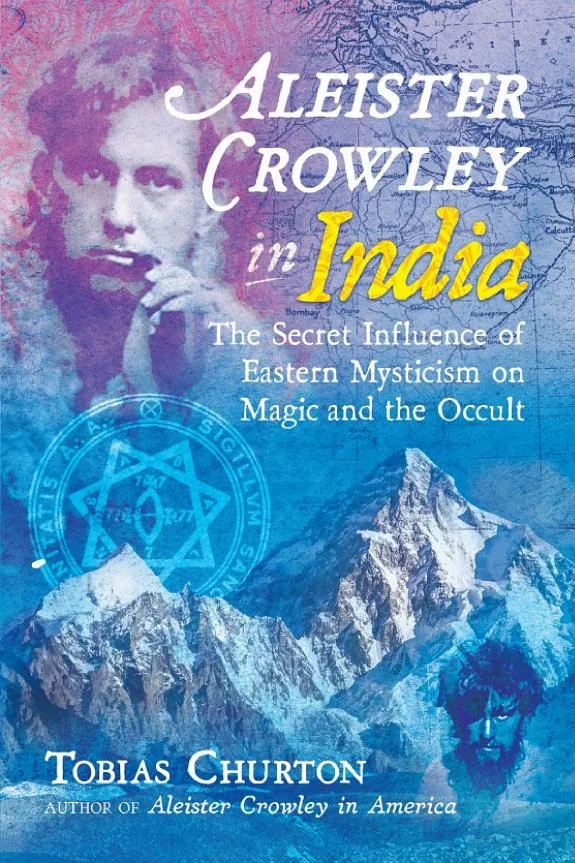
Aleister Crowley in India
Tobias Churton's Aleister Crowley in India offers a detailed examination of a crucial, yet often underspecified, period in the Great Beast's life. The book's strength lies in its rigorous use of Crowley's own diaries, providing a granular look at his travels and intellectual absorption from 1901 to 1906 across India, Burma, and Sri Lanka. Churton effectively illustrates how concepts like Jnana Yoga and Vedantist philosophy were not merely observed but actively incorporated into Crowley's developing magical lexicon. A limitation, however, is the density of the narrative, which at times can feel overwhelming without prior familiarity with Crowley's extensive oeuvre. The section detailing Crowley's encounters with yogis and his wrestling with Buddhist doctrines is particularly illuminating, showing a genuine engagement beyond superficial interest. Ultimately, Churton provides a valuable, scholarly account of Eastern spiritual influences on a pivotal Western occultist.
📝 Description
81
Tobias Churton's 2012 book details Aleister Crowley's transformative 1901-1906 travels in India.
Aleister Crowley in India by Tobias Churton examines the occultist's significant travels through India, Burma, and Sri Lanka between 1901 and 1906. This period profoundly influenced his developing ideas on Magick and philosophy. Churton details how Crowley integrated Eastern spiritual traditions, including Vedantist and Buddhist thought, into his magical system. The research relies on Crowley's diaries, many previously unpublished, granting insight into his personal experiences and evolving beliefs during this formative time.
The book is aimed at serious students of Western esotericism, comparative religion, and occult history. It will interest those curious about Aleister Crowley's biography and intellectual journey, particularly the Eastern influences on his unique magical practices. Readers interested in the intersection of Eastern philosophies and Western occultism will find substantial material. The work also serves scholars of Theosophy and early 20th-century spiritual movements.
The early 20th century saw a surge in Western interest in Eastern religions and spiritual practices, a trend mirrored in movements like Theosophy. Aleister Crowley's extensive journey to India during this time of global spiritual exchange places his personal quest within a larger historical and esoteric context. This book contrasts Crowley's individual synthesis of Hindu and Buddhist ideas with the more structured, syncretic approaches of contemporary groups such as the Theosophical Society.
💡 Why Read This Book?
• Understand the specific impact of Crowley's 1901-1906 Indian travels on his magical system, moving beyond general claims of Eastern influence. • Gain insight into how Crowley adapted practices like Jnana Yoga and Vedantist philosophy, as detailed in his personal diaries from this period. • Explore the historical context of Western engagement with Indian spirituality, exemplified by Crowley's encounters with yogis and Buddhist traditions.
⭐ Reader Reviews
Honest opinions from readers who have explored this book.
❓ Frequently Asked Questions
What specific Eastern philosophies did Aleister Crowley encounter in India between 1901 and 1906?
During his travels in India, Burma, and Sri Lanka from 1901 to 1906, Aleister Crowley engaged with Vedantist and Buddhist philosophies, alongside practices such as Jnana Yoga. He also explored various Tantric traditions, integrating these diverse elements into his magical system.
How did Aleister Crowley's time in India influence his magical system?
Crowley's experiences in India profoundly shaped his magical system by introducing him to Eastern philosophical concepts and yogic disciplines. He incorporated elements of Jnana Yoga, Vedantist thought, and Buddhist philosophy, which provided new frameworks and methodologies for his occult practices.
Does the book feature excerpts from Aleister Crowley's unpublished diaries?
Yes, Aleister Crowley in India by Tobias Churton draws extensively on Crowley's unpublished diaries from his travels between 1901 and 1906. These excerpts offer direct insights into his personal experiences and intellectual development during this crucial period.
What is the historical period covered by Aleister Crowley in India?
The book primarily focuses on the period between 1901 and 1906, detailing Aleister Crowley's extensive travels through India, Burma, and Sri Lanka. This era is significant for its impact on his occult philosophy and magical practices.
What role does Theosophy play in the book's narrative?
The book explores the broader context of spiritual movements like Theosophy, which were influential during the early 20th century. It situates Crowley's personal engagement with Indian traditions within this larger landscape of Western interest in Eastern religions.
Which specific geographical locations are covered in Crowley's travels as described in the book?
The book details Aleister Crowley's travels through India, Burma, and Sri Lanka during the period of 1901 to 1906. These locations were central to his encounters with various spiritual traditions and his subsequent philosophical development.
🔮 Key Themes & Symbolism
Crowley's Eastern Synthesis
This theme examines how Aleister Crowley actively integrated diverse Indian spiritual and philosophical traditions into his Western magical system. Churton highlights the specific adoption of concepts like Jnana Yoga, Vedantist tenets, and Buddhist doctrines. The work details how these Eastern frameworks provided Crowley with new theoretical underpinnings and practical methodologies, moving beyond purely Hermetic influences. It illustrates a conscious effort to synthesize disparate spiritual paths, creating a unique occult paradigm that would later define his magical philosophy and practices during his formative years.
The Role of Diaries
Central to the book's methodology is the extensive use of Aleister Crowley's personal diaries from 1901-1906. These unpublished writings offer a direct, unvarnished account of his experiences, thoughts, and intellectual evolution during his travels in India, Burma, and Sri Lanka. Churton leverages these primary sources to provide a granular perspective on Crowley's encounters with yogis, his philosophical inquiries, and the personal impact of Eastern spiritual traditions. The diaries serve as the bedrock for understanding the profound influence these journeys had on his life and work.
Cross-Cultural Spiritual Exchange
Aleister Crowley in India situates the occultist's journey within the broader historical context of early 20th-century spiritual exploration and cross-cultural exchange. It explores the fascination Westerners, including figures associated with Theosophy, had with Eastern religions. The book details Crowley's direct interactions with Indian yogis and Buddhist practitioners, showcasing a more personal and less institutionalized form of engagement compared to movements like the Theosophical Society. This highlights the complex interplay between Eastern traditions and Western esoteric thought during this period.
Vedanta and Buddhism in Magick
This theme focuses on the specific philosophical underpinnings Crowley drew from Indian traditions. The work details his engagement with Vedantist philosophy, particularly its non-dualistic aspects, and Buddhist concepts. It explores how these metaphysical frameworks informed his understanding of consciousness, reality, and the nature of the divine. The integration of these ideas into his system of Magick suggests a departure from traditional Western esotericism, marking a significant evolution in his occult thought and practice.
💬 Memorable Quotes
Direct passages from the work, attributed to the author.
“Crowley's diaries reveal his deep engagement with Jnana Yoga, seeking knowledge as a path to spiritual realization.”
— This highlights Crowley's deliberate study of Eastern spiritual disciplines, indicating his interest in intellectual and philosophical paths to enlightenment, not just ritualistic or ecstatic ones.
“The work details Crowley's encounters with yogis, indicating a direct, personal interaction with practitioners of Indian spiritual arts.”
— This points to the experiential nature of Crowley's learning in India, suggesting he sought practical wisdom and guidance from living traditions, not just theoretical study.
“Crowley incorporated Vedantist concepts into his magical philosophy during his 1901-1906 travels.”
— This signifies the deep influence of Hindu philosophy on Crowley's occult system, suggesting a merging of Eastern metaphysics with Western ceremonial magic.
“Buddhist philosophy offered Crowley new perspectives on impermanence and the nature of the self.”
— This indicates that Crowley's exposure to Buddhism provided him with alternative frameworks for understanding fundamental existential questions, potentially influencing his views on liberation and consciousness.
“The author meticulously traces Crowley's itinerary through India, Burma, and Sri Lanka.”
— This emphasizes the biographical and geographical thoroughness of the book, showing how specific locations and travel routes were integral to Crowley's spiritual and intellectual development.
🌙 Esoteric Significance
Tradition
This work fits within the broader Hermetic and Western Esoteric traditions but significantly expands upon them by detailing Crowley's integration of Eastern philosophies. It represents a departure from purely Western occult lineages, demonstrating a conscious effort to synthesize diverse spiritual systems. Crowley's approach can be seen as a precursor to later New Age syncretism, though grounded in his unique magical paradigm. The book illustrates how foundational Western esoteric concepts were re-examined and re-contextualized through the lens of Indian spiritual thought.
Symbolism
The book touches upon symbols inherent in Vedantist and Buddhist traditions, such as the concept of Brahman (ultimate reality) and Anatta (non-self). Crowley's engagement with Jnana Yoga implies a focus on the symbol of the 'wise man' or the seeker of knowledge. His travels through sacred sites in India would have exposed him to a wealth of Hindu iconography, though the text specifically emphasizes philosophical and yogic practices over purely symbolic interpretation, reflecting his intellectual approach to spiritual development.
Modern Relevance
Contemporary practitioners of Western Esotericism, particularly those interested in Aleister Crowley's work or the synthesis of Eastern and Western spirituality, continue to draw upon the influences detailed in this book. Thinkers exploring comparative religion and consciousness studies also find value in understanding this historical cross-pollination. Modern occultists and spiritual seekers engaged in practices like yoga, meditation, and comparative philosophy often encounter the traces of Crowley's own integrations, making this historical account relevant to contemporary spiritual exploration.
👥 Who Should Read This Book
• Students of Aleister Crowley's biography and magical system seeking to understand the lasting impact of his Eastern travels. • Researchers in comparative religion and Western Esotericism interested in the cross-cultural exchange of spiritual ideas in the early 20th century. • Practitioners of yoga and meditation who wish to explore the historical context of these disciplines influencing Western occultism.
📜 Historical Context
The period between 1901 and 1906, when Aleister Crowley traveled through India, Burma, and Sri Lanka, was a time of significant global spiritual and intellectual ferment. Western interest in Eastern religions was burgeoning, fueled in part by the Theosophical Society, founded by Helena Blavatsky. Figures like Annie Besant were also prominent, promoting Eastern philosophies within Western contexts. Crowley’s immersion in traditions like Vedantism, Buddhism, and various yogic practices represented a personal, often idiosyncratic, engagement with these spiritual currents. Unlike the more systematized syncretism of Theosophy, Crowley sought to directly absorb and integrate these teachings into his own evolving system of Magick. His journey occurred against a backdrop of colonial India, where Eastern and Western cultures were in constant, often tense, interaction, influencing both the observed and the observer.
📔 Journal Prompts
Reflect on Crowley's adoption of Jnana Yoga during his 1901-1906 travels.
Consider the implications of integrating Vedantist philosophy into Western Magick.
Analyze the significance of Crowley's diary entries from India.
Explore the impact of Buddhist thought on Crowley's evolving worldview.
Examine the role of yogis in Crowley's spiritual development in India.
🗂️ Glossary
Jnana Yoga
A path of spiritual liberation in Hinduism that emphasizes knowledge and wisdom, often through philosophical inquiry and contemplation of the self.
Vedantist
Pertaining to Vedanta, one of the six orthodox schools of Hindu philosophy, particularly focusing on the Upanishads, which explore the nature of Brahman (ultimate reality) and Atman (the self).
Tantric
Relating to Tantra, a collection of esoteric traditions found in Hinduism, Buddhism, and Jainism, often involving ritual, meditation, and the use of mantras and visualizations.
Magick
As defined by Aleister Crowley, the science and art of causing change to occur in conformity with Will. It encompasses ritual, ceremony, and psychological techniques.
Theosophy
A spiritual movement founded in the late 19th century, aiming to promote universal brotherhood and study of comparative religion, drawing heavily on Eastern philosophies.
Yogi
An individual who practices yoga, a spiritual discipline and meditative practice originating in ancient India, aiming for spiritual insight and liberation.
Buddhism
A religion and philosophy originating in ancient India, based on the teachings of Siddhartha Gautama (the Buddha), emphasizing enlightenment, mindfulness, and the path to end suffering.
This book appears in 1 collection
🔮 Readers Also Liked
Browse all →








From the “Western Esotericism” Collection
View all →






More Free Occult Philosophy Books
View all →