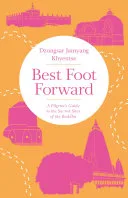
Best Foot Forward
 74
74

Best Foot Forward
Dzongsar Jamyang Khyentse, a respected contemporary Buddhist teacher, approaches the venerable practice of pilgrimage with characteristic directness in *Best Foot Forward*. The book eschews flowery prose for a no-nonsense guide, particularly valuable for Westerners unfamiliar with the nuances of Buddhist holy sites. Khyentse’s insistence on right motivation—seeing pilgrimage as a tool for glimpsing enlightenment, not mere tourism—is a vital corrective. A slight limitation is the book’s brevity; while pithy, some readers might wish for more detailed historical or geographical context for each site beyond their spiritual significance. The chapter on Sarnath, for instance, clearly articulates the Buddha's first turning of the Wheel of Dharma, a cornerstone teaching, but could benefit from a more expansive discussion of the site's archaeological layers. Nevertheless, it serves as a potent reminder that the journey is as much internal as it is external.
📝 Description
74
Dzongsar Jamyang Khyentse published Best Foot Forward in 2018, a guide for Buddhist pilgrims.
Dzongsar Jamyang Khyentse's 2018 book, *Best Foot Forward*, acts as a practical guide for Buddhist pilgrims. It focuses on approaching the four main sacred sites connected to the Buddha's life: Lumbini, Bodh Gaya, Sarnath, and Kushinagar. The author translates complex Buddhist philosophy into clear advice, highlighting the spiritual rewards and proper intentions needed for such a pilgrimage.
The book is mainly for devout Buddhists, particularly those planning or considering a trip to the sites in India and Nepal linked to Siddhartha Gautama. It will also interest readers who want to see Buddhist teachings put into practice, those wanting a better grasp of pilgrimage as a spiritual discipline, and students of Buddhist practice and sacred geography. It is a helpful companion for anyone aiming to visit these holy places with the correct mindset and knowledge.
Pilgrimage has been a central practice in Buddhism for centuries, with followers traditionally traveling to sites associated with the Buddha's life and teachings. Khyentse's work appears in a time of increased global travel, which makes these journeys more accessible but also risks superficial engagement. By offering a framework for devotional travel, *Best Foot Forward* addresses the modern need for genuine spiritual grounding amid contemporary distractions.
💡 Why Read This Book?
• Gain practical advice for approaching the four principal Buddhist pilgrimage sites, understanding the significance of Lumbini, Bodh Gaya, Sarnath, and Kushinagar as detailed in the book. • Cultivate the correct motivation for pilgrimage, recognizing it as a method for spiritual insight rather than mere travel, as emphasized by Khyentse. • Deepen your understanding of pilgrimage's role in Buddhist practice, appreciating its capacity to reinforce the Buddha’s teachings and aid in glimpsing the awakened state.
⭐ Reader Reviews
Honest opinions from readers who have explored this book.
❓ Frequently Asked Questions
What are the four main Buddhist holy sites discussed in Best Foot Forward?
The book focuses on the four most significant sites associated with the Buddha's life: Lumbini, his birthplace; Bodh Gaya, where he attained enlightenment; Sarnath, where he gave his first sermon; and Kushinagar, the site of his passing into parinirvana.
Who is the author of Best Foot Forward?
The author is Dzongsar Jamyang Khyentse, a Bhutanese lama and filmmaker, known for his accessible teachings on Buddhism.
When was Best Foot Forward first published?
Best Foot Forward was first published on August 14, 2018.
What is the primary purpose of pilgrimage according to the book?
The book posits that the primary purpose of pilgrimage is to help practitioners get a glimpse of the awakened state, reinforcing Buddhist teachings through the sacred atmosphere and shared experience.
Is this book suitable for non-Buddhists interested in the topic?
Yes, while written for Buddhist pilgrims, the book offers valuable insights into the spiritual significance of sacred places and the practice of pilgrimage, making it accessible to those interested in comparative religion or spiritual journeys.
What distinguishes this guidebook from secular travel guides?
Unlike secular guides, *Best Foot Forward* prioritizes the spiritual intention and practice of pilgrimage, focusing on the internal benefits and correct mindset rather than logistical details of travel or tourism.
🔮 Key Themes & Symbolism
The Sacred Journey
This theme explores pilgrimage not merely as travel, but as a deliberate spiritual practice. Khyentse emphasizes that visiting sites like Bodh Gaya, where the Buddha attained enlightenment, is intended to cultivate a similar awakening within the practitioner. The act of journeying, the sacred atmosphere, and the shared devotion of fellow pilgrims are presented as tools to help one remember and embody the Dharma, transforming mere movement into profound spiritual progress.
Right Motivation
A central tenet of the book is the critical importance of one's intention when undertaking a pilgrimage. Khyentse distinguishes between genuine spiritual seeking and the mundane motivations of tourism or worldly gain. He stresses that the aim should be to 'catch a glimpse of the awakened state,' urging readers to approach holy places like Sarnath, where the Buddha first taught, with humility and a sincere desire for spiritual realization, rather than superficial curiosity.
Pilgrimage as Practice
The work frames pilgrimage as an active form of Buddhist practice, akin to meditation or study. By engaging with the physical and spiritual field of sites connected to Siddhartha Gautama's life, practitioners are encouraged to integrate the teachings into their being. This active engagement, facilitated by locations such as Lumbini and Kushinagar, serves as a potent reminder of the path and its ultimate goal, making the journey itself a vital component of the spiritual path.
Embodied Dharma
Khyentse suggests that pilgrimage facilitates an embodied understanding of the Dharma. By physically visiting the places where key events in the Buddha's life occurred, practitioners can connect with the teachings on a deeper, more visceral level. This approach moves beyond intellectual comprehension, fostering a direct experience of the sacred that reinforces the teachings and aids in realizing the nature of reality, as exemplified by the significance of each of the four main holy sites.
💬 Memorable Quotes
Direct passages from the work, attributed to the author.
“Going on pilgrimage, soaking up the sacred atmosphere of holy places, and mingling with other pilgrims are simply different ways of trying to achieve that glimpse.”
— This highlights the multi-faceted nature of pilgrimage, presenting its environmental, social, and devotional aspects as integrated tools for spiritual progress toward enlightenment.
“Pilgrimage is a powerful method for remembering the Buddha’s teachings and putting them into practice.”
— This emphasizes the active, rather than passive, role of pilgrimage in reinforcing the Dharma, suggesting the journey itself serves as a living lesson.
“For Buddhists, the most important holy pla”
— This incomplete fragment suggests the book will identify and elaborate on the primary sacred sites crucial for Buddhist practitioners, setting the stage for their detailed exploration.
“The sacred atmosphere of holy places is an important factor.”
— This points to the environmental aspect of pilgrimage, suggesting that the inherent sanctity of locations like Bodh Gaya can actively contribute to a practitioner's spiritual experience and insight.
💡 Key Ideas
Editorial paraphrase of the work's core concepts — not direct quotes.
The aim of all Buddhist practice is to catch a glimpse of the awakened state.
This quote expresses the ultimate goal of Buddhist endeavors, framing pilgrimage as a practical method to achieve this profound realization, moving beyond mere ritual.
🌙 Esoteric Significance
Tradition
While rooted in the Mahayana tradition, specifically Vajrayana Buddhism as taught by Khyentse, *Best Foot Forward* touches upon universal esoteric principles. The emphasis on pilgrimage as a path to directly realizing higher states of consciousness aligns with esoteric concepts of spiritual ascent and direct experience, often found in traditions like Gnosticism or Hermeticism, albeit through a distinctly Buddhist lens. The focus is less on hidden doctrines and more on the transformative power of sacred geography and intention.
Symbolism
The four primary sites themselves—Lumbini (birth), Bodh Gaya (enlightenment), Sarnath (teaching), and Kushinagar (death)—function as powerful symbols representing the entire arc of the Buddha's journey from the mundane to the transcendent. These locations symbolize key stages of spiritual realization: the potential for awakening, the achievement of Buddhahood, the dissemination of wisdom, and the ultimate liberation from the cycle of rebirth.
Modern Relevance
In contemporary spiritual circles, the book's emphasis on intentionality and the transformative power of place appeals to modern mindfulness movements and the growing interest in 'conscious travel.' Thinkers and practitioners exploring embodied spirituality and the psychology of sacred sites find value in Khyentse's approach, which bridges traditional Buddhist cosmology with a practical, experiential understanding relevant to seekers today.
👥 Who Should Read This Book
• Devout Buddhists planning a pilgrimage to India and Nepal, seeking to understand the spiritual significance and proper conduct at sacred sites like Bodh Gaya and Sarnath. • Individuals interested in the practical application of Buddhist philosophy, who wish to learn how pilgrimage can serve as a method for spiritual insight and practice. • Scholars and students of comparative religion and Buddhist studies, looking for contemporary insights into the tradition and practice of Buddhist pilgrimage.
📜 Historical Context
Dzongsar Jamyang Khyentse's *Best Foot Forward* was published in 2018, a period marked by increasing global mobility and a resurgence of interest in traditional spiritual practices, including Buddhist pilgrimage. The work engages with a long-standing Buddhist tradition, tracing back to the earliest sanghas, of venerating sites associated with the Buddha's life. Contemporary figures like the Dalai Lama have also consistently promoted pilgrimage as a means of deepening faith and understanding. Unlike purely academic or historical accounts of these sites, Khyentse's text functions as a practical guide, reflecting a modern need to reconcile ancient practices with contemporary life. It implicitly addresses potential pitfalls like the commercialization of sacred spaces, a concern echoed by many Buddhist scholars and practitioners working through the modern world.
📔 Journal Prompts
The Buddha's first turning of the Wheel of Dharma at Sarnath.
The significance of Lumbini as the birthplace of Siddhartha Gautama.
Approaching Bodh Gaya with the intention to glimpse the awakened state.
The role of mingling with other pilgrims during the journey.
Kushinagar as a site of ultimate liberation (parinirvana).
🗂️ Glossary
Pilgrimage
A journey undertaken for religious or spiritual reasons, particularly to a place regarded as sacred. In Buddhism, it's a practice to deepen faith and gain insight.
Awakened State
Refers to the state of enlightenment or Buddhahood, characterized by ultimate wisdom, compassion, and freedom from suffering.
Dharma
In Buddhism, the teachings of the Buddha, the truth about reality, and the path to liberation.
Siddhartha Gautama
The given name of the historical Buddha before his enlightenment.
Lumbini
The birthplace of Siddhartha Gautama, located in modern-day Nepal; one of the four principal Buddhist pilgrimage sites.
Bodh Gaya
The site where Siddhartha Gautama attained enlightenment under the Bodhi tree; a major Buddhist pilgrimage destination.
Sarnath
The deer park near Varanasi where the Buddha delivered his first sermon after enlightenment; a key pilgrimage site.
Kushinagar
The site where the Buddha attained parinirvana (final liberation); one of the four main pilgrimage sites.